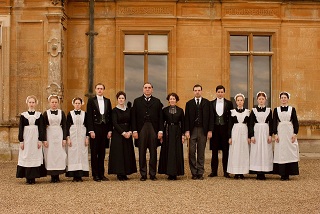
My family’s own “Downton Abbey”

Large households usually needed an army of servants, as depicted in ITV's hit drama series Downton Abbey.

Apparently, in 19th century England there were more people working in service than actually working down the mines. Being employed in someone else’s household as a member of staff was an alternative available to those who, for instance, wished to leave their agricultural background and establish themselves in a big, industrial city.

At a time when the industrial revolution made the rich even richer, the members of the more modest classes often found work in the aristocracy’s ever growing households a steppingstone toward starting a new life. It wasn’t always easy, as those who worked “below stairs” had to wake up at dawn, do hard work throughout the day and stay up long after their masters had gone to bed. It was a tough life, but a very dignified one too. There was always the opportunity of going up (“bettering oneself“) in the strict social/professional scale which outlined the staff’s order of precedence even in their day-to-day lives; being employed as a butler or a valet in the case of men, or as a housekeeper or a lady’s maid in the case of women, was a goal many strived to achieve. But of course, there was a downside, in that very often working in a large household left very little time for oneself, and consequently almost no time at all for love to blossom. Members of staff did marry, but usually had to leave service sooner or later to start a family of their own.
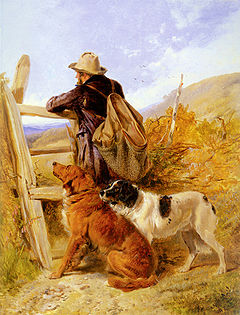
The Gamekeeper, by Richard Ansdell.

A distant relative of mine, Emma Saviger (b.1843) could easily have felt the need to leave her native village in the West Midlands and establish herself as a servant in some large household in another county. Young Emma was the daughter of Thomas Saviger, an agricultural labourer from Herefordshire, and his wife Mary Mound, a charwoman from Shropshire. Although I haven’t managed to locate her in the 1861 Census (I suspect she was not recorded in the census or more likely that her name/surname was wrongly transcribed) I do know she married a man called John Wilson in 1865. Six years later, the childless couple were registered in the census living in Woolley Park, Chaddleworth (Berkshire), where John was the head gamekeeper in the employment of Mr. Philip Wroughton, a conservative Member of Parliament whose family had owned Woolley Park for a great deal of time.
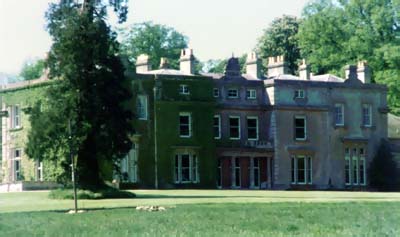
Woolley Park, in Berkshire, is the private residence of the Wroughton family.

John and Emma Wilson lived in the Upper Lodge at Woolley Park for a long time. By 1881 the Wroughton family -comprised at the time by Philip Wroughton, his wife and four young daughters- were employing a vast number of staff in their household. Although not as grand as Highclere Castle, where Downton Abbey‘s exteriors and upstairs interiors are filmed, Woolley Park does look like a large country house which could easily fit a substantial quantity of servants. In 1881 the Wroughtons employed a permanent nurse, a lady’s maid, a nursemaid, two footmen, a cook, a kitchen maid, two housemaids and two laundry maids, all of whom lived in the house itself. The stables were occupied by the coachman and his family, followed by the lodge where the Wilsons lived accompanied solely by the coachman’s assistant, John Bearman, an 18-year old boy from Sussex who may well have been like the son John and Emma never had.

In the 1880’s John Wilson left the Wroughton family’s service but carried on working as a gamekeeper. In 1891 he was living in Speen, Berkshire, and still working as a gamekeeper. By 1901 the couple had prospered enough to be recorded as “living on own means”. There is no trace of them in 1911, implying that they may have been deceased by then, but I am sure they never forgot their days when they worked at the downtonabbey-ish Woolley Park in Chaddleworth.

Posted in Berkshire, Downstairs staff, England, Genealogy, Herefordshire, Marriage, Shropshire, Work | 2 Comments

Finding Aunty Rita

Two days ago, genealogy came to life. Less than two weeks ago, you’ll remember, I posted about a recent discovery we made, concerning my grandfather’s younger half-sister, Rita. Through a distant English cousin of mine, Anne (related to us through an entirely different line altogether), we managed to get a bit more information about Rita, having been born in the early 1930’s in New York City. Anne’s cousin in America, Michele, who has access to many documents online (I’m not sure whether through Ancestry or some other genealogy webpage) started reporting back many documents, some of which we already had, some of which were news to us: my great-grandfather’s emigration records, his application for US naturalisation and so on.

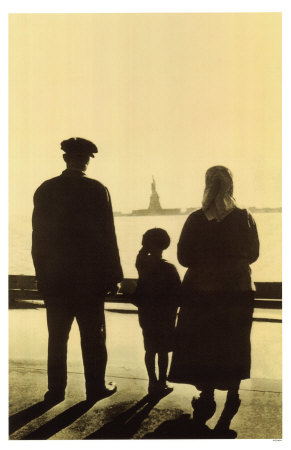
Several times did my ancestors pass in front of the Statue of Liberty when they emigrated to America in the 1910's.

The crack came when I got an e-mail from Anne forwarding a message from Michele, which read “I have found Rita’s married name“. We were getting closer and closer at an incredible speed. Less than two weeks ago I had no idea my grandfather had any brothers or sisters in America, and here we were unearthing names and people out of the blue.

Hours later we got another forwarded e-mail from Michele/Anne saying that Michele had actually rung Rita up and told her about my dad and I, and that we were looking for her, and asked her whether Michele could send us Rita’s phone and address, and she said yes! Well, to cut a long story short, I rang my dad and told him all about it, and surely enough he telephoned Rita once a few hours had gone by (given the time difference, phoning our long lost Aunt for the first time early in the morning would not make us too popular…).

My dad spoke to her for a short while (I wish I had been there to listen on). He said she sounded nice, if slightly weary (well wouldn’t you be?) and that she was all there. He asked her about his dad (her late brother), about whether there were any pictures of him (there aren’t any, apparently), about when his father died (because we couldn’t find his death certificate) and so on. As she doesn’t have an e-mail, she asked my dad if he could write her a letter. My dad asked her how he should address her, and she sweetly replied “Aunty Rita will do”. I suspect it will be a long, revealing and heart-felt letter.

Who knows, maybe by this time next year we will have gone to New York and visited our newly discovered Aunty Rita? Anyway, what an unexpected Christmas present this has been.

Posted in Birth, Death, Emigration, Genealogy, Italy, United States | 1 Comment

Coping with the loss of children

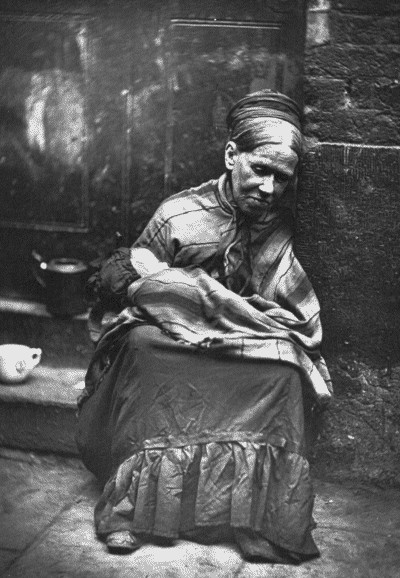
Poverty was partly to blaim for many infant deaths before the 20th century.

There is probably nothing more painful, nor more unnatural, than the death of a child. Fortunately, in the world of today fewer and fewer parents experience such a terrible loss when their children are young , but not many generations ago having to cope with the loss of a child or children was something many parents would be expected to go through.

I don’t have to go very far to find infant deaths. My mother’s maternal grandmother buried three children in her lifetime: a stillborn daughter in the late 1920’s, and shortly thereafter one of her youngest sons died of diphtheria aged only four. The final blow came in 1935 when my great-uncle was travelling in a car with three friends in the Spanish city of Valladolid, when the driver fell asleep and the car skidded off the road and crashed into a tree. My 20 year-old great-uncle was the only casualty.

Several couples related to me on my mother’s side also sustained several untimely losses throughout their married life. One such case is a couple in my family tree who lived in the second half of the 19th century and who had eleven children (four girls and seven boys), of whom at least one girl and four of the boys died in infancy. One of my English great-great-great-grandfathers, Frederick Vickress, sired ten children with his wife over a period of 24 years, but only six of those ten children made it to adulthood. Perhaps the highest level of child deaths endured by a relative of mine was a case which also took place at the turn of the century, when my great-grandmother’s uncle José Pereiro Liboreiro buried six of his seventeen children.

Oddly enough both my father’s maternal grandfather and paternal grandmother each had a twin sister, and in both cases the sister apparently died in infancy. Lucky escape for my great-grandparents (and me I guess!).

Another of my Vickress relatives was specially unfortunate at having healthy children. Although his only daughter from his first marriage lived (only) to the age of 36, his second marriage was even less fortunate. By the time Henry Edward Vickress died in 1875 in Wolverhampton, aged only 45, he had already buried four of his babies; his two remaining daughters lived into adulthood, but one died aged 22 shortly after giving birth to an illegitimate son in Birmingham (the baby boy lived only two days). What became of her remaining sister is still a puzzling question mark. Only 60 years after his birth, by 1891 there seem to have been no descendants of Henry Edward Vickress left alive.

My great-great-great-grandmother Ellen Morris was last recorded in the 1911 Census; she died the following year having survived her late husband for some fifteen years. During their long marriage, which spanned almost two decades, they buried their second son; as a widow, Ellen had to cope with the loss of two more children: one was my great-great-grandfather Samuel (himself having buried his two youngest children), who died in 1909 of diabetes and gangrene aged 58, and his youngest sister Mary Lane, who died of tuberculosis in 1907 aged 40. Even at such an advanced age I can’t begin to imagine how sad it must have been to endure such awful losses for poor old Ellen.

Although I haven’t found anyone in my family tree to beat Queen Anne, who just happens to have buried all of her 17 children, none of whom got passed the age of 12, I would imagine burying one child was bad enough, let alone all the ones my ancestors lost. As the saying goes, “We don’t know we’re born“… Now for a morbid question, what is the record of child deaths in your family?

Posted in Birth, Death, England, Genealogy, Spain | Leave a comment

This year’s Christmas present: Great-Auntie Rita

Just when you think you know almost everything about your closest relatives, WHAM, you get a brand new person to hook on the family tree, opening up a whole new branch in your ancestral garden… and who knows what else. You can imagine my amazement the day before yesterday when I got a new annual suscription on Ancestry.co.uk and we found someone we had never even heard of before: my grandfather’s half sister, Rita Ameglio.

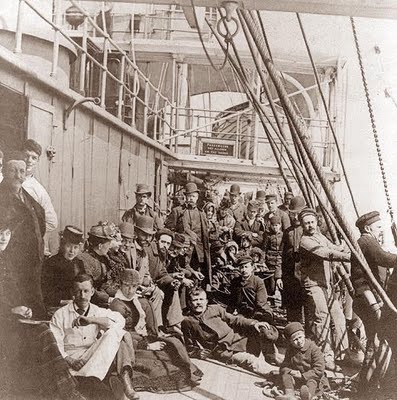
Arriving at the New World.

To be honest, we weren’t even looking for any siblings my grandfather may have had. We just assumed he probably didn’t have any, as his father Giacomo Ameglio (aka Jack) would have been in his 40’s by the time he and his second wife started a new life together. We knew that by 1920 my grandfather’s mother had died, and six years later his father had remarried to a fellow Italian called Francesca Castino. She sailed to New York City two years after, and applied for naturalisation in the United States in the late 1930’s. Looking at the application form it all seemed pretty much old news: the address, the name of her husband, even her date of birth were facts we had already found before through one webpage or another. Suddenly, a new paragraph made it clear: she and Jack did have a daughter, born in 1931, living with the couple in 1938.

There it was, that silent piece of family history waiting to be dug up by us, probably their nearest living relatives in the world. So it appears my great-grandfather had a son from his first marriage six years after settling in the USA, and a daughter with his second wife about three years after she moved to America. Sadly, that’s all the news we have been able to trace so far. There are no further records on Ancestry about “Great-Aunt Rita“, who would be 80 today (if she’s still alive). I wonder, has she ever wondered if she has any living relatives abroad? Does she know her older half-brother had a child in Europe? Would she, do you suppose, have any photos of her late brother, my grandfather? Does she hold the key to so many mysteries which have plagued my dad’s life for so long?

If by any chance you are, know or knew Rita Ameglio, born in May 1931 in New York City, daughter of Jack Ameglio and his second wife Francesca (Castino), who lived at 412 W39th Street, Manhattan, or have any further information about her older brother Peter Ameglio (1916-1981), please get in touch by leaving a message at the end of this post and an e-mail address where I can get back to you. Thank you.

Posted in Emigration, Italy, United States | Leave a comment

A rather unusual marriage

In the past three years or so I have encountered just a small handful of couples whose ages were slightly apart from one another. Finding a case where the bride was a lot older than her husband was even harder. But rather unusually, old female/young male marriages did take place in the past long before Zsa Zsa Gabor, Joan Collins or Demi Moore started marrying (and divorcing) younger men.

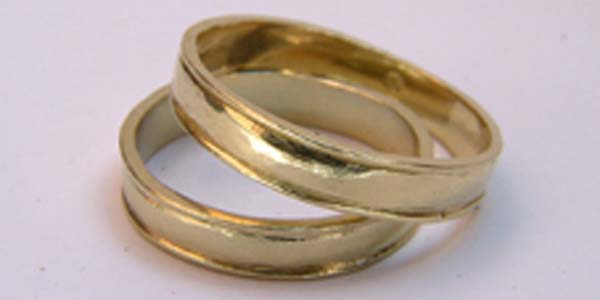
The key players in this story were Robert Allen and Judith Bond (née Cooke). Naughty Uncle Robert was my great-great-great-grandfather’s youngest brother. He was born in late Summer 1821 in Colwall (Herefordshire) and at some stage in his early adulthood he married someone whose name sadly I have been unable to trace. I’m not even sure if they had any children together, but by the late 1850’s Robert was in his late thirties and already a widower. He also owned a pub in Colwall, and who knows if having all that beer and liquor around made him feistier than most of my other contemporary relatives in the area.

Judith Cooke, on the other hand, was born in Longdon or Upton-on-Severn (sources vary) in Gloucestershire in 1797, into a family of five children. Her first marriage, to William Bond, took place in 1813 (when her future second husband hadn’t even been born yet). William Bond was a publican, as Robert Allen would later be; who knows if they knew each other? Living in the same village, and sharing the same trade, I would imagine they definitely met!

Judith and William had two sons who were roughly Robert’s age. Then, in 1844, Judith’s youngest son died in nhis mid-20’s, followed shortly thereafter by the passing of his father. Judith was left, at 50, a lonely widow with one son to look after her in old age. The final blow came in 1851 when her eldest son, John, died too.

Robert was roughly the same age as Judith’s late sons and probably knew them well. If the Bonds ran their own pub, it is very likely Robert would have had many dealings with them. The wedding took place on 13th May 1858 in Colwall. Was it true love, or a mutual longing for companionship and comfort in old age that pushed the 36 year-old publican to wed the 60 year-old widow? As neither of them were wealthy, I find it highly unlikely that they were moved into matrimony with monetary interest in mind.

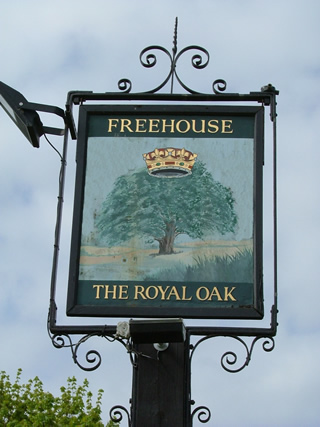
Against what you may think initially, the couple did stay together till the end of their days. Robert carried on working in a pub in Colwall, The Royal Oak, while Judith probably tended their house and who knows if she too worked at the pub! But if Robert expected to become a widower early on in life, he couldn’t have been more wrong. The marriage lasted an astounding 35 years, until Judith’s death in 1893 at the age of 95. Robert lived for only seven more years, and died in early 1900, aged 78.

Thus ended probably the most bizarre yet long-lasting marriages of the time in my family tree. Love is most definitely blind.

Posted in England, Genealogy, Herefordshire, Marriage | 1 Comment

Runaway Dad

I know that growing without a dad is tough. If you or anyone else close to you grew up without a parent, then you know what I’m talking about. Whether it was a war, or a fatal illness which snatched your father’s presence from you, I presume you might find it within yourself to accept his absence, and get on with your life.

What can’t be so easy to swallow -I imagine- is accepting that your father abandons you, your family, and your home, and disappears to all effects from your life and your world. Such a selfish and irresponsible gesture must be very difficult to live with up to your dying day. Yet I know of several cases within my family where the father voluntarily abandoned their wives and families in order to prusue another life… often ending up marrying someone else bigamously.

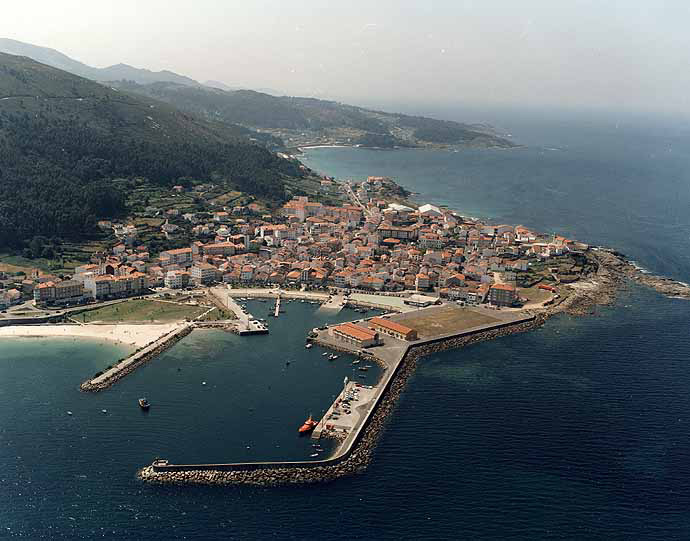
Puerto del Son, Juan Blanco's birthplace.

My great-grandmother’s mother was the daughter of such a man. Juan Blanco was born in 1847 in the small seaside port of Puerto del Son (AKA Porto do Son), in NW Spain. The area still looks pretty much the same as it did some 150 years ago when my ancestor married Dolores Carou, who was by then heavily pregnant with their only daughter, my great-great-grandmother Josefa. Juan and Dolores were married in August 1868, and only two months later baby Josefa came into their lives. Was Juan Blanco happy to marry the mother of his child, or was her perhaps talked into marriage by dutiful relatives?

Crossing the high seas...

I am told by several great-aunts of mine that Juan soon abandoned his wife and daughter, who would have been a mere infant when he boarded a ship that took him all across the Ocean to Argentina. There, according to family legend, he bigamously became a de facto (if not de jure) married man a second time, and seemingly fathered another child or children, thus starting a second family. He was still alive when years later, towards the turn of the century, his son-in-law (whom he’d never met in Spain) tracked him down in Buenos Aires. Juan was so horrified by his visitor’s appearance that the first thing he muttered was: El Diablo te trajo hasta aquí (“The Devil has brought you here“). Was Juan afraid that his daughter’s husband would bring him back to Spain, or report him to the Argentinian police? Evidently Juan had no intention of coming back to Puerto del Son, and was probably more content with his second family than with the people he left back home. His son-in-law returned home empty handed, and as far as I know that was the last time anyone saw or heard from Juan Blanco.

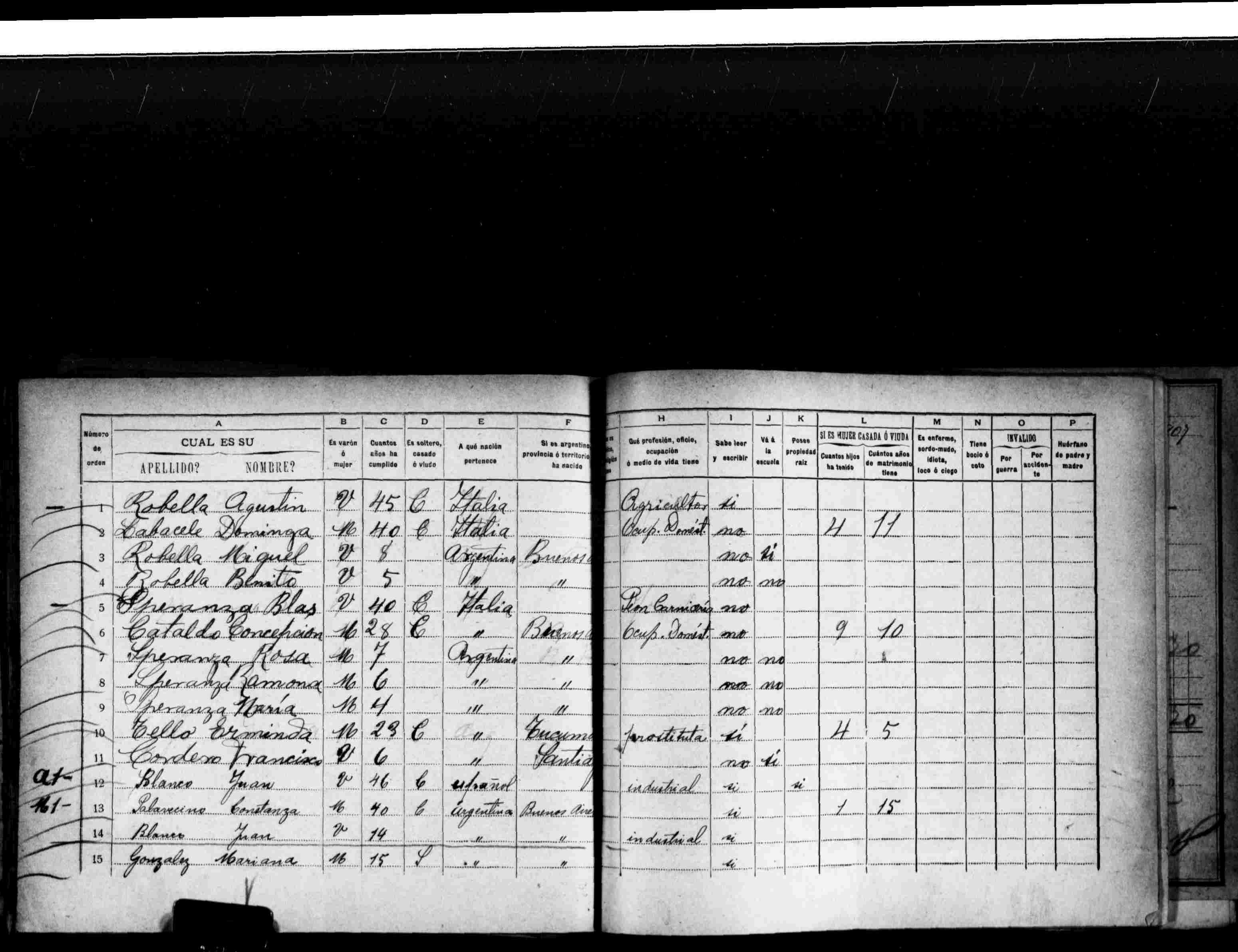
There is a Juan Blanco recorded in the Argentinian census in 1895 listed with a wife and son… There’s a big chance he might be my great-great-great-grandfather.

Argentina's 1895 Census showing a married man called Juan Blanco born in Spain circa 1849. Was he my Juan Blanco?

As far as I know, Juan never returned home. His daughter may have been more forgiving than I would have thought at first, for she gave her father’s name to one of her sons. Despite her many hardships Josefa must have endured during childhood, she found it within herself to forgive the father she had hardly known.

I don’t know when Juan died exactly, but his (first) wife in Spain lived well into the 20th century. His daughter too lived a long life, and gave Juan seven grandchildren. Through them, his descendants have perpetuated the family line into the 21st century, many of them not knowing that just over a century ago our ancestor sheepishly gave everything up in order to start afresh in Buenos Aires. Who knows what Juan’s descendants in Argentina know about their ancestor!

I am happy to say that very recently I was contacted by a distant relative of mine who lives in Uruguay (a hop and a skip from Buenos Aires) and who is a great-grandson of Juan’s brother, who also emigrated to America. Who knows if this person, of whom I knew absolutely nothing a couple of days ago, might fill me in on any gaps about Juan’s life in South America.

Posted in Argentina, Bigamy, Emigration, Genealogy, Spain | 2 Comments

The elusive Mr Davis

My first real post about my family tree ought to be dedicated, I suppose, to my latest genealogical conundrum. A couple of weeks ago, my father ordered four certificates from the General Records Office in England. All four certificates correspond to the death of three of my ancestors plus my great-grandmother’s first cousin once removed, who was murdered in the late 1920’s. That much I knew. The real surprise came when I read the death certificate of John Davis, my great-grandfather’s maternal grandfather.

John Davis was my great-great-grandmother’s father. She being an only child, I have always presumed her line would prove relatively easy to research: no collateral lines to follow down, no relatives with whom my gr-gr-gran would be staying with as a child when the census was taken… Just plain sailing really. Well, turns out I couldn’t been more mistaken, it seems.

Colwall, where John Davis lived and possibly died on an unknown date.

From what I gather from the census records, John Davis was born in Colwall, a small village located in the East of Herefordshire but which falls under the postal administration of Worcestershire. All births, marriages and deaths which take place in Colwall are consequently recorded in the registry district of Ledbury, but many people there have links with the neighbouring county of Worcester. John was born sometime in the early 1800’s, as he is recorded being 46 years old in the 1851 census and 56 ten years later; therefore I am inclined to believe he was indeed born in or about 1805. In the 1841 census he is listed as a 35 year-old, which would seem to fit since ages for people over the age of 15 were rounded down to the nearest five years in the 1841 census. John would really have been 36 years old at the time, which would explain why his age was listed as being “35”. So far so good.

Regarding his profession, John Davis seems to have been a wood dealer. In 1841 and again in 1851 he is listed as a carpenter, but in 1861 he is down as a “wood dealer” (which sounds better anyway)… Then, some time later, he dies. Not only is absent from the 1871 census anymore, but by 1868 his widowed wife Maria decided to remarry. So John definitely died between 1861 and 1868, I assume in Colwall.

I go on the Free BMD webpage and check if all deaths which took place in Herefordshire have been transcribed, as seems to be the case. So I do a quick search to check for the 100th time how many John Davis died between the said dates. Assuming John died in Colwall, his death would have been registered in Ledbury. There are four possible candidates: one who died in the Spring of 1861 (who may just have made it to the 1861 census, which was taken on 7th April); another in 1864; another in 1866 (aged 62) and another one in the Summer of 1868 (aged 66). A fifth John Davis died in 1867 aged only seven, so I immediately discard him as my ancestor. The death certificate I ordered -and which has made me uneasy- is the death certificate for the John Davis who died in 1866 aged 62. I thought initially that ages were sometimes rather sloppily recorded in registry offices. This could well be my John Davis.

The thing is that the certificate does indeed belong to a John Davis who died aged 62 in Colwall (bingo!) on 27th April 1866. His given age would mean he was born circa 1804 (bordering on 1805, which would match the census as stated above) but… occupation: innkeeper! Hang on. An innkeeper? I thought we were dealing with a humble carpenter/wood dealer, so what’s this about being an innkeeper (or publican as they used to call them back in Victorian England)? Moreover, the informant doesn’t ring any bells (Mary Carless, present at death, of Ledbury). Something doesn’t quite match.

I am fortunate enough to have found a free page online with the transcription of baptisms, marriages and burials for Colwall in the 19th century. Sadly, burials are only covered until 1863, so I can’t really check if my John is on there… Well, not after 1863 anyway. I have a look at the men that died between the last census John was recorded in (the 1861 census) and the end of the transcription, just in case – to no avail. No name even remotely like John Davis’s is listed. So I look at baptisms, since John was born in Colwall and thus would, in all probability, have been christened there.

The baptism records offer some clues, I am glad to say: there is a John Davis baptised on 5th April 1807, son of John and Feby (sic) Davis. The date is a bit late, but I keep an eye on this one. I go back a few years and there is another John Davis that pops up on 26th June 1803, the illegitimate son of Mary Davis. A quick browse proves there are no more candidates born anywhere near the correct date of birth, so we have two Johns to consider, assuming they both survived infancy (sadly burial records only cover 1813-1863). Assuming that both Johns were christened shortly after birth, the first one (b.1803), would have been exactly 47 years and 9 months old when the 1851 census was taken… Not 46 as was stated in the census retusn I’ve seen. The other John, on the other hand, would have been only 43 when the 1851 census was taken and 54 when the 1861 was carried out (the censuses were taken on different dates).

Neither candidate christened in Colwall seems to match perfectly the age of the John recorded on the census records and, more importantly, who just happened to be my great-great-great-grandfather. There is a chance, of course, that a) my John was born but not christened in Colwall and thus I have yet to find his baptism record; b) he was either one of those two Johns and I haven’t managed to suss him out, but I don’t have his correct death certificate; or c) he was indeed either of them, I do have his correct death certificate and John just gave up being a carpenter and opened an inn before he died in 1866 and some completely unknown -to me- woman went to register the death in Ledbury. Only to make things more difficult for me. I think I will just have to set this one aside for a bit. Any ideas, clues… advice?

Posted in England, Genealogy, Herefordshire | Leave a comment

Once upon a while ago…

Ready, steady, go!

Opening a new blog about genealogy is something I have often wanted to do. For some odd reason, maybe with my ancestors giving me the final push I needed, and with much delay, today I have finally decided to open this blog. The Genealogical Corner will, I hope, explore the many and unknown sides family genealogy has to offer everyone who makes a pause in life and starts to build their family history from scratch. I am happy to say it will not all be about names, dates and places. It will be about people, some long gone.  And what happened to them. And how they lived. And about the things they did. And the reasons which made them do those things. It will be exploring History from a personal perspective.

I intend my blog to be a place of research and reminder, but also a place of interest to whoever stops by. Getting ten thousand visits a day and dozens of comments is not my goal, though I will be very glad if anyone takes a minute to drop a simple message, and perhaps share their own stories to tell. For practical reasons I will only use English as my main language, but genealogical research in non-English speaking countries may also be analysed.

Genealogy is a fascinating and productive hobby, greatly misunderstood by many, but fortunately with an increasing number of followers each day. I hope this blog will give useful tips and ideas to those seeking their ancestry, like me.

Best of luck to you all!

Posted in Genealogy | Leave a comment