Remembering Ash Villa

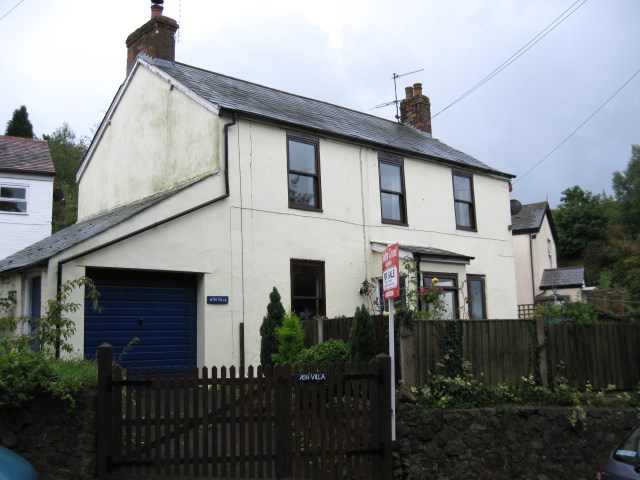
Ash Villa up for sale in 2010. Note the garage on the left, formerly a workshop.

Ash Villa up for sale in 2010. Note the garage on the left, formerly a workshop.

There are not many buildings left standing where an ancestor of mine once lived. One of the few exceptions that I know of is a quaint yet ordinary-looking, four-bedroom house called Ash Villa, in Upper Colwall, Herefordshire. Nestled behind the border with Worcestershire on the Malvern Hills, the house lies on the edge of Beacon Road, which connects Colwall proper with the British Camp above. The Wyche Cutting is located a few feet away.

Ash Villa may not look imposing, with its four bedrooms and its simple façade overlooking the valley. All the same, its location and surroundings make it an idyllic property, in my eyes at least. Having a direct personal link to the place naturally naturally makes it a lot more special, but what is even more exciting is the fact that at one point Ash Villa -and practically all the houses around it- once belonged to my English ancestors, the Allens. To both sides, and even behind the house, a whole network of siblings, nephews and eventually grandchildren once lived. Today, alas, not a single relative of mine owns or even lives in the area, which I suppose is an all-too-natural occurrence in most people’s family history.
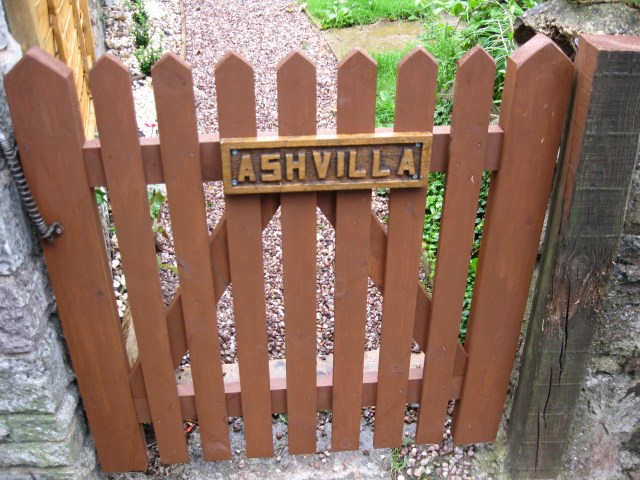
The front gate at Ash Villa.

The front gate at Ash Villa.

How and when my ancestors came to live in Ash Villa is a bit of a mystery. Inspecting tithe maps and property records could hold the answer, I am reliably told by Hereford Records Office. If I were to check the Tithe Map of c.1840 and the Finance Act map of c.1910, I should be able to ascertain whether the building existed in 1840 or if it was built between that year and 1910 (thanks to census records, I know that the building certainly existed by 1911). The 1840 tithe map apparently holds an “apportionment” mentioning who a building’s owner and occupier were at the time, and what the name of the property was. However, if the house changed name after that date, it would be practically impossible to follow the houses’s history in subsequent decades. To all effects, it would be like searching for the same individual under an alias. In addition, the only way you might be able to find out about a particular property before 1840 is if it is mentioned within the records of a larger estate where it was situated… At any rate, as I live nowhere near Ash Villa or the Hereford Records Office, I need to rely on other sources of information to find out the truth.

My great-great-great-great-grandfather Thomas Allen (1760-1843), who was a land-owning farmer, lived all of his live in Colwall. In the 1841 census he is listed as living in the hamlet of Evendine, which is little over two miles away from Upper Colwall and the site where Ash Villa now stands. It is therefore evident that my ancestor did not inhabit Ash Villa almost 200 years ago, if the building even existed at the time, but this does not mean he had no link to the area that his descendants would one day call home.
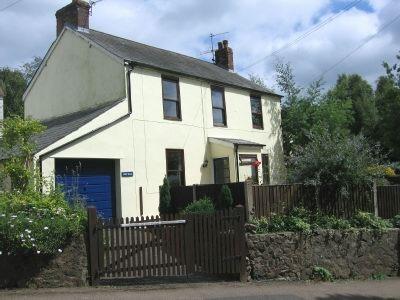
Ash Villa a few years ago.

Ash Villa in more recent times, a few years ago.

Fast-forward ten years and the Allen family seem to have moved up from Evendine to Upper Colwall. By 1851 Thomas’s widow Sarah lived with one of her sons, Joseph Allen, sharing a farm called The Knell. Another of her sons, my 3x great-grandfather Edward, was living at the Wytch (sic) with his wife Ann, their daughter and two sons, a niece and someone who appears to have been a foster daughter of the family. The geographical shift looks like we are definitely getting closer to the truth.

In 1861 Edward Allen and his family appear to be living in Upper Colwall in a property called Portugal Cottage, near the Wyche. Portugal Cottage may have been the same property as the one they were occupying ten years previously, and may even be a primitive name of Ash Villa (or the house than stood there previously), but without specific references, such a link is at best questionable. Other families not immediately related to mine lived in surrounding houses on Wyche Road, going down to an area of the village called the Purlieu (often mistranscribed as Purleigh or Purley, which are both closer to the place’s actual pronunciation).
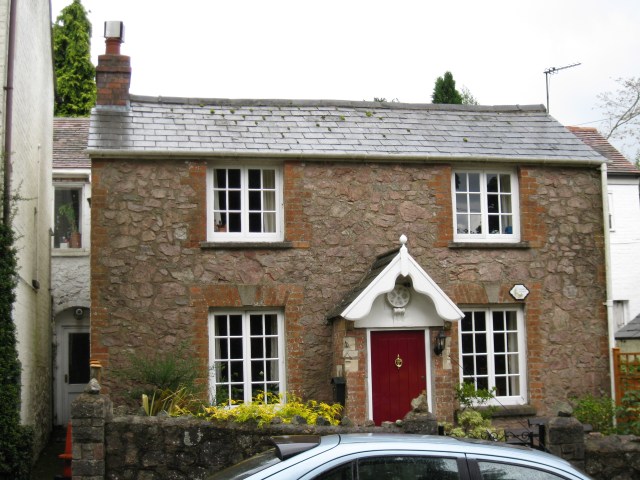
Victoria Cottage, Beacon Road, was once owned by my family.

Victoria Cottage, Beacon Road, was once owned by my family.

By 1871 Edward Allen had lost his wife, but he still lived in Upper Colwall with his daughter Clara (a seamstress). Her brother William Henry lived next door in Ivy Cottage (which, I believe, may well be the cottage currently standing next to Ash Villa under the name Victoria Cottage). Curiously, another brother called John (who incidentally is my great-great-grandfather) was not living in Colwall at all, but in Albert Road, Kings Norton, on the outskirts of Birmingham. The move may have been prompted by the latter’s profession -he was a carpenter and joiner- and he would certainly had found more job opportunities in the booming city than in sleepy Upper Colwall. John was not alone in Kings Norton, for he had his wife Jane and two infant daughters, Ada and Ellen (a third daughter, Annie, had been left behind, to live with her maternal grandmother and the latter’s second husband). We know the couple’s next child, Rose, was born in Birmingham, but for the next birth (that of my great-grandfather William John and his twin sister Maria) John and his wife went back to Colwall. We know they both resumed their existence in Birmingham (that is where they would both die and where, presumably, they are both buried) but it is likely they made regular trips to Upper Colwall to visit their relatives there.
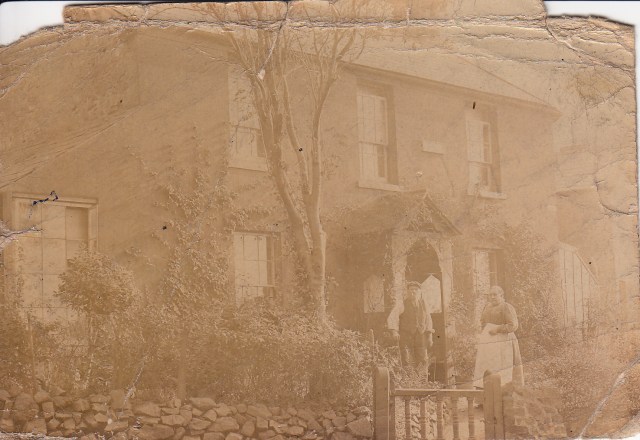
John and Jane Allen outside Ash Villa around the turn of the century.

John and Jane Allen outside Ash Villa around the turn of the century. The window on the left side, once a carpenter’s workshop and then a large canary birdcage, is now a garage.

By this time, and with all certainty, Ash Villa had come into the family’s possession, for an existing photo of John and his wife outside Ash Villa (above) has somehow miraculously survived. Although difficult to date, I am certain the photograph is from about the turn of the century. Although the couple no longer appear to have lived in Upper Colwall by the early 1900’s, they may well have been photographed outside their son William John’s house during a prolonged family visit.

Having left Birmingham for good, my great-grandfather William John decided to move back to Colwall sometime between 1901 and 1910, although it appears he did not set home in Ash Villa/Portugal Cottahe right away. The 1911 census shows that Ash Villa was inhabited by a Mr William Sombs (or Tombs) and his family, who were likely tenants of my great-grandfather. Around that time, William John married my great-grandmother, whose own house during her unmarried years, Hyde Ash, in Ivington, may well have given Ash Villa its current denomination. The couple had three children, and it was in Upper Colwall that they lived when World War I broke out. The young family lived for a time at Highland View (the house adjacent to Ash Villa) but by the time my grandmother was born in 1917 they had already moved next door to Ash Villa itself. It was next to the house, in what is today a garage, that William kept his workshop, and where he would later build a large bird-cage which came to house some 300 canaries. In the aftermath of the 1929 Crash, and to make ends meet, my great-grandmother (a decidedly excellent cake maker) decided to turn the workshop/aviary into a tearoom for hikers who were walking up to/down from the Beacon.
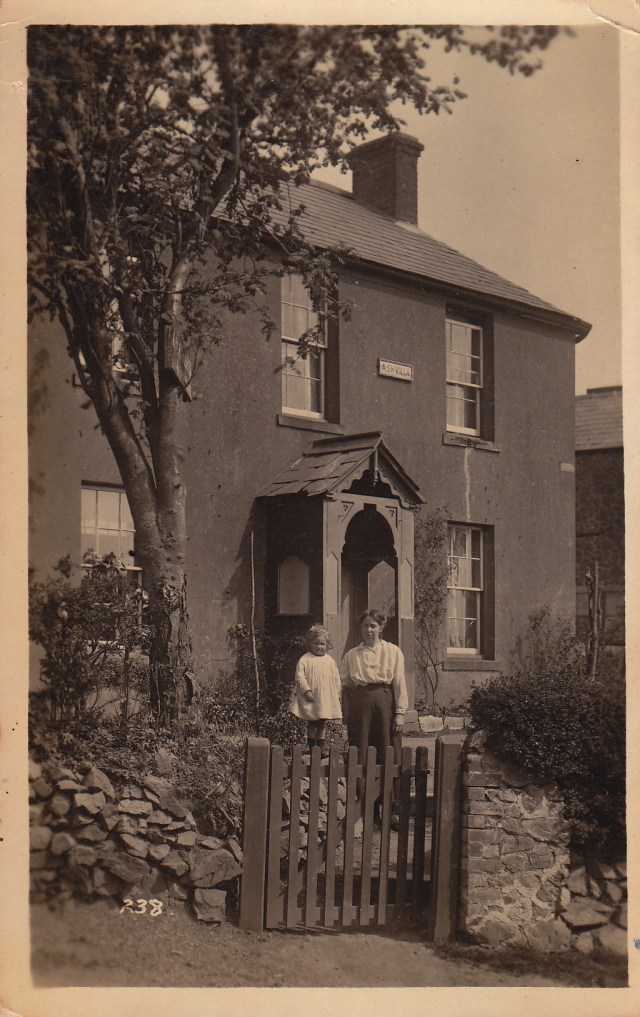
A family snapshot in front of Ash Villa in 1918.

A family snapshot in front of Ash Villa in 1918. The name of the house can be clearly seen on the first floor plaque.

Both William and his wife died in Upper Colwall late in life, but their closest relatives still lived nearby. Their only son lived in Highland View, which I believe was still in the family until a few years ago, and one of William John’s widowed sisters lived in one of the terraced cottages until her own death in 1955. Later one of my own uncles lived in the property behind Ash Villa after his own marriage, but as time went on less and less people, particularly among the younger generation, wished to remain in the village. The properties that had been inhabited by various relatives over the years were gradually sold off after my great-grandmother’s death in the 1960’s. Although no longer part of my family’s present history, I have the satisfaction of being able to claim some degree of personal relationship with the place. I wonder if those who live in Ash Villa and the surrounding houses have ever even heard of the Allen family?
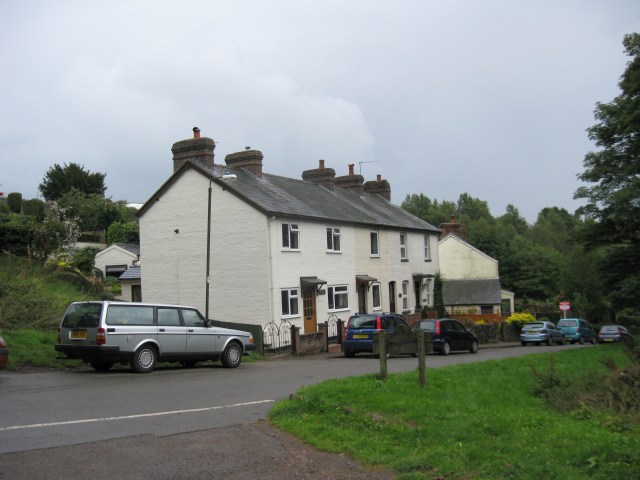
The row of cottages known in the 1800's as Allens Cottages.

The row of cottages known in the 1800’s as Allens Cottages. The side of Ash Villa can be seen on the far right.
Posted in 1851 Census, 1861 Census, 1871 Census, 1881 Census, 1891 Census, 1901 Census, 1911 Census, Adoption, Birmingham, Birth, Colwall, Death, England, Genealogy, Herefordshire, Property, War, Worcestershire, World War I | 7 Comments

Who Do You Think You Are Live! 2016

Oh yeah!

Oh yeah!

My head is still buzzing with information, my feet occasionally still hurt, and my bank account is a sad sight. Yes, the effects of the annual Who Do You Think You Are! Live trade fair are still fresh in my mind (and my pocket). What an experience for a poor, amateurish genealogist like me…

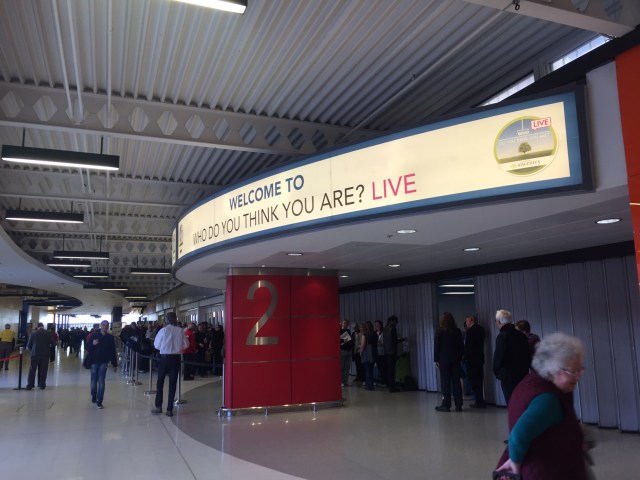
On Friday last week I left Brussels after what seemed an eternal wait at the terminal, still suffering the effects and destruction of the 22 March terrorist attacks. Security was like never before, and although the atmosphere was far from tense, the lack of passengers throughout the airport and the empty planes on the tarmac served as an eerie reminder of that tragic event. For the second year running, WDYTYA Live took place not at the London Olympia, but at the NEC in Birmingham. My short flight to the city where my great-grandfather lived between his adolescence and the time of his marriage in 1910 was a pleasant hop and skip overflying the English Channel. The hotel was conveniently situated a mere 5 minutes away from the Nec and directly opposite the airport, which made transport the day after very convenient.

Queue to enter WDYTYA 2016

Queue to enter WDYTYA 2016

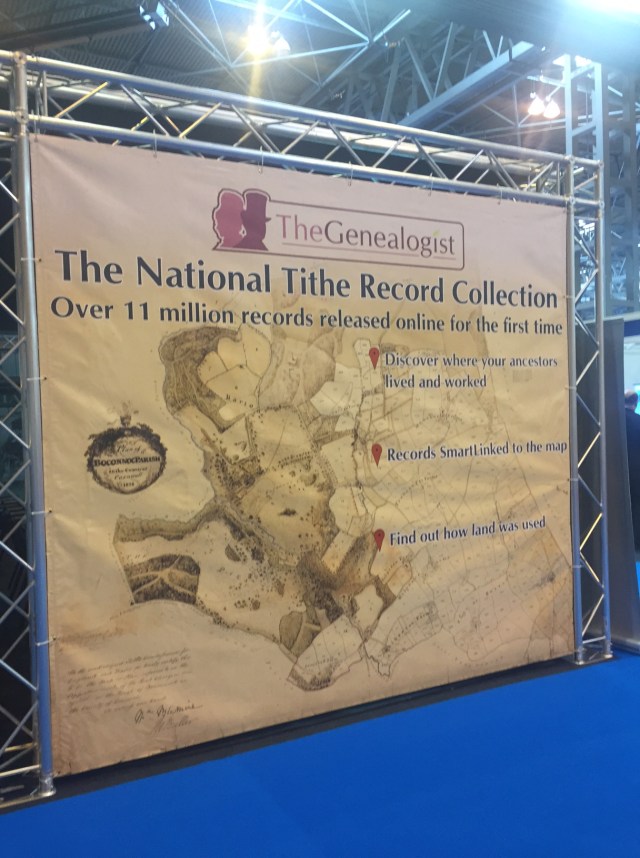
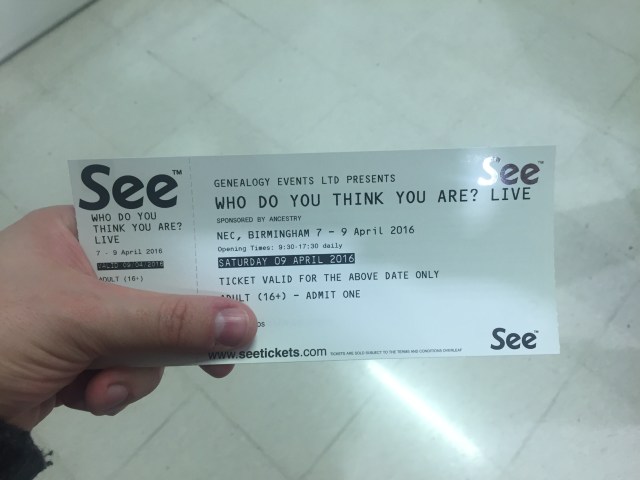
When entering the NEC (I had only purchased a one-day ticket) I realised just how big the event was, and the sheer amount of interest that genealogy and family history arouse in the UK. A large queue marked the way to the entrance, but I was kept busy at the ticket office where I had to collect my modest one-day pass. A slight miscommunication between me and the man on the other side of the glass ended up with me having to spell out my e-mail (including the word genealogist, which the young and helpful man was not familiarised with). Once I got in, I was overwhelmed by the amount of stands and booths I had to visit. I bypassed some of the larger stands, such as those dedicated to Ancestry.co.uk and AncestryDNA, FindMyPast and TheGenealogist, in favour of the smaller companies and exhibitors. I had a nice chat with the people at the Famberry stand (a new family tree software), enquired about the surnames in my family tree and whether any one of them they may be of Huguenot origin, and had a very interesting conversation with two ladies from the Jewish roots booth. I then made my way to the Herefordshire Family History Society desk where a nice lady called Heather, with whom I shared our mutual fondness for burial records, kindly sold me a CD with an index of marriages in the county between 1538 and 1837. A second visit to the stand convinced me I should also buy a map of the districts of Hereford and Leominster, and to take advantage of the fact that they were giving away parish maps of Herefordshire for free.

Free lectures at The Genealogist stand...

Free lectures at The Genealogist stand…

But as my grandmother came from the small village of Colwall, I was advised to go to the Malvern Family History Society, where I spoke to a man who actually lives in Colwall (unfortunately I didn’t catch his name) and shared common knowledge and common names from the area. He kindly pointed me in the direction of a lady called Vanessa, who was at The Genealogist stand and who has transcribed dozens of parish records over the past 20 years. After moving about like a modern-day pinball (and taking a dreaded selfie with Sir Tony Robinson) I listened in to a talk by professional genealogist Laura Berry and then by Mark Bayley (of The Genealogist) who spoke about bringing down brickwalls.

Time for lunch, so I took advantage of the fact that, unlike the Brits, I can eat as late as 2PM or even later, and so I made my way to a fish & chip stand. Armed with my tray of chips and cod, and noticing all tables were taken, I asked a lady who seemed to be alone if I could sit at her table. We got chatting, and it turns out her family history was tremendously interesting. The lady, by name of Penny, was there assisting the FIBIS (Families in British India Society), and told me of how she had started researching her ancestry fairly late in life, having only a few memories of her earlier years in post-independence India. Now without any older relatives to ask about her family origins, Penny relies on records and the help of others to find out more about her own personal story. Best wishes Penny!

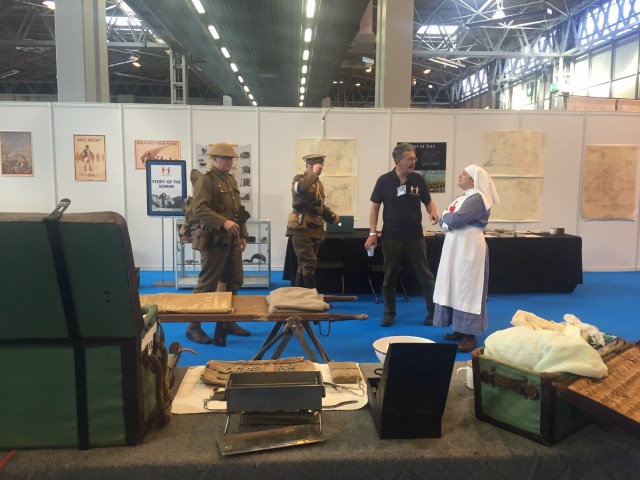
Not just about Genealogy...

Not just about Genealogy…

The day ended rather soon, but I took advantage of the quietness of the last half hour to peruse through the 1939 UK Register at the FindMyPast section (sadly my grandmother’s name is crossed out as she was born less than 100 years ago, but I did find her parents and siblings). I also had a nice encounter with someone from a stand dedicated to Wales, where I bought a couple of cotton bags which commemorate the Welsh-born author (of Norwegian ancestry) Roald Dahl. I think it is high time I research my Welsh ancestry, don’t you?

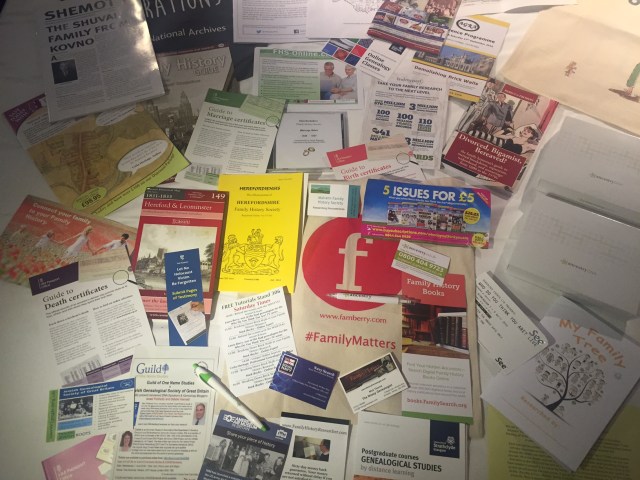
I came back with a mountain of flyers, freebies, a signed copy of Rebecca Probert’s book on bigamy, divorce and bereavement, my pre-civil registration CD of marriages, and two AncestryDNA kits at 40% off… What an amazing experience. I am already counting the months until the next WDYTA Live!!!

My take-aways!

My take-aways!

Posted in 1939 UK Register, Bigamy, Birmingham, Birth, Colwall, Divorce, Emigration, Famous Genealogy, Genealogy, Herefordshire, Jewish Ancestry, Marriage, The National Archives, United States, Wales, War, Who Do You Think You Are?, Worcestershire, World War I | Leave a comment

508, 9th Avenue, Manhattan

The year is 1884. On 20th March, the day before the start of spring, my great-great-grandmother, then a young girl of 15 years, put down her name on a marriage certificate. Maria Maddalena Terzano, who preferred to go by the more poetic name of Amalia, thus became the wife of my great-great-grandfather Pietro Amerio. The marriage took place in the medium-sized market town of Nizza Monferrato, in Italy’s Piedmont region. Present were the four parents, all of whom had been born in the nearby village of San Marzano Oliveto; this, and the fact that the bride’s father and the groom’s mother shared the same surname, leads me to believe they may have been distantly related, although genealogical research spanning three further generations has left this question, as yet, unanswered.

Pietro and Amalia made San Marzano Oliveto their home. Then as now, San Marzano is little more than a small village dominated by the local church dedicated to San Marziano and the local medieval castello, now a decaying but still impressive solid ruin. Various hamlets and fields where apple trees are grown dot the surrounding area, which slopes up and down as far as the eye can see. Overall it is a peaceful and picturesque part of the world, if somewhat abandoned by the less romantic advances of the technological age.

Unspoilt in this nook of the Italian landscape, Pietro and Amalia started their own family. Although far from wealthy (Pietro worked a nearby chunk of land; Amalia tended the household), the couple would go on to have no less than twelve children, although some of them predeceased their younger siblings, and therefore the twelve were never alive at the same time. Giacomo, so named after his paternal grandfather, was born little over a year after his parents’ wedding. Then came Luigi about two years later, followed by Luigia (affectionately called Luigina) in 1889 and Giuseppina in 1891. In 1894 twins arrived with the birth of Cesarina (known as Rina) and Cesare, although the boy died that same year. The sad loss was somewhat compensated by the arrival of yet another set of twins, two girls who were baptised Irma Margherita and Giovanna Carolina. The latter happens to be my great-grandmother.

For almost nine years the family seemed to be complete. The parents, their two surviving sons and five daughters would have already felt crammed in a household probably designed to hold no more than a small number of children, but then tragedy struck once more when nine-year old Irma Margherita died of undisclosed causes. It is difficult to imagine what her twin sister, my great-grandmother Giovanna Carolina must have felt.

Strikingly, the death occurred on 16 March 1904; Amalia, heavily pregnant at the time, went into labour the day after, perhaps prematurely due to the sudden death of her young daughter, and gave birth to another girl whom she named Irma Maria, in her memory. A year later Pietro and Amalia were faced with another family tragedy when their second son Luigi died aged just 17. Happily that same December Amalia gave birth to not one but two children, her third set of twins, and had them baptised with the names Armando and Ernestina. Armando would go on to have a long life, but little Ernestina managed to live for only three weeks, having lived long enough to see in the New Year. The family would not be complete until 1907, when baby Jolanda was born in Spring, twenty three years and one month to the day after her parents had married in Nizza Monferrato. Sadly, she too would be destined to a short life, and died that same July.

Child mortality may have been common at the time in countries like Italy, but it does not mean it did not have any effects on the families it touched. The string of early deaths, followed by the few prospects of work and money that San Marzano seemed to offer, may have led the eldest brother, Giacomo, to seek a new life and new opportunities in America. Less than two years after the death of his youngest sister, he set sail for the New World, leaving behind his parents and their other five surviving children. Having left Genoa in April, Giacomo reached Ellis Island in early May, and successfully made it through customs and the health inspection queue. Described as a countryman, he was apparently able to read and write. He wasn’t travelling alone, however, as he was accompanied by the young Imerito family, neighbours from San Marzano Oliveto: Cesare Imerito (29), his wife Maggiorina (née Quaglia; 20), daughter Ada (who being 9 may have been too old to be Maggiorina’s daughter) and Cesare’s cousin Casimiro (15), all of whom came from San Marzano.

The Imeritos apparently had relations in America, and it may have been Giacomo’s intention to accompany then and try out his luck. His friend Casimiro claimed he was going to stay with his parents at an address given as “Lines North Riverfoot 74, Nr 3 Str, New York City”, while Cesare and his own famiy were going to stay with another of Cesare’s cousin Enrico Imerito at the same address (it can therefore be deduced that Casimiro was the son of Enrico Imerito, who in turn was Cesare’s first cousin). As Giacomo Amerio may not have been closely or even directly related to the Imeritos, he went to stay with a friend called Giuseppe Bussi, who also lived at the same address.

Little over a year later, on 27th April 1910, the US Census was taken. Giacomo, now 25 years of age and working as a silverman, and living at 508, 9th Avenue, Manhattan, a boarder in the house of a couple called Marco and Serafina Surano, who had emigrated to the US in 1905 and 1906 respectively. The Amerios and the Suranos were closely related, as I found out through the marriage records in Italy: Marco’s younger brother Stefano had married Giacomo’s younger sister Luigia. Living at the same address was a 26 year-old Italian called Luigi Pesce. Fast-forward a few months: a ship called the SS Duca di Genova reached New York after a two-week crossing from Genoa. Aboard was a young man in his 20’s called Giacomo Ameglio, who came from the small town of Mombarruzo. Travelling alone, this second Giacomo made his way to a friend’s house, the friend being none other than the above-mentioned Luigi Pesce. The address, once again, was 508, 9th Avenue, Manhattan.

It was very probably at this seemingly inconspicuous address that the fate of my family was decided. Giacomo Ameglio probably met Giacomo Amerio there and then, and the two became fast friends.

508, 9th Avenue, Manhattan seems to have been the place to go for this array of Italian friends and cousins making their way to a new life in America. In January 1912 Luigi Pesce’s brother Carlo arrived with his wife (by surname Terzano, like Giacomo Amerio’s mother…), followed a few months later by Giacomo’s younger sister Giovanna (affectionately known as Giovannina). My 17 year-old great-grandmother was travelling with her cousin Fiorenza Quaglia, whose crossed-out names seems to suggest she may have been sent back to Italy after trying unsuccessfully to go through the health inspection queue.  At any rate, Giovanna stated in her papers she was going to stay with her cousin Serafina Surano (her sister’s sister-in-law) at 508, 9th Avenue, Manhattan. Her brother Giacomo would have been living there at the time, but as he was probably not a naturalised citizen of the United States, she may have been unable to give him as a reference.

At any rate, it was surely brother Giacomo who introduced his sister to his friend Giacomo Ameglio, known to friends as Jack. The young pair soon bonded and by 1915 Jack travelled across the ocean back to Italy, probably to make the necessary bureaucratic arrangements so he and Giovanna could marry in New York City. Meanwhile, there is proof that brother Giacomo was still alive and living at 508, 9th Avenue, Manhattan, since in January 1914 a 22 year-old labourer from San Marzano OLiveto called Oreste Terzano (another cousin?) went to stay with him at the same address. Around the same time his sister Rina emigrated to America, as she was married to a fellow Italian called Ermano “Herman” Graziano.

The story obviously does not end there, but references to 508, 9th Avenue, Manhattan seem to die down after 1914/1915. Jack and his bride Giovannina were married in 1915 and welcomed their only son, Peter, a year later. Sadly the young mother became ill with consumption and died in 1920, not yet 25 years of age. Rina meanwhile settled in neighbouring New Jersey with Herman Graziano. All trace of her brother Giacomo disappears after 1914, although there is no proof that he went back to Italy. Jack himself would go on to remarry a fellow Mombaruzzian, and set up home at 357 W39 St New York City. The days of Italian cousins arriving from the other side of the Atlantic and merrily meeting at 508, 9th Avenue, Manhattan were forever over.

Posted in Emigration, Genealogy, Italy, New York City, Ships, United States | Leave a comment

Who was Hitler’s grandfather?

Hello all, and greetings from sunny Bavaria. Yes, for a few days I have been in southern Germany enjoying a quiet family holiday with my little brother. Throughout our visit we have been based in Munich, the capital city of Bavaria and a hotbed for history freaks like us.

While in Munich we have undertaken a few excursions to get to know the area better. One such trip was to the old Concentratiom Camp at Dachau, in the outskirts of town. I have always thought everyone should visit a concentration camp at least once in a lifetime, and our trip only confirmed this.

We also visited the chocolate-box town of Salzburg, just across the Austrian border. Yes, you may know it as the place where The Sound of Music is set. Or Mozart’s birthplace. Either way, Salzburg is also well worth the trip.

When zigzagging through the Alps I could not help wondering how the most evil man in modern history could have come into existence in such a beautiful area. Indeed, Adolf Hitler (1889-1945) was not a German by birth. He was Austro- Hungarian (but belonged to the German-Austrian ethnic group within that empire). When reading about him later on in the hotel I picked up on a story I had read over and over before, and it got me wondering: who was Hitler’s paternal grandfather? It may sound like a fairly trivial question, and yet can you imagine pre-1945 Germans shouting “Heil Schicklgruber”?

Schicklgruber was, in fact, the birthname of Adolf Hitler’s father. Alois Schicklgruber was born in the small hamlet of Strones, which belonged to the larger village of Döllersheim, in the Austrian Waldviertel. Alois was born illegitimate in 1837, as stated in his baptism certificate. Whoever his father was, Alois’s mother Maria couldn’t or wouldn’t say. At any rate, she took the secret to her grave when she died in 1847, when her only son was 10.

There has always been speculation about Alois’s father. The most absurd of these theories was that it was a Graz Jew called Frankenberger, for whom Maria had supposedly worked at the time of her pregnancy. Research into the matter has shown that there was no Frankenberger family in Graz in the 1830’s, and furthermore, no Jews had lived there for centuries, and were in fact not allowed to settle in the area until the 1860’s. Even more damagingly, Maria Schicklgruber did not live or work in Graz in 1837: she was living in Strones. To me, the Jewish father theory simply does not add up.

Leaving aside the always acceptable possibility that Alois was fathered by someone unbeknownst to us (i.e. a “Mr X”), there are two possible candidates who may have done the job.

The official version says that a man called Johann Georg Hitler (the name is usually spelt differently, but I have kept the “final” version as was used by the family). Hitler, who was of humble origin, was born in 1792. His first wife died in the 1820’s, but in 1842 he married Maria Schicklgruber, under whose roof he had been living for a time together with her ageing father and illegitimate son. The couple had no children together, and while they lived, no mention of “legitimising” little Alois was voiced. Note that, had Johann Georg Hitler been Alois’s father, the child would have started using the surname automatically, the marriage having made up for his parents’ indiscretion. As mentioned, Maria died in 1847, her widowed husband ten years later.

Enter Johann Nepomuk Hitler, the younger brother of Johann Georg. This younger Hitler had married a woman called Eva Maria Decker in 1829. She was 15 years his senior, and the marriage produced only two children – a surprising fact since marriages at the time tended to be prolific. In 1830 Eva Maria gave birth to a daughter, Johanna, followed two years later by another daughter, Waldburga. It is likely Eva Maria’s age had something to do with the lack of further children – or was it?

It is not known how or why the Hitlers would have come to know the Schicklgruber, but it is possible (and this is my own theory of events, mind you) that Johann Nepomuk, tired of his wife, had an affair with the unmarried Maria Schicklgruber, who was also a few years older than him but still younger than his wife Eva Maria. If this was really the case it is unlikely the prematurely aged Eva Maria knew anything of her husband’s fillandering.

Again, it is POSSIBLE that Johann Nepomuk, being a married man but of modest economic means, managed to get his older brother Johann Georg to marry his former lover, and thus secure an official link with his only (albeit illegitimate) son. I believe this arrangement fits with the fact that it took Maria five years to marry Johann Georg – a lengthy period had he actually been Alois’s father.

Another fact which supports my theory is that when Maria died in 1847, her son Alois did not stay to live in Strones with Johann Georg. In fact, he was taken to Spital with his “uncle” Johann Nepomuk and his family. Alois remained there until he turned 13.

Strangely enough, Alois did not use the surname Hitler until he was 39. With both his mother and (step?) father dead, he asked the authorities to change his name, giving Johann Georg as the father. His “uncle” Johann Nepomuk testified to this. Was Alois playing along with his real father’s cover-up? Did he know who is father was? We will never know.

Another damnig fact to the official story is that Johann Nepomuk made provision for Alois in his will, which is not uncommon had he been his nephew or even better still, his own son! Then again, Johann Nepomuk may well have felt affection for the illegitimate son of his deceased sister-in-law, but would he have left property to the son of an unknown Mr X?

Whatever the truth, we know Alois had a troubled sentimental life. After two marriages he married the much younger Klara Pölzl, the daughter of Johanna Hitler (Johann Nepomuk’s eldest daughter). Officially, he was marrying his first cousin’s daughter. Unofficially, he may well have been marrying the daughter of his half-sister.

Alois and Klara had good reason to marry.  She was pregnant. It would be years until she gave birth to her son Adolf, who, not having witnessed any of the above, may not have known more about his family history than you or me…

Posted in Genealogy | Leave a comment

Milboroughs and Montilions

John, Ann, William, Mary, Thomas and Elizabeth. These are probably names which appear dozens, if not hundreds of times in your family history, particularly as you delve into the earlier decades of the 18th century. However, while researching you family tree I am sure that you have also encountered one or two strange, unusual or odd-sounding first names in that sea of otherwise dull, repetitious system of name-giving. Besides learning of a particular name’s existence, it is quite possible that you have discovered the name was somehow popular or significant in your forefathers’ time, and was consequently used fairly often generation after generation, a useful way of investigating collateral branches in your ancestry.

Such was the case of Milborough, a female (yes, female!) name which often appears on several branches of my own family tree. Milborough derives from the Medieval name Milburga (sometimes spelled Milburgh or Mildburh). Historically, Milburga was the daughter of Saint Ermenburga and of Merewalh, King of the Mercian sub-kingdom of Magonsaete, in the area occupied by the present-day diocese of Hereford, which is where my family came from. Milburga had two sisters, Mildrith and Midgytha who, like her, were later canonised by the Catholic church, still prevalent in the England of the Middle Ages. Milburga, according to legend, had a mysterious power over birds, and it is said that she was able to turn these creatures away from the crops whenever she asked them to; she was also reputed to perform other miracles. She eventually became a Benedictine abbess of Wenlock priory (which was converted into a private home following Henry VIII’s dissolution of the monasteries in 1540), and her feast day is celebrated on 23rd February.

Milburga’s association with Herefordshire explains why several of my relatives from that area were named after her, not to mention a small village on the southern border of Shropshire, called Stoke St Milborough. I first encountered the name Milborough when I researched my great-great-grandmother’s family. The patriarch of the bunch, Frederick Vickress, had five daughters and five sons, although two of each died in infancy. One of the surviving girls was my great-great-grandmother Elizabeth, so named in honour of her grandmother; when it came to naming the middle sister, their parents chose to call her Milborough. She and her husband would go on to live near her sister Elizabeth and her family in the Herefordshire countryside. Milborough became a widow in 1932 and died herself in 1936, four years after the passing of her beloved elder sister.

“Aunt Milborough” got her name from one of her father’s younger sisters. The elder Milborough was the sixth of her parents’ twelve children, but unlike her niece, she never married. Instead, she remained a spinster all her life, working as a dressmaker, and lived with her elder unmarried sister Drusilla, who was an invalid, until her death in 1894.

I have not been able to find further Milboroughs further up the family tree, but the name pops again a few generations later when, true to tradition, my great-grandmother’s cousin was baptised Milborough in 1892. This cousin married a man called Jenks during the Great War and had three children. She passed away in Wales in her mid-70’s. Milborough Jenks also had a niece (her brother’s daughter) who was born just weeks before the outbreak of WWI. She too went on to marry and produce children, and passed away in the 80’s, to my knowledge the fourth and last of a line of Milboroughs which since the 1820’s have populated my family tree.

But if we want a name with history, that has to be the name Montilion. This (male) name has been in the family for generations and, although no longer in use by living family members, it does strike me as somewhat significant. The first time the name pops up in my family tree is in 1746 when two of my ancestors baptised their first-born son. To me, the fact that it was their first child who received the name is somewhat significant, as it implies it was probably important to them (or plainly their number one preference for a name). But there has to be more to it. Where could they have taken this un-English sounding name from?

The name Montilion appears in different forms throughout the next three generations, Mantilian and Monteleon being the alternative spellings. The latter sounds distinctly Spanish, but again it may just be a coincidence in spelling. Or is it?

The 17th and 18th centuries saw an increase of population in Britain, mainly due to the Industrial Revolution which swept the country and changed life in the country forever. But this was not the only cause for the surge in demographics. Immigration also played a key part, and a particularly notable group of immigrants who arrived in England were the Huguenots, French Calvinist Protestant who fled religious persecution on the other side of the Channel. Although far from being conclusive evidence that my ancestor’s name was linked to French Huguenots, I find it significant that Montilion’s wife Sarah was the daughter of a woman whose maiden name was Tringam.

Tringam (alternative spellings Tringham and Stringham) is a surname which, according to several online sources, originated in France. One branch of this Protestant family arrived in Herefordshire at the time of the Edict of Fontainebleau, which effectively expelled Huguenots from France. If Sarah’s mother was indeed descended from a family of religious refugees, would they not have also kept ties with other Huguenot families in the area, thus allowing for a matrimonial alliance with Montilion’s family? The question remains to be answered.

Sarah and Montilion had eight children, including one son also called Montilion. The latter died in 1838, not before giving his own name to his younger son, born in 1805. Alas the latter appears to have died young, as I can trace no references about him in later sources. The name was also given to a first cousin born approximately a generation later, but as the child died prematurely, the name was not used again. Only a sister of his, Ann, gave it as a middle name to one of her own brood, but he too seems to have disappeared from the records in the 1850’s. Thus, after one hundred years in the family, the name vanished as mysteriously as it had first appeared. Who knows if one day it will be revived?

Posted in Birth, Emigration, England, France, Genealogy, Herefordshire, Hope-under-Dinmore, Huguenots, Kington, Marriage, Shropshire, World War I | 1 Comment

La epidemia de cólera de 1854: Noya

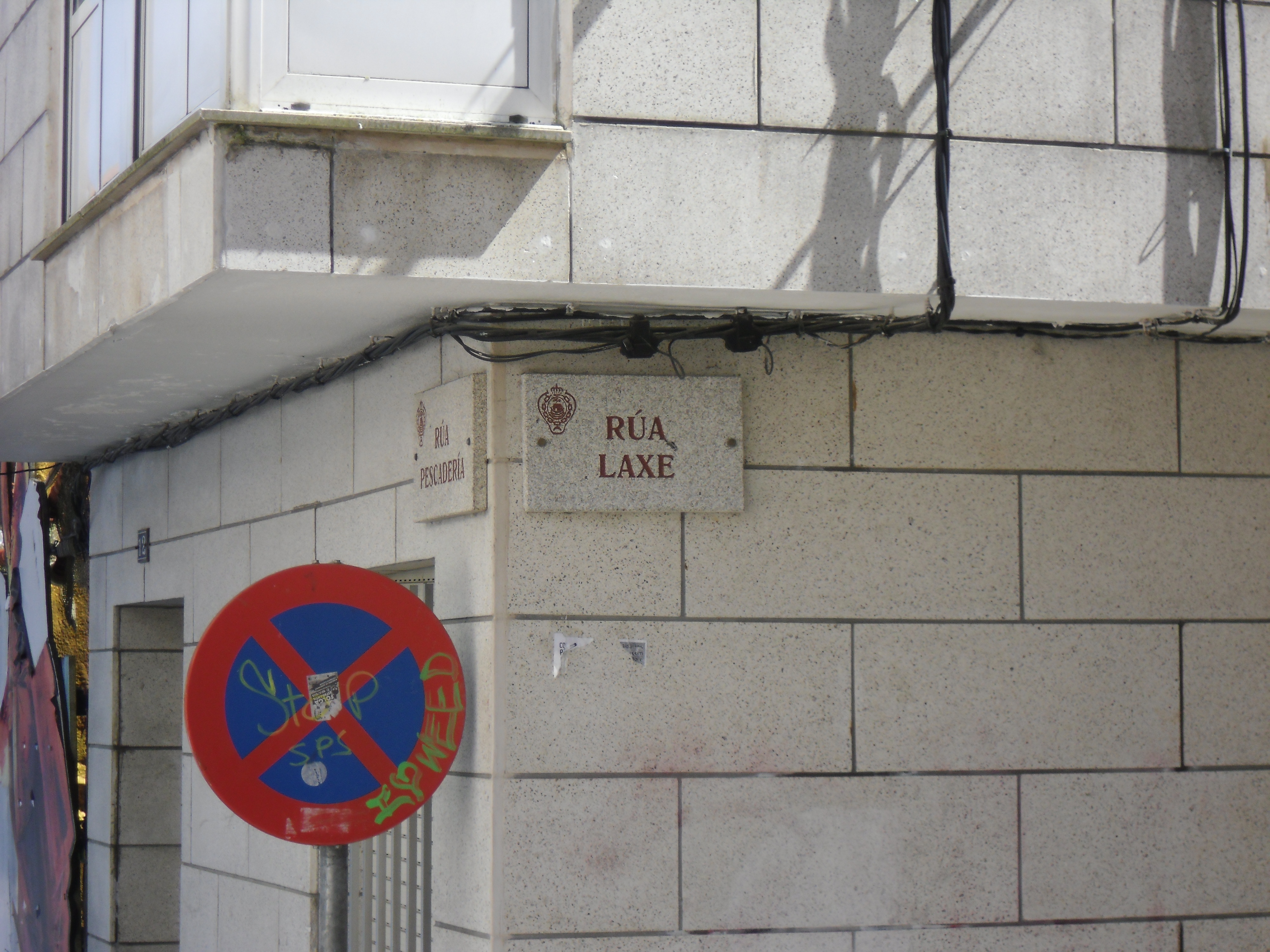
La Rúa de Lage (hoy Rúa de Laxe) en Noya resultó especialmente afectada por el cólera en 1854. Varios residentes de la zona perecieron durante la epidemia.

La Calle de Lage (hoy Rúa Laxe) en Noya resultó especialmente afectada por el cólera en 1854. Varios residentes de la zona perecieron durante la epidemia. Foto propiedad del autor. Prohibida su reproducción y/o distribución.

Todos recordaréis mi artículo (en inglés) sobre la epidemia de cólera que asoló España en 1854-1855. Como el resto del país, Galicia se vio afectada por la enfermedad que en cuestión de semanas acabaría con la vida de cientos de miles de personas. En la parroquia de San Vicente de Noal, en el Puerto del Son (provincia de La Coruña) fallecieron más de 120 personas en unas pocas semanas. Para leer la lista completa leed mi artículo sobre el Puerto del Son (en español).

En la vecina villa de Noya, de donde también procedían parte de mis antepasados, murieron bastantes menos vecinos, pero su número no deja de ser sorprendente y considerable. He aquí una lista de difuntos cuyo óbito se debió al cólera morbo en 1854-1855. Dicha información ha sido extraída del libro de difuntos de la parroquia de San Martín de Noya, actualmente custodiado por el Archivo Histórico Diocesano de Santiago de Compostela.

  1. Dominga Fernández, falleció el 23 de agosto de 1854 en la Calle de La Fanequeira. Recibió los sacramentos de penitencia y extremaunción.
  2. Pascua Agrafojo, hija de Domingo Agrafojo y de Dominga Conde, murió el 30 de agosto de cólera morbo asiático. Era natural de Noya, y tenía 60 años.
  3. Benita Patiño, soltera, de 66 años, murió el 1 de septiembre en la Calle de la Carnicería Vieja. Era hija de Jacobo Patiño, de Noya, y de Feliciana Insua, de Barro.
  4. María Sanmartín, viuda, murió el 6 de septiembre, habiendo testado el mismo día de su fallecimiento.
  5. Manuel Pardiñas, marido de Francisca Alvite, murió en la Calle de Lage el 6 de septiembre.
  6. Melchor Carril, natural de San Miguel de Broncos (¿) en Lugo, viudo, hijo de Ángel y Marta Carril, murió el 6 de septiembre en la Corredera de Afuera.
  7. Manuel Ageitos, casado, de profesión marinero, falleció a los 74 años de edad en la Calle de la Condesa el 8 de septiembre.
  8. Patricio Oviedo, marinero, casado con Rosa Abeijón, hijo de Ventura Oviedo y de Manuela Rodríguez, falleció en la Calle de Lage el 8 de septiembre de 1854.
  9. Manuel García de Agra, de 55 años, hijo de Ignacio Domingo García y de Juliana de Agra, falleció el 11 de septiembre de 1854, habiendo testado ante Carlos Mariano de Ben.
  10. Lorenzo Martínez, hijo de Hipólito Martínez y de Manuela Lado, falleció el 12 de septiembre en la Calle del Horno.
  11. Juana García, hija de Antonio García y de Ignacia Feijó, falleció el 13 de septiembre de 1854.
  12. Ignacio García, de 5 años y medio de edad, hijo de Jacoba García, soltera, falleció el 15 de septiembre en la Calle de Lage.
  13. Felicina Caamiña, soltera, de 66 años, vecina de la parroquia de Argalo, murió en el Hospital Provisional el 16 de septiembre.
  14. Rosa Fontán, casada, murió a los 50 años de edad en el Hospital Provisional el 16 de septiembre.
  15. Domingo Vázquez, soltero, de Chacín, murió en el Hospital Provisional el 17 de septiembre.
  16. Vicente Rodríguez, de 12 años de edad, hijo de Manuel Rodríguez y de María Gracia Ageitos, murió el 17 de septiembre en la Plaza.
  17. María Martínez, soltera, murió a los 38 años de edad el 17 de septiembre en el Hospital Provisional.
  18. Juana Agrelo, de 64 años de edad, falleció el 18 de septiembre en la Rúa de los Besteiros.
  19. Agustina Martínez, viuda, de 60 años, murió de 18 de septiembre en la Calle Cuncheiros.
  20. Francisco Carbajal, viudo, hijo de José Manuel Carbajal y de Rosa Doval, murió a los 74 años el 19 de septiembre.
  21. Basilia Nimo, viuda, murió el 21 de septiembre en el hospicio.
  22. Rosario Fernández, viuda, murió a los 72 años en la Corredera de Afuera el 21 de septiembre.
  23. Antonio Castro, de 56 años, hijo de Andrés Castro (de la parroquia de Argalo) y de Juana Abeijón (de la de Barro), murió en la Rúa de Lagares el 21 de septiembre.
  24. Dominga Vázquez, casada, murió a los 50 años en el hospital para coléricos el 22 de septiembre. Era oriunda de Santa María de Brañas.
  25. Manuela Fernández, mujer de Cipriano Raño (vid), murió el 22 de septiembre en el hospital para coléricos.
  26. Gaspara González murió en el hospital para coléricos el 22 de septiembre.
  27. Jerónimo Lamas Romero, agrimensor, hijo de Pedro Lamas y de Teresa Romero, murió en la Corredera de Afuera el 23 de septiembre a los 34 años de edad.
  28. Adelaida Bello, de 2 años de edad, murió en el cantón el 23 de septiembre, siendo sus padres Francisco Bello y Ramona Martínez.
  29. Bernarda Santamaría, vecina de Barro, casada, murió el 24 de septiembre en el hospicio.
  30. Cipriano Raño, viudo de Manuela Fernández (vid), murió en el hospital para coléricos el 24 de septiembre. Era de San Isidro de Postmarcos, y era hijo de Andrés Raño y de Isabel Insua.
  31. Francisca Triñames, hija de Antonio y de Juana Castro, murió el 24 de septiembre en la Rúa de Lagares.
  32. Jacobo Freire Abeleiro, hijo de Tomás y de Justa, casado con Cayetana Tubío, murió el 24 de septiembre.
  33. Ramona Ronquete Gudín, mujer de Bernardo Patiño, hija de Gabriel Ronquete y de Juana Gudín (vid) murió en la Corredera de Afuera a los 35 años el 25 de septiembre.
  34. María Piñeiro, viuda, murió en el hospital para coléricos el 25 de septiembre.
  35. Pedro Fernández, viudo, hijo de Felipe Fernández y de Juana Pérez, murió el 26 de septiembre.
  36. Juana Gudín, mujer de Gabriel Ronquete y madre de Ramona Ronquete Gudín (vid), murió el 26 de septiembre en la Plaza.
  37. Benita Oviedo, hija de Felipe Oviedo y de Teresa Martínez, murió a los 20 años el 26 de septiembre.
  38. Manuela Martínez, hija de Bernardo Martínez y de María Rosa Cisneros, murió en el hospital para coléricos el 30 de septiembre.
  39. Manuela Rodríguez, mujer de Tomás Malvido, murió en la Rúa Besteiros el 1 de octubre. Era hija de Andrés Rodríguez y de María Piñeiro.
  40. María Chouza, de 60 años, murió en el hospital para coléricos el 1 de octubre.
  41. Jacoba García, soltera, murió en la Calle del Horno el 2 de octubre.
  42. Salvador Blanco, hijo de Dolores Blanco (soltera), murió con 10 días de edad en la calle Lagares el 3 de octubre.
  43. Jacinta García Blanco, viuda, murió “a consecuencia de una diarrea crónica” el 4 de octubre; tenía 70 años y no recibió el viático por no permitirlo los vómitos.
  44. Teresa Sieira, hija de José Sieira y de Teresa Rudiño, murió en la Plaza el 4 de octubre.
  45. Manuela Moniño, párvula de 4 años, hija de Diego Moniño y de Manuela Rial, falleció el 6 de octubre.
  46. Cipriana Blanco, mujer de Manuel Lago, murió a los 39 años el 7 de octubre.
  47. Luisa Malvido Rodríguez, hija de Tomás Malvido y de Manuela Rodríguez, murió en la Calle Besteiros el 8 de octubre.
  48. Andrés Martínez, de 2 años, falleció el 10 de octubre. Era hijo de Francisco Martínez y de Joaquina Trillo.
  49. Josefa Caamaño, viuda, hija de Francisco Caamaño y de María Belo, murió el 14 de octubre.
  50. Enriqueta Doval, párvula de 6 años, hija de Domingo Doval y de Manuela Martínez, murió el 15 de octubre.
  51. Andrea Colmeiro, hija de Francisco Colmeiro y de Juana Parcero, y mujer de Juan Cabezudo, murió el 24 de octubre de cólera morbo encontrándose enferma de fiebre tifoidea.
  52. Domingo Doval, casado con Manuela Martínez, “que murió de cólera fulminante yendo de viaje a San Pedro de Outes en el día 8 de octubre.”
  53. Ramona Montes, soltera, huérfana de Benito Montes y de JacintaPiñeiro, murió en la Calle Cuncheiros el 8 de noviembre.
  54. Carmen Paz de Andrade, hija de Domingo Paz de Andrade y de Josefa Guntín, viuda de Juan de Amil y España, murió a los 80 años en la Puerta de la Villa el 13 de enero de 1855 debido a vómito, por lo que no pudo recibir el viático.
CIMG7667

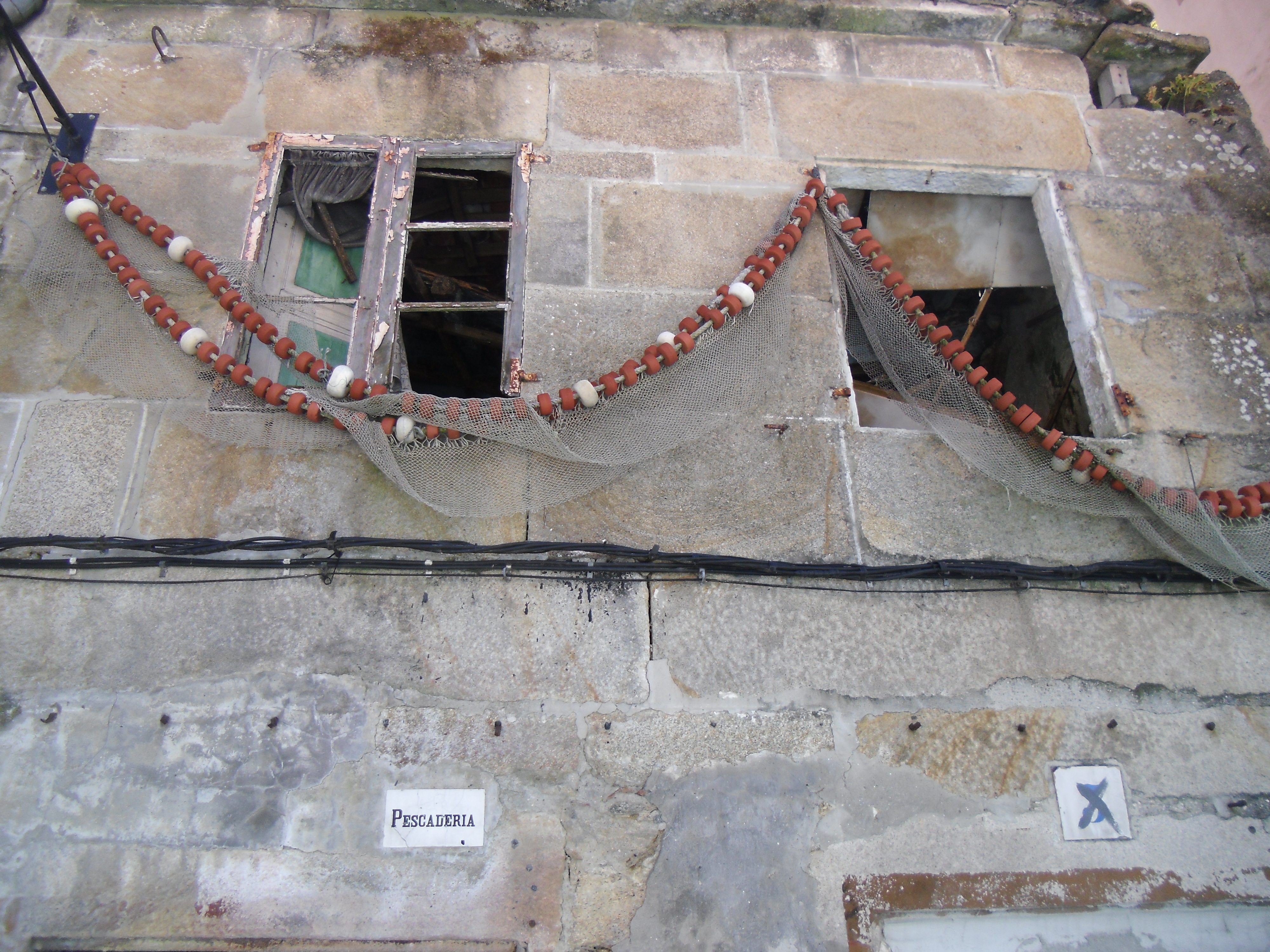
Imagen actual de la Calle de la Pescadería. La insalubridad, así como la falta de medios y de conocimientos, contribuyeron a que enfermedades como el cólera se propagasen rápidamente por zonas como Noya. Foto propiedad del autor. Prohibida su reproducción y/o distribución.

Posted in Genealogy | Leave a comment

Remembering the centennary of the Lusitania sinking

CIMG8446For my come back to blogging I thought I would share a short article on one of my favourite historical episodes of all: the sinking of the RMS Lusitania, which took place on 7 May 1915.

Exactly 100 years ago, the Cunard liner RMS Lusitania departed New York bound for Liverpool. The voyage took place almost a year after the outbreak of World War I, and just over three years after the sinking of the RMS Titanic in the North Atlantic. The Lusitania was not on her maiden voyage: she had been crossing the ocean for almost a decade, and was at one point the largest ship of the world, being surpassed by her sister ship, the Mauretania, and then by the Titanic itself.

The Lusitania was one of the fastest and most luxurious ships of her day. She crossed the Atlantic regularly, transporting both the destitute and the very wealthy between Europe and America. The demand for passenger tickets fell in the autumn and winter of 1914 and 1915, mainly due to the presence of German submarines in British waters. And yet, demand was sufficiently strong to keep the Lusitania in active service, commercial aeroplane travel being non-existent at the time.

CIMG8447On 1 May 1915, amid warnings from the Imperial German embassy in the United States, passengers and crew left New York bound for England. Over 100 Americans were on board. The United States were not yet involved in the war, though the (secret) presence of ammunition stored in the ship’s cargo would certainly seem to prove the USA’s support for the Allied cause.

The Lusitania sailed across the Atlantic without incident, though as it neared the southern coast of Ireland (then a part of the United Kingdom), Captain Turner decided to take special precautions and change the ship’s course in order to avoid being torpedoed by a German submarine. As luck would have it, an enemy U-Boat happened to be nearby, and towards lunchtime on 7 May 1915, targeted the Lusitania.

Despite the ship’s size, existence of water-tight compartments and other safety measures installed after the sinking of the Titanic in 1912, the Lusitania rapidly took on water, and quickly started to list. Many of those on board did not even have time to reach the boat decks and were drowned inside the ship’s enormous hull. Those who did make it to the surface were met by a second difficulty, when lifeboats on the lower side started dangling off the ship’s davits, plunging their occupants out into the water below. Those on the opposite side of the ship were crushed by the very same lifeboats that had been added to the deck for their own well-being.

CIMG8456The Lusitania sank in just a quarter of an hour. Those who did not go down with the ship had to swim for safety, if they knew how, or drowned in a matter of minutes. Rescue was at hand when dozens of small fishing boats from nearby villages, including the port of Queenstown (present-day Cobh), reached the site and started pulling survivors out of the water. Many bodies were recovered, but most were lost forever. In all, some 100 American citizens were killed in the incident, and prompted the United States to declare war on Germany in 1917.

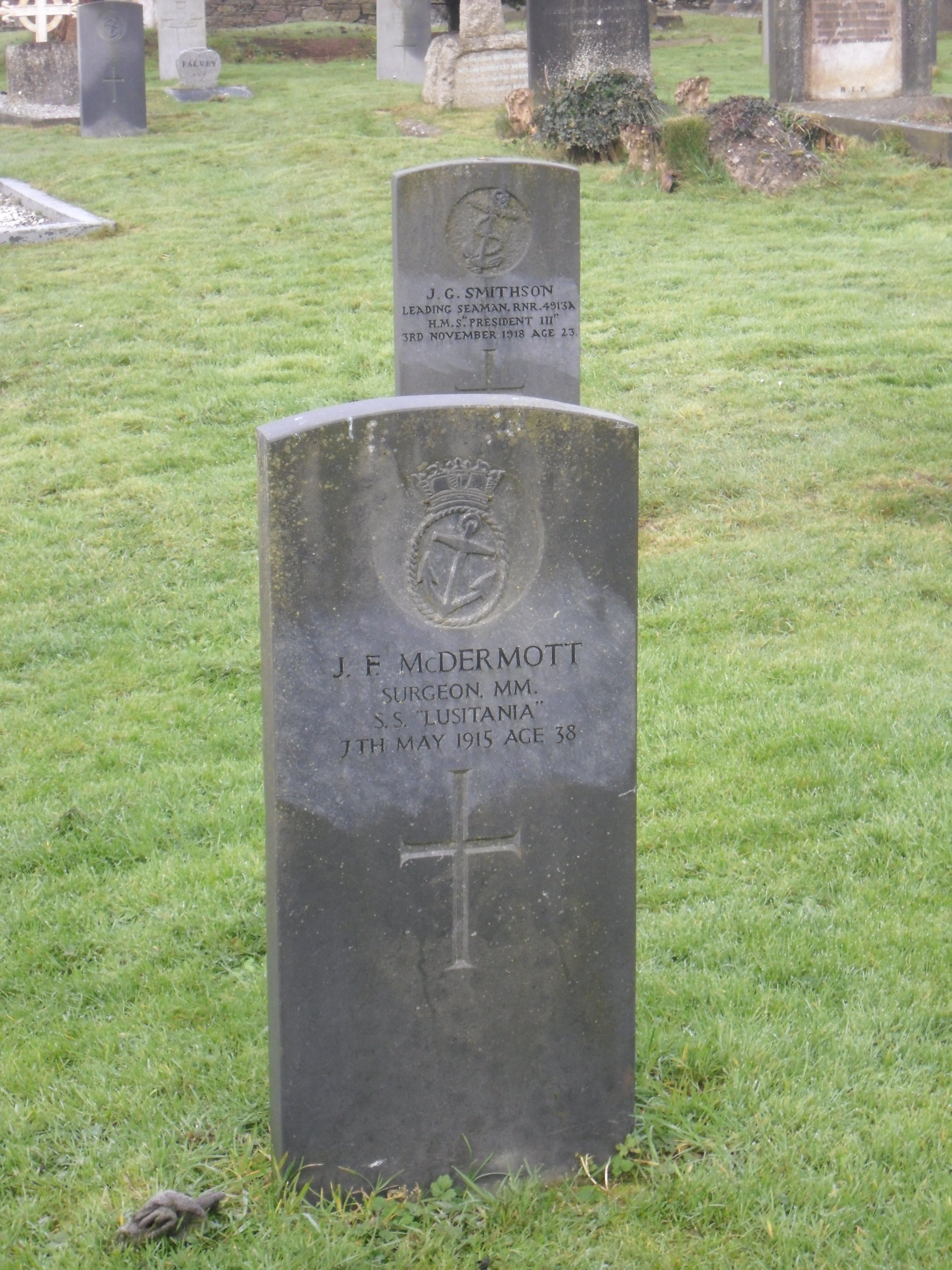
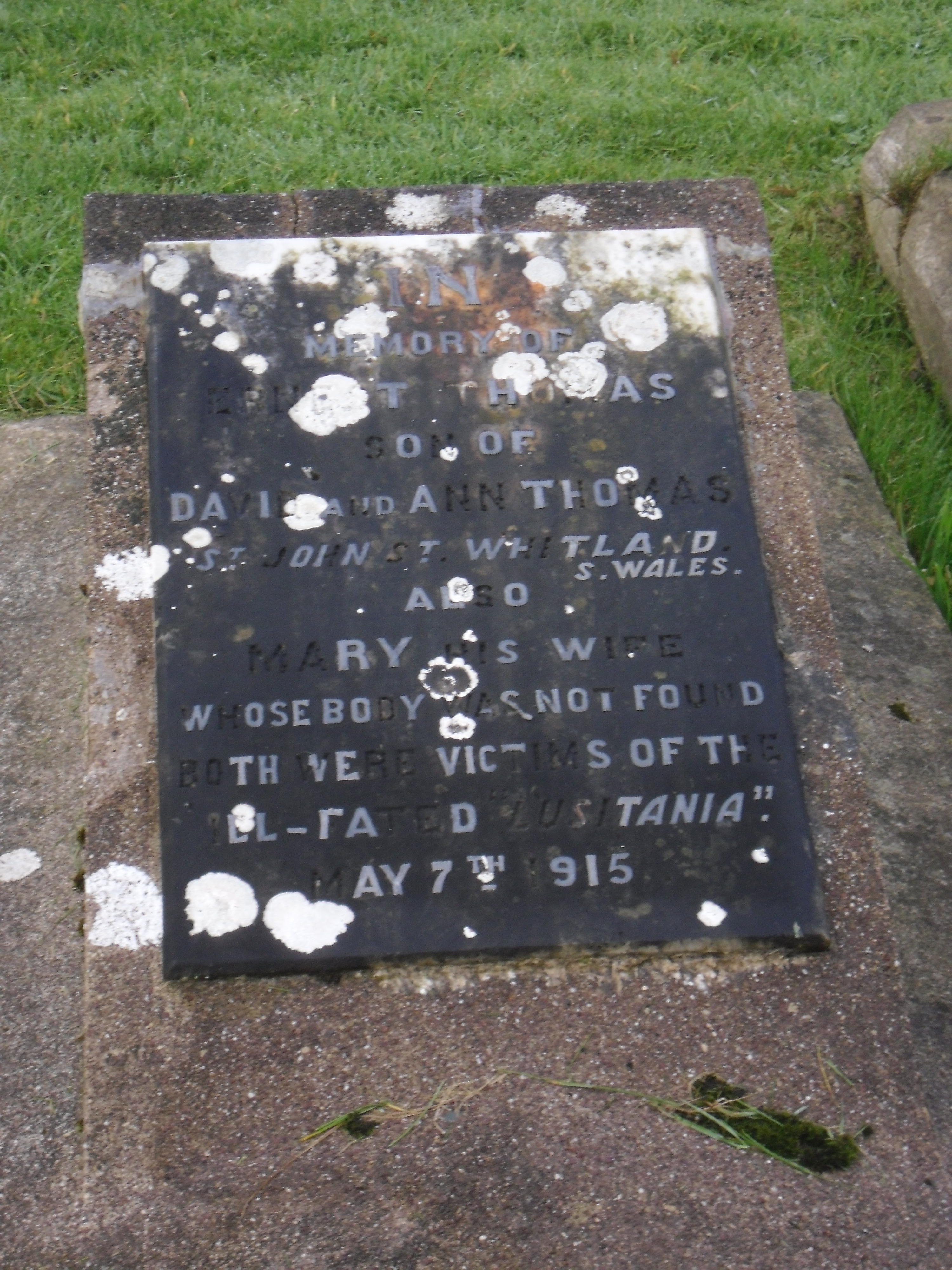
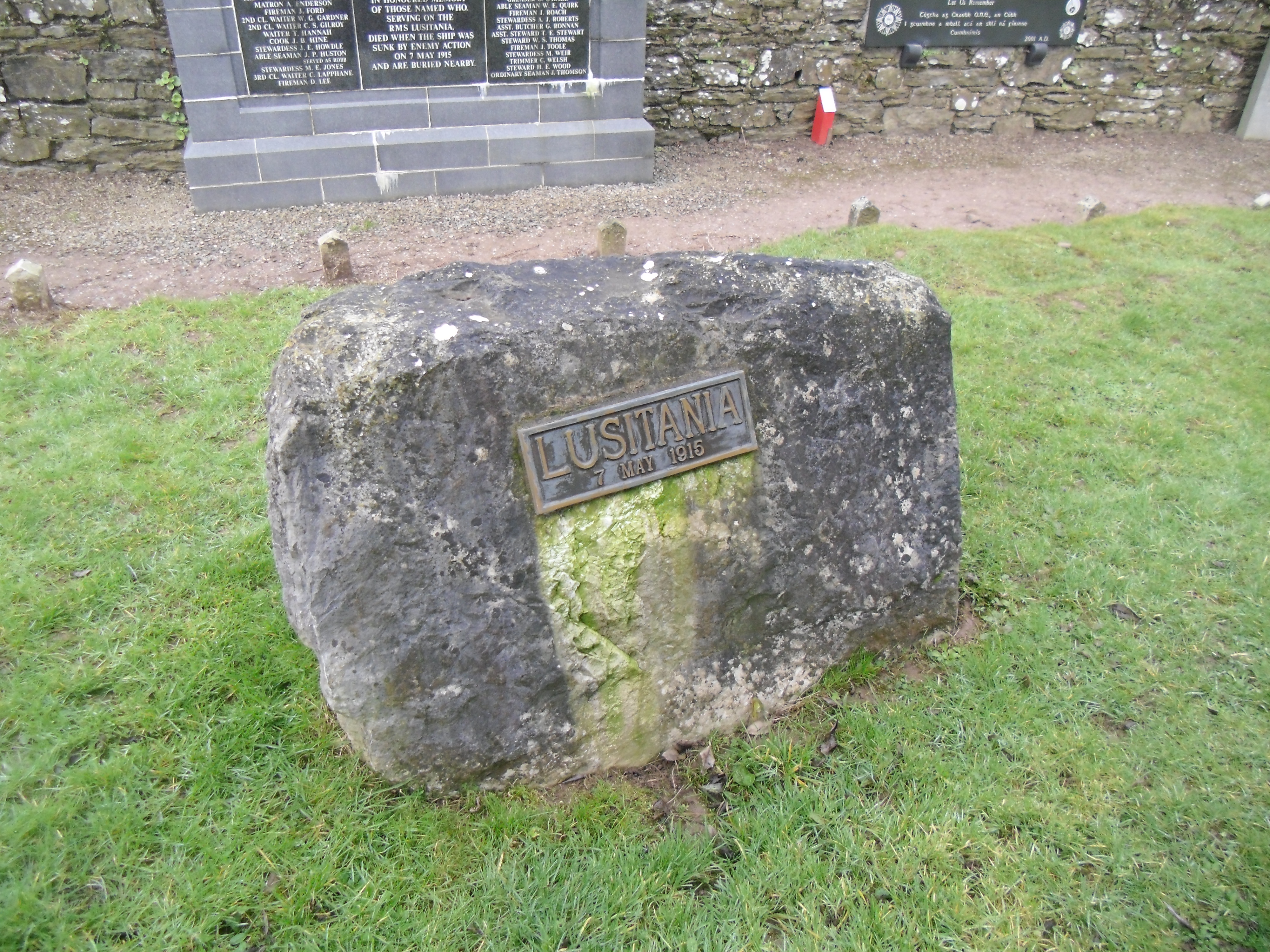
Today, most of those bodies that were recovered are buried in Cobh. I visited the area last February, and took pictures of the few marked graves that can be seen. Three mass graves containing 193 bodies can also be seen. The Wikipedia article on the Lusitania reads: “7 May 2015 marks the 100th anniversary of the sinking of Lusitania. To commemorate the occasion, Cunard’s MS Queen Victoria is undertaking a voyage in May 2015 to Cork, Ireland in commemoration of the loss of Lusitania.

Lest we forget.

800px-RMS_Lusitania_coming_into_port,_possibly_in_New_York,_1907-13-crop

Posted in Genealogy | Leave a comment

Eric Cartwright (1896-1916)

Eric Percival St George Cartwright was born in Leicestershire in the summer of 1896, the youngest son of Arthur Cartwright, who worked as School Inspector in the Worcester District. Eric’s mother, Ellen Mabel, was the daughter of Colonel Thomas Heywood, a Manchester magistrate who belonged to a wealthy family.

The Cartwrights moved to Colwall after Eric’s birth, and moved into a property known as The Knoll, where they lived when the 1911 census was taken. The family later moved to Rothbury, Hay. Young Eric was educated at Bilton Grange, Rugby and Charterhouse, where he joined the Officer Training Corps.

Soon after the First World War broke out in 1914, Eric was commissioned into the 4th Leinster Regiment, which was based in Cork. He was seconded to the Machine Gun Corps and went to the front in January 1915.

In August 1916 a fellow officer wrote of him: “He directed the fire of the gun in the most splendid manner in the attack on the night of the 12th and did great work. No-one in the particular part of the line worked harder that night through the attack and many a man had his wounds bandaged by Eric. He was hit by a sniper as it was beginning to get light and died instantaneously. He was buried the following and the ceremony was attended by the whole Company.”

Thus Eric Cartwright went to his death on 13th August 1916.

Sources:

http://www.cwgc.org/find-war-dead/casualty/293612/CARTWRIGHT,%20ERIC%20PERCIVAL%20St%20GEORGE

http://www.malvernremembers.co.uk/HPCartwright_EPStG.html

Posted in Genealogy | Leave a comment

Naughty Nancy (part 2)

Well, it seems I was wrong to judge her, and Naughty Nancy was not really as naughty as I thought. Well, at least partly. It is true that she married in January 1776, when she was a widow of almost 43 years of age; and it is true that she was pregnant at the time, which I imagine would have meant quite a scandal for the time, bearing in mind she lived in the same place she had been brought up. But since writing my latest post the day before yesterday I have learnt some very interesting facts about her which have completed the picture. And it’s not pretty.

Nancy Davis, as was, was born in the Gloucestershire village of Dymock. I had not realised that Dymock is located smack in the Forest of Dean, a beautiful slice of England where nature prevails over man’s might and power up to the present today. There is an interesting website called Forest of Dean Family History Trust, which includes some very useful sources. If your relatives came from the area, I bet you find some useful pieces of information. The website is free – although it requires registration- and is packed with data, much of which you won’t find on professional pages like Ancestry or FamilySearch.

Using the search engine of Parish Records I managed to trace Nancy’s death in 1806. It appears she died in her 70’s, not in Manchester as I had fantasized in my last blog post, but in good old Dymock, where she had been born, where she married and where she had most of her children.

You will remember that Nancy married John Jones in 1758, and that the couple had three children, of whom the middle child, Lancelot, died in 1771 aged only 8. What had become on the other two children remained a mystery until a fellow user on Rootschat pointed out that there were three interesting entries on the Forest of Dean website. One was for Nancy Jones, who died in 1769. As I know “my” Nancy remarried in 1776, this person can only be her daughter, who therefore died aged only 9.

Tragedy had already struck mother Nancy before, since in 1766 she had the misfortune to lose her husband John (July) and her youngest son James (August). This meant that by 1771 Nancy had lost her husband and all three children, all within 5 years! Somehow, the fact that she got pregnant and decided to marry and give it another go doesn’t seem to naughty of her now…

Whatever the facts, Nancy did remarry, to Henry Webster, in 1776. Their first son, Francis, was born a few months later, after which I found the couple in nearby Coddington. I had suspected that the family had taken refuge there due to Nancy’s “indiscretion”, but then again, the fact that she married the baby’s father before the child had been born means the boy was always going to be legitimate anyway. Maybe the trip to Coddington was nothing more than a family holiday…?

In any case, Nancy had a fifth child in 1778, but unfortunately the boy died soon thereafter. Nancy passed away in 1806, in her early 70’s, in Dymock, having survived most if not all of her family.

I have found nothing yet on husband Henry or son Francis Webster. Hmm… To be continued, I wonder?


Posted in Coddington, Death, Dymock, England, Forest of Dean, Genealogy, Gloucestershire, Herefordshire, Illegitimacy, Marriage, Women | Leave a comment

Naughty Nancy

For a few days I have been pining for a family tree mystery. It has been ages since I last found a real question mark in my ancestry, but this morning I fortunately seem to have stumbled across one. Trying to avoid jumping to conclusions and accepting any old result as God’s truth, simply because the facts fit nicely in our family tree, has proved to be most enjoyable! Beware, fellow genealogists, of assuming things all too readily. With records being sometimes very sparse in their content, it it easy to confuse your ancestors with similarly-named cousins or even parents – let alone people who are not even connected to your own family!

I found my latest question mark while profiting from the fact that one of my distant English ancestors had a fairly unusual name, and so I set off to search for the descendants of my seven-times great-grandmother, Comfort Allen (née Godsall). For some reason I have always been intrigued by this female ancestor of mine; maybe it’s because of her name; or maybe it’s because I know so much about her, comparatively speaking. She was born in 1654 – in other words, when England was ruled not by a king, but by Oliver Cromwell, who a year before my ancestor’s birth had set up the Protectorate.

Comfort probably married in her early 20’s, because by 1677 she already had a daughter. Comfort went on to have at least five other children, and died at the age of 75 in Colwall (Herefordshire) the place of her birth. Comfort’s eldest daughter, Ann Allen, married a chap called Richard Pitt, and the couple had a son, named after his father, and a daughter, who was named in honour of her grandmother, Comfort.

Comfort Pitt married in the city of Hereford in 1730, when she was 31 years old – a considerable age bearing in mind it was more common for women to marry in their 20’s rather than their 30’s. But anyway, good for her that she found someone to marry. The couple had five daughters (this is turning into a very feminine story, isn’t it?) called Dinah, Nancy, Comfort, Sarah and Lucy. Not a bad choice of names, I think.

All of these girls were born in the village of Dymock, in the neighbouring county of Gloucester, but very close to the Herefordshire border. In fact, Dymock is located just four miles south of Ledbury, so it seems reasonable to suppose that the family kept close ties with their relatives on both sides of the frontier, and probably travelled back and forth very often.

Nancy, the second-born of the five Davis sisters, was of course named after her own maternal grandmother Anne (the name Nancy became a proper name in the 18th century, but originally it was a familiar version of the more standard Anne). What I knew until now was that in 1758 Nancy married a tediously-named man called John Jones.

The couple were blessed by the birth of three children within five years: Nancy (1760), Lancelot (1763) and James (1765). I have not yet managed to find anything on Nancy Jr. nor James, but the fabulously named Lancelot Jones sadly passed away in infancy in 1771, when he was just eight years old. For his mother, the loss of her middle child must have been a cruel blow. To add insult to injury in her personal tragedy, at some point during the next few years, Nancy’s husband John Jones died.

Nothing more is known of Nancy for a few years, until in late December 1775 she chose to remarry. The marriage was announced, by banns, in the village where she lived, Dymock. Her husband-to-be was a bachelor called Henry Webster, whose origins remain as yet unknown to me, although the banns declared he was of the same parish. Whatever his origins may have been, Henry Webster and Nancy Jones were married on 8 January 1776. Nancy was 42 years old at the time.

My biggest surprise came later, when I searched through the baptism records to find out whether Nancy had had any children from her second marriage, despite the fact that she was in her 40’s. I found just one record in Gloucestershire that fitted the bill. It was a son, Francis Webster, who was baptised in Dymock on 5 July 1776 (only a day after the United States declared their independence from the United Kingdom).

But what struck me most from the birth date is not its historical significance, but the short distance in time in relation to the date of marriage of the boy’s parents. It took me a split second to realise that Nancy was at least two or three months pregnant when she married Henry Webster! A picture of a roguish second husband is starting to emerge in my mind, but that’s probably me just trying to add melodrama to my family’s story.

After the birth of her son, the trail goes cold. Did Nancy stay in Dymock? If so, why can’t I find anything on her, her husband or her son? Could her pregnancy have had something to do with her mysterious disappearance? The fact that Nancy had been born in Dymock more than four decades earlier suggests she was well known in the small c,ommunity and a second marriage -let alone being pregnant by her future husband- may not have been looked upon with approval by her neighbours.

Finding no clues in Gloucestershire, I try my luck in neighbouring Herefordshire, where Nancy’s ancestors had once lived. And what luck! In the summer of 1778, in the village of Coddington, Nancy gave birth to a second son, called Henry in honour of her husband. Nancy would have been 45 at the time. Not bad, Nancy! Sadly, the boy only lived for a few days. Once again, however, Nancy and Henry Webster seems to vanish into thin air.

The loss of two children by the age of 45, and the possible social stigmatisation in Dymock, may have prompted Nancy to move farther away from the area (Coddington is only nine miles away from Dymock, and such a small distance surely would not have prevented gossip and slander from propagating themselves in the neighbouring villages. OK, perhaps I’m being melodramatic once again…)

My efforts to find a trace of Nancy in Herefordshire have proved unsuccessful. One possible clue may lie in far away Manchester, more than 120 miles north from Coddington. It was there, in the parish of Saint Michael’s, that a Nancy Webster, wife of Henry Webster, was buried on 10 July 1799. Could she be “my” Nancy? The fact that she died almost 21 years to the day after the death of Henry Webster Jr. is tantalisingly enigmatic, but what a cruel twist of fate if it is her!

My search for now will concentrate on Nancy’s other offspring and her second husband Henry. Let’s see if they can offer any more clues about this side of the family. I simply want to put naughty Nancy to rest once and for all.

Posted in Birth, Coddington, Colwall, Death, Dymock, Emigration, Engagement, England, Genealogy, Gloucestershire, Herefordshire, Lancashire, Manchester, Marriage, Women | Leave a comment