Reviving dead lines and the Titanic

Have you ever come across a line in your family which you thought had become extinct? Have you ever assumed a distant relative passed away without having had children? Ever felt like that person attached to a solitary name hanging on your family tree never made it to adulthood? And have you ever been proven wrong?

If you have, then you might understand my sheer joy when yesterday I spent most of my evening going mad on Ancestry, FamilySearch and other webpages trying to fathom out something which I felt was slightly amiss on my Davis side. You’ll remember of course the case of the elusive Mr. Davis, my great-great-great-grandfather John whose second marriage produced the girl who one day became the grandmother of my grandmother. Still on track? OK.

I have always felt something was missing on this side. John’s daughter Jane, begotten through John’s second marriage to Maria Parker, was an only child. But of course, if there was a second marriage, there must have been a first one. Sadly, John’s first wife is recorded in one single census return, and on top of that, it’s the one taken in 1841.
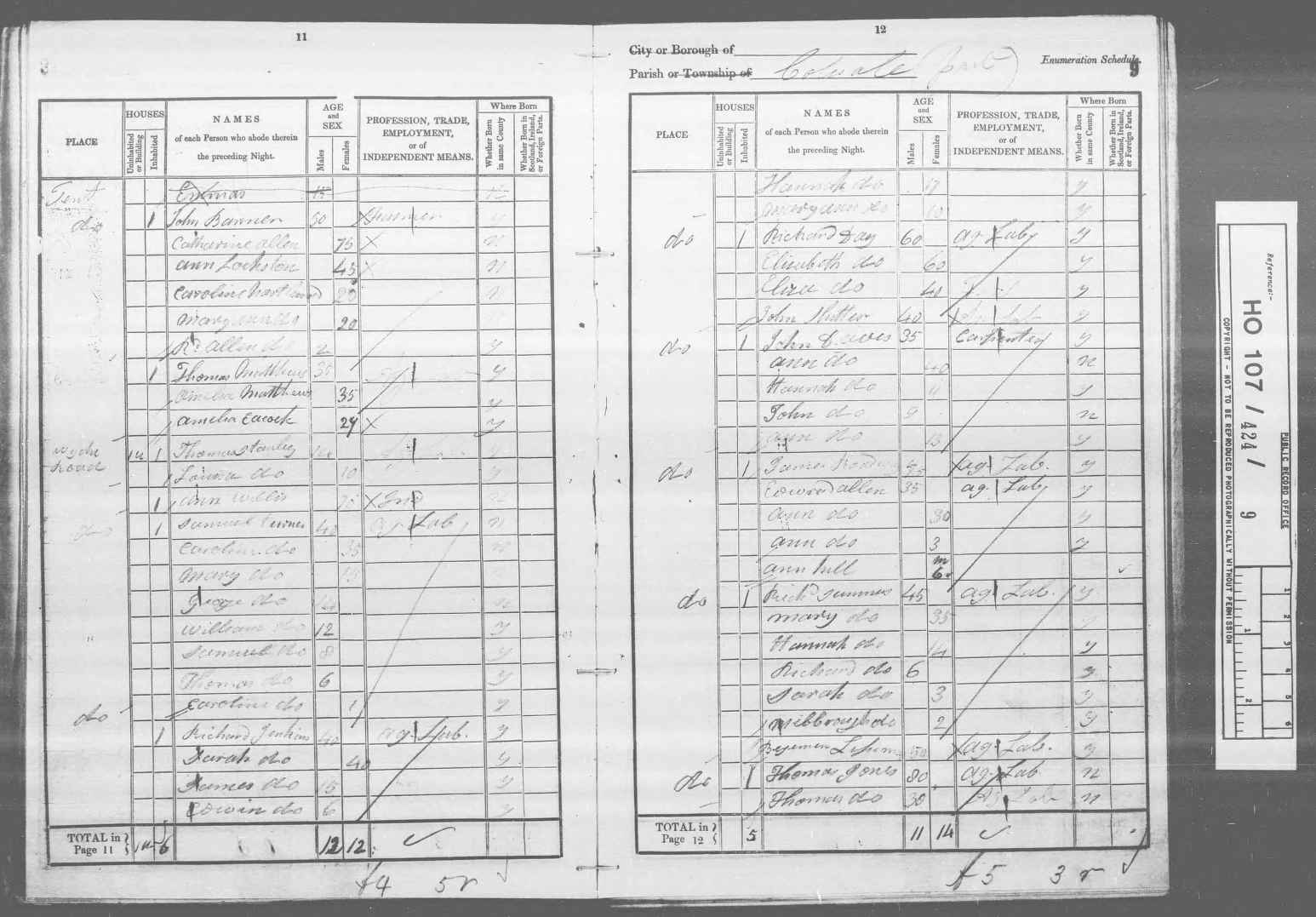
The page of the 1841 census which shows John Davis, his first wife and their three children.

What does the census tell us about John’s first family? Well, not much, but enough to start searching. In 1841 John and his wife (Ann) were already living in Colwall (Herefordshire), where John originally came from. His wife, however, is recorded as not being born in the county. So is their 9 year-old son, also called John. Daughters Ann (13) and Hannah (11) are both listed as being natives of Herefordshire. A look at the baptisms for Colwall, which fortunately can be found online, made it clear that Ann was indeed baptised on 24th February 1828 and her younger sister followed suit on 14th February 1830. Naturally, there is no trace of John Jr., who must have been born around 1832 in a different county.

The church records also mention the funerals which took place in Colwall until 1863, and it doesn’t take long for me to find John’s wife’s death recorded in 1843 when she was just  48, so slightly older than her husband. In 1845 John remarried in Worcestershire and by 1851 he is recorded back in Colwall with his new wife Maria and their infant daughter Jane. But no trace of the other children.

A new search proves that Hannah in fact died aged 22 in 1852 and was buried in Colwall. But still no trace of John Jr. (in fact I have found nothing more on him after 1841) or sister Ann. Hopefully, they might be elsewhere and thus were not recorded living in Colwall in 1851. But what a stroke of luck to see that Hannah was alive in 1851, one year before she died.  as she died single, I have no doubt that when the census was taken her surname was still Davis.
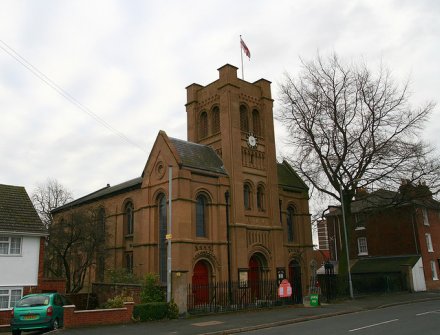
Worcester's St Clement church, the parish where the Allsup children where baptised.

No trace of Hannah Davis in Herefordshire in 1851; but as I know she was born in Herefordshire, I carry out a new search, this time including the county where she was born but not where she was living. Results pop up and bingo, Hannah Davis, born in what seems to be Colwalm (an excusable mistake) and living in Saint Clement, Worcester. Hannah is listed as a sister, but the head of the house is James Allsup (or Allsop), who was born in Worcester and whose wife is none other than Ann born in Colwalm (sic) as well! There they are! My two distant aunties, Ann and Hannah. Hannah obviously lived there for a short time, then went back to Colwall and died there a year later. But Ann lived on, as subsequent census returns show me. she is recorded in all the censuses until at least 1901, and seems to be the matriarch of a small brood of two, Alfred and Edith Ann Allsop.

A new search on the public family trees on Ancestry reveals son Alfred married Ellen Greenhill on Christmas Day 1874 and became the father of at least eight children, born either in Worcester or Manchester. I google their name just to see if I can find anything else on them, and find a reference to a Alfred Samuel Allsop, born in 1877 in Manchester who became an electrical engineer and (wait for it) died on the Titanic disaster. My head starts spinning. Could he be one of my Alfred’s Manchester-born sons? Name and place match fairly well! Ancestry reveals the truth, once more.
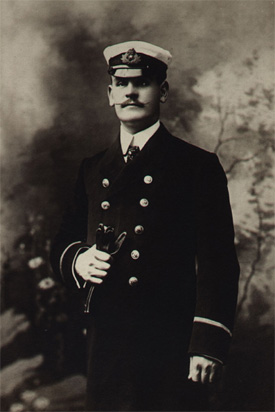
Alfred S. Allsop, who went down with the Titanic in 1912.

It appears that Alfred Samuel Allsop was the son of George and Elizabeth, not my Alfred and wife Ellen. Further research proves that the Alfred that did perish in the Titanic sinking does appear on someone else’s tree, but it seems they have not entered his personal details like his marriage, his son or his watery end. So I think what I’ll do is contact the owner of the tree on Ancestry and let them know of their “famous” relative.

Ann and Hannah may not have gone down with the Titanic, but they have certainly helped me to solve a family mystery which has haunted me for quite some time. And surely, that is a great finding too.
Posted in 1841 Census, 1851 Census, Birth, Colwall, Death, England, Famous Genealogy, Genealogy, Herefordshire, Marriage, Worcestershire | Leave a comment

A brick-wall called Ann Williams

Stumbling upon a brick-wall when you’re researching your family tree is very common. It can prove a difficult mystery to solve, but these situations are after all what make genealogy fascinating – how boring it would be if it was all plain sailing, tracing endless and meaningless names of ancestors which in themselves tell us nothing of who they really were or what they achieved in their own lifetime.

I am happy to say that I have a few brick-walls in my family tree, none of which are presumably impossible to prove. It will probably just take a lot of patience and time to get through them. At the moment, my great-great-great-grandmother is my major cul-de-sac.

Ann Allen (born Ann Williams) was my great-grandfather’s paternal grandmother. As far as I know, no surviving photographs of her exist, but as she died in 1867 this can hardly be surprising, especially since I have found no indication that her family was particularly wealthy, and thus may not have been able to afford to go to a photographer’s studio at a time when photography was still in its early stages.

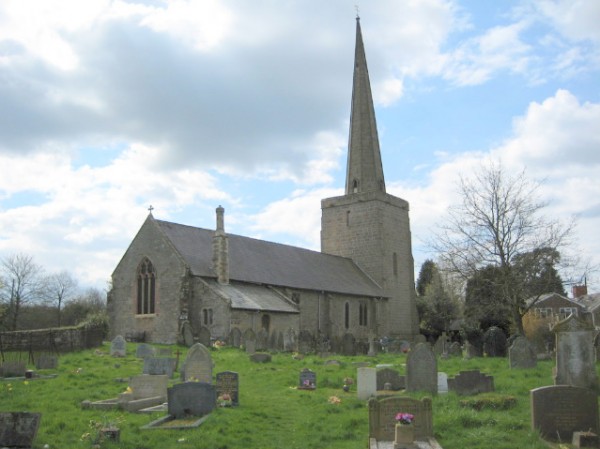
The church of Saint Peter, Withington, where Ann married my ancestor Edward Allen almost two centuries ago.

Ann’s marriage to my ancestor Edward Allen took place in the village of Withington (Herefordshire), only a year after civil registration became compulsory in England. The wedding certificate sheds a bit of light on Ann’s early life, but otherwise her origins are a complete mystery. The same document states that Ann was a widow by the time she married Edward in 1838, and that her previous married name was Lewis. The certificate also reveals her father was a certain Thomas Williams, which is a very common name, a genealogist’s nightmare.

Since Ann died in 1867, she only had time to be registered in the 1841, 1851 and 1861 censuses. In 1841 she was recorded living in her husband’s hometown of Colwall (on the border between Herefordshire and Worcestershire) with husband Edward and their infant daughter, also called Ann, plus a foster daughter aged only six months who was still living under the Allens’ roof ten years later. As the 1841 census does not record the specific place of birth of every individual, but does state if a person was born in the county where the census was taken, it is impossible to know if Ann was actually born in Colwall or elsewhere; she was, however, born in the county of Hereford.

The subsequent censuses for 1851 and 1861 both state she was born in Colwall, but so far I have found no traces of the birth either on Ancestry, FreeREG, FamilySearch or even the parish records for Colwall, which are available online. The absence of a Williams family living in the village at the correct time makes me suspect that Ann was not actually born there. I suspected as much when I saw that she actually married in Withington, a place which as far as I know bears no other connections to the family. Was Ann from Withington then, or did she perhaps move there following her first marriage to the elusive Mr. Lewis? If so, there ought to be a death or a funeral record for this Mr. Lewis before 1838, but as we are talking about pre-civil registration times, the whole thing just gets worse and worse.

Ann’s birth must have taken circa 1809, according to the census entries of 1851 and 1861, which tallies with her death record in 1867. As there are no children from her first marriage mentioned living with her second husband’s family I presume that her first marriage was either childless or else the children born during Ann’s marriage to Mr. Lewis died in infancy. Her second marriage produced four children, three of whom lived to adulthood.

So, as you can see, Ann’s origins and earlier years are almost totally shrouded with mystery. On the one hand, there is no positive indication about her parentage (other than what her marriage certificate says about her father’s name), nor of where and when she was actually born or who her mother was, let alone what her first marriage was like (apart from short-lived) and what happened to her first husband. Yes, I’m afraid Ann is going to linger on my tree for quite some time surrounded by a lot of question marks. Ann is definitely my favourite brick-wall on my tree at the moment.

Do you have any suggestions as to how to find more about her?

Posted in Birth, Colwall, Death, England, Genealogy, Herefordshire, Marriage | 2 Comments

Adolf Hitler’s family tree

Many traits of Hitler's evil personality can be traced, for example, to his father's treatment of him.

It is often stated that Adolf Hitler, the man responsible for the death of over 6 million Jews and countless other innocents in the Second World War, had Jewish blood flowing through his veins. The story, is in fact, false, but it would have been very ironic if it were true.

Hitler, like you and me, was once a child born into a family with certain characteristics. The man who would eventually lead the world into a cruelly long and bloody war was born in 1889 in the small Alpine town of Branau-am-Inn, on the Austrian side of the Austro-German border. His father, Alois Hitler, was a rough and ill-tempered man who had joined the civil service and worked as a customs official in several Austrian towns and villages throughout his life. Given to drink, Alois was also fond of female company, and in fact married three times. His first wife, Anna Glasl-Hörer, was much older than he and well past child-bearing age by the time they married.  In the early 1880’s Alois began an affair with one of his household servants, Fanny Matzelsberger, then aged 19. In 1882 she gave birth to their illegitimate son (Alois was still married to the elderly Anna, who died in April of the following year). Alois and Fanny soon married and thus legitimised their son Alois Jr.; their daughter Angela was born in 1883.

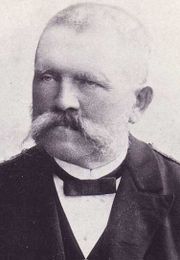
Alois Hitler, Adolf's father.

Fanny died of a pulmonary ailment in 1884, aged 24. By then, Alois had already began an affair with Klara Pölzl, the young daughter of his first cousin (there is some reason to believe that Klara and Alois were actually uncle and niece given the fact that the identity of Alois’s father is still disputed). The couple married and had six children, of whom only two, Adolf and Paula, reached adulthood.

While Alois is generally regarded as a vicious and cold father, his wife Klara was a caring and devout mother to her children. Alois died of a sudden stroke after a visit to the local tavern in 1903. Understandably, when Klara died of breast cancer in 1907 her son Adolf was distraught.

Klara Pölzl, Hitler's mother, who was his father's distant niece.

Hitler’s paternal grandmother, Maria Schicklgruber, came from the village of Strones, a hilly area in the Austrian mountains. She was one of 11 children. When she was 42 (and single) she gave birth to her only son, Alois, who presumably was the son of Johan Georg Hitler, the man Maria eventually married and who legitimised Alois as his own son. However, it has been considered that Maria’s child was actually fathered by her future husband’s brother, Johan Nepomuk Hitler, the grandfather of Hitler’s mother Klara. The theory that Maria became pregnant by a Jewish man from Linz called Leopold Frankenberger is generally regarded as apocryphal, as there was no family called Frankenberger (or anything similar) in Linz at the time Maria worked there as a maid.

Hitler never met his paternal grandmother, but without a doubt he would have met aunts and uncles and cousins throughout his lonely childhood. A branch of his family, the Veits, were Hitler’s second cousins. There was a trait of schizophrenia in that side of the family tree, but even their close kinship to the Führer did not save their lives. At least one of them, Aloisia Veit, was killed in the war as part of the so-called “Euthanasia program”, which effectively sought to wipe out those who were considered “unworthy of life”.

William Patrick Hitler, who eventually took up arms against his half-uncle.

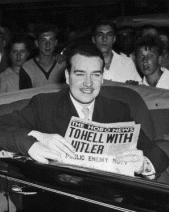
Hitler’s immediate family was also problematic. He forbade his sister Paula to marry the man she loved; as a consequence, the gilted boyfriend was sent to the Russian front, never to be seen again. Hitler’s half-brother Alois Jr. eloped to Britain before WWI and had a son by an Irishwoman called Bridget Dowling. Their son, William Patrick Hitler, would later take arms against his evil uncle, not without making a huge effort to get a good job through Hitler’s influences in pre-war Nazi Germany. His children are among the dictator’s closest living relatives. They live in the USA and have chosen lead an anonymous existence.

After Alois Jr. left his wife and child, he returned to Germany, where he bigamously married a German woman by whom he had a son. This son did live up to his uncle’s expectations, but was tragically killed in action in the 1940’s on the Eastern front.

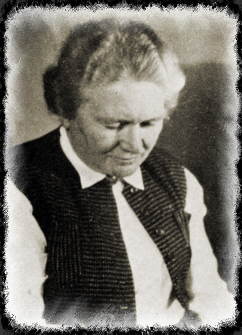
Paula, Hitler's unmarried younger sister. Their relationship was not a fluent one, and Adolf thought she was "stupid".

Hitler’s half-sister Angela was the closest of all of his siblings. Her marriage to Leo Raubal produced three children, the youngest of whom, Geli, became Hitler’s lover. Their tempestuous and incestuous relationship ended with her suicide in Munich in 1931, two years before Hitler came to power.

Hitler had no children (his marriage lasted less than 48 hours, and there are no records of him having any children by any of his lovers), and thus his surname died out with the death of his younger sister Paula in 1960. However, there are still many in Austria who bear the surname Hüttler and Hiedler, well aware that somewhere in their family tree cousin Adolf lingers, to the family’s great shame and understandable sadness.

For more information about Hitler’s family tree, you can watch this excellent documentary on the matter.

Posted in Birth, Death, Famous Genealogy, Genealogy, Germany, Killed In Action | 9 Comments

Titanic victim’s niece survives Concordia disaster

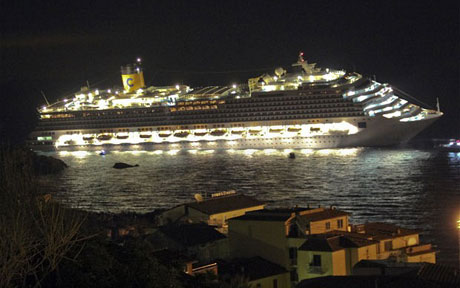
The Concordia, shortly after starting to sink.

Like many of you out there, I am utterly stunned by the amazingly horrific images of the recent Costa Concordia disaster off the Island of Giglio, on the western coast of Italy. The footage showing the ship gradually listing to its side, with people hysterically holding on as they are clumsily lowered to the sea in their lifeboats, as passengers and crew scramble for a life jacket, and a huge gash in the ship’s side finally unveils an enormous rock still piercing what remains of the ship’s hull above the waterline, is simply gripping. For many reasons, the press has understandably reminded us that this year commemorates the sinking of the RMS Titanic, the worst maritime disaster of its day.

I confess I haven’t come across any relatives, even remotely related to me, who perished in the sinking of the White Star liner. The Titanic was making its first crossing ever, covering the line from Southampton to New York (via Cherbourg and Queenstown, now called Cobh), and was carrying over 2,200 souls onboard when it grazed past an iceberg in the North Atlantic and sunk in just over two hours. I can’t say it’s actually sad not have had relatives on the Titanic, but it would certainly make a good story to include in the family history. But as my grandfather actually crossed the Atlantic on the Queen Mary, and as there is no shortage of relatives who went down with their respective ships (in wartime I have to say) in my family, we’ll let it rest.

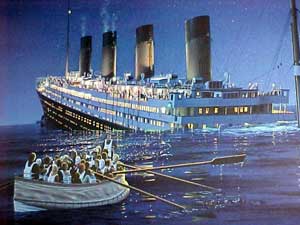
Artist's conception of the Titanic sinking; no photograph of the actual sinking exists.

Someone who did have a relative on the Titanic was Valentina Capuano, a 30 year-old Italian who was travelling on the Costa Concordia last week when the ship ran into some rocks after apparently getting too close to the shore. Capuano, like most of the 4,000-odd passengers on the ship, managed to get off the sinking vessel and survived. Her great-uncle, Giovanni, was not so lucky. Giovanni (I haven’t managed to find his full name) had been hired by the White Star Line as a steward; his plan was to finish the trip and remain in America, where he would start afresh. Sadly, he never made it there. He was among the 1,500 passengers and crew who either drowned or froze to death on the terrible night of 14/15th April 1912. His great-niece has told the Italian press how often her grandmother would recollect her own brother’s sad loss on the Titanic so many years ago. Now Capuano herself has managed to survive another maritime disaster, but fortunately has survived to tell not only her own story, but also to remember Giovanni’s.

Of course, there are similarities between both disasters: there was a large amount of neglect on behalf of both the ships’ Captains (Captain Smith and Captain Schettino, respectively) which greatly contributed to the sinking of both ships; the vessels were not only quoted as being beautiful and comfortably equipped, but they rated among the best and biggest ships of their day. Safety regulations apparently made them seemingly unsinkable, or at least very tough if things happened to go wrong (although no cruise line would dare saying so now), but once again we are cruelly reminded that we still have a lot to learn from ourselves.

The Concordia after listing to its side off the Island of Giglio.

But despite the press’s eagerness to link the Titanic and Costa Concordia disasters, I think that there too many differences between the two catastrophes to make such comparisons even remotely justified, even with the Capuano story. Although the loss of life on the Titanic was many times greater than on the Concordia, the evacuation in 1912 certainly seemed a lot more civilised and humane than in 2012. “Women and children first” was a rule almost religiously observed a century ago. Then what happened on the Concordia last week? The Titanic’s crew may not have known much about safety measures at the time, but by Jove they behaved a lot better and certainly more honourably than many members of crew on the Concordia, particularly the officers. And what about the Captain’s behaviour? Captain E.J. Smith went down bravely with his ship; had he survived he certainly would have had to face the judicial enquiry into the sinking. Even more importantly, had he made a run for it, his professional career would have suffered, despite the fact that he was planning to retire shortly afterwards. Schettino behaved in exactly the opposite way as Smith. Not only did he abandon his post and obligation to evacuate the ship, but he actually left the ship itself about an hour after the Concordia rammed into the rocky seabed at Giglio, leaving hundreds if not thousands of people onboard to fend for themselves. (Obviously, Schettino thinks it is better to be a living dog than a dead lion, as they quote in one of my favourite films.) So far almost a dozen casualties have been accounted for, and over 20 people are still missing somewhere inside the ship’s hull, with slim possibilities of being found alive.

But going back to genealogy, do you have any people on your family tree who were in any way involved in a maritime disaster? Did they survive? What was their story? Tell us about it!

Posted in Death, England, Genealogy, Italy, Ships, United States | 2 Comments

John Tippins, the fate of a family passion

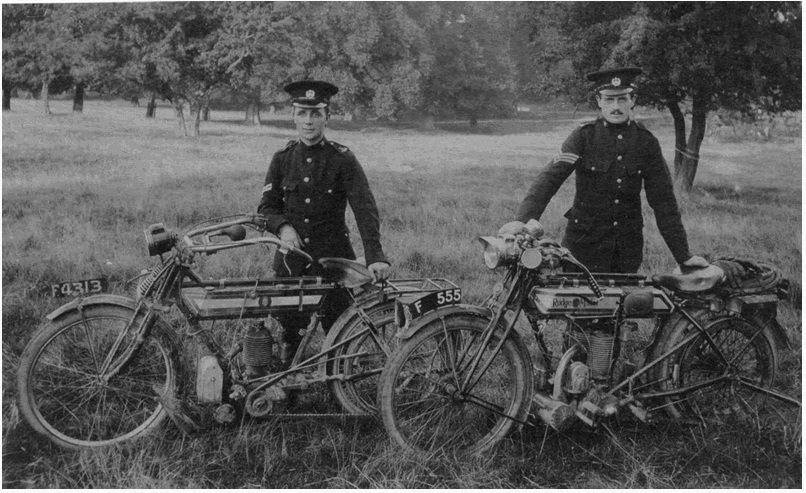
Sergeant John Tippins (right) with his Rudge Multi Motorcycle.

Guns and bullets seem to have been central in the life of my distant relative, John Tippins, an expert rifleman who won many medals during his all too short life. Ironically, it was also a bullet – an enemy bullet fired by a German soldier in the first World War, to be precise- which put an end to his existence.

John Tippins was born in Windsford, Somerset, on 20th March 1887, the second and last child of Luke Ricketts Tippins (who was my second cousin four times removed) and his wife, Rose Anne (née Ellingham). John’s only sister, also called Rose, was three years older than him, and became a qualified teacher with certificates in science and art who went on to become headmistress of several schools in Essex.

But John’s life was shaped not by education, but by guns, a passion he inherited from his father. Luke Tippins had been involved with firearms for a long time. He had even been involved in a shooting in the early 1880’s when his wife’s former fiancé, Albert E. Sanders, shot at Luke and Rose shortly after their marriage in Westerham, Kent. Sanders was arrested two weeks later, with signs of the shooting still blatantly evident on his body. He was sentenced to 10 years in prison.

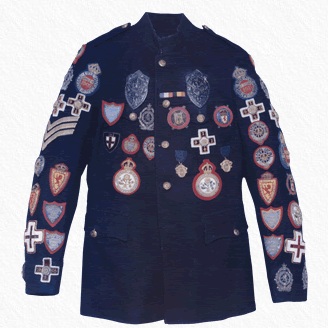
John Tippins's army jacket showing his insignia and badges.

Luke was a schoolmaster in Mistley, in north-east Essex, but despite his sentimental mishap between he and Sanders shortly after his marriage to Rose, he professed a true love for firearms. He became a founding member of the Colchester Rifle Club, an organisation which his son would join soon after. John was an excellent shot, and went on to win the 1911 Service Rifle Championship. A year later, he was voted by his peers as one of the best 10 marksmen in the whole world! Like himself, another great contemporary rifleman, Captain Ommundsen, would perish in the Great War.

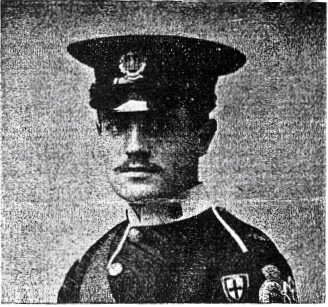
John Tippins, probably shortly before his death.

John started shooting at the age of 16, undoubtedly instructed and guided by his father. Thereafter, his shooting career went up like a rocket. He won so many medals and badges that by the end of his life his Regiment TF army jacket was almost completely covered by them.

Sadly, John’s shooting skills and expertise rendered him no more immortal than the rest of his comrades. He was killed shortly after the outbreak of the First World War, on 26th November 1914. Reports claim that his heart was pierced by an enemy bullet while he was fetching water for a machine gun. His death reached home soon thereafter, but it was even reported as far away as Melbourne.

Photos: copyright of the Colchester Rifle Club. No copyright violation intended. 🙂

Posted in Death, Engagement, Genealogy, Killed In Action, War | 3 Comments

Discovering new aunties in the 19th century

Ever since my dad bought me a subscription on Ancestry.co.uk last Christmas, I have spent many hours researching and downloading documents about my relatives in England, America and the Commonwealth. A few days ago I discovered someone had published their family tree on Ancestry, and surprisingly some of their Allen ancestors from Colwall (Herefordshire) actually matched people on my tree as well. Of course, I had to double check in order to see if the information published by these (so far unknown) relatives of mine was correct, and indeed it seems generally so. Beware, Ancestry users: always check if the information you find on someone else’s tree does match the facts on your tree, as very often we tend to take things online as gospel. In fact I have actually found one or two mistakes on this particular tree about the Allens, but I’m so excited about finding out more about them that I haven’t had time to actually send a message to the administrator and correct the mistakes. But give me time.

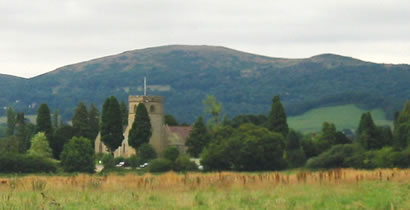
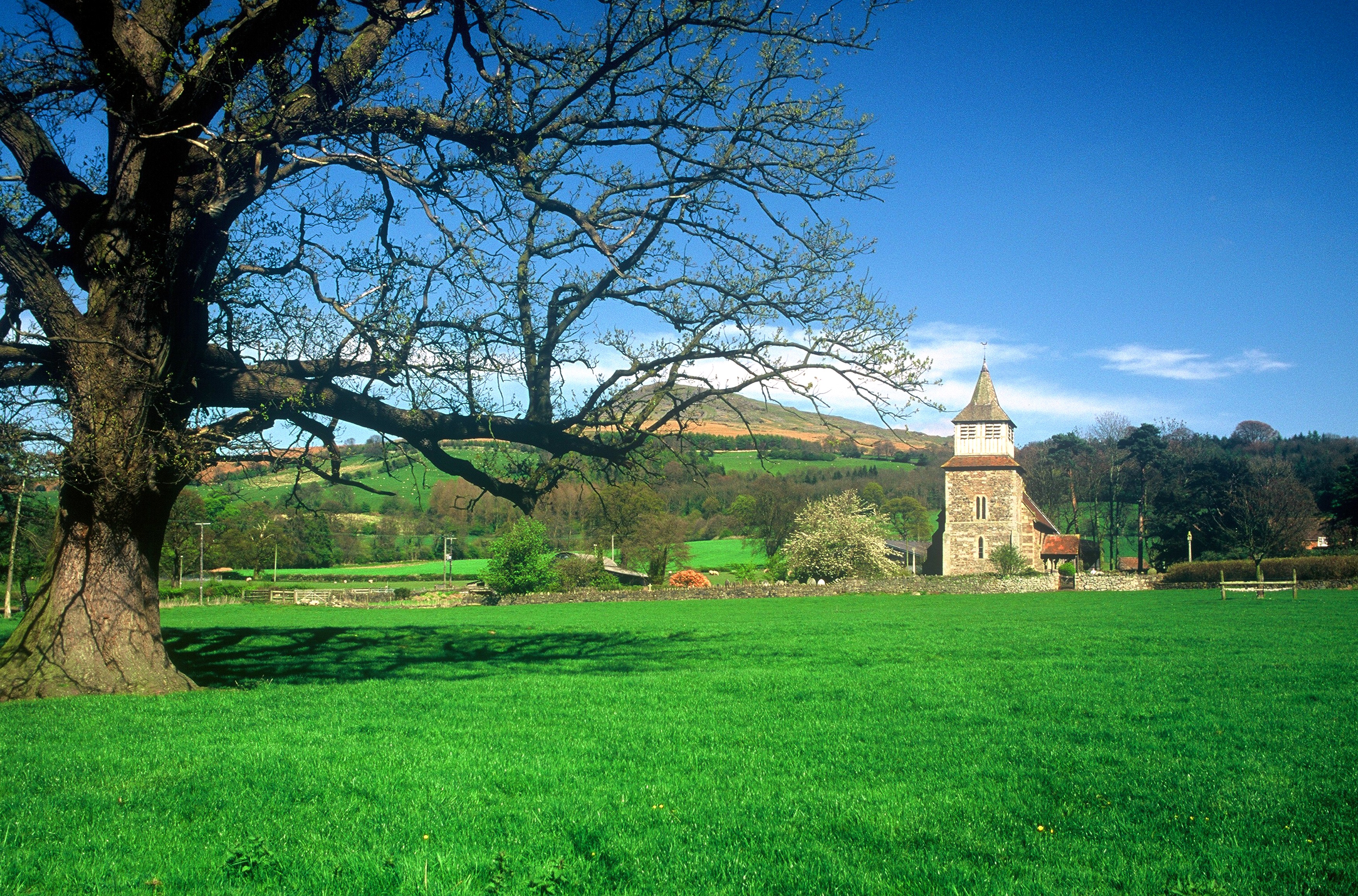
View of Colwall church and the Malvern Hills in the distance. Source: here.

These past two days I have digging information about two very distant relatives of wine born at the end of the 18th century. The two sisters, Kitty and Hester Allen, are actually related to me through two lines, given the fact that their parents were both great-grandchildren of an ancestor of mine born in the 1600’s. Kitty and Hester did actually have more brothers and sisters, but so far I have only managed to locate them in the 1841 and later censuses. It is possible the other siblings died before the first census was taken, or else they emigrated, always a possibility to be borne in mind.

Kitty was actually christened Kitty (not Catherine) in Colwall Church in 1785. Kitty’s husband was a John Willoughby, who would have been roughly the same age as she. John came from Godalming, in the distant county of Surrey; instead of moving back to Godalming, Kitty (usually down as Catherine in the baptism registry of her children) and John Willoughby remained in Colwall, on the edge between the counties of Hereford and Worcester.

Kitty gave birth in quick succession to seven babies, by name John, Sarah, Henry, Milborough, Elizabeth, George and Mary Ann. Tragically, only a year after the couple had their last child, their eldest daughter Sarah died aged just 17. The following year 14 year-old Milborough and 2 year-old Mary Ann died within six months of each other. The final blow came two years after, when Kitty’s eldest son John died at the age 22.

The pain of losing four children in just four years must have been heartbreaking for John and Kitty Willoughby. Fortunately, they still had three robust children who did eventually make it into adulthood. In late 1840 Elizabeth, Kitty’s only remaining daughter, married John Eacock, a member of one of Colwall’s largest and oldest resident families. The couple don’t seem to have had any children.

Kitty and Hester Allen were, as far as I know, the only one of their siblings to eventually marry. Source: here.

Five years later it was the turn of Kitty’s son Henry to marry. He and his wife, Sarah Smith, had three daughters, finally making Kitty a grandmother. Unfortunately, the youngest of the girls died in 1863, but the other two, Martha and Mary, led long and probably eventful lives. Mary in fact married Thomas Eacock (one of her uncle’s nephews) and had two sons by him, but Thomas disappears (presumably he died shortly after) and Mary remarried Adam Clark, with whom she had six more children. By 1901 she and her growing family had moved up to Yorkshire, where she died in 1919. Her sister Martha also married and had a large family of her own. This branch, however, settled in nearby Birmingham.

Kitty and John Willoughby’s remaining son George married Elizabeth Newell in 1851. Although they had no children together, George did take care of Elizabeth’s illegitimate daughter (by an unknown father) as if she were his own. Thus, despite the fact that Kitty Willoughby (née Allen) had seven children in total, she became a grandmother only through her son Henry and to just three girls, in whose descendants her blood continues to flow into the 21st century.

Unlike Kitty, who by the way died in 1856 in her 70th year, her sister Hester’s family was much smaller than Kitty’s, and in fact they did not make it even into the 20th century. Hester was born in Colwall in 1789. She probably moved away to nearby Ledbury in the 1810’s, because it was there that she married in 1818 a Welshman called Hugh Hughes.

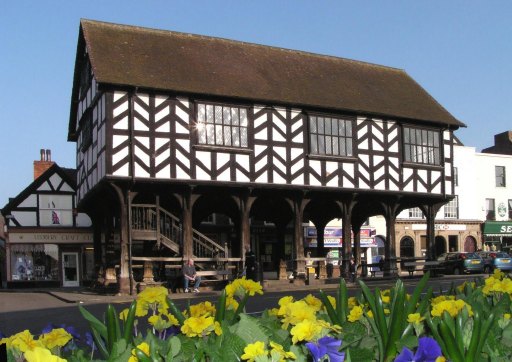
One of Ledbury's most recognisable landmarks, Ledbury Market. Source: Wikipedia.

There must have been a large age difference between the two, as in 1851 Hugh was almost 90 years of age and his wife was only 60. But despite the difference in age, the couple had two children together whom they named Elizabeth and William, both born in Ledbury in 1820 and 1822 respectively. Although William seems to disappear at some point after 1851, I did find that Elizabeth did marry in 1855 a man called Charles Aubury Court, an auctioneer and furniture broker from Monmouth. The family, including Hester (who became a widow in the 1850’s), settled in Monmouth, where she died shortly thereafter. Charles A. Court himself died in late 1871, followed to the grave by his widow less than two years later. Until I find any documentary evidence about Elizabeth’s brother William Hughes, my conclusion is that, with the end of the Courts’ childless marriage in the 1870’s, Hester’s line also came to an abrupt end less than 100 years after her own birth.

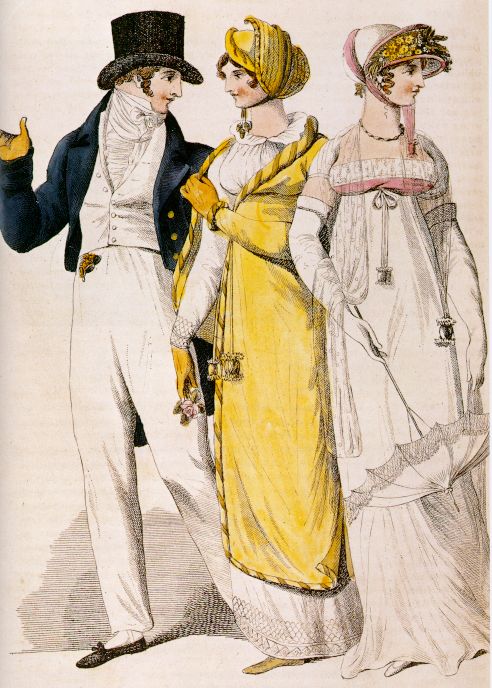
Sources: for the photo of Colwall, click here, and for the photo of Regency-style fashion, press here.

Posted in Birth, Colwall, Death, England, Genealogy, Herefordshire, Illegitimacy, Marriage, Surrey, Wales, Yorkshire | Leave a comment

Love and Courtship… at the spa of Mondariz

I will not pretend my background is at all affluent. Far from it in fact. If you go back long enough, you will see that my family tree is mostly populated by farmers, agricultural labourers and other individuals for whom manual labour became the only way of earning a decent living. Fortunately, some branches in my ancestry made well for themselves eventually; others didn’t leave the countryside till well into the 20th century.

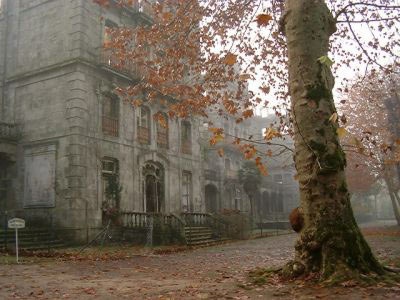
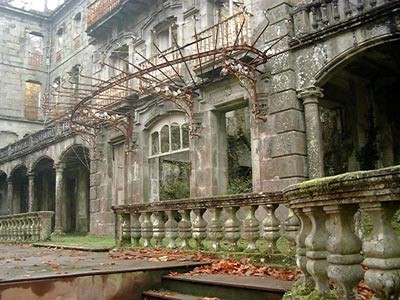
The ruins of the old spa hotel in Mondariz, as it looked a few years ago.

One of the few branches that did make it into, let’s say, the middle class, was that of my maternal grandfather’s mother.Her name was Hermelinda Cerviño and thanks partly to her parents’ encouragement (and stubbornness probably), she was able to marry and live a comfortable, albeit very short life. Hermelinda’s father José Benito Cerviño came from a very small parish in the Spanish region of Galicia. He was a stonemason, like so many men in his family, but unlike most of them, he was actually confident enough to move to Vigo, the nearest and largest city in the area. Vigo was, like now, an expanding industrialised centre which attracted young men and women from many surrounding villages. José Benito must have done well for himself, for before long he managed to buy some property right in the centre of Vigo, where he built a house, which was surrounded by a large garden surrounded by a thick stone wall, probably made by José Benito himself. The terrain on which he built his house must have been big enough to accommodate the row of houses which currently occupy the space. I’m not sure if there is actually any trace of the house, the garden or the wall any more. But that’s how things go.

José Benito married Dominga Iglesias in 1877 when he was 26 and she was 24. Their marriage lasted until Dominga’s death in 1924. My great-grandmother Hermelinda was their sixth child; out of their ten children, nine were girls, and out of those nine, three died as toddlers. By the early 1900’s José Benito and Dominga’s eldest daughter was already married and churning out children. Hermelinda’s only brother, eager to make a name for himself, left for Chile and returned several years later, a dandy-looking, pleasant young man who also found a wife soon after his arrival. So José Benito and Dominga were left home with five spinster daughters aged roughly between 25 and 13; it is no wonder that their parents decided the girls ought to marry if they didn’t want to remain gloomy, lonely virgins all their lives.

The doorway to the hotel; this is where my great-grandparents met for the first time.

At the time, middle-class families relied on friends and acquaintances to introduce their eligible daughters to suitable young men. Concerts, dances and other people’s weddings usually did the trick. Women seldom travelled anywhere alone and respectable ladies never left home without at least the company of a chaperone. The destiny of five girls, however respectable, could not be trusted solely to fortune. That is probably why José Benito and Dominga decided to spend a season every year at the nearby spa town of Mondariz, not too far from Vigo. Mondariz is actually more a village than a town, but its beautiful surroundings and mineral springs earned it national, if not international fame. It attracted the rich and the middle classes alike, and my family, being somewhere in between, were no exception.

A group of ladies surrounded by a few men in Mondariz, circa 1916. My great-grandmother's sister Carmen awaits her husband-to-be, second from right, bottom row. (Warning: Photo Copyright of "The Genealogical Corner"; Do Not Copy Or Use Photo On Other Websites)

I imagine Mondariz would have been an adequate place to find a good catch for Dominga’s spinster daughters (José Benito usually stayed behind in Vigo, probably attending to his own business interests). But year after year, in the hope of meeting agreeable candidates to her daughters’ hand, Dominga persevered in travelling to the spa with two or three of the girls and attended daily concerts, washed in the springs and drank the refreshing water of Mondariz, which is still bottled and exported abroad today. Most of the photos we have, which show the ladies sitting rather dignified awaiting the arrival of an eligible young man, date back to the mid 1910’s; it’s rather funny to think that while half of Europe was being killed in the trenches, my great-grandmother went hunting for a husband.

In fact, Hermelinda was the first lucky one (being my great-grandmother, dare I presume she was also the prettiest?); another sister found her own beau about a year or two later (poor Dominga, how many times must she have returned home empty-handed, without a man for her daughters’ hand!). Hermelinda’s husband-to-be, Guillermo, a Spanish-born merchant who had amassed a small fortune in pre-Castro Cuba, boasted an elegant moustache and pretty items of jewellery which I’m sure dazzled even the sad-eyed woman who shortly thereafter was to become his mother-in-law. Despite the difference in age (he was 38, she had turned 30), Guillermo and Hermelinda’s wedding took place in December 1917; the wedding was even announced in the newspaper; Dominga had succeeded! The young couple toured Spain before leaving for Cuba, where they lived for a few years. Theirs was a happy match.

Their first two children (the eldest died young) were born in Cuba. The other three were born in Spain in the 1920’s. Sadly, Hermelinda passed away aged 49 during (but not because of) the Spanish Civil War; one of her spinster sisters became a second mother to her orphaned niece and nephews.

Photo sources here and here.

Posted in Engagement, Galicia, Genealogy, Marriage, Spain | Leave a comment

Verifying Ellen

I love going over the facts on my family tree to check if they’re correct. Very often it happens to me that I feel unsure about some of my past online findings, and I start to wonder whether I may have leapt to a conclusion too fast. For instance, tonight I have spent the best part of the last hour wondering about an ancestor of mine who was born toward the end of the 18th century and whose true identity I have yet to prove conclusively.

What I knew for sure was that her name was Ellen and at some point around 1820 she married my great-great-great-great-grandfather, Thomas Mound (for the record, I haven’t been able to track down a marriage entry for them circa 1820). Since Ellen died in 1860, she only had time to be recorded in the 1841 and 1851 census, both of which seem to offer a somewhat contradictory story about her; the 1841 census records Thomas Mound as being about 40 years old, and Ellen as being about 50 (as ages for adults were rounded down in the 1841 census, she could have been born roughly at any point between 1787 and 1791) and it states that she was not born in the county where the census was taken (in this case, Herefordshire). So we can deduce that Ellen (maiden name unknown) was born in 1787-1791 somewhere outside Herefordshire.

Bitterley, in Shropshire, where my ancestor Ellen was born over 220 years ago.

I then take a look at the 1851 census, taken ten years later. Surprise! Ellen is down again as Thomas’s wife, only this time he seems to be older than she; in fact, Ellen appears to be 42 years old now. If I am to believe her age as stated, then I’m afraid I’m not buying her story. If her age was really 42, she would have been born circa 1809, and as her eldest recorded daughter was born in 1820 (this I know for a fact), I very much doubt Ellen became a mother when she was just 11 years old. No, I believe her age would have been closer to 62 than 42 when the 1851 census was taken, thus making the facts on the 1841 census fit better. I simply think Ellen vainly pretended to be younger, as mature women often do. Even more revealing is the fact (finally) relating her place of birth: Bitterley, in the county of Shropshire. Everything seems to match, except the little detail concerning her age. Success!

Having combined all the facts gathered from the two census entries, I do a search on Ancestry, FreeREG and FamilySearch to check if there is an Ellen born around the late 1780’s in Bitterley, Shropshire.

Aha! Elinor Hughes, christened 14th  June 1789, looks promising. A quick search reveals that there seem to be no other Ellens/Elinors recorded in the 1851 census (or later records) who were born in Bitterley which would fit the birth year span. It also seems that Elinor Hughes had quite a big family, and curiously she gave her son the name of her brother Richard and her mother’s name to her eldest daughter. OK, maybe I’m seeing things I just want to see, but I really can’t see any other alternatives to my Ellen’s identity. Going up the tree of the Hughes family I discover that Elinor’s grandfather was first married to a woman called Ann Maund (sic). Coincidence, fate, or simply the result of two families intermarrying through different generations almost 100 years apart? Does this prove my Ellen was actually born Elinor Hughes, and that she was the one who married Thomas Mound around 1820? I’ll see what my brain comes up with tomorrow…


Posted in Birth, England, Genealogy, Herefordshire, Shropshire | 5 Comments

The stigma of illegitimacy

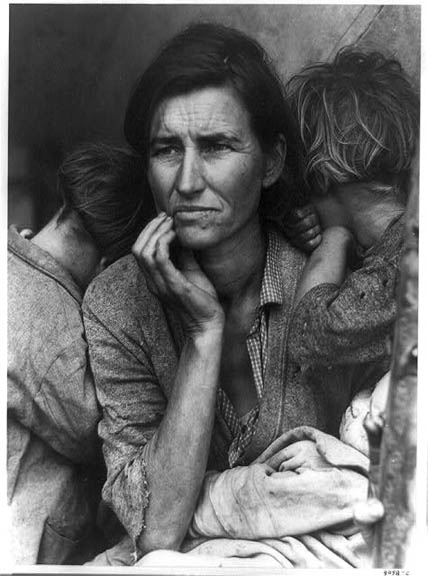
"Migrant mother"

Illegitimate children abound in every family; if you haven’t found any yet, then you just haven’t searched enough. In our modern age we tend to think of the past generations as being prim and proper, ultra-respectable, morally conservative and social-conscious. Well, I don’t think it’s like that. Obviously, the different moral rules which dictated societies in the past tended to be less progressive than those we have today, but that doesn’t mean everyone followed them. Although these days hardly anyone raises an eye-brow when an unmarried woman has a child and doesn’t decide to marry the father, in the past it is true that a woman could be socially stigmatised if she had what was called an “illegitimate child”. Even worse was the stigma which overshadowed the child throughout its life simply because it had been born out of wedlock.

Illegitimate children were simply the result of a “more than hands-off” relationship between an unmarried couple. Of course, if you find an illegitimate child in your family tree you might want to ask yourself any of the following questions: were the child’s parents romantically involved, or on the other hand did the girl/woman become “accidentally” pregnant? Did the father recognise the child as his? Did the mother eventually marry the child’s father? If she did, then the child or children born out of wedlock automatically became legitimate, although there might still have been a few hurdles to make them eligible to inherit their father’s possessions, if he had any.

There are many cases of illegitimate children in my family tree (and by that I don’t want to sound as if my tree if plagued by them, it’s just a big tree!) which to some extent reflect the relationship going on between their parents.

Some fathers eventually recognised their illegitimate babies...

The first case to consider in the family is that of Mary Ann Vickress, a young Herefordshire woman born in 1813 and raised just before the dawn of Victorian England and its tight moralistic values. In 1834 Mary Ann (then aged 21) became pregnant and, for whatever reason, did not marry the father. As she was over age, one can only presume that the child’s father (also of age) did not wish to marry her; perhaps there was some sort of legal impediment to the marriage; maybe the bans would have to be read, although in the case of a pregnant single woman I would imagine they would have got a bit of a move on. The boy was born in March 1835 and recorded in the baptism registry as illegitimate and with the mother’s surname. But the relationship between Mary Ann and the boy’s father did not end there. By early 1837 she was again pregnant, only this time she did marry Joseph Caldwell, the man she was obviously in love with. The baby, William Caldwell, was born later that year. Later census records have proved that young Edward Vickress did become Edward Caldwell, and his parents seem to have been content with each other, at least enough to sire another four children together.

Sadly, not all cases of illegitimacy had such happy endings. Mary Ann’s niece, Mercy Vickress, was born in 1863 into a poverty-stricken family who had earlier left the Herefordshire countryside in order to move to Wolverhampton. Four of Mercy’s six siblings died before the age of 4, and when she was 12 her own father died. Mercy went into service, as many girls of the time did, but by 1881 she was unemployed, living with her mother, who was a washerwoman. By early 1885 Mercy became pregnant by an unknown father. Whoever he was, he was not there or did not wish to be recorded as the child’s father when Mercy gave birth to a son in October. The child lived only 48 hours. Grief-stricken, Mercy herself was by then dying of pulmonary tuberculosis, and passed away the following February aged only 22.

Cases of illegitimacy can sometimes prove much more surprising than we think. Despite living in an intensely Catholic country, my Spanish relatives also sired their own lot of illegitimate babies. One case on my grandfather’s side is that of Rosa Cerviño (herself an illegitimate daughter), who dutifully married a man who made her a mother -of legitimate children may I add- five times over. Of her surviving three daughters, however, at least two of them had illegitimate children (the eldest had two, the second one had three) and neither of them married the father, whoever he was. As they obviously remained living in the same place and carried on with their lives in the community, I can surmise that their children did not pose such a big problem to them (and society) as I thought initially.

... others just didn't, and got on with life apparently as if nothing had happened.

Yet another case on my grandmother’s side leaves no room for doubt. Dolores Agra had been born in the Spanish town of Noya in 1833. Some time after her father died when Dolores was just 12 years old, her mother had a daughter by another man (the baby died within a year). Doubtless, Dolores would have been aware of the story, and may have been brought up to believe that having an illegitimate baby was not as sinful as society made her believe; soon she too became an unmarried mother, giving birth to a total of six children between 1855 and 1870. We don’t know if they were all fathered by the same person or not, but clearly Dolores did not mind or did not avoid having children even if she had no man at her side to take care of them. And that in the 19th century was probably something very brave to do. By the way, at least three of her children reached adulthood and had children of their own.

My Spanish great-great-grandparents, Miguel and Manuela also got better acquainted before they were actually married. When they were just 18 years old, my great-great-grandmother Manuela became pregnant, but the baby girl was actually registered motherless, not fatherless. Miguel stated that he recognised the child as his natural daughter, but gave no hint as to the identity of the mother. It took Manuela almost two years to sign a formal declaration recognising the little girl, called Dalmacia, as her own, but shortly thereafter the little one died of tuberculosis. Her untimely death may have been decisive for my great-great-grandparents, who got married on 31st December 1884, and enjoyed a long-lasting marriage which produced… no less than eleven more children.

Now it’s your turn to spill the beans. Are there any cases of illegitimacy in your family tree? Do you think they posed any problems at the time? Were your relatives accepting? What became of the child?

Posted in Birth, Death, Galicia, Genealogy, Herefordshire, Illegitimacy, Marriage, Spain | 6 Comments

My slave-owning American cousins

If a couple of days ago I commented on the grief of parents over the loss of their infant children, I wonder how much worse it would be to receive a letter or a telegram containing the awful news that your son has been killed in action. Probably equally awful.

I suspect, however, that the feeling of sadness might be slightly compensated by the sensation of pride and honour at having a son giving his own life for “King and Country”, or at any rate for defending what he so ardently believed in. Sometimes it is hard to understand why people fight, and why wars take place, but in the real world where fact surpasses sentiment, more often than not men of all ages throughout the history of Humanity have had to make the brave decision of joining the lines, knowing they were risking absolutely everything.

Over the past few years I have tried to gather information about the men (no women killed in action in my family so far, I am glad to say!) who lost their lives as a direct result of a war. This is the earliest case I have found so far:

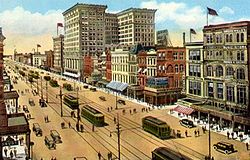
View of New Orleans, late 1800's.

My grandmother’s second cousin three times removed, Manuel de Ben, was born in Porto do Son (Spain) in 1832. At a very young age he followed an uncle and one of his father’s first cousins to America, settling in the city of New Orleans, Louisiana. There was a fairly large proportion of Spaniards in the vibrant capital of Jazz and Mardi Gras; commerce was an important reason for bringing people from all over the world, especially European immigrants arriving from France, Italy and some parts of Germany. Manuel worked as a clerk in a local store, and lived with his two relatives in what was probably a small house; both his uncle and his cousin worked as gardeners, and (this was the big shocker) actually owned three slaves -two black males and one mulatto boy- who probably lived under the same roof as them. The American Civil War inevitably broke out between the Northern States, who among other factors defended the abolishing of slavery, and the Southern States or Confederates, who were in favour of preserving slavery, given the huge plantations which existed in the South of the United States. Manuel and his younger brother, José Antonio, who had emigrated to America only four years before, both joined the Regiment of Cazadores Españoles, a military body formed essentially of Spaniards, Italians or men of Hispanic origin who wished to defend their beliefs and their adoptive land against those who they felt posed a threat to their modus vivendi.

Difficult as it is to reconcile myself with the fact that someone with my own blood would actually give his own life to defend slavery, I admit in some way I can feel… not exactly admiration for him, but I can comprehend the courage and the conviction that moved Manuel to wage war. I doubt very much that I would have joined the Regiment so readily as he and his brother did, nor do I think would I have had the courage to enlist in any war, now I think about it. But there you go.

The American Civil War tore the country apart, but ultimately made the country more progressive than ever.

Manuel de Ben was killed on 21st June 1864 at the age of 32 (some sources say he was 34). His death was probably reported to his parents soon afterwards, perhaps through their other son José Antonio, who did survive the war. In fact, in time José Antonio de Ben became a successful cigar and tobacco dealer in New Orleans. He eventually married Inès Marie Fernández, an young American woman from New Orleans whose father was a Spanish émigré as well. Her mother, born Caroline Baldwin, was probably related to Stephen Rumsey, who had been a Lieutenant who had distinguished himself in the War of 1812. Their descendants continue to populate New Orleans and other places in the United States even today. My other American cousins.

Posted in Death, Emigration, Genealogy, Killed In Action, Louisiana, Marriage, Spain, United States, War | 1 Comment