Every now and then I use my lunch hour to have a peruse through my family tree in search of gaps that need filling. Today I decided to give my great-grandfather’s cousin a go.
Until now all I had found about Rose Allen was that she was born around 1888 in the same village where most of my ancestors were born, lived and died over the last 300 years: Colwall. Very few of my relatives moved away from that very rural area of England, and I therefore had no reason to believe Rose had done otherwise.
As usual, I started off by checking the census. In 1891, the first time Rose was recorded in the census, she was listed living in The Knell (also known as Knell Farm, which I know had been in the family for a few generations). Her father, Herbert, was a farmer and living under the same roof, as were his wife Jane and their brood of six children, of whom Rose was the second-youngest.
1901: ten years later and the family are still living in Colwall, at Hill Top (perhaps still at Knell Farm), only this time Rose is the second-oldest child left behind with her parents while her elder siblings are recorded elsewhere. A younger brother and sister are now recorded in the same household too.
By 1911, however, things have changed for the family. Rose’s parents are both deceased by then, and some of the children seem to be scattered to the four winds. Some are in Wales, still living together, but there is no sign of Rose anywhere. I therefore tried to broaden my search by not including her last name, as she may have married by the time the census was taken, and therefore in all likelihood would have dropped her maiden name. I find a Rose Bleazard (right age, right place of birth, different surname), happily married to a corn carter and living in Lancashire. No connections there, but I decide to look for a marriage between Rose Allen and a Mr Bleazard all the same.
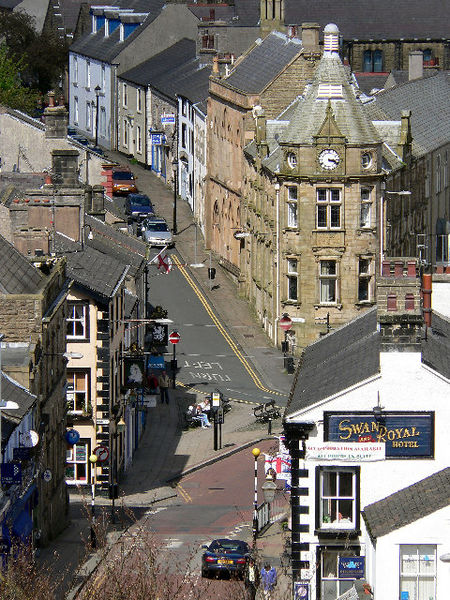
Clitheroe, in Lancashire, where Rose Allen lived with her husband Marmaduke Bleazard.
Well hello! In the second quarter of 1910, up in Clitheroe registration district, Marmaduke Bleazard married none other than Rose Allen. I guess I’m definitely on the right track!
Unfortunately the couple had no children by the time the census was taken in 1911 so I temporarily hit a dead-end. I thus change tactic and try the Free BMD index using the fantastically-named Marmaduke’s surname combined with Rose’s maiden name. And lo and behold, I get two hits: Ada M. Bleazard (born in Clitheroe at the end of 1911) and Edith Bleazard born in early 1918. This not only confirms that the couple were blessed with two girls, but also that Marmaduke lived at least until the last year of the Great War.
Ordinarily I would end my search there, but as Marmaduke’s name is as fascinating as it is unusual, I decide to type his name in my search machine and see what comes up. I get a few census records, a birth… and a war record! One click later and I’m looking at Marmaduke’s service record. Long live the Internet!
And then I seemed to strike gold! Marmaduke’s address is Ing Farm, Newton Clitheroe, in Lancashire; his profession: corn man and general farm labourer; married: yes (phew!), and states he enlisted in December 1915. Excitingly, the next page over provides me the name of a middle daughter, Jane, born in 1916 and of whom I knew nothing (I later realise her surname was mistranscribed on Free BMD index as Blessard, explaining why I hadn’t found her before).
As I later zoom out to make out the scribbled words which have been added on the main page of the record, I make a sad discovery. The word “dead” leaps off the page of Marmaduke’s war record. A quick visit to the Commonwealth War Graves Commission website leaves me in no doubt: Marmaduke Bleazard was killed in action in France on 12 (sic) November 1918. However, as the war had officially ended the day before, I go back to Ancestry, and find at least one document that states he was killed on 2 November, but either way, I feel sorry for young Rose and her three very young daughters.
Rose obviously moved on with her life, as by 1921 she had already remarried, to a Mr Hanson, but thereafter the trail goes cold. I wonder how she managed to cope with her loss, and how she managed to bring up Ada, Jane and Edith before her second marriage took place? Did she ever visit Colwall again? Did she keep in touch with her siblings in Wales? We may never know…
I must humbly and sincerely apologise for my absence since last July. I wish I had a good excuse, such as a prolonged holiday somewhere hot, or at least a fruitful trip somewhere where my ancestors lived generations ago. But unfortunately, my summer has been spent almost exclusively in Brussels, at work, with very little time or energy to do family research.
I tell a lie. There have been developments, although not very big ones. Still, I’ll probably allude to them very soon. I basically wanted to say “Hey, wake up, I’m still alive” to you all, and inform you of some changes yet to come.
First of all, my blog will now become bilingual. I think one of the advantages of having a blog about genealogy and family history is that you can use it as a tool to try and get in touch with distant relatives who are, like one self, looking for their ancestry. Sounds a bit like fortune-telling or a medium, doesn’t it? Thus, as about half of my ancestors came from Spain, I will now use Spanish to write those articles about my Spanish (i.e. maternal) relatives and ancestors. But don’t worry! English will still be the main language on this blog, and I will carry on using it as my main language of communication with you all.
Secondly, I will also start writing (in English, mind you) reviews and comments on the hit BBC series Who Do You Think You Are?, sharing with you all my opinion about each episode in detail.
Apart from the odd physical change on the blog (maybe a change of cover picture, or a different background?), I think that’s it.
And now, perhaps a Who Do You Think You Are? episode and a nice hot cup of tea.
Oh, that wonderful, childish excitement that we all get when we know we are onto something big! I mean of course that funny feeling we all know and love, when out of the blue we stumble across new pieces of evidence to add to the family tree. Seeing as the pieces match and go together in perfect harmony is a sensation probably only equal to what archaeologists feel when digging up bits of a really old Phoenician vase. But I digress…
Today, during a brief pause at work, I decided to venture into the newspaper archives of Galiciana, the self-styled “Library of Galicia”, a huge repository of old Galician newspapers, which I briefly mentioned in my last post.
While searching for some distant relative or other, I came across a name which for some reason made something click at the back of my mind. I quickly looked up the biography of my very distant great uncle (actually my 5x great-grandfather’s youngest brother), Román Martínez Montaos, which some kind soul decided to research and publish online some time ago.
The biography, which is fairly thorough (although it misses a very important fact, which I already knew about, which is that uncle Román married his own niece), includes an extract of his will, written jointly with his wife before her early death from tuberculosis. Among other relatives whom I have successfully been able to pin-point on the family tree, Román leaves some of his worldly possessions to his niece Luisa Martínez Escalada, and instructs her that she shall take care of her sister Olegaria, whom it is implied in a chronic invalid.
Now, as I don’t know how these two nieces come into my family tree, their connection has always been a mystery. There is a possibility that they were actually Roman’s wife’s nieces, but as he and his wife were closely related, I can safely assume the two heiresses are, with all certainty, my kinswomen too.
As the surname Escalada is fairly unusual in Galicia, I decide to read any mention of a “Martínez Escalada” I find, starting with the first result I cam across accidentally earlier today. This woman, Gumersinda, seems to have died in February 1903, and all details point to the fact that she was already an elderly lady by the time she passed away. So far, everything seems normal, until we check the obituary column.
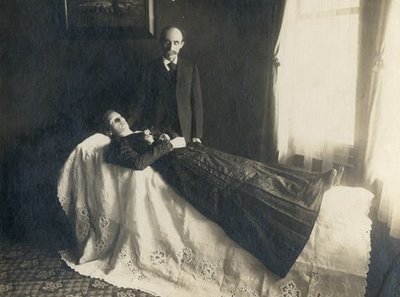
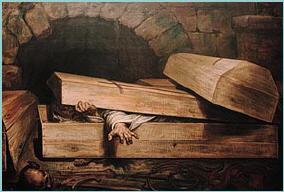
The newspaper “Gaceta de Galicia”, which I assume has long since ceased to exist, reports that the editor had withheld the information of the lady’s unusual death. On 13 February Gumersinda died of bronchitis, and her motionless body was taken to the city of Pontevedra’s local cemetery. However, despite the obvious fact that Gumersinda was dead, a fact which had been certified by several doctors, her face had somehow kept its “good colour” and there was no indication that the corpse had started to decompose, a fact which led many of her relatives to believe she could well still be alive, and suffering from an attack of catalepsy. For days Gumersinda’s optimistic relatives kept guard over her lifeless body in the chapel of Saint Mauro, while onlookers and friends prayer for her soul. Five days later, her family relented, and Gumersinda’s body was finally buried.
An artist’s depiction of a Catalepsy victim.
A further search on Galiciana enabled me to further learn more about Gumersinda’s relatives. She was, indeed, the sister of Luisa Martínez Escalada, mentioned in Román’s last will and testament. Sadly, no newspaper record of the other sister, the incapacitated Olegaria, remains, a fact which leads me to believe that she probably died young. However, I was in for a bonus when I found that there were other sisters of whom I had no previous knowledge. In all, there were six sisters. Olegaria probably died first, as she is not mentioned in any of her sister’s obituaries; then there was Juliana, who died a spinster in the Galician capital, Santiago, where I think the sisters came from. After her our main character, Gumersinda, passed away, followed in 1910 by Carlota. Three years elapsed before Luisa, the one I already knew of, died (she was a widow and, as far as I can make out, she had three children – more to add to the family tree!). By 1918 there was just one sister left, Cecilia, who remained unmarried until she died.
How all these sisters and their interesting end fits in my family tree is, for now, a mystery. I have already ordered Gumersinda and Luisa’s respective death certificates. Those documents will hopefully tell me more about their place of origin, their age (or, dare one hope, exact birthdate) and, perhaps more importantly, their parents’ names. A visit to the church archives at some later date will probably come in handy, but that’s another story…
Aside from spending hours sitting quietly in my local archive listening to my iPod as my brain races while I read through endless pages of baptism records, I do love looking at old newspapers in search of new clues.
You never know what you might find in an old newspaper: wedding announcements, obituaries, local events, college graduations, scandals, ships’ passenger lists… I bet that if you care to look in the right place, you’ll find more than one relative occupying quite a few lines in the press of the past!
Such has been the case with me and my ancestors these past few days. I have found a tremendously useful tool in Galiciana Digital, a site which essentially comprises a repository of old newspapers and magazines from my region which sadly are no longer in existence (with the exception of El Ideal Gallego, of which incidentally my great-grandfather was the director for some time). Given the fact that my region is not all that big, and that some of my relatives were what you might call “illustrious” (there were politicians, historians, newspapermen, doctors, university professors and so on), the chances of finding new pieces of my already huge family tree become greater.
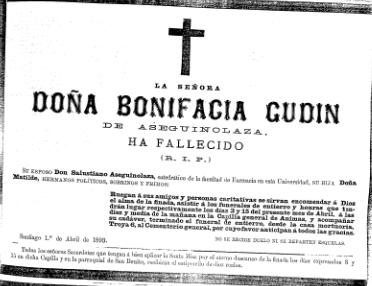
Thus, a few moments ago I came across the obituary of a very distant relative of mine about whom I wrote a post some months ago. You may remember I once wrote about Bonifacia Gudín, the spinster niece of my 6x great-uncle Elías de Agra. Uncle Elías, an eternal bachelor, died in 1854 of a sudden aneurysm, leaving most of his fortune to his siblings, nieces and nephews. As his niece Bonifacia had nursed him devotedly for some time, she got the house and the remaining property, which I am sure came in very handy at a time when women could not earn money by themselves. Now a fairly wealthy lady, she decided to marry a younger man of aspiring intellectual ambitions called Salustiano Aseguinolaza, who later became a professor at the University of Santiago de Compostela.
My previous research revealed that in later years Salustiano became deranged, and I can only deduce that his wife Bonifacia must have suffered acutely from her husband’s odd bouts of madness. Exhausted, she passed away in her 79th year in 1893, an old newspaper clipping (right) has just revealed.
I knew looney Salustiano outlived his poor wife, and indeed his obituary was published several times over the days following his death in 1894.
But I also knew the couple had a daughter, Matilde, whose fate had always remained unknown to me. Did she marry? Being all alone, did she decide to emigrate? The online newspaper archive was just too tempting to resist.
Surely enough, I found an obituary for Salustiano a year after his death, in which Matilde’s husband was mentioned for the first time: Luis Agra Cadarso. Hang on, that name rings a bell. Could it be? Could this young man, who rescued Matilde from her bereavement and her spinsterhood, be in my family tree already?
Indeed! It turns out Matilde and Luis, who happened to be second cousins, got married only months after the death of our deranged Salustiano. Well well… With the help of Google and the Galiciana newspapers I soon discovered the couple (both nearly 40 by the time they got married) had a son, whom they inevitably named Salustiano. What became of this young man, the product of so many events throughout so many generations, remains unknown, but surely today’s findings have filled in the gap somewhat…
When I was little, I used to attend Sunday School every week, while preparing myself for my First Communion and, later, for my Confirmation. It wasn’t what you might call a very spiritual experience, as our lessons were taught by the local church-going spinsters, who knew little more about God and the Trinity than I did about the Panama Canal. I wasn’t particularly devout, even then, but despite my uninspiring beginnings, I have always felt great respect for the Catholic church -despite its bad PR in recent times. I always knew my family background was mixed, but I never considered that my religious background might be mixed too.
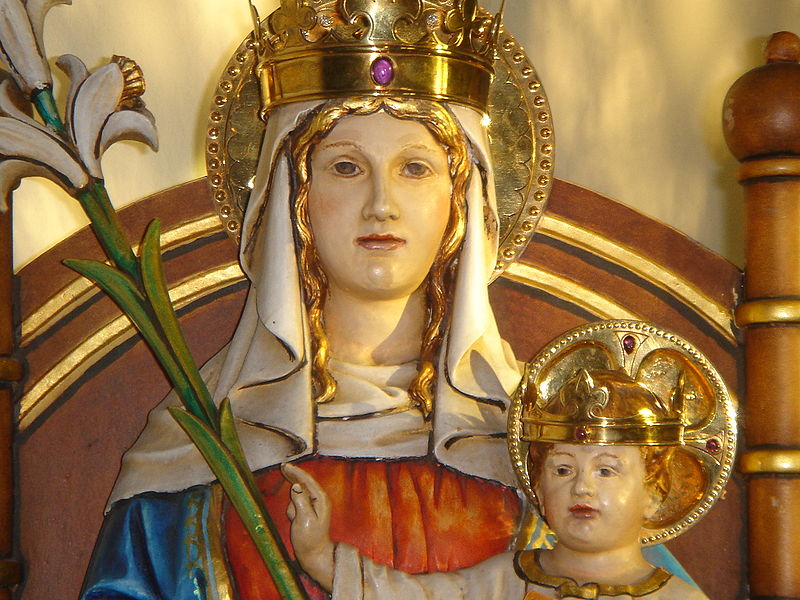
Our Lady of Walsingham, one of the main Catholic shrines in England. (Source: Wikipedia)
When I was about 12 or so, I “discovered” that my paternal grandmother’s family were not Catholic, but Anglican. This is hardly surprising, as they were all as English as bread and butter pudding; after all, England was a country where Catholics have made up for a very small percentage of the population since Henry VIII divorced Katherine of Aragon in 1533.
Since my discovery I have traced my family back many generations, but it wasn’t until a year ago or so that I learnt of a distant relative whose descendants married into the very core of the early Mormon movement in North America.
Lucy Allen was christened in 1774 in the (Anglican) parish church of Saint James the Great in the small English village of Colwall, Herefordshire. Her parents were William and Mary Allen. At the time, there were only a handful of men called William Allen in Colwall who could have been Lucy’s father, and from what I have researched so far, the likeliest candidate would have been my 4x great-grandfather’s elder brother.
Lucy grew up in Colwall and it was there that toward the end of the 18th century she married a man called Henry Turner. They had eight children -two died in infancy- and most of them were born in different parts of Worcestershire, the neighbouring county, very close to Colwall itself. Lucy’s life afterwards seems to have been somewhat uneventful, and she died in 1833, aged 59. Perhaps not coincidentally, four of her children married members of the Stead family, whose origins have been traced back to the early 18th century. As I have found no other Mormons on the Turner/Allen side, I believe the Steads may have been the source of my relatives’ conversion to the Church of Jesus Christ and Latter Day Saints, as the Mormon Church is officially known.
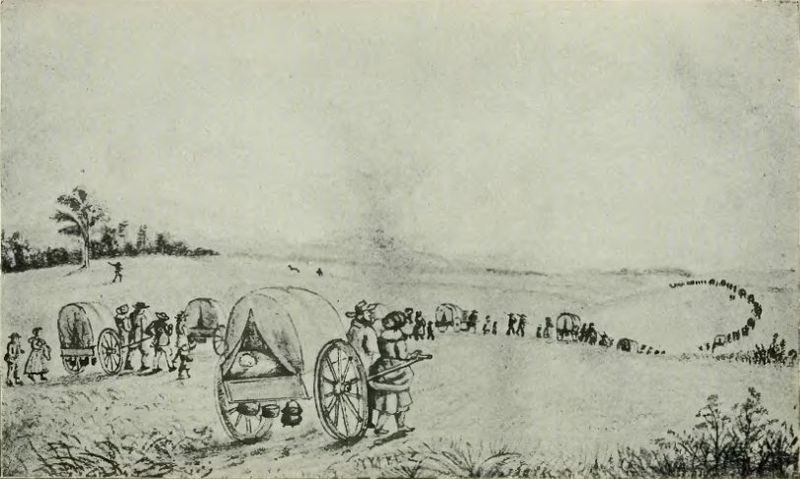
A Mormon handcart train making its way across the American territories. (Source: Wikipedia)
One such union, that of Henry Turner Jr. and Ann Stead, took place in 1835, but at which point the couple converted to Mormonism, I cannot say. I know that by 1857, the couple and their surviving brood, plus Ann’s widowed mother, joined a large group of fellow Mormons in Liverpool. There, they boarded the George Washington, a square-rigged, three-floored vessel which had been chartered by the Mormon Church in America to bring “pilgrims” to the new continent. The ship set sail at the end of March with over 800 Mormons on board. After a peaceful crossing of 23 days, they reached Boston, and thence they made their way to Iowa City. What extraordinary sensations my relatives must have felt! The new world, a new life amongst a new congregation!
Using handcarts as their only means of transport, the Sixth Company, as this conglomeration of newly arrived immigrants was known, made their way to Florence, Nebraska (present day Omaha, Nebraska), and from there to Salt Lake City, Utah, where they arrived in late September of 1857.
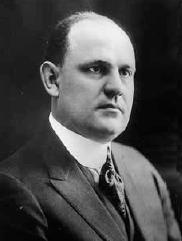
Stephen Longstroth Richards, a Mormon leader and my very distant relative. (Source: Wikipedia)
Henry and Ann Turner and their family lived in Salt Lake City for a limited time, as some years later they were already living in Farmington, Utah, where most of them settled permanently. By 1857 the couple’s eldest child, Emma Louise, had already moved to the United States, where she had married a fellow Mormon, Arthur Steyner, who came from the Isle of Guernsey. Tracing their descendants proved particularly interesting.
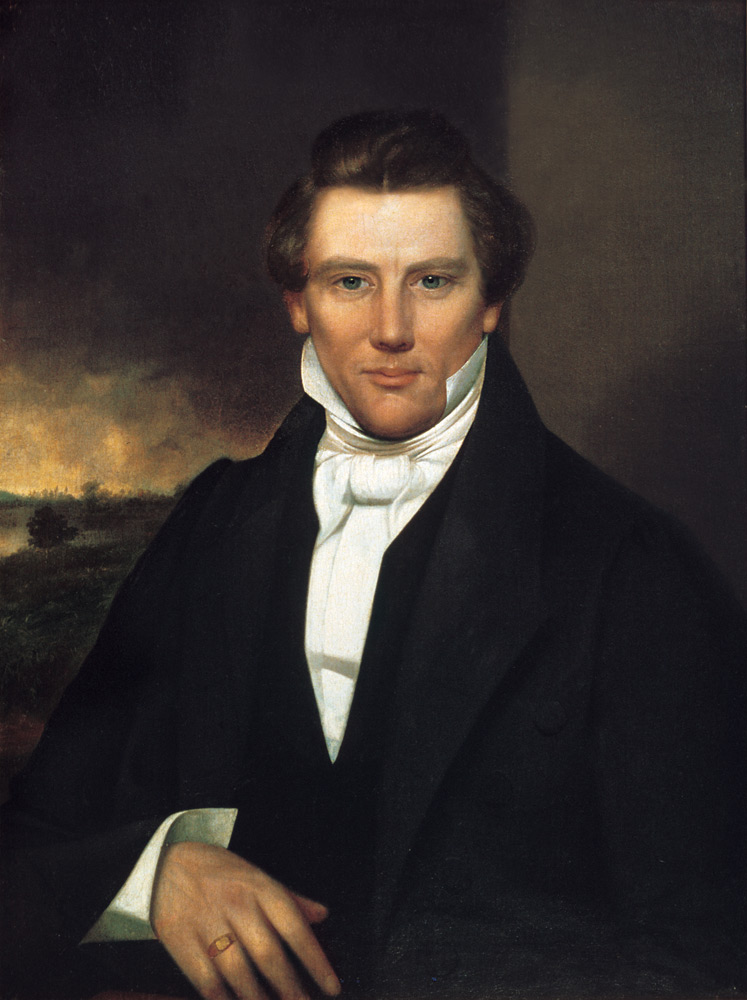
Their eldest daughter, who was also her mother’s namesake, married Stephen Longstroth Richards, the son of Willard Richards, an early leader in the Latter Day Saint movement who served as Second Counsellor in the First Presidency to church president Brigham Young until his death. Emma Louise Steyner and Stephen Longstroth Richards had a son, also called Stephen Longstroth Richards, who was a prominent leader in the Church and who became a member of the Quorum of the Twelve Apostles of the LDS Church and a First Counselor in the First Presidency. His marriage in the year 1900 to Irene Smith Merrill, a maternal granddaughter of George A. Smith and thus a great-grandniece of Joseph Smith Jr., the founder of the Mormon Church, produced many descendants.
Joseph Smith Jr., the founder of the Church of Jesus Christ and Latter Day Saints (Source: Wikipedia)
Today, many descendants of the Turner, Steyner, Richards and Smith families live in the USA and abroad, and in many cases still adhere to their Mormon beliefs. I wonder if they know of their ancestors from Colwall, or of their Catholic relatives in Europe?
Yesterday was Mother’s Day in Spain. The event triggered my imagination: I couldn’t let the day go by without writing about one of the thousands of mothers who populate my family tree! But who should I write about? I suppose I could have written about my own mother, but I’m afraid she is quite reserved about publishing personal information online, so I decided to go further back, so as to not offend anyone’s feelings. I hope that’s OK, Mum.
I finally decided to write about my mother’s grandmother, Hermelinda. Unlike my own mother, who has had almost 30 years of hugs, kisses and best wishes on this important day, Hermelinda hardly had a chance of enjoying her children’s love, warmth and affection.
Hermelinda was part of a big family. She was the sixth of ten children, although when she was a few months old one of her elder sisters, then a baby of two years, suddenly died. Hermelinda was very close to her next sister, Carmen, and probably enjoyed playing with the next baby to arrive, Marina, who tragically died when Hermelinda was only five years old. It was clear that, from a very early age, she would need to face untimely deaths in quick succession throughout her short life.
Hermelinda grew up to become a pretty if not remarkably beautiful young woman. She, like her sisters (I hesitate to call them spinsters, since they were in their 20’s), was taken to a fashionable spa in the countryside where their anguished mother expected them to make good marriages. Hermelinda certainly did not let her down. At the age of 30, with the clock already ticking, she managed to marry an older, richer man fresh from Cuba who had amassed a small fortune and lived the life of a dandy while searching for a bride.
The wedding was probably a lavish ceremony. They had their picture taken before the wedding breakfast took place. It was even published in the local rag, and the happy couple soon departed on a steamer across the Atlantic to enjoy their honeymoon abroad. For a time they lived in pre-Castro Cuba, then a country which enjoyed the apparently carefree and perpetually prosperous rule of the United States.
Hermelinda’s first-born came soon thereafter, and the proud couple named the baby after its father. Then, quite unexpectedly, the boy died, and Hermelinda’s hopes of a prosperous motherhood were dashed. What a terrible start to a new life, she must have thought, and how homesick she must have felt at the time.
Yet, all was not lost. She was still young and more babies would follow; surely enough, she soon became pregnant once again. In 1920 she gave birth to another son, also named after her husband (and the baby).
It then became apparent that Cuba was no place to bring up a growing family, and the couple returned to Spain. There Hermelinda managed to carry on with life while her husband tended to his business interests in Cuba. Frequent letters heaped with kisses and loving messages between them crossed the Atlantic every month. Two sons arrived in 1921 and 1923 respectively.
By 1928 the family was complete. Three healthy sons and a little girl were the materialisation of the couple’s affections. How sweet life must have seemed to them, and yet, how terribly short it proved to be.
In 1936 civil war broke out in Spain. Brother killed brother, and nothing was certain in a time of extreme political convictions. Hermelinda and her husband must have fretted when a distant cousin sent them news that her eldest son had been seen enlisting and getting ready to go to the front – needless to say he was sent packing back home, where he was probably scolded for his actions.
Then, in all that greyness and gloom, with the smell of burning in the air and the distant sound of shooting, Hermelinda was diagnosed with breast cancer. Her face seemed to have aged prematurely; her expression became worried and all around her the news of the war must have turned into pure psychological torture. She probably got all the comfort she could from her husband, who faced losing his most precious possession. She also worried about her children, aged 17, 14, 12 and 9 at the time. Before long, there would be no more cards on Mother’s Day. No more laughter. No more playing the piano – the sound was too painful for Hermelinda’s husband, as it reminded him of her, and so he forbade his little daughter from playing.
Hermelinda implored one of her elder sisters to take care of the children. Amalia duly moved in, but although as loving as a spinster aunt could be toward four bereaved children, she was no match for tender, musical Hermelinda. She passed away one spring day, with the sound of gunfire in the background. No more Mother’s Day cards for her.
In our cold, modern, somewhat unsentimental western culture, death has become a taboo subject. While we are totally powerless to avoid it, we still feel rather uneasy when we discuss this particular subject with friends and relatives, as if by avoiding the topic we will stay clear of the inevitable end, and because we think it’s a depressing and morbid subject for a conversation. Even children are kept in the dark longer than what is probably good for them by telling them that Granny has gone away on holiday, rather than telling them that she actually suffered a stroke and went to meet Grandpa in Heaven… Oh very well, sugar-coating the information a touch is OK too, I suppose.
But what I want to talk to you about today is death certificates. I have noticed that, as a genealogist, I have tended to neglect the tremendous amount of information that a death certificate can actually give me when doing family research. This may have been because I was over anxious to climb up my family tree at all possible speed, that what I wanted was not to find how long my ancestors lived and what their lives were like, but rather what my link to the Tudors and the Plantagenets was. As I seem to have failed miserably in my quest to find my direct link to Royalty, I’m back to square one.
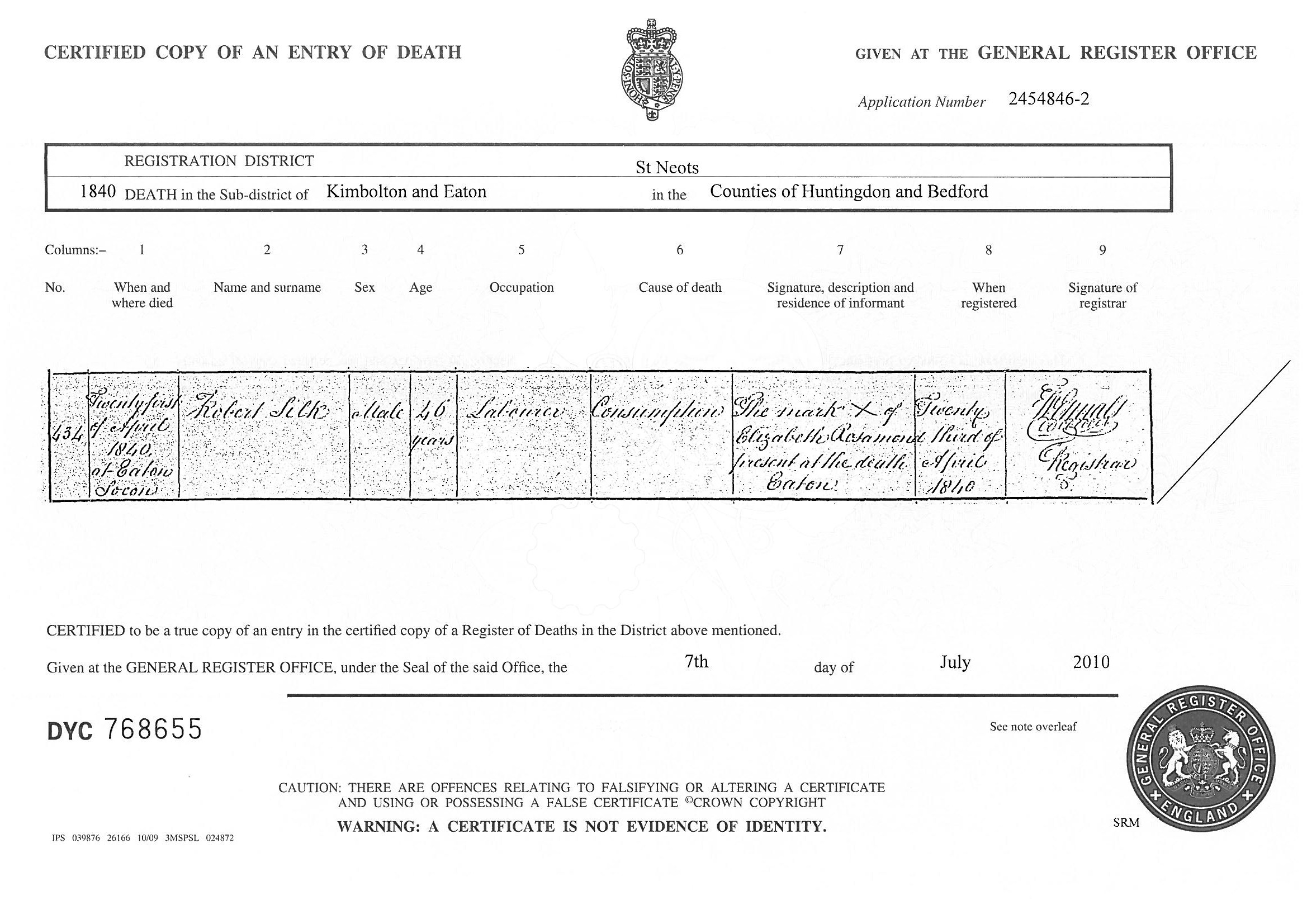
Death certificates are, in fact, a hugely helpful source of information. Any researcher will come across a death certificate at some point or another in their research, but knowing how to use it goes beyond understanding the words it contains. If you need to track down a death certificate in the UK the best way to start is by using the Free BMD database available online. Remember to consider alternate spellings and initials if at some point you draw blanks. If you are unable to find a direct reference, a kind-worded letter to the local registry office may be very helpful too.
The most obvious fact you will learn out from a death certificate -be it a civil registration inscription or a document issued by a religious authority- is the date of death. Knowing when your ancestor died will help you to close a chapter in your family history while revealing a huge number of details. Does the date mean anything to you? Compare the information with the data you have of your ancestor’s birth/baptism; did he die young, or was he an old man? Some death certificates mention the person’s age at the time of death, but quite often you may find incongruities on this score, as very often ages were rounded to the next birthday, or to an estimate number if, for example, the informant -who may well have been a son-in-law or a neighbour- did not know the exact facts in detail.
The fact that the age stipulated on the death certificate does not tally in with the information you believe to be true does not necessarily mean that you are on the wrong track. Remember that in the olden days birthdays were not celebrated in some countries, and thus a lot of people may not have known when they had been born or what their exact age was. My own ancestor Susannah Tippins was 101 years old when she died in 1884, which would mean she was born in 1783; frustratingly her baptism certificate is dated 1789, which leaves me to wonder whether she wasn’t really 101 when she died, or whether she was about six years old when she was baptised in 1789.
The next obvious fact that you’ll learn from the death certificate is the cause of death, a piece of information which for privacy reasons is now being omitted from the death records by the authorities in countries like Spain – a grave mistake in my opinion. The cause of death will of course tell you if the person in question died of natural causes, in an accident or otherwise. If a female ancestor died during childbirth, you may wish to check whether the baby managed to survive and made it to the birth/baptism registration books. If your ancestor died of a well-known illness, did he/she die during an epidemic? What is certain is that, by researching the illness a bit, you will get a clearer picture of the circumstances in which your ancestor died: did your ancestor suffer for a long time before passing away? Was it sudden? Did a doctor certify the death? Did more relatives in your family die of the same disease? Is the disease still present in your family tree? Bear in mind you will often come across archaic medical terms. For instance, my great-grandmother’s death certificate states that she died of “cachexia”, which today is considered a symptom of cancer, rather than as an illness in itself. Words like consumption, apoplectic attack or dropsy are now more commonly known as tuberculosis (or TB), cerebral haemorrhage (or stroke) and oedema. If you need to consult medical terms you are not familiarised with check Rudy’s List of Archaic Medical Terms.
An interesting point to note on the death certificate is where the death took place. One hundred years ago hospitals were much rarer than they are today, not to mention the availability of professional medical care to the general population. Many could not afford a doctor’s fees and very often even struggled to pay for the burial, which would account for the fact that so many of our ancestors ended in communal burial sites known as pauper’s graves. Nevertheless, the vast majority of our ancestors died at home. Do not be surprised, however, if again you come across an incongruity on this score. My great-grandfather died of a massive heart-attack while going up the stairs of a government building (the Inland Revenue, would you believe it). You can imagine my surprise when I saw that his death certificate said that he died at home. Then again, could I really expect to see something like “he died climbing up the stairs of the Inland Revenue”.
The informant might also be an interesting clue to your family puzzle. Sometimes recently bereaved spouses and children could not face having to go all the way to the local registry office to record a death, so it was often up to a neighbour or a son-in-law to record a death. If you have encountered the name before you may well wish to take note of it, as the same person might turn up again in your family history as the godfather to one of your relatives, a witness to a marriage or even that distant cousin you’ve always wondered about. If you want to make sure who the informant was use the available tools to find out, by using the closest census record (was the informant a neighbour living next door?) or the marriage certificates (was the informant married to your ancestor’s sister/daughter/cousin?).
Noting when the death was recorded in the registry can sometimes prove of interest as well. There is usually a legal time-span that people have to record official events -particularly births- before the authorities. However, sometimes did not work out quite as we may expect. On one particular birth certificate I have in my possession I noticed that the mother was unable to make the two-mile journey to the local registry office to register the birth of her son because of the violent storms which affected the area at the time. This may not be a vital piece of information, but it will certainly add a couple of lines when I begin writing my family history.
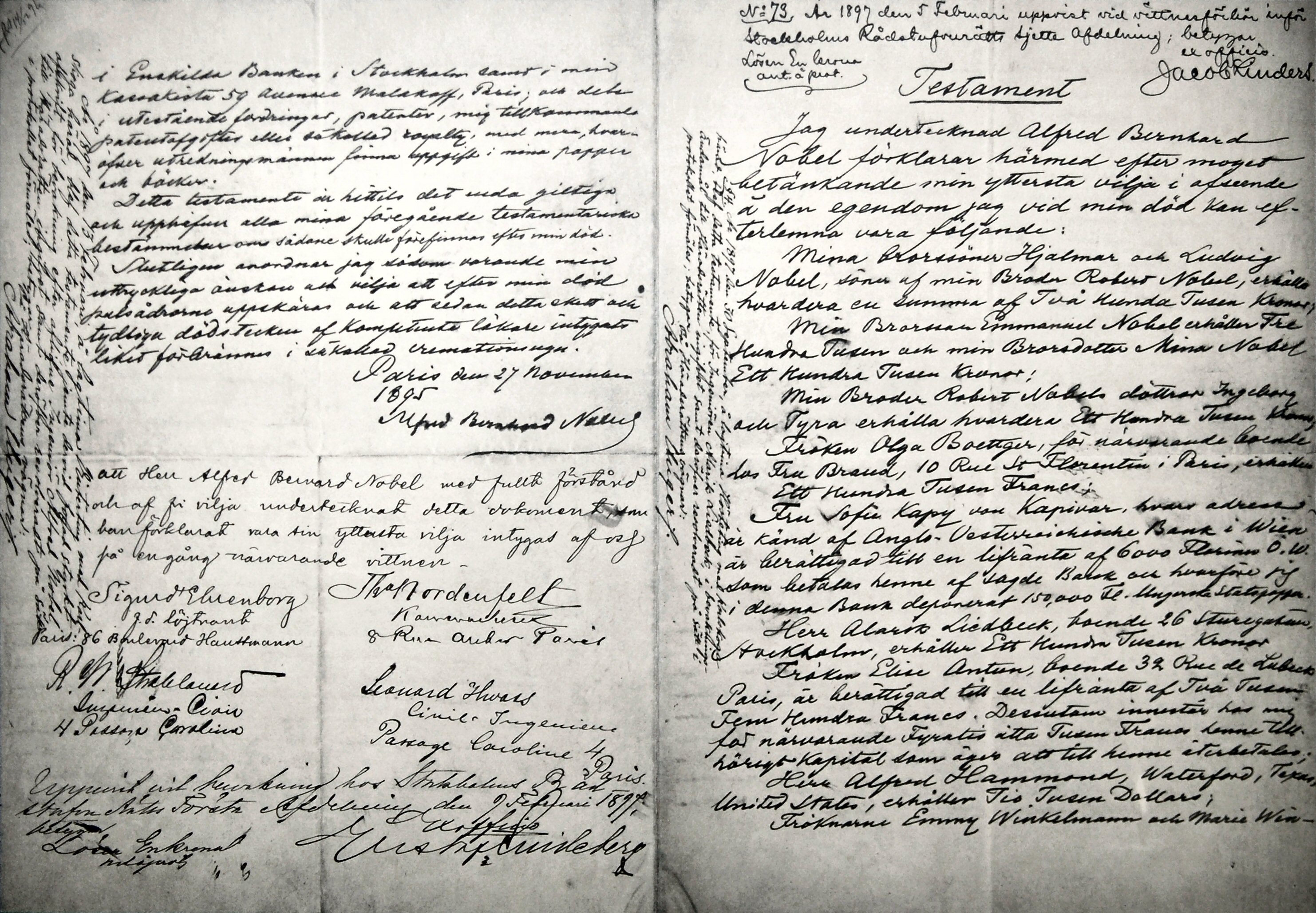
The last will and testament of Alfred Nobel, written in 1895. (Source: Wikipedia)
If you’re looking for a date of death but you don’t know where to start, I would suggest you began around the time of the birth of your ancestor’s youngest child. Consider starting nine month’s prior to the birth of the person’s baby. If your ancestor was born posthumously, you can pin point the father’s death almost to the month without even paying for a death certificate. If your female ancestor died a widow, you can logically surmise that her husband passed away beforehand, and therefore you will be able to narrow the research by a few years. Our ancestors seldom lived into their nineties, but it doesn’t mean that everyone died in their thirties, as it is widely believed. In fact some of our ancestors did lead very long lives; remember that the lower life expectancy is calculated taking into account infant mortality as well, which of course makes the average age at death seem lower than it is today.
Once you have your ancestor’s death certificate you might want to start applying the information to the history you have already. Did your ancestor leave a will? To find out, use the available tools you have at hand, either online or by visiting the local archives (notary registries, local libraries, etc.). Wills contain a tremendous amount of information about your ancestors’ personal life, not only because they tell us how much money they left behind (it’s always nice to fantasize, isn’t it?) but how many children they had at the end and what they left to each one. You may even spot a family feud you had no knowledge of, and realise that “my son whoever” was disinherited for some reason or another.
A date of death will also give you a clue as to where your ancestor was likely to be buried. Why not find out whether there is still a headstone marking the grave at the local churchyard? You may even find a memorial plaque, or your ancestor’s name engraved on a stained-glass window! Check whether there are any references in the parish records as to when the burial or the funeral took place. Remember that in countries like Spain burials usually took place within 48 hours of death, a tradition which is still carried on today, while in Britain they took place days or even weeks after the person had passed away. Do the records state how much the funeral cost, and who was present? Don’t disregard this type of record, for you may well find surprises too. You may find that a funeral took place in your ancestor’s home town, but in fact your ancestor died abroad or drowned in a shipwreck and consequently no burial ever took place in the area.
I think it is quite obvious that death certificates are tremendously helpful. In fact, I think I might well order a couple today…
Welsh actor, comedian and TV presenter Griff Rhys Jones goes through four death certificates while searching for the record of his ancestor Daniel Price:
Last October, my dad and I visited the village in northern Italy where my great-grandmother Giovanna Amerio was born in 1895. It was to be not only a quest for missing family information, but also something of a sentimental pilgrimage.
The information we had about Giovanna’s family was initially very sparse: a date of birth, the name of her parents and the fact that she had a twin sister was more or less everything we knew about my great-grandmother’s life before she packed her bags and made her way to New York in 1912.
Our visit to the San Marzano Oliveto registry office, the local cemetery and the diocesan archives in Acqui Terme helped us to build what turned out to be a huge family tree. Not only did we confirm that my great-grandmother’s twin died in infancy (a fact corroborated by the fact that a younger sister was given the same name as her) but we also managed to find the births of twelve children in total.
One of the more surprising facts was that my great-grandmother’s parents, Pietro and Amalia, had three sets of twins. One of these twins was a girl called Maria Cesarina Amerio, but the family called her Rina. Rina Amerio was born in 1894 and was christened a week after she and her twin brother were born. Lack of future references to the brother has led me to believe that he also died young, a fact corroborated by his absence from family portraits, letters and passenger lists.
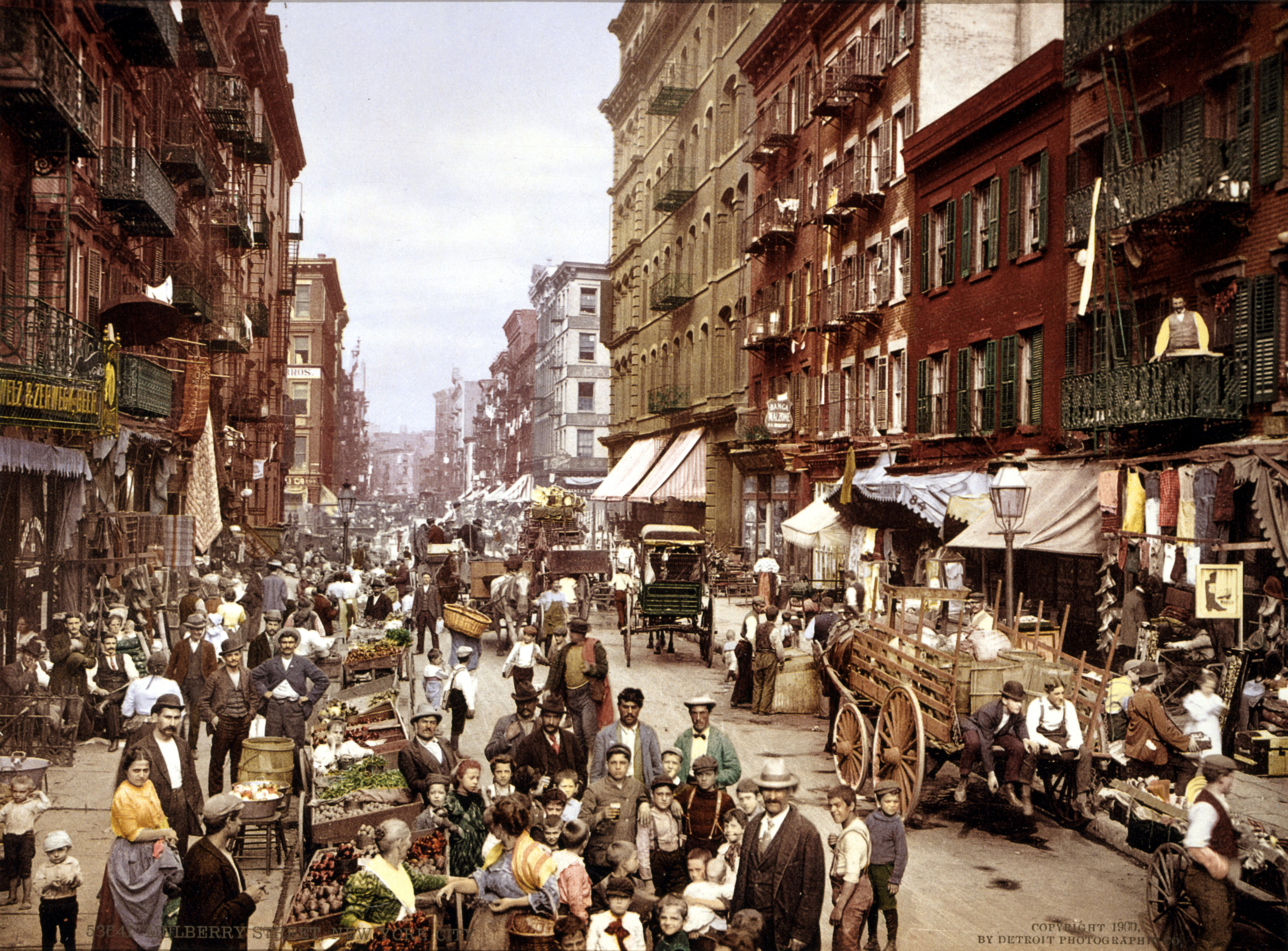
Mulberry Street, Little Italy, in New York City, c. 1900. (Source: Wikipedia)
In the spring of 1910, when Rina was but a girl of 16, she decided to emigrate to America, where her elder brother Giacomo Amerio had moved to recently. Another girl called Anna Amerio (possibly a cousin, since her mother was not Rina’s mother Amalia) was also travelling with her. Her younger sister Giovanna (my great-grandmother) followed in her footsteps, and joined her in New York about two years later.
Initially the two sisters probably led similar lives in America. They both got engaged to and married fellow Italian immigrants, and each had a son, but sadly my great-grandmother passed away in 1920, when she was just 24 years old. Rina, on the other hand, led a long life. In 1914, or there abouts, she married Ermano Graziano (he used the English version of his name, Herman Graziano, after he moved to America), who came from Castell’Alfero. The couple kept in touch with their relatives in Italy and for the next few decades wrote short, heart-felt letters back home. I imagine that the advent of War may have affected their fluent correspondence, but I am sure it resumed when peace came back in 1945.
Rina Graziano’s husband Herman died in New York City in 1963; she passed away in late 1977. I know from available records online that their only son, John P. Graziano (1915-2006) married Margherite Pauline Cerrina (known in the family as Rita). She passed away in April 2009 after a long and interesting life. She and her husband were survived by their son Peter “Rocky” Graziano, who I understand lives in the state of Montana, and the latter’s children (Michael and Pauline Graziano) and grandchildren.
If you belong to the Graziano/Amerio family or know anything about them and would like to get in touch with me I would be very interested in hearing from you. Please drop me a message by leaving a few lines and your e-mail address at the bottom of this post, and I will get back to you as soon as possible. Thank you.
Tomorrow, March 19th, is Father’s Day in Spain. A year ago exactly, a short letter from our newly-discovered Aunt Rita enclosing pictures of my up-to-then unknown grandfather arrived on our doorstep. And my, have we gone a long way since then…
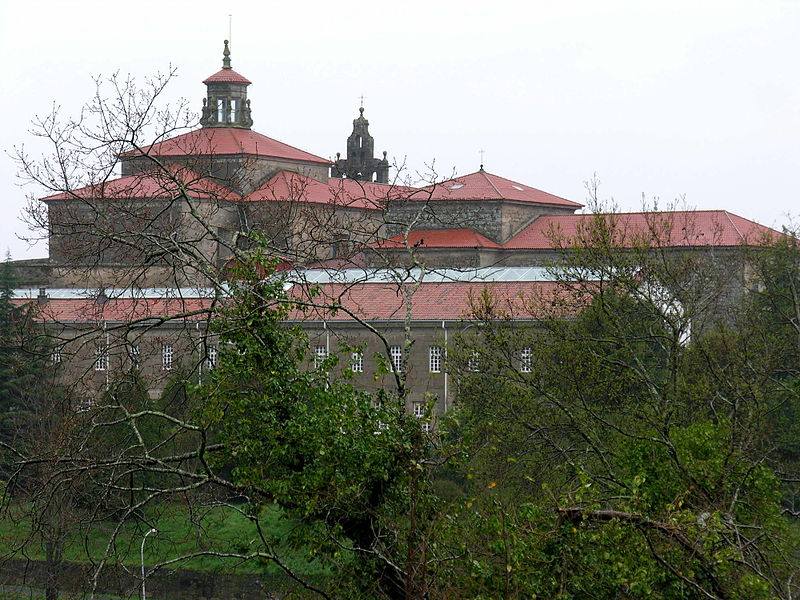
View of Conjo psychiatric asylum. (Source: Wikipedia)
But this year I want to talk about a different father altogether. His name was Ramón Pereiro, and he was born in the parish of Conjo (or Conxo as it is now known), in what was then the outskirts of the Spanish city of Santiago. The village isn’t particularly interesting as far as I know, except for the fact that it houses a psychiatric asylum, but my family had nothing to do with that (I hope!).
Anyway, Ramón was born in 1818, a difficult period for Spain. He had both older and younger brothers and sisters, and belonging to a poor family, he probably stood little chance of making a decent life for himself had he stayed put. Thus, he set off all by himself and by his late teens lived in the fishing town of Noya (Noia), on the north-western coast of Spain.
Soon thereafter he met and married a young local girl called Vicenta Liboreiro, whose paternal family hailed from the Galician town of Tuy (Tui), on the Spanish-Portuguese border. Their wedding took place in August 1841.
Ramón and Vicenta soon welcomed their first child, a boy whom they called José Antonio. However, tragedy struck the family when in January 1845 the child died. Exactly two months later, Vicenta delivered a second son who was christened José Salvador; sadly, he only reached 18 months.
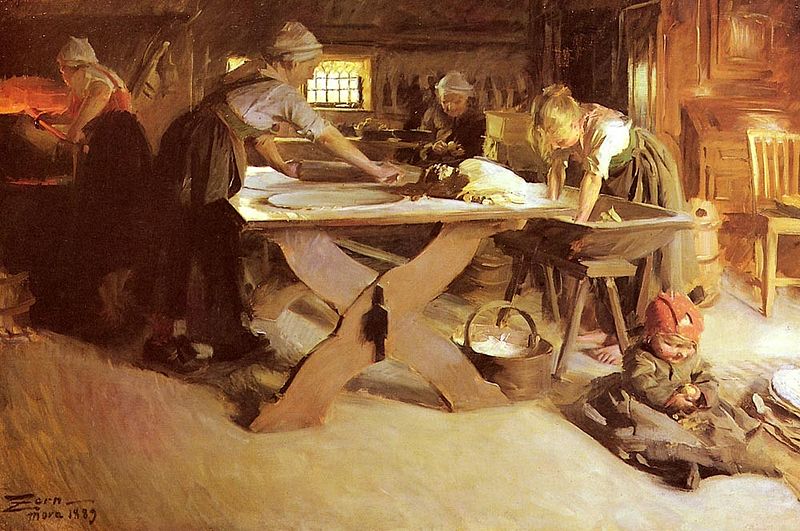
“Bread baking” (1889) by Anders Zorn. (Source: Wikipedia)
This seemed a bad start to a marriage which apparently was based on the nearest thing to love one can imagine for two youths living at a time of constrained and puritan social behaviour. The couple would have undoubtedly struggled, as Ramón’s wages as a mere tailor and Vicenta’s pay as a simple baker would not have been great. This was, however, just the beginning.
At some point in the late 1840’s, Ramón left Noya temporarily, perhaps to visit his relatives back in Conjo. His wife was left behind to tend to their house, and during her husband’s absence, became pregnant. The identity of the baby’s father has not been recorded. Then, in July 1849 Vicenta gave birth to a boy whom she called José Antonio, in memory of her first-born baby.
One can only guess at how Ramón would have reacted to the news of his wife’s extramarital affair. Even by today’s standards one could well expect the marriage to crumble, particularly given the morals of the time, which would have seen Vicenta being cast out into the darkness and becoming a social pariah. However, nothing of the sort seems to have taken place. Where many may have seen rage, Ramón saw room for forgiveness. Perhaps it was the loss of their two boys, and the unexpected arrival of a new-born baby (even if it wasn’t his) that prompted Ramón to accept his wife and her baby, and to carry on as if nothing had happened. No wonder that their grandson, my great-grandfather, described Ramón in his memoirs as a buenazo (which roughly translates as “kindly”, “good-natured” and by extension “long-suffering”).
I don’t know whether Vicenta’s son survived childhood or not, but I do know for certain that she and Ramón decided to give their marriage another go. Before a year had gone by, a baby girl, Antonia, was born, followed by Joaquina two years later, and then Ramón, Carlos, José and Manuela, my great-great-grandmother. I shudder to think that, had Ramón’s character been different, and had he not chosen to pardon his wife’s infidelity, my great-grandmother would never have been born, and I would have been history.
Of course, the marriage did suffer a few more sorrows, but I have reason to believe that when Vicenta died of pneumonia in 1880, Ramón truly mourned her. His health probably declined in the years that followed, and he probably had to give up running the tavern he had opened (obviously being a tailor didn’t suit him very well).
In 1882 his son Carlos died of tuberculosis aged just 24, and two years later Joaquina died of the same ailment, leaving behind two young daughters to be brought up. Ramón finally gave in on a cold January day in 1887. His remains were buried beside those of his beloved wife two days later, but his memory was preserved several generations later, as four of his grandsons were given the name Ramón. I think that proves that, not only was he a loving husband, but also a much-loved father.
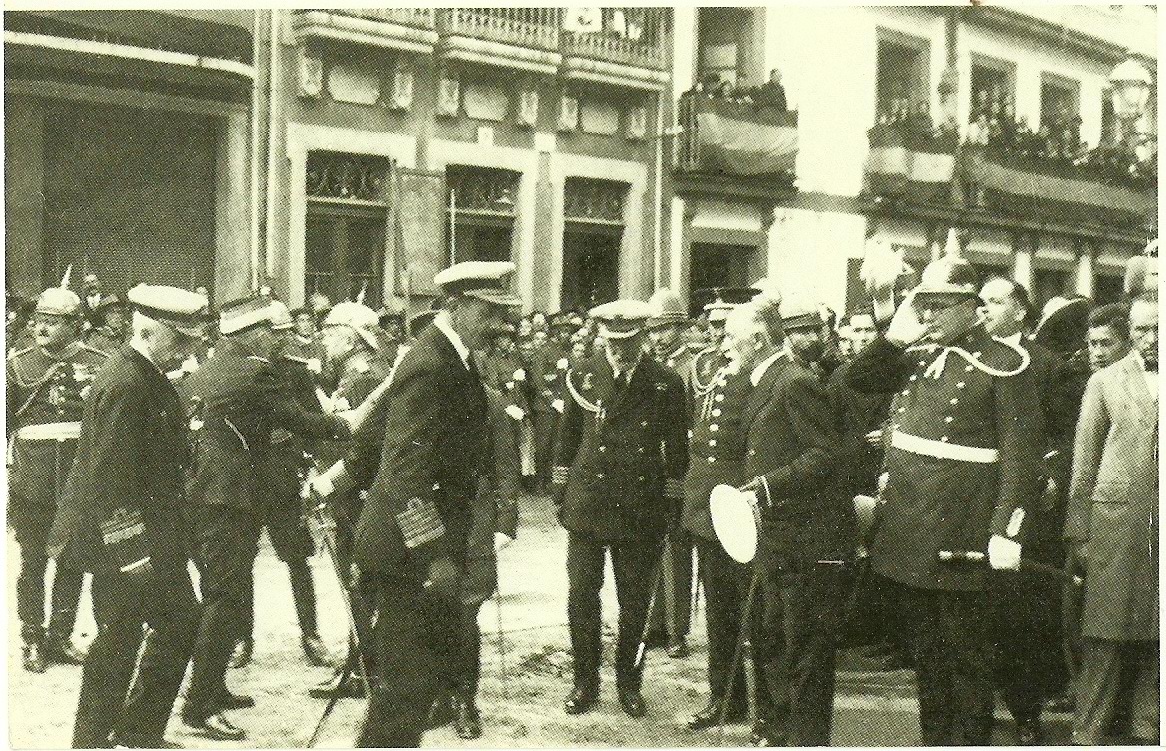
Alfonso XIII is received by local dignitaries in La Coruña in 1927. My great-grandfather’s head can be partially seen, third from right. (Source: Foto Blanco)
The other day I walked into one of my favourite bookshops in town: Librería Arenas. As I am writing researching and writing about the history of my grandmother’s family, I was wondering whether there might be a good reference book about life in La Coruña around the time of the Spanish Second Republic (1931-1936), which preceded the Civil War.
As my great-grandfather was a political conservative -he was a staunch supporter of the ousted Spanish monarchy, held zealous religious views (and consequently feared persecution against Catholics in religiously-hostile Republican Spain) and had been politically active prior to 1931-, I wanted to find a book which would tell me about what life would have been like at the time for a man of his position and condition.
Sadly, my quest for such a book was not successful, but on the whole it was a positive and fruitful afternoon. A friend of mine who’d accompanied me to the bookshop pointed out a book about a Royal visit to La Coruña. I leafed through the slim volume without much hope or interest, partly because I soon noticed that the authour had made the fateful mistake of confusing one of the visiting princes (Prince George of the United Kingdom, future Duke of Kent) with his elder brother Albert, Duke of York. Such mistake was understandable, as Albert, Duke of York later became King not as Albert I, but rather as George VI, in the aftermath of the succession crisis of 1936.
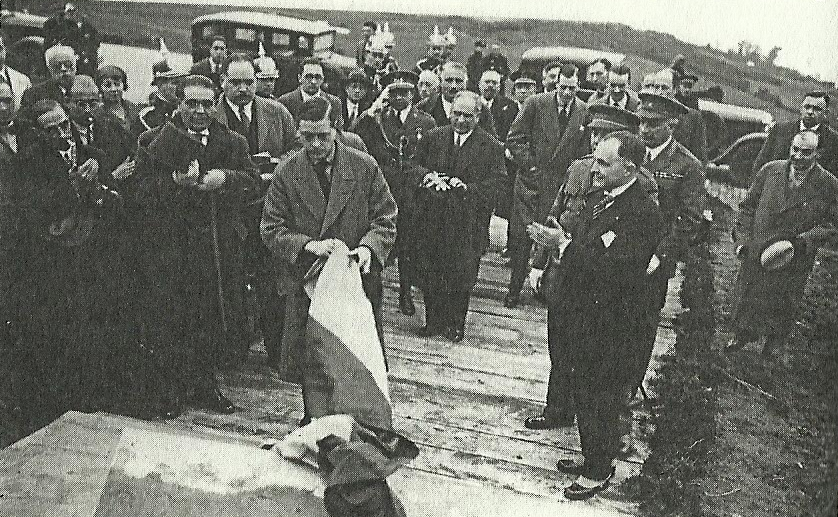
Edward, Prince of Wales, unveils a plaque to the memory of Sir John Moore in La Coruña on 19 January 1931. My great-grandfather stands behind him, on the left. (Photo by express and gracious permission of Mr Manuel Santiago Arenas Roca. Total or partial reproduction, distribution, public communication or modification is prohibited without his express authorization)
But besides poor research on the author’s part, I also noticed a remarkable picture: the Prince of Wales, who in 1936 became King Edward VIII and was later created Duke of Windsor by his successor, appears in the forefront of the photograph unveiling a plaque to the memory of Sir John Moore, a British lieutenant-general who lost his life in the Battle of Corunna (1809) fighting against Napoleonic forces. Behind him, dressed in what seems to be a long rain-coat, is none other than my own great-grandfather! I needn’t tell you that I purchased the book without hesitating.
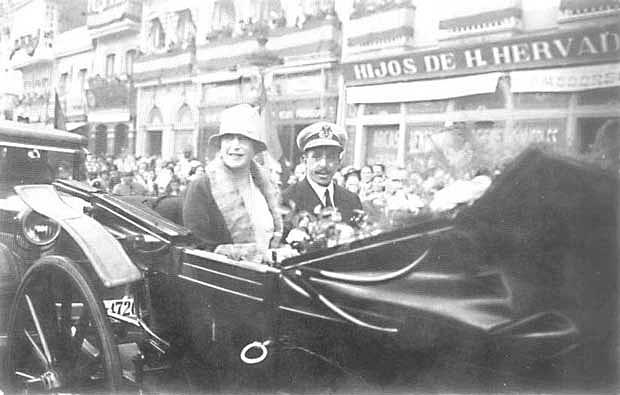
An old cutting from a 1990’s calendar had proved that my great-grandfather had already met a Royal personality years before, when in September 1927 he had been part of the reception committee which welcomed Alfonso XIII of Spain and his wife, Victoria Eugenia (born Victoria Eugenia of Battenberg and one of Queen Victoria’s many grandchildren) to La Coruña. Back then, the King and Queen had paid a visit to the city -the King’s third and the Queen’s first- to inspect the improvements of the new railway line which connected La Coruña with Zamora. It was to be their last visit to the city.
King Alfonso XIII of Spain and his British-born wife, Queen Victoria Eugenia, parade through the streets of La Coruña in 1927. It was their last official visit to the city. (Photo courtesy of La Opinión).
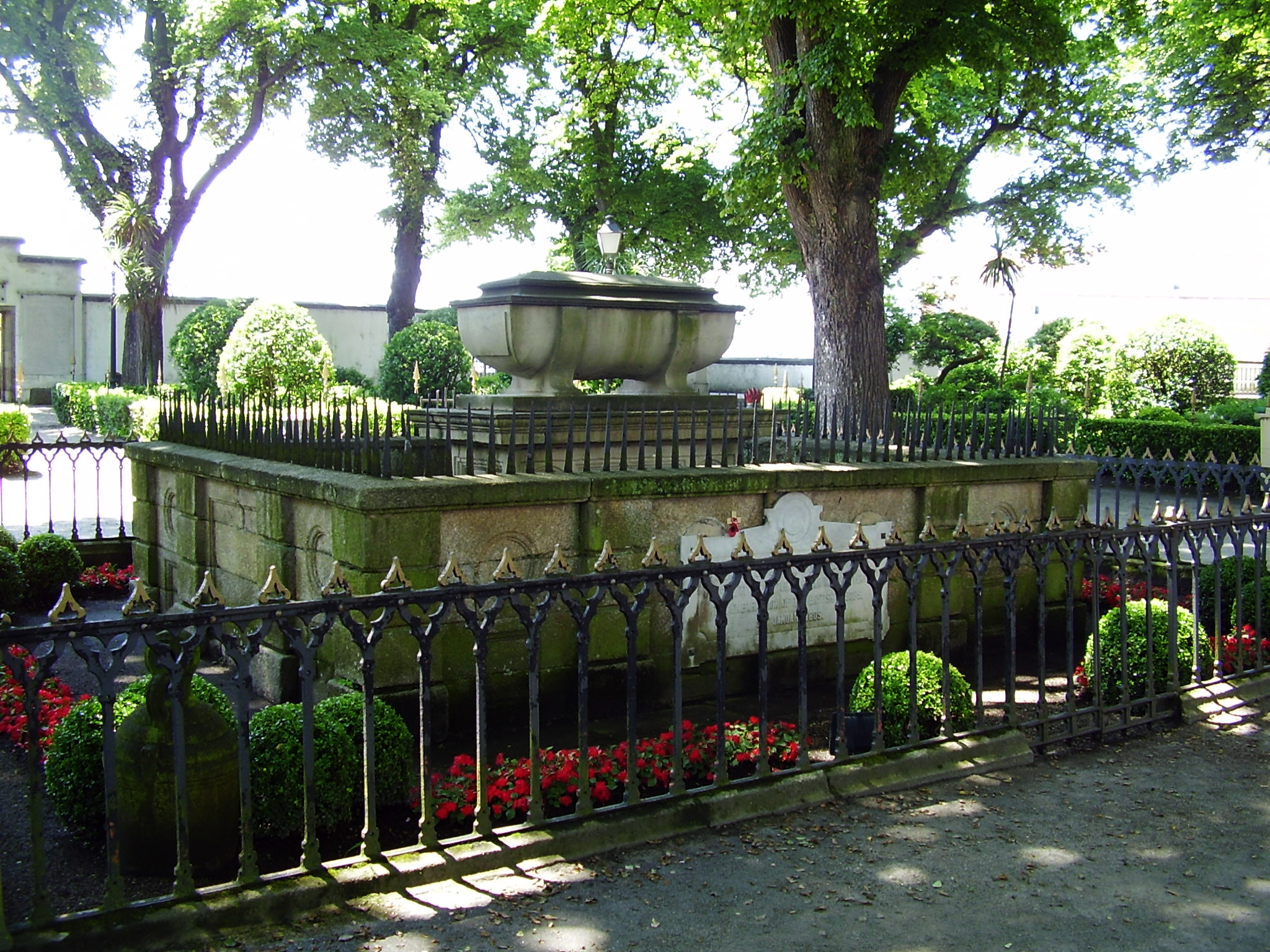
In January 1931, with Alfonso XIII’s monarchy on its last legs and the Second Republic looming over the horizon, the Prince of Wales and his brother, Prince George, visited Spain before embarking on an official trip to South America. They entered Spain by car through the north from France, and made their way to Santander, where they boarded the ship Oropesa, which would take them, not without delay, to La Coruña. There they visited the tomb of Sir John Moore and then unveiled the above-mentioned plaque, which still exists today. However, Edward and George only spent a few hours in the city, for they still had to make their way to Santiago, where they saw the remains of St James the Great, before travelling to the port-city of Vigo, then as now an industrialised hub of the Spanish North.
Sir John Moore’s tomb and memorial in La Coruña. (Source: Wikipedia)
The Princes then made their way to Bermuda, and from there proceeded to South America. The Prince of Wales, it was reported, was so pleased with what he saw of La Coruña that he had promised to return on his way back home the following April. Alas, political developments at the time, with the monarchy recently toppled and the Second Republic still being celebrated by the hysterical masses, it was judged best that the Princes should return to London straight away.
When the picture of the Prince of Wales and my great-grandfather was taken in 1931, one of my great-aunts (who is fortunately still alive) was only three weeks old. Another of my great-aunts was born over a year later, but perhaps more poignant is the fact that my great-grandfather would soon lose his job on account of his political views. It was, after all, a very dangerous time for someone not in tune with the ruling regime.



 The Genealogy Corner