Part I: A mound of relatives

Lately I dedided to do a bit of research on the Mounds, the family of my 3x great-grandmother Ellen. But before delving into the past and (hopefully) unearth some skeletons, let’s learn a bit more about Ellen herself.

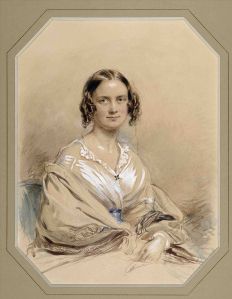
To start with, Ellen Mound is a bit of a mystery, despite the fact that her life is fairly well documented thanks to census returns and her children’s baptismal records. I even have a photograph of her (albeit not a very clear one, and sadly her face cannot be easily made out), showing her sitting in front of her cottage in rural Herefordshire, next to her husband and youngest son, Richard Thomas.

A distant relative once shared an old family memoir about Ellen’s feisty character, so I have always imagined her to be a somewhat matriarchal and dominating sort of woman, more formidable than admirable, though this of course may be my own bias taking over. For all I know, she may have been the sweetest Granny imaginable. Ellen and I finally “met” a few years ago when I went on a trip through Herefordshire and found her grave; the sober headstone reads “Her End Was Peace“. A fine epitaph for her feisty, formidable woman. But what were Ellen’s origins? What was her background like? Why did her character turn out the way it apparently did?

Ellen was born in or around 1824 in Wormsley, a small parish a few miles outside of the city of Hereford. My research has led me to conclude that she had, at least, an elder sister called Mary, and two younger siblings called Sarah and Richard. It is quite possible that Ellen named her youngest son Richard Thomas in her brother’s honour.

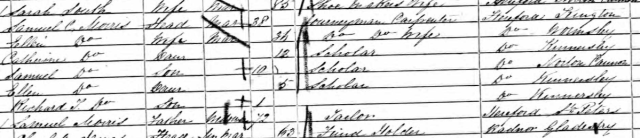
The 1851 census entry confirming Ellen (under her married name) as being from Wormsley, Herefordshire.

The 1851 census entry confirming Ellen (under her married name) as being from Wormsley, Herefordshire.

Ellen seems to have belonged to a close-knot family. Years after her death, her sister Sarah’s granddaughter Ivy, who had recently lost her father, was taken to live with Ellen’s own son, Samuel Morris, and his family in Ivington. The Morrises raised Ivy as one of their own, but it was not until a few years ago that I actually discovered Ivy and the Morrises were related through the Mound family.

Another connection that drew the Mounds closer together was the marriage of Ellen’s brother, the aforementioned Richard, to Emma Savigar (or Saviger), who happened to be his first cousin via his aunt Mary Savigar (née Mound). This confusing web of relations made me take a keener interest in the family’s roots and background, and so this is what my research has yielded so far.

The Mounds originally came from the southern part of neighbouring Shropshire, not far from that county’s border with Herefordshire. The most distant ancestor I have managed to trace is a man called Thomas Mound, Ellen’s paternal grandfather, whose origins are, so far, a mystery. All I know is that he is likely to have been he seems to have been the church warden in St John the Baptist’s church, in the village of Hope Bagot.

Thomas and his wife Ann (whose maiden name and origins, incidentally, are just as obscure), had at least five children, all of whom were baptised in Hope Bagot: William (1796), Thomas Jr (1798), Richard (1802), John (1805) and Mary (1808). Although all five were born in the same village where their father worked, later census returns of the 19th century prove that none of them remained in Hope Bagot for very long. In fact, by 1841 they were all living in other areas of the county and of the country, leading fully independent lives from their parents and each other.

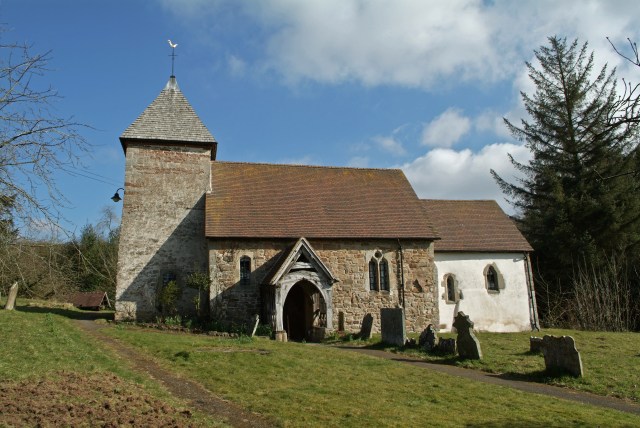
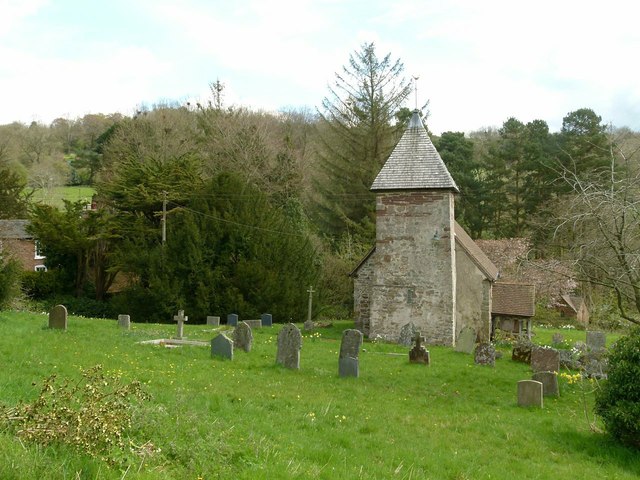
The church of St John the Baptist, Hope Bagot in Shropshire where the Mounds lived in the early 1800's.

The church of St John the Baptist, Hope Bagot in Shropshire where the Mounds lived in the early 1800’s.

William Mound, the eldest of the five siblings, was christened on 1st May 1796. By the time he turned 30 he had already married a woman called Mary (maiden name unknown), who would be his companion for the next five decades of his life. The couple settled in Trysull, at the time a rural village which is now a suburb of the larger city of Wolverhampton. It was there that their first four children were born: Harriet (born in 1825), Helen (1827), Anne (1833) and Thomas (1836), the couple’s only son. The daughters’ lives remain a mystery, although the fact that little Helen doesn’t appear in any census returns makes me suspect that unfortunately she died young. A further daughter, Mary, was born in nearby Seisdon in 1838.

In 1851, 25 year-old daughter Harriet is listed living at home in Seisdon, close to Trysull, with her mother, her brother and her youngest sister Mary. Both Harriet and mother Mary worked as seamstresses, while father William worked as a groom (and consequently lived in a separate house nearby, probably in the service of a local employer). Years later, youngest daughter Mary was recorded as a dressmaker, having outlived her parents.

The family’s only son, Thomas, began working at a very early age. By 1851 he was in service, probably working as a stable-boy, since he would later go on to become a groom and then a coachman, thus following in his father’s footsteps. He married Mary Ann Lewis and moved to Merseyside, where their brood of (at least) twelve children were born over the next 24 years of marriage. I am far from having traced their individual personal stories so far, so for the time being I will just mention them by name: Belinda Boyd (later Haslam), Harriet (later White), William Lewis , Thomas , Ellen Gertrude (later Corrin), Mary Louise , James , Annie , Henry , Charles , Emily Louisa and Arthur Edward. Phew! I wonder if any of their many descendants are reading this article right now?

The father of this proud brood lived until the year 1914, dying a few months before the outbreak of World War I.

Stay tuned for more updates on the Mounds, as next time I will be tackling the other children of Thomas the church warden.

Who knows how many of my Mound relatives are buried in the churchyard of Hope Bagot!

Who knows how many of my Mound relatives are buried in the churchyard of Hope Bagot!


Posted in 1851 Census, 1861 Census, 1871 Census, 1881 Census, Adoption, Death, Downstairs staff, England, Genealogy, Herefordshire, Hope Bagot, Shropshire, Wolverhampton, Women, World War I, Wormsley | 1 Comment

Mum’s AncestryDNA adventure

When my Mum was diagnosed with a double case of breast cancer several years ago, we knew that a long battle was about to start. What we didn’t know is that DNA, or genealogy for that matter, would come into the equation.

We might have known that the fact that the numerous cases of cancer within the last four or five generations were probably all linked, but it was not until recently that the doctors confirmed my Mum carries a genetic mutation (oddly enough, common among the Jewish populations of Eastern Europe) that a pattern began to emerge. What if all those cancer patients in our family tree carried the same genetic mutation? If so, where does it come from? Could we really have some Jewish blood in us?

When I took my AncestryDNA test back in spring, I was very surprised to find that I have a small but perhaps poignant 3% of European Jewish genes. I therefore bought an AncestryDNA kit for my Mum and sent her sample through a few weeks ago. Earlier this week, at long last, her results came in!

You may remember from my post back in May that, as far as I know, my Mum’s side is almost all 100% Spanish, save for an ancestor of hers in her 8th generation who was Genoese (that’s from Genoa, in NW Italy). That means that of my Mum’s 128 ancestors in the 8th generation, one of them was not Spanish-born and all the rest were (until I can prove it otherwise).

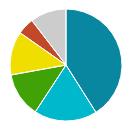
With such a prognosis, I would have expected my Mum’s DNA results to be fairly straightforward. A large chunk of Iberian Peninsula, perhaps some Mediterranean, and that’s it. Imagine my surprise when she turned out to be (brace yourselves) 41% Iberian Peninsula, 18% Mediterranean, 13% Great Britain (where did that come from?), 13% European West, 5% European Jewish (bingo!), and a sprinkling of African North, Scandinavia and Middle East.

Although by no means conclusive, and by no means indicative that the dreaded cancerous gene does come through the “Jewish” line we apparently have flowing in our veins, it may appear that my Mum’s Jewish inheritance (which is stronger than my feeble 3%) could really hold the key to our medical history.

My Mum's genetic composition is obviously much more complicated than I thought...

My Mum’s genetic composition is obviously much more complicated than I thought…

While I ponder how we could have British or even African blood through my Mum’s side, I am now tempted to have two great-aunts tested, one from each side, as there are few others left to ask from the previous generations, and it may go a long way in explaining how on earth did we manage to get 1/10 of our genes from an East European Jewish ancestor of whom we know nothing!

Posted in DNA, Galicia, Genealogy, Italy | 4 Comments

My Italian ancestry online

A year or two ago, I got an e-mail from someone in America who was carrying out a research into his brother-in-law’s Italian ancestry. By pure coincidence, the man’s family came from the small Piedmontese village of San Marzano Oliveto, where my very own great-grandmother was born in 1895 (and which she then left to start a new, and all-too-brief existence, in New York City). That same person told me that he was researching some surnames which may have ties with my own family. Now, although we have not established a link, he did share with me one important source of information which I had completely disregarded in my previous research.

FamilySearch has, quite literally, millions and millions of documents from all over the world which are now at anyone’s disposal on their website. Among them are civil records of San Marzano Oliveto covering the crucial years of 1866 to 1910. Roughly speaking that covers the years when my great-grandmother’s parents were growing up and having children, all of whom are now recorded online. But it is not only birth records that can be viewed. You can also view and download marriage records, banns, death certificates and even cittadinanze, or citizenship records.

Of course, having only a limited period to check makes it impossible to build a family tree many generations prior to the birth of my own great-great-grandfather Pietro, who, having been bon in 1859, is not recorded on civil records online. So, how else can be build a tree when we have such a limited time-frame?

The answer is fairly simple – use the other records you have at hand by applying a bit of logic. If Pietro was born in 1859, there is a fairly good chance his parents died after 1866, when he would have been a small child. It took me a while until I actually found the death certificates of his father (1887) and his mother (1903), and while doing so, I also came across the death of a younger brother in 1884 and the deaths of countless relatives. Rather usefully, death certificates in Italy mention the names of the deceased’s parents – bingo, yet another generation to add to my tree!

Marriage records are of course very handy too, because they will usually hold the names of the bride and groom’s respective parents. Not only will you gather handy information about the newlyweds (what was their profession, were they widowed beforehand, were they living in the same place…) but you will also establish definitive links with those parents you unearthed through death records – remember that one record is no guarantee of accuracy, and names, surnames and identities could easily have been confused by an inattentive registrar.

So, if you are stuck with your family tree and cannot travel to the place where your ancestors came from, remember to check online sources regularly for changes and updates, and to share those findings with those contacts who may have an interest in the same geographical area.

Posted in Birth, Death, Genealogy, Italy, Marriage | 2 Comments

How to order a Spanish birth certificate?

One of the most common questions I usually get when discussing genealogy is “how can I get my ancestor’s birth certificate from Spain?”. The procedure is actually pretty straight-forward and it usually only takes a few days – if you’re lucky!- to reach your doorstep. Oh, and most importantly, it’s free of charge wherever you live!

Going on an official government’s website can be a bit confusing, not least because of the language barrier, which is why I have prepared a simple PDF manual that will hopefully help you to order a Spanish birth certificate step by step.

Remember you can always contact me if you have additional questions or if anything remains unclear!

A traditional Spanish birth certificate before the introduction of telematic forms.

A traditional Spanish birth certificate before the introduction of telematic forms.

Posted in Birth, Civil Registration, Genealogy, Spain | 28 Comments

Beware of names!

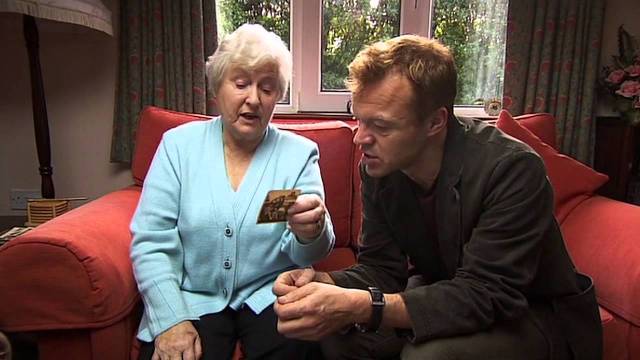
Graham Norton and his mother were puzzled by their ancestor's ambiguous use of two different surnames...

Graham Norton and his mother were puzzled by their ancestor’s ambiguous use of two different surnames…

If, like me, you have ever had trouble locating an ancestor’s name knowing you are looking in the right place, you will know how frustrating it is to hit a brick wall. Hopefully this article may offer some further guidance.

You may recall when on oneWho Do You Think You Are? (UK) episode, on his quest to unearth his Protestant Irish roots, Graham Norton had some difficulty fathoming out whether his great-grandmother’s family name was Logan or Dooey. As the woman, by name of Mary, had not been married before, Graham was not initially able to explain why she should have two surnames. It eventually transpired that, while Mary was illegitimate (and her birth name was recorded as that of her mother’s maiden name, i.e. Logan), a rather convenient marginal note on the baptism certificate which had been scratched out mentioned that the father was a Fred Dooey. Although the episode only connects the facts, which go to explain why Mary would have used two surnames during her lifetime, it does not make a point which I find is very valuable to any genealogist: just because your ancestor used one particular form as his or her surname on an official document does not necessarily mean that he/she was known by that name. In the above example, it is perfectly possible that illegitimate Mary Logan was commonly known as Mary Dooey because it is likely everyone around her knew who her father was but, of course, she would not have been legally entitled to call herself anything but Logan on an official document, much less her own marriage certificate.

Surname order in Spain was not regulated until the end of the 1700's.

Surname order in Spain was not regulated until the end of the 1700’s.

A similar case where someone used a different name other than the one recorded on a birth certificate was the grandfather of a friend of mine. Born in the Canary Islands (where, it seems,  usage of aliases and fictitious first names is commonplace), the man -by name Manuel- had actually been recorded in the Civil Registry office as Mistral. You could argue that, in handwritten form, both names can look similar and may therefore be confused, but it was only by checking identity cards and the certificate itself – where incidentally date of birth and parents’ names coincided perfectly- that we grasped that Mistral actually went by a different first name. Maybe he disliked his birth name and never bothered to change it officially?

Names can also be horribly confusing, especially if you dig back enough. In Spain, everyone has two surnames: the first one is that of the father, and the second is that of the mother. For instance, Pablo Picasso’s real name was Pablo Ruiz Picasso, Ruiz being his father’s first surname, and Picasso being his mother’s first surname). The mother, María Picasso López, inherited the Piccaso surname from her father, and López from her mother, and so on… Women in Spain don’t take their husband’s surname upon marriage, which makes researching maternal lines easier than in other cultures that have different practices… Or so I thought, because if you are researching your Spanish ancestors pre-1800 you may find that the order of surnames can be very confusing as well. In fact, it was common practice during the 1700’s for daughters to take the mother’s surname, while sons would take the father’s. This means that my ancestors Juan Pérez and María Domínguez could easily have been the parents of two children called Carlos Pérez and Susana Domínguez, and you would not guess from the outset that Carlos and Susana were related, much less full-blooded siblings!

So, a note of caution, fellow researchers. Beware of names, beware of surnames, and beware of surname order. In fact, just beware when researching your family tree!

Posted in Birth, Civil Registration, Galicia, Genealogy, Illegitimacy, Ireland, Marriage, Spain, Who Do You Think You Are? | 1 Comment

My AncestryDNA Adventure

The following entry has been written over a period of several weeks.
IMG_8810

25 March 2016

It was one of those lazy mornings when, instead of rushing to get ready for work, as I should, I got glued to the minuscule screen of my iPhone and became engrossed watching YouTube videos and how random people talk about their DNA results sent to them by Ancestry.

My appetite wetted, and at that, I decided that I should once and for all take the famous DNA test, and so ordered a kit online. Now, at this point you should be made aware of the fact that I know a considerable amount about my most recent ancestors (at least, those who lived within the last 200-300 years). Naturally the DNA test will tell me about my most remote ancestors, not necessarily those I know by name, but those who lived way back in the past, maybe even thousands and thousands of years ago, and whose names, alas, I shall probably never know.

Order made, card details submitted, payment goes through, and the Ancestry DNA kit is shipped on the same day I order it. The online tracker tells me it goes from Bell Gardens, California to Los Angeles, and from there flies to New York before making it to Belgium, where I am based. The impatient wait begins.

7 April 2016

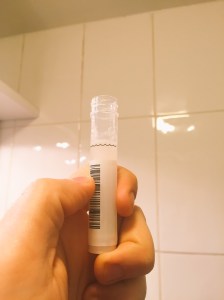
After two agonising weeks, my Ancestry DNA kit is delivered! It arrives at work in the morning, and by nightfall I have devoured the simple instructions that are enclosed, and placed the test tube next to my toothbrush so I would remember to give my saliva sample early next day (i.e. spitting into a test tube until the level of spit reaches a particular level!). Note that one must not chew gum, eat, drink or smoke at least 30′ before providing the sample. Once everything is correctly sealed and placed within its bespoke little box, the tube is whisked off to the lab that very Friday.
IMG_8820

9 April 2016

So I’m at the Who Do You Think You Are! Live show in Birmingham (England, not Alabama, I hesitate to clarify) and one of the first places I stop is the Ancestry DNA stand. I start chitchatting with one of the girls behind the counter, and before I know it I’m buying a second kit (price marked 40% off the original amount) for my partner. After a few minutes of wandering around, I decide to buy a third kit for my dad, who is also very interested in our family origins. I have yet to convince my mother to do the test, but my bank account will surely appreciate waiting a bit until I fork out another 120 Euro for a fourth kit!

12 April 2016

My partner sends off the kit as instructed. I can feel the excitement building up in both our faces… My dad’s kit is neatly put away until my next trip home.

23 April 2016

Mad! Utterly mad! My Ancestry DNA account tells me they still haven’t received my sample. Fair enough, as it takes 6 to 8 weeks to carry out the whole procedure, and they may be a bit behind. But my partner’s has just been received! Who has my spit???

25 April 2016

The e-mail notification informing me that my DNA sample is in has (finally!) arrived. About time! Sorry, I’m just too nervous for words… Excitement building up…

10 May 2016

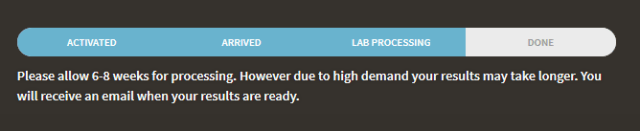
I am notified by Ancestry that my sample is currently being tested at the lab. Time to update the old family tree on Ancestry – after all, what’s the point of doing the test if I can’t tear down some of those nasty brickwalls by (hopefully) linking up with some close matches?
The third stage of the AncestryDNA test has begun!

The third stage of the AncestryDNA test has begun!

13 May 2016

Time to have a good recap before my results are in, and reflect on what I know about my ancestors, and what I think I know about them. Here it goes:

I am the product of what you might call a mixed marriage (not a mixed race marriage, mind you, as both my parents are European). I’ll start with my maternal side: my Mum comes from NW Spain, specifically from an area called Galicia (not to be confused with the area of the same name in Poland). Until a few years ago I was under the impression that all her ancestry, as far as I was able to tell through documents, came from this particular region in the Iberian Peninsula. Most of my maternal ancestors lived along the coastline, where of course sea-routes favoured a fluid exchange of peoples in the olden days far more than across land does today. It was therefore not a wholly unexpected surprise when I found out that an ancestor of mine who settled in the area actually came from the sea port of Genoa, in modern-day Italy. This link to the Mediterranean could open up a whole new range of genetic ancestors – would my Italian ancestors have been Jewish refugees expelled from Spain in the 1400’s? Or perhaps they had links to the Barbary Coast in modern-day Algeria thanks to the sea trade? Perhaps there is even a whiff of the Middle East among my genetic pool…
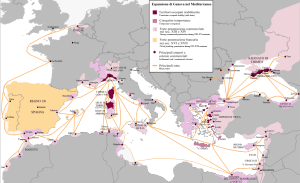
The maximum expansion of the Genoese Republic.

The maximum historical expansion of the Genoese Republic.

But of course, Galicians are thought of as Celtic people (even though the Celtic element is probably more diluted and less common than we are made to believe), so there is a chance my ancestors actually came from Cornwall, or Brittany, or Ireland, or Scotland… That remains to be seen once the results come in.
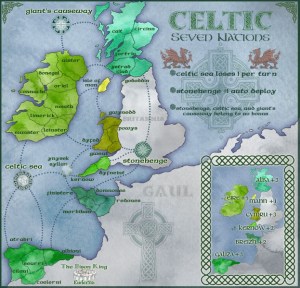
The "Seven Celtic Nations" which includes Galicia, where most of my maternal ancestors lived at one point.

The “Seven Celtic Nations” which includes Galicia, where most of my maternal ancestors lived at one point.

My father’s side is equally mysterious, and considerably more varied than my maternal ancestry. My paternal grandfather, although born in New York, was the son of Italian emigrants who came from Piedmont (a landlocked region in NW Italy wedged between Switzerland, France and the Ligurian coast). Astonishingly, all my paternal Italian ancestors as far back as the early 1800’s came from different villages and towns within a radius of 5 miles. Needless to say the repetition of several surnames could suggest a considerable degree of inbreeding that I have not yet been able to suss out. I don’t think that branch will bring many exotic branches into the equation though…
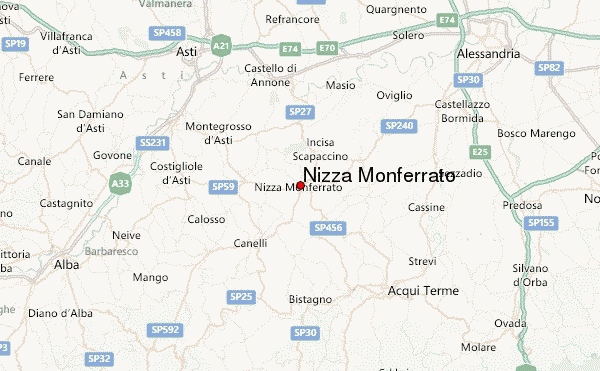
My paternal grandfather's ancestors came from a 5-mile radius around Nizza Monferrato, in the Italian Piedmont.

My paternal grandfather’s ancestors came from a 5-mile radius around Nizza Monferrato, in the Italian Piedmont.

My paternal grandmother, on the other hand, was British (more specifically, English). Most of her ancestry relates in some way or other to villages strewn across the county of Hereford, in the west of England, bordering with Wales. But of course, nothing in genealogy is ever completely black or completely white: one of her great-grandmothers came from Worcestershire (which is next to Herefordshire), and the prolific existence of surnames like Griffiths and Evans could suggest there may be close ties to Wales too. Welsh ancestors? Yes, please! And that’s not all, for there is an unusual surname among my ancestry, Tringam (aka Tringham or Stringham) which, unverified online sources claim, may be of Huguenot origin and would have therefore originated in France.
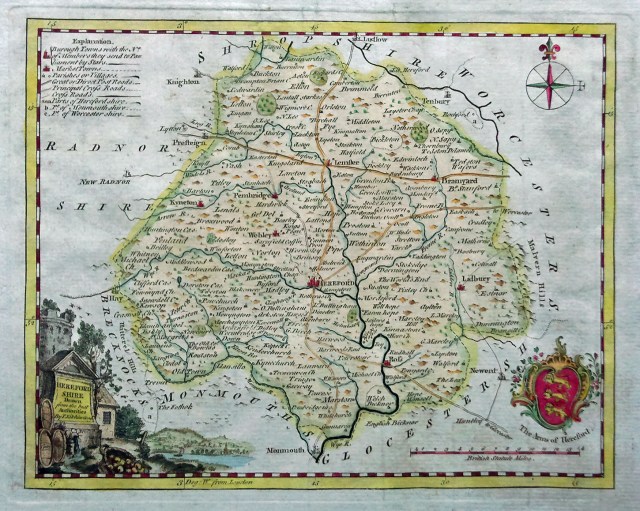
Herefordshire, in western England, where many of my paternal grandmother's ancestors lived as far back as the 1600's.

Herefordshire, in western England, where many of my paternal grandmother’s ancestors lived as far back as the 1600’s.

That’s what I know, or think I know, about my ancestry as of May 2016. And now for the truth…

23 May 2016

And now for the cream… My AncestryDNA results are in! And not before time, as my partner’s results arrived the previous morning and were making me green with envy! So I’ll start with my partner’s family: as far as we knew his ancestry is 100% Spanish, so you can imagine my surprise when the results revealed that only 53% of his ancestors are from the Iberian Peninsula (yes, that’s Spain and Portugal for those of you whose geography is a little rusty). That leaves an astonishing 47% “foreign” DNA flowing through his veins! A 4% DNA from the north of Africa is a pleasant, if not wholly unexpected surprise: my father-in-law comes from the southern region of Andalucía, an area that was dominated by Arabic peoples for over 700 years. There was bound to be some intermarriage at some point between invading Moors/Arabic peoples and “native” Spaniards, although of course that appears to have diluted significantly by now.

My partner’s results also show a staggering 29% Italian/Greek ancestry… We have no idea where that comes from but of course it suggests Mediterranean influence somewhere or other in the family tree. An ancestor who ostensibly came from Catalonia may hold the key to a larger and as yet unexplored branch of Mediterranean seafarers. Time to order some birth certificates…

There are a few trace regions which, although not 100% accurate, seem to indicate a fairly exotic concoction of Irish, British, Scandinavian, East European and (yes!) Jewish ancestry, making up for the remaining 14%. Although the numbers are much smaller than the other figures mentioned above, it still leaves the door open to a highly varied family tree!

And what about my results?
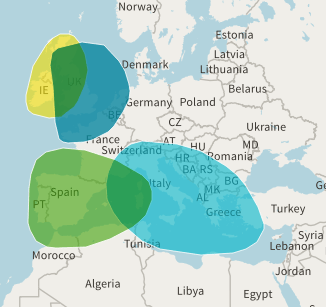
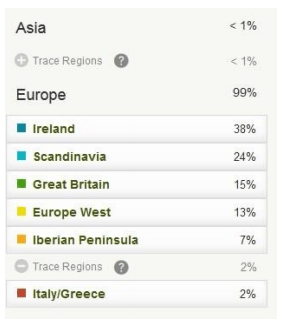
My main ethnicity results.

My main ethnicity results.

The e-mail from Ancestry arrived the same evening as that of my partner’s. Bearing in mind the above (see 13 May), I would have expected to be about 45% Iberian (Spanish), 30% Italian and 25% British. You can imagine my surprise when I saw that the largest chunk of DNA I “have” is actually British (31% – that’s almost a third of my total genetic composition!). Now, I have no clue how my British DNA actually surpasses the expected 25%, as only one of my grandparents had British ancestry. It may be possible that some of my ancestors from the British Isles made it to my hometown of La Coruña (Spain) when John of Gaunt landed there in 1386 to claim the Castilian throne by right of his wife. Who knows…

Next up I would have expected to be mostly Spanish, with just over a quarter of Italian ancestry, but once again I am proven disastrously wrong when I see a staggering 29% Italian(/Greek) DNA group. Again, more Mediterranean blood! This means my original calculations were fairly accurate, on the one hand, with my grandfather being genetically Italian and with an Italian ancestor on one of my mother’s sides. But still, my miscalculation regarding my British genes, however, leaves me with much smaller proportion of Spanish genes: a mere 21%! Yikes, sorry Mum!
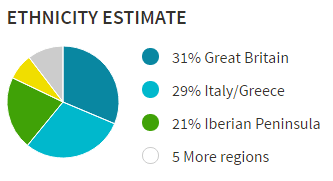
My ethnicity estimate.

My ethnicity estimate.

The real shocker, I suppose, was the revelation of having 8% Irish genes… That leaves me with a doubt: could one of my ancestors, whose line I have not been able to figure out, have had Irish origins? Worth a shot…
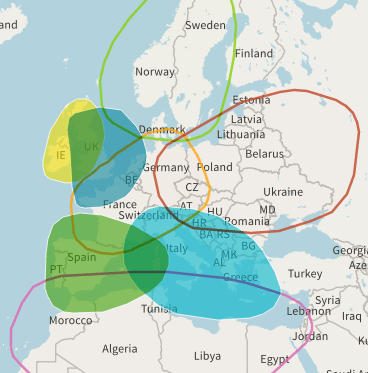
Circles mark trace regions in my genetic makeup.

Circles mark trace regions in my genetic makeup.

What about my own Trace Regions? What you need to know is that these are regions where the estimated range includes zero and does not go above 15%, or where the predicted percentage is less than 4.5%. Since there is only a small amount of evidence that you have genetic ethnicity from these regions, it is possible that you may not have genetic ethnicity from them at all. This is not uncommon, and as more genetic signatures are discovered with a higher confidence level, we may be able to update these Trace Regions over time. My own Trace Regions indicate I have 4% Europe West (France, Low Countries…), 3% European Jewish, 2% Scandinavia and 2% Africa North… Now, until these results become more defined, I won’t be able to delve into these branches any further, but having my father and mother tested will doubtless shed light on where I get my genetic makeup from.

Next step? Hopefully know more about my ancestry, complete my Ancestry family tree and hunt for some of those distant relatives who are also trying to bring down those nasty brickwalls!

Still have questions? Check the FAQ Section of AncestryDNA for answers, or better still, drop me a line!
map


Posted in Ancestry.com, Andalucía, Birth, DNA, England, France, Galicia, Genealogy, Germany, Herefordshire, Huguenots, Ireland, Italy, Jewish Ancestry, La Coruña, New York City, Spain, United States, Worcestershire | 3 Comments

Behind the Scenes at the Lab (by Ancestry)

I just received this very interesting and informative piece from Ancestry concerning my Ancestry DNA test, which is currently undergoing lab examinations in the US. I think it goes a step further to explaining how saliva samples are tested, and result obtained. Note the text is not my own; full credit and copyright is Ancestry’s:

“You’ve spit and put your saliva in the mail. Within a few days, your sample will make it to the lab. Once it arrives, it begins a journey that will take your saliva through many steps before you see the results online.

1. Your saliva sample has DNA in it, but that DNA isn’t ready to read yet. It’s stored inside immune and cheek cells. The first step at the lab is called extraction. Your sample is put into a plate in its own container with 95 other samples and then given to a series of robots that will take a small sample of your saliva and start processing it. Get comfortable with the other 95 samples – they will be with you for the rest of your journey! To extract the DNA, your saliva will be exposed to chemicals, spun at over 10,000 rpm, and all kinds of cell parts and pieces will be removed.

2. Next comes amplification. In this step, we make up to a thousand copies of your DNA. If you are thinking that is a lot, you’re right. This is done through a process called PCR (Polymerase Chain Reaction). Your sample is moved to a new robot that guides it through all kinds of chemicals, enzymes, and cycles of heating and cooling. Once we’re done, we have a lot more of your DNA than we started with. Now, we’re ready to read it.

3. How do we actually read your DNA? We start by applying your DNA to a SNP (pronounced “snip”) chip, or microarray. This SNP chip has been designed to read the 700,000 markers that will ultimately tell you your ethnicity estimate and which AncestryDNA members you are related to. The chip contains manufactured DNA that will bind to your DNA that we will then read. This technology is advancing and becoming better and better even as you read this.

4. Reading the SNP chip is a complicated stage of the process that uses a lot of science and math. Another robot communicates the final results from the chip. We need to be able to read at least 98% of the SNPs that we test; otherwise, we won’t be able to give you any results.

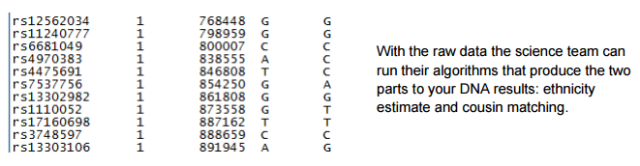
5. If we received enough data back, the As,Ts,Cs, and Gs that make up sections of your DNA are turned into a raw data file:

raw

How do we determine your ethnicity estimate?

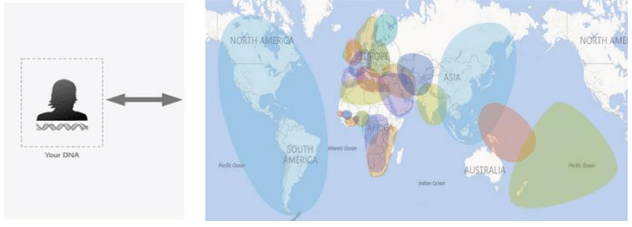
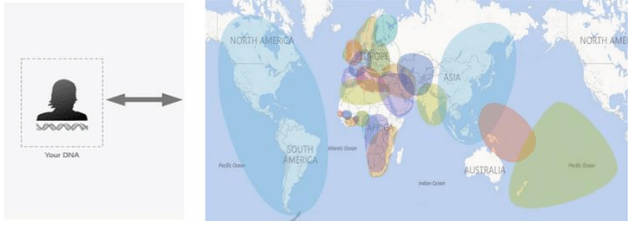
We take the data from your 700,000 markers that we just analyzed at the lab and compare it to population data from 26 different regions.

map

We run this comparison 40 times to get the best estimate of what regions your family genetically connects to based on current research. After running the comparison, we give you an ethnicity estimate. It is just that: an estimate. The estimate could change over time, depending on what new research might reveal. The example below shows what a set of ethnicity results could look like.

regions

Your ethnicity results are unique to you. If you had additional family members tested, their results might look different. How is that possible? It comes down to the random nature of genetic inheritance. You received a random 50% of each of your parents’ DNA; because inheritance is random, a sibling typically won’t inherit exactly the same DNA as you unless he or she is an identical twin.

How do we determine matching?

Once your DNA is analyzed, we can compare it to everyone else in the database. We have more than 1 million samples in the database now, and we will continue to compare your genetic data to anyone else who takes the AncestryDNA test. Depending on how much DNA you share with any given person in the database we estimate a possible relationship. This is how DNA can help you find cousins you never knew you had.

You will be able to contact and see tree data for your matches if you have a subscription and your match has a public tree linked to their DNA results. This is one of the perks of having a membership and is a huge help in trying to identify where the common connection is between you and your matches, not to mention you will then have access to records where you can find out more about your ancestors and how they lived.

Watch a short video on the DNA experience.

After you get your results look for updates and check out our blog to stay informed.”

Posted in DNA, Genealogy | Leave a comment

Understanding Spanish Birth Certificates

One of biggest challenges we face when researching our ancestry or anybody else’s is the language barrier. There are many online tools that help overcome these barriers – from online translation tools to common phrases which are used in such documents.

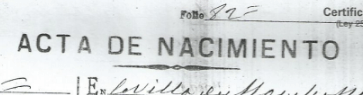
Certificate of Birth, as mentioned on a Spanish specimen.

Certificate of Birth, as mentioned on a Spanish specimen.

The purpose of today’s article is to show you an example of a Spanish birth certificate and what aspects you will certainly come across when ordering one, and what peculiarities you might also expect to encounter.

To begin with, you should know that birth (and marriage and death) certificates in Spain, collectively known as Civil Registration, started to be recorded in the year 1871*. Before that year, vital records were kept almost exclusively by the Church in local parishes. Today the latter are usually kept in centralised archives per bishopric, although sadly have been lost over the years due to the effects of time and, not least, due to anticlericalist actions and wars that have shaped Spain’s tumultuous past.

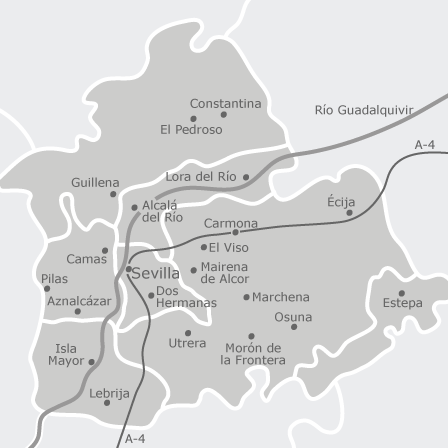
Each municipality in Spain has its own registry office (Registro Civil), and each one maintains it and controls access to its records. Whenever requesting a certificate, therefore, you will need to know in which municipality the birth took place. This can be very difficult to ascertain, particularly as some municipality borders have changed over the years and, more commonly, some municipalities share their name with the province where they are located. In fact, almost all of Spain’s 50 provinces share their name with their respective capital city. For instance, if your ancestor was born in Seville, you will have to make sure that the record you are looking indeed relates to the city of Seville, and not to any other location within the province of Seville, such as Constantina, Dos Hermanas, Écija or Utrera, to name only a few examples. Unfortunately no centralised registry for all births, marriages and deaths exists (not even an index), like in the United Kingdom.

A basic map of the province of Seville showing its capital (the city of Seville) and a fe other municipalities within the region, each with its own civil registry office.

A basic map of the province of Seville showing its capital (the city of Seville) and a fe other municipalities within the region, each with its own civil registry office.

Civil Registration records are kept in chronological order and separated in books according to births, marriages and deaths. Knowing the exact date (or a very good approximation) is essential for which you can use external sources like newspaper announcements or baptism records to work your way back in time. Also important to bear in mind is the fact that, while in some locations are so small that finding a person’s birth certificate will be easy -particularly if the surname is not common-, in larger communities it would be like finding a needle in a haystack, and very often without an exact date the registrar will not even look for the certificate you are requesting.

Ordering a birth certificate is free of charge and can be made online via the website of the Spanish Ministry of Justice (I suggest you contact me or get someone acquainted with the website to help you out with the procedure, as there are a few intermediate steps you will have to overcome). Overall you will need to supply the registrar with basic information, such as the province and the municipality where the birth took place, the person’s name and two surnames (yes, Spaniards have two surnames: that of the father and that of the mother, who incidentally does not become a Mrs X upon marriage), the parents’ first names and the date of the birth. There is an additional, non-obligatory field you can always use to your advantage (for instance, I usually state if the date is actually an approximation, so the registrar can -if they’re feeling generous- look up the birth a few months either side of the given date).

Birth certificate forms have changed considerably since they were first introduced. While some communities almost immediately started using printed forms that were later filled in by hand, many registry offices wrote each entry by hand in full. I can imagine that must have been quite a tedious job.

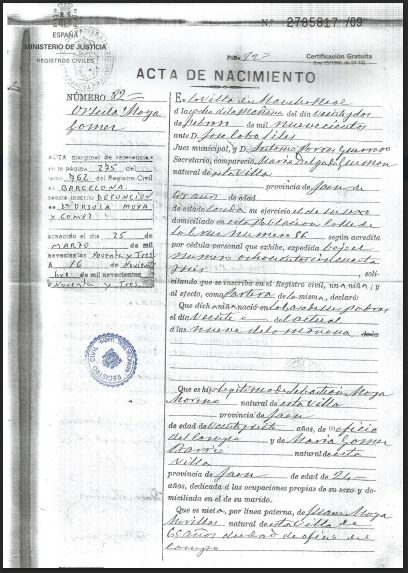
Front page of a Spanish birth certificate dated 1900.

Front page of a Spanish birth certificate dated 1900.

The example I have chosen for you is a printed form which dates back to the year 1900 and, like most birth certificates, will mention a series of fiels that I have listed below, with some comments:

  • The name of the village, town or city where the birth took place: “En la villa de Mancha Real”;
  • The time the birth was recorded: “a las ocho de la mañana”;
  • The date when the birth was recorded: “del día veinte y dos de febrero de mil nuevecientos”;
  • The name of the local magistrate who was head of the registry office at the time: “ante D. José Cobo Silos, Juez Municipal”;
  • The name of the local registrar: “y D. Antonio Porras Guerrero, Secretario,”;
  • The name and origin of the person who registered the birth (note this detail is very helpful, as this was commonly the father, but occasionally it was a grandparent,a  neighbour or a close relation): “compareció María Delgado Guzmán, natural de esta villa, provincia de Jaén”;
  • The age of the person who registered the birth: “de 47 años de edad”;
  • The person’s marital status: “de estado casada”
  • The profession of the person who registered the birth (note that, in the case of women, very often you will find politically incorrect expressions which are fortunately no longer in use, denoting their status as ordinary housewives): “su ejercicio el de su sexo”;
  • The address of the person who declared the birth: “domiciliado en esta población, calle de la Cruz número 56”;

propias de su sexo

  • The relationship of the person to the child (in this case, the term used is partera, or midwife): “solicitando que se inscriba en el Registro Civil, una niña, y al efecto como partera de la misma, declaró”;
  • When and where the child was born: “Que dicha niña nació en la casa de sus padres el dia veinte del actual á las nueve de la mañana”;
  • The child’s father’s name, origin, age and profession: “Que es hijo legítimo de Sebastián Moya Moreno, natural de esta villa, provincia de Jaén, de edad de veinte y siete años años, de oficio del campo”
  • The child’s mother’s name, origin, age and profession: “y de María Gómez Barrio natural de esta villa, provincia de Jaén, de edad 24 años, dedicada á las ocupaciones propias de su sexo y domiciliada en el de su marido.”
  • The paternal grandfather’s name, origin, age and profession: “Que es nieta por línea paterna de Juan Moya Morillas natural de esta villa, de 65 años de edad, de oficio del campo,”;
  • The paternal grandmother’s name, origin, age and profession (if, like in this example, the person was no longer alive, only the name and the word deceased (difunto/a) would be included, and occasionally the place of origin): “y de Florentina Moreno Morales, natural de esta villa, difunta,”
  • The maternal grandfather’s name, origin, age and profession: “y por línea materna de Ildefonso Gómez Casas natural de esta villa difunto”;
  • The maternal grandmother’s name, origin, age and profession: “y de Úrsula Barrio Casas, natural de esta villa, de 47 años, de edad, de ejercicio de su sexo”;
  • Finally, the chosen name (or names, like in this example) for the child: “Y que la expresada niña se le pondrán los nombres de Úrsula Eleuteria del Sagrado Corazón de Jesús.”
  • And a final, official note that lists the witnesses to the registration of the birth, an honour which usually and consistently befell the workers at the archive, who then went on to sign the document along with the person who had registered the birth, if he or she was literate.
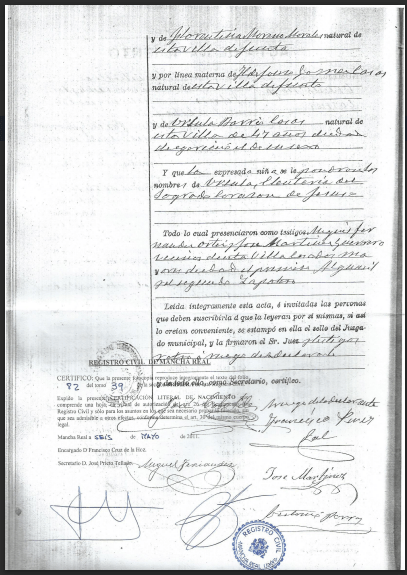
Back of a Spanish birth certificate.

Back of a Spanish birth certificate.

As a last note, you may also notice that on some birth certificates there are marginal notes made by the registrar and dated when the note was made. Such notes are made only on a handful of occasions as communications between civil registry offices was not consistent, but may often include a mention of the person’s marriage, death, and even such wonderful details as the date of the person’s divorce, if he or she was legally declared incapacitated, or when their first national identity card was issued. The present example notes the person’s date of death and where the event took place., which of course will make tracing a death certificate a million times easier.

Do you still have questions about birth certificates in Spain? Having trouble finding an ancestor? Drop me a line and/or follow me on Twitter!

*There was a first attempt to initiate Civil Registration once before in the early 19th century. These records are kept by different local authorities throughout Spain, so you are probably more likely to find your ancestors’ information via church records.

Posted in Andalucía, Birth, Civil Registration, Death, Genealogy, Jaén, Marriage, Spain, Women | 13 Comments

Cousin Marjorie’s Letter from Canada

Marjorie Wilfrida Allen

My relative, Colwall teacher and tireless traveller Marjorie Allen (1897-1980).

Years ago, probably sometime during the 1950’s, my grandmother’s cousin Marjorie Allen visited Canada and there met up with friends and acquaintances from her native Colwall (Herefordshire) whom she had not seen in decades. The story of her trip, which took her thousands away from home, was capture in the following clipping in the Ledbury Reporter:

A Letter from Canada

COLWALL TEACHER SEES LOCAL EMIGRANTS

News from Home Village Eagerly Devoured

To travel thousands of miles from one’s native land and to have the pleasure of running across quite a number of old friends and neighbours who emigrated to Canada years ago was the exciting experience recently of Miss Marjorie Allen, daughter of Mrs. Beatrice Allen, of Greenwood, Jubilee Drive, Upper Colwall.

Mis Allen, who is a teacher, has visited Canada on several occasions, and has taught in a number of schools in that vast country. A member of the “Reporter” staff recently received a letter from her in which she describes her meeting with many old friends and acquaintances who formerly lived in Upper Colwall and The Wyche.

“While staying with cousins in Winnipeg,” she writes, “a ‘Ledbury Reporter‘ arrived containing the article about Mrs. Green’s (Purlieu) 98th birthday. It was most interesting to us, because only the night before I had been the centre of a large family group of old-time Upper Colwallians, doing my best to recall all I ever knew of Upper Colwall and its older inhabitants since the time I was born.

“I was staying with a member of the Dee family, three of whom emigrated to the Winnipeg district when I was a small child. The two young married men, Will and Jim, with their wives and children, followed by their sister, Ada, and her three little girls, took up sections of land north of Winnipeg, and set out to farm their land. Here their families grew up and eventually went to work in the big ‘city.’ One after another went into employment with a large departmental store (Eaton’s) which has branches all over Canada.

LEFT ON BONFIRE NIGHT

“About the time the Dee boys left Upper Colwall there also moved away for Canada Mr. Billy Hill -a friend of my father’s, who was married to the former Mrs. Susan Crouch. The latter was the sister of my aunt by marriage, Mr. Walter Martin.

“I well remember the night they left -‘bonfire night,’ 1906- for three tiny little girls who went to school with me were due to catch a Malvern train at midnight (a weird time to catch a train, to me) with their pre-school-aged brother, Jack and Baby Mamie and their mother, to follow their daddy who had built their first Canadian home. The little girls were Katie, Gertie and Bee – it appalled me to think so many babies were going so far.

“Now I have been visiting Mrs. Billy Hill and all her grow-up married children, and I have been made a tremendous fuss of. Mr. Hill, unfortunately, died in 1945 from a first world war wound. I also visited Mr. Will Dee and his wife, who was Miss Jenny Smith before her marriage. They have a large family of grown-up married children, all doing extremely well, with Canadian homes of their own. You can imagine how interesting it was to me to meet the former Jenny Smith, because my present Upper Colwall home was built on land previously owned by her.”

FAMILIAR NAMES

Miss Allen goes on to describe how large family parties gathered together to hear all the news she could tell them about the inhabitants of Upper Colwall during the time when the late Rev. G. M. Custance was Rector of Colwall. Her friends listed eagerly to what she could tell them of families that had known in the past, and she was the centre of a never-ending stream of inquiry.

Interest was also keen as to what had happened to the local quarries, large houses, and new houses that had been built on old family sites and playgrounds.

“When I return home in August,” writes Miss Allen, “I am likely to be very busy going round Upper Colwall with my camera finding pictures of places and people these news-hungry native of the “Hill” are asking to receive.

“It is interesting to me to learn a few facts of my childhood days which I had never known. 

Miss Allen spent an afternoon in Montreal with young Mr. Charles Smith, who worked at Linden Manor, Colwall, three years ago, and who belongs to the Eacock family, who used to lived behind the Royal Well Brewery (West Malvern-road) at the time the Winnipeg colony of Colwall fold left their native land.

This is Miss Allen’s third visit to Canada. “I lost my heart to this wonderful country when I taught in Calgary, Alberta, from 1928-30.” she writes.

“I spent a summer here in 1927 and am now repeating the same trip ere international disputes may prevent me. The bad dollar situation notwithstanding, one can at least get here, if able to arrange an exchange of hospitality with friends.

“Each time I have visited Canada I have tried to do something extra beyond visiting old friends and haunts.”

THROUGH THE PANAMA

On her first visit to the Dominion, Miss Allen travelled by road to Vancouver and Victoria, the down the Pacific coast to Los Angeles, and by ship through the Panama Canal to New York, before re-crossing the Atlantic.

The second time she travelled the length of the Mackenzie River, journeying northwards by Hudson’s Bay supply ship (to surposts) as far as the Arctic Coast and the Eskimo settlements.

In conclusion, Miss Allen writes:

“But the Rocky Mountains are my Mecca and my never-failing magnet, and soon I will be among them. For a little time I expect to be with the Canadian Alpine Club, and holidaying with the Forest Ranger at Banff, who became a friend of mine when I worked in the Beaver Club during the recent war years. I trust I shall be able to invite you to a private movie show when I get home.

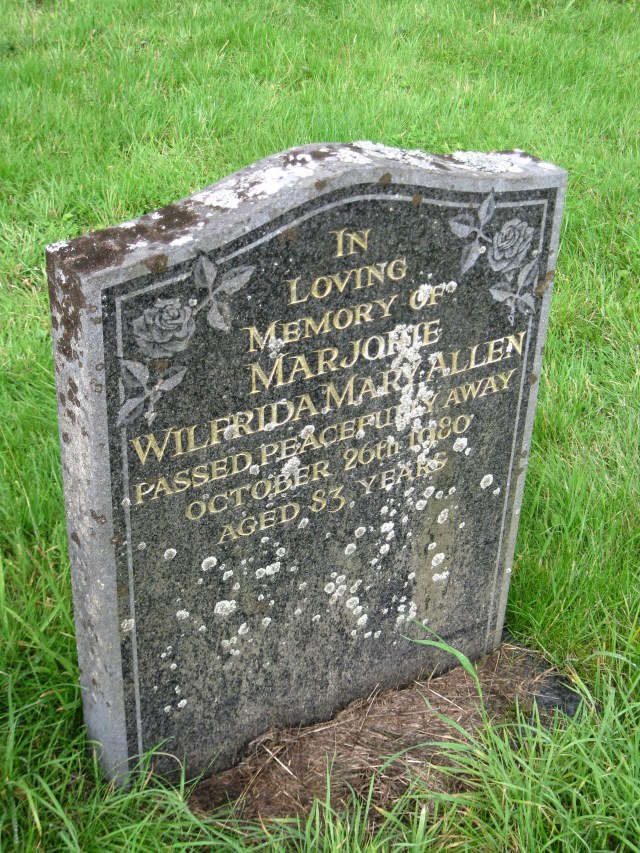
This cousin of my grandmother’s, Marjorie Allen, never married. She died in Colwall, where she is buried, on 26th October 1980, at the age of 83.

IMG_0367

Marjorie Allen’s gravestone stands within the grounds of Colwall churchyard.

Posted in Canada, Colwall, Death, Emigration, England, Genealogy, Herefordshire, Marriage, New York City, Property, Ships, United States, Women, World War I, World War II | Leave a comment

Remembering Ash Villa

Ash Villa up for sale in 2010. Note the garage on the left, formerly a workshop.

Ash Villa up for sale in 2010. Note the garage on the left, formerly a workshop.

There are not many buildings left standing where an ancestor of mine once lived. One of the few exceptions that I know of is a quaint yet ordinary-looking, four-bedroom house called Ash Villa, in Upper Colwall, Herefordshire. Nestled behind the border with Worcestershire on the Malvern Hills, the house lies on the edge of Beacon Road, which connects Colwall proper with the British Camp above. The Wyche Cutting is located a few feet away.

Ash Villa may not look imposing, with its four bedrooms and its simple façade overlooking the valley. All the same, its location and surroundings make it an idyllic property, in my eyes at least. Having a direct personal link to the place naturally naturally makes it a lot more special, but what is even more exciting is the fact that at one point Ash Villa -and practically all the houses around it- once belonged to my English ancestors, the Allens. To both sides, and even behind the house, a whole network of siblings, nephews and eventually grandchildren once lived. Today, alas, not a single relative of mine owns or even lives in the area, which I suppose is an all-too-natural occurrence in most people’s family history.

The front gate at Ash Villa.

The front gate at Ash Villa.

How and when my ancestors came to live in Ash Villa is a bit of a mystery. Inspecting tithe maps and property records could hold the answer, I am reliably told by Hereford Records Office. If I were to check the Tithe Map of c.1840 and the Finance Act map of c.1910, I should be able to ascertain whether the building existed in 1840 or if it was built between that year and 1910 (thanks to census records, I know that the building certainly existed by 1911). The 1840 tithe map apparently holds an “apportionment” mentioning who a building’s owner and occupier were at the time, and what the name of the property was. However, if the house changed name after that date, it would be practically impossible to follow the houses’s history in subsequent decades. To all effects, it would be like searching for the same individual under an alias. In addition, the only way you might be able to find out about a particular property before 1840 is if it is mentioned within the records of a larger estate where it was situated… At any rate, as I live nowhere near Ash Villa or the Hereford Records Office, I need to rely on other sources of information to find out the truth.

My great-great-great-great-grandfather Thomas Allen (1760-1843), who was a land-owning farmer, lived all of his live in Colwall. In the 1841 census he is listed as living in the hamlet of Evendine, which is little over two miles away from Upper Colwall and the site where Ash Villa now stands. It is therefore evident that my ancestor did not inhabit Ash Villa almost 200 years ago, if the building even existed at the time, but this does not mean he had no link to the area that his descendants would one day call home.

Ash Villa a few years ago.

Ash Villa in more recent times, a few years ago.

Fast-forward ten years and the Allen family seem to have moved up from Evendine to Upper Colwall. By 1851 Thomas’s widow Sarah lived with one of her sons, Joseph Allen, sharing a farm called The Knell. Another of her sons, my 3x great-grandfather Edward, was living at the Wytch (sic) with his wife Ann, their daughter and two sons, a niece and someone who appears to have been a foster daughter of the family. The geographical shift looks like we are definitely getting closer to the truth.

In 1861 Edward Allen and his family appear to be living in Upper Colwall in a property called Portugal Cottage, near the Wyche. Portugal Cottage may have been the same property as the one they were occupying ten years previously, and may even be a primitive name of Ash Villa (or the house than stood there previously), but without specific references, such a link is at best questionable. Other families not immediately related to mine lived in surrounding houses on Wyche Road, going down to an area of the village called the Purlieu (often mistranscribed as Purleigh or Purley, which are both closer to the place’s actual pronunciation).

Victoria Cottage, Beacon Road, was once owned by my family.

Victoria Cottage, Beacon Road, was once owned by my family.

By 1871 Edward Allen had lost his wife, but he still lived in Upper Colwall with his daughter Clara (a seamstress). Her brother William Henry lived next door in Ivy Cottage (which, I believe, may well be the cottage currently standing next to Ash Villa under the name Victoria Cottage). Curiously, another brother called John (who incidentally is my great-great-grandfather) was not living in Colwall at all, but in Albert Road, Kings Norton, on the outskirts of Birmingham. The move may have been prompted by the latter’s profession -he was a carpenter and joiner- and he would certainly had found more job opportunities in the booming city than in sleepy Upper Colwall. John was not alone in Kings Norton, for he had his wife Jane and two infant daughters, Ada and Ellen (a third daughter, Annie, had been left behind, to live with her maternal grandmother and the latter’s second husband). We know the couple’s next child, Rose, was born in Birmingham, but for the next birth (that of my great-grandfather William John and his twin sister Maria) John and his wife went back to Colwall. We know they both resumed their existence in Birmingham (that is where they would both die and where, presumably, they are both buried) but it is likely they made regular trips to Upper Colwall to visit their relatives there.

John and Jane Allen outside Ash Villa around the turn of the century.

John and Jane Allen outside Ash Villa around the turn of the century. The window on the left side, once a carpenter’s workshop and then a large canary birdcage, is now a garage.

By this time, and with all certainty, Ash Villa had come into the family’s possession, for an existing photo of John and his wife outside Ash Villa (above) has somehow miraculously survived. Although difficult to date, I am certain the photograph is from about the turn of the century. Although the couple no longer appear to have lived in Upper Colwall by the early 1900’s, they may well have been photographed outside their son William John’s house during a prolonged family visit.

Having left Birmingham for good, my great-grandfather William John decided to move back to Colwall sometime between 1901 and 1910, although it appears he did not set home in Ash Villa/Portugal Cottahe right away. The 1911 census shows that Ash Villa was inhabited by a Mr William Sombs (or Tombs) and his family, who were likely tenants of my great-grandfather. Around that time, William John married my great-grandmother, whose own house during her unmarried years, Hyde Ash, in Ivington, may well have given Ash Villa its current denomination. The couple had three children, and it was in Upper Colwall that they lived when World War I broke out. The young family lived for a time at Highland View (the house adjacent to Ash Villa) but by the time my grandmother was born in 1917 they had already moved next door to Ash Villa itself. It was next to the house, in what is today a garage, that William kept his workshop, and where he would later build a large bird-cage which came to house some 300 canaries. In the aftermath of the 1929 Crash, and to make ends meet, my great-grandmother (a decidedly excellent cake maker) decided to turn the workshop/aviary into a tearoom for hikers who were walking up to/down from the Beacon.

A family snapshot in front of Ash Villa in 1918.

A family snapshot in front of Ash Villa in 1918. The name of the house can be clearly seen on the first floor plaque.

Both William and his wife died in Upper Colwall late in life, but their closest relatives still lived nearby. Their only son lived in Highland View, which I believe was still in the family until a few years ago, and one of William John’s widowed sisters lived in one of the terraced cottages until her own death in 1955. Later one of my own uncles lived in the property behind Ash Villa after his own marriage, but as time went on less and less people, particularly among the younger generation, wished to remain in the village. The properties that had been inhabited by various relatives over the years were gradually sold off after my great-grandmother’s death in the 1960’s. Although no longer part of my family’s present history, I have the satisfaction of being able to claim some degree of personal relationship with the place. I wonder if those who live in Ash Villa and the surrounding houses have ever even heard of the Allen family?

The row of cottages known in the 1800's as Allens Cottages.

The row of cottages known in the 1800’s as Allens Cottages. The side of Ash Villa can be seen on the far right.

Posted in 1851 Census, 1861 Census, 1871 Census, 1881 Census, 1891 Census, 1901 Census, 1911 Census, Adoption, Birmingham, Birth, Colwall, Death, England, Genealogy, Herefordshire, Property, War, Worcestershire, World War I | 7 Comments