Divorce, Spanish style

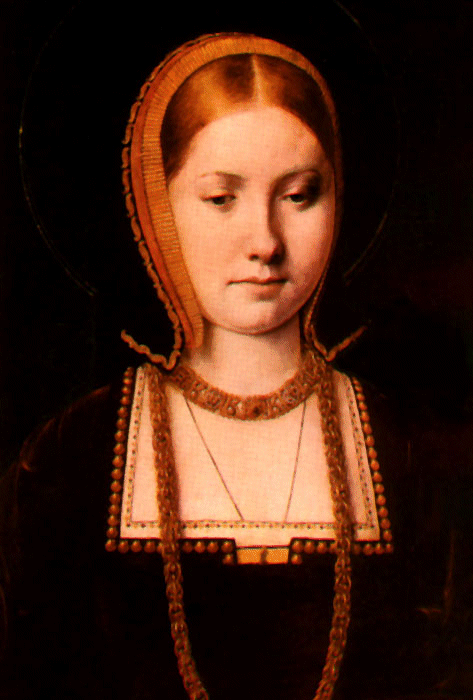
Catherine of Aragon, the world’s most famous Spanish divorcee.

Divorce, or the dissolution of a marriage, is an institution which has existed for centuries. Although we may not realise it, there were hundreds of historical divorces which preceded the case of King Henry VIII and his first wife, Catherine of Aragon, where a marriage was legally terminated – usually because the husband wished it so.

Until recent times, legal divorce was far less readily available to the general masses because of the costs it implied -travelling to court, paying for the legal expenses and so on-; the social and anti-religious stigma attached to marital problems also made divorce a very undesirable solution to a bitter and dysfunctional marriage. But despite these factors, divorce has existed in the civilised world ever since the time of the Ancient Athenian society. The Romans started to turn matrimony into a watertight institution where divorce was a rare alternative to an unhappy marriage, but Christianity gave marriage a moral taint which made divorce even rarer still. However, it was still there. Annulments -that is, the legal procedure whereby a marriage is declared null and void and is therefore regarded retroactively as never having taken place- was used by many Medieval monarchs who had lost interest in their wives or when other political alliances through matrimony seemed to be more advantageous to them. Problems usually arose when there were children involved, as the existence of issue could make matters difficult for the estranged parents. If the annulment went ahead, they risked making their child illegitimate, with grave consequences for the child’s eventual inheritance prospects.

Divorce was certainly rare in Spain eve before the times of the Catholic Kings, Ferdinand and Isabella, the parents of the unhappy Catherine of Aragon. The lack of methods to attain an ecclesiastical annulment for ordinary couples usually pushed the husband t osuddenly abandon his wife and children, never to be seen again (such was the case of my grandmother’s maternal grandmother, whose bigamous father left her and her mother to search for a better marital life in Argentina, where he sired a second family).
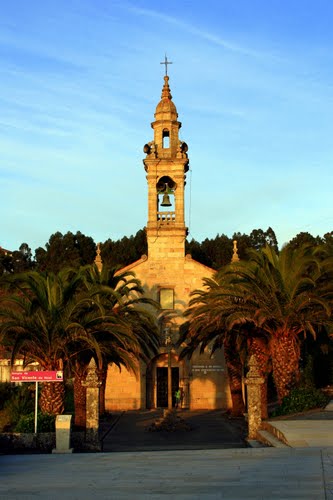
The parish church of San Vicente de Noal, where in 1820 my distant uncle Ciprián de Lojo married Ignacia Sieira, the woman he would divorce twenty years later.

You may well imagine my surprise when, about a year ago, I stumbled across a document signed in 1840 which referred to the divorce of one of my 5x great-grandfather’s younger brothers. Ciprián de Lojo was born, like most of my ancestors on my great-grandmother’s side, in the tiny fishing village of Puerto del Son, in NW Spain, in 1785. His was a large family -he was the seventh child and sixth son out of his parents’ ten children- and I have no reason to believe that they were particularly wealthy or prosperous. By 1817 both his parents were dead and Ciprián may have turned to marriage for company and comfort. His wedding to Ignacia Sieira took place on 3rd August 1820 in the local parish church, and would have been attended by Ciprián’s numerous relatives, including his young niece Joaquina, my 4x great-grandmother, who died in her 90’s in 1908.

The marriage remained childless, and by 1840, two decades after the wedding took place, it had started to crumble. Neither husband nor bride wished to convey the reasons for their divorce when in September of that same year they both stated before the local public notary that they mutually wished to separate. The fact that they had no legitimate children  made them sure of their irrevocable decision.
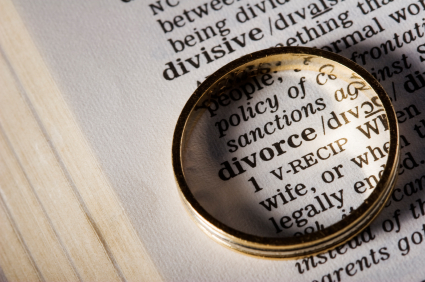
Divorce is a world seldom found in my family dictionary.

Everything seemed to be finalised between Ciprián and Ignacia, so you can imagine my surprise when less than two years later, in early 1842, Ciprián drew up his last will and testament and stated that he was still married to Ignacia Sieira. Reading further down, Ciprián declared that despite their mutual agreement to divorce, he and his wife had voluntarily decided to “fraternally” overlook their passed differences and resume their marital life; he then made her the sole benefactress of his small inheritance, being close to death. But the document reveals one further point of interest which could explain the whole sad history of my relatives’ divorce. Ciprián stated that, upon his wife’s death, the said possessions should go to a David Sieira. This David Sieira seems to have been the illegitimate son of a Manuela Sieira, herself the extramarital daughter of Ignacia Sieira by another man.

Could Manuela and David’s mere existence have embittered Ciprián and Ignacia’s marital relations over the years? If so, I can only imagine that Ciprián’s final illness may have forced him to reconsider his divorce plans as well as his animosity towards his wife’s illegitimate descendants. In a final effort to make a good gesture, he may have left them everything he had in this world, before entering the next.
Posted in Bigamy, Birth, Death, Divorce, Galicia, Genealogy, Illegitimacy, Marriage, Property, Spain, Women | 1 Comment

Blooming Brides

Next year will be the 100th anniversary of my great-grandparents’ wedding. I hope I will be able to arrange a big family gathering with my mother’s extended family, my great-grandparent’s 40-odd grandchildren.

To freshen up my memory, I asked my aunt to send me a scanned copy of their wedding -it is the oldest wedding photograph I have ever seen of any of my ancestors on either side of the family. The picture shows my great-grandfather, then aged 24, smiling, looking genuinely happy and -if I may- even comical with his tiny moustache, rather like a young version of Mario Moreno Cantinflas. His bride, on the other hand, was only 23 at the time, but looks more serious, somewhat sober, and very self-conscious. It was, undoubtedly, a very important day for them both.

What strikes me most about the photo, aside from the fact that it is a studio portrait probably taken on a different date from their actual wedding day, are the bride’s clothes. Far from wearing a radiant white gown, she is dressed from head to foot in a simple black pleated dress decorated solely by three buttons. She wears a white undershirt, and her head is covered by a black lace veil which falls gently over her shoulders and is hooked to her bodice by a small branch of blossom. She clasps a small Bible or missal in her bare hands, and a long rosary with white beads. Religious symbolism is obviously an important factor in the portrait; in the background two paste niches containing a praying figurine of the Virgin Mary stand discreetly between two candles; a small plant, possibly symbolising fertility, peeps into the photo from the side.

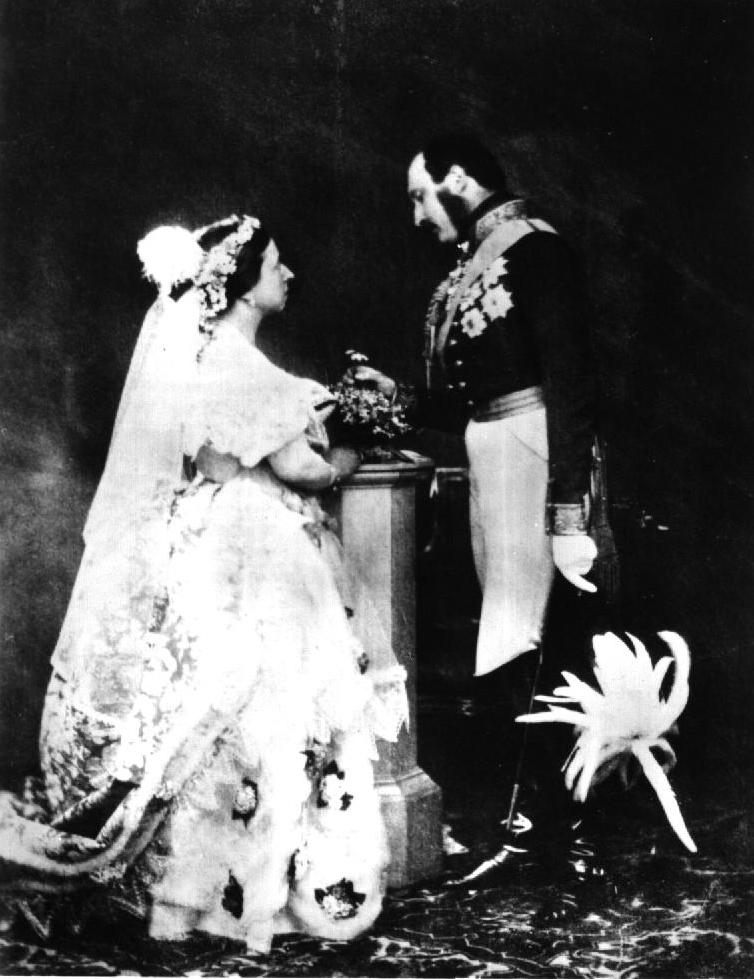
Wedding portrait of Queen Victoria and Prince Albert in 1840.

Nowadays, being used to white wedding dresses, it seems surprising to see my great-grandmother getting hitched in what would seem to me to be mourning clothes. However, wearing black at one’s wedding was the rule rather than the exception in many countries across Europe up until the 1910’s and 20’s. However, in the English-speaking world, ever since Queen Victoria got married -wearing white- to Prince Albert in 1840, white became the chosen colour to get married in. Thus, the tradition quickly spread to Australia, New Zealand, British India and of course the United States. It was thanks to American dominance in all spheres of society that European women started copying American fashion, even at weddings. Soon, European women started getting married wearing gowns.

Thus, it is hardly surprising that when my other great-grandparents married in 1917, the bride wore a dark dress -perhaps a dark-red or golden-coloured gown studded with tiny beads and pearls. American tastes had still not entered Spanish fashion trends. But when my grandparents married (32 years later), my grandmother was already fashionably attired in a bulky white wedding dress; the photograph was not taken at some small photographer’s studio, but rather in front of the church altar where she and my grandfather had just become husband and wife.

Do you have any wedding photographs stashed away at home? Is the bride fashionably dressed? Is she wearing black, or white? Are there any symbols to be seen?


Posted in Australia, Genealogy, Marriage, Spain, United States, Women | Leave a comment

Bye, Aunty Rita

Today my brother spoke to me on Skype; I knew something was up, because we hardly ever speak on Skype save for the odd conversation about something in particular now and then. He told me he had some news which our parents would tell me about shortly. He gave some notice beforehand: Aunty Rita had passed away.

You will remember the story about Aunty Rita, but I’ll just fill you in. During the war my widowed Granny in England had an affair with an American soldier; she became pregnant, he left with his unit to London, then Scotland, and finally America. My grandfather died there in the 80’s without ever meeting his only son, my dad, or even giving his family there much information about his life in Britain. We found out about his death in 2006, just in time to tell my ageing Granny, who passed away a few months later.

Until last Christmas we were all convinced my dad’s father was an only child, although my Granny had mentioned that she thought my biological grandfather had a younger sister. When my father bought me an annual subscription on Ancestry as a Christmas gift, we proved my Granny right. My grandfather did indeed have a (half-)sister 15 years his junior; the name leapt up from the webpage: Rita.

Thanks to modern technology and a distant cousin’s invaluable help, we managed to get Rita’s home address and phone number in New York state. My dad gave her a call, and the rest was history. Rita knew her brother had had a child in England, but was too young to remember much detail about the story, and besides, she lost touch with my grandfather early on when he decided to pursue his own life away from the family. She didn’t even know when or where he had passed away, so my dad filled her in on the details. There was the added surprise that Rita knew exactly who we were, as if there was no explanation necessary; Rita knew my dad was her nephew, and at once made it clear that he was welcome to come and visit.

Thus, my dad and mum left for America in May, and were actually there when Rita turned 81 -her last birthday- surrounded by her husband, daughter, son-in-law and grandchildren. Now she had a nephew to add to the Christmas shopping list, and she told my mum when they were leaving “I am so happy to have found a nephew, this has been one of the happiest days of my life”. My parents felt very welcome and at home there, but sadly had to rush out to catch the train back to NYC. Little did they imagine they would not see Rita again.

But even though Rita is gone, and I never got a chance to meet her personally, I am happy she got to know my dad, and my dad got to meet her. Had he and my mum decided to travel to Americn after the summer, it would have been too late, and how guilty we would all have felt then! No, it was all just as it should be. Rita was the missing link, the connection between my dad and the father he never knew. Rita was the first person to show us pictures of my grandfather. Rita was the closest relative my father has ever met on that side of the family. But above all, Rita was a wonderfully strong and patient lady. She was just waiting to meet my dad. Now she’s gone, but her role in my family history will never be forgotten. At long last, we have all been reunited, thanks to her.

God bless, Aunty Rita.

Love from Pete, Dolly, Dan & Will.

Posted in Death, Genealogy, Illegitimacy, United States, War, Women | 4 Comments

Dora Carrington’s Family

Dora Carrington with the love of her life, homosexual writer Lytton Strachey.

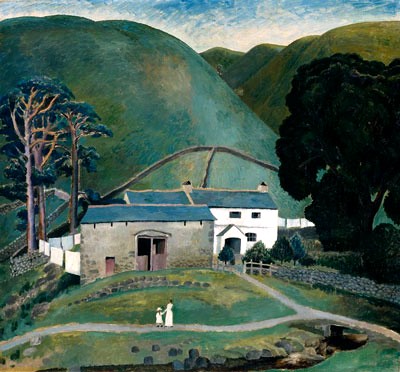
Dora Carrington is perhaps best remembered for being associated with the bohemian, artistic Bloomsbury Group of the early 20th century. Although not a part of the Bloomsbury Group herself, Carrington knew some of group’s members intimately. The person who had the strongest influence on her was, by far, Lytton Strachey, a man several years her senior and a well-known homosexual whose intellect and flamboyance made her fall irremediably in love with him. When he died, probably of stomach cancer, in early 1932, she was absolutely distraught, which is why she decided to kill herself two months after. Her paintings, mainly portraits and landscapes, have become synonymous with her somewhat unconventional existence and her fascinating private life.

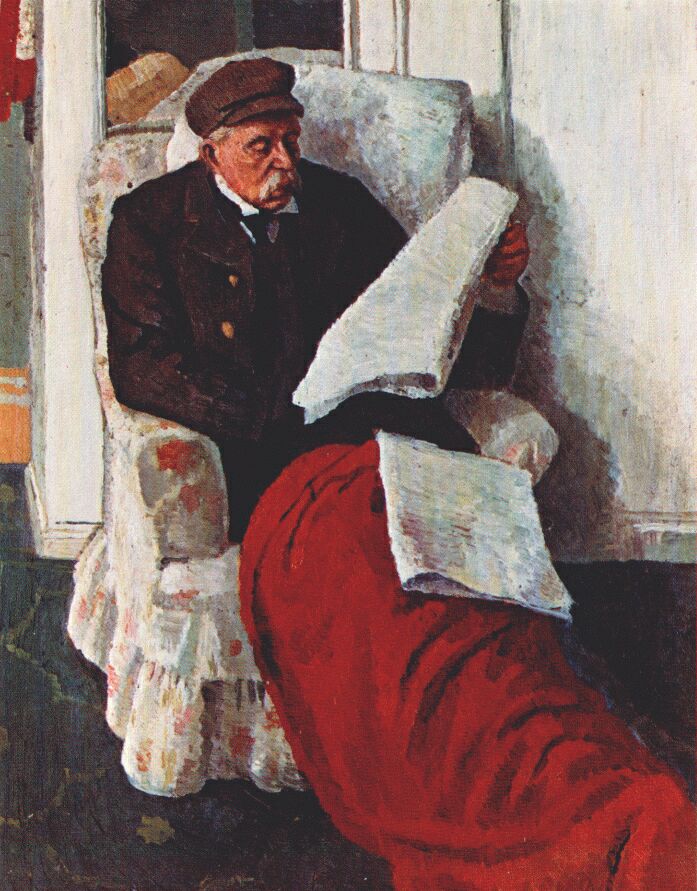
Samuel Carrington, the artist’s father, painted in 1915.

Dora de Houghton Carrington (or Carrington, as she preferred to be known) was the daughter of Samuel Carrington, a civil railway engineer who spent some thirty years working in India. Samuel Carrington had been born in Penrith, Cumberland, in the early 1830’s; his father came from Kent, his mother from Liverpool. By the time his famous daughter was born in 1893, he was already old enough to be her grandfather, but despite the age difference, young Dora felt nothing but adoration, if not curiosity, toward her ageing father. Mr Carrington had met his wife rather late in life; Charlotte Eliza de Houghton, whose maiden name our protagonist inherited as her middle name, was born in Surrey in 1854. There was, therefore a considerable gap between the ages of Dora’s parents. Charlotte had worked as a governess in the household of Reverend and Mrs Hanson in Axminster, Devon. Mrs Hanson, born Lilia Mary Carrington, was Samuel Carrington’s sister; when he returned from India, possibly during a trip to visit his sister and her brood of ten children, he met the children’s governess, and duly proposed. Interestingly, one of those ten children, Lilian Ethel Hanson, would later marry Francis Gassiot Houghton, Dora’s uncle; thus her maternal cousin married her paternal uncle.

A landscape painting by Dora Carrington.

Young Dora was born in Hereford, but only lived there for a few short years. She and her family soon moved to Bedford, where she would later describe her childhood as being “awful”. Dora had one elder sister, Charlotte Louisa (called Lottie), two older brothers and one younger brother, called Samuel, Edmund and Noel respectively. All three brothers went over to fight in France at the outbreak of WWI, but Dora, being a woman, was forced to remain at home; she would always bitterly regret having been born a woman.

Dora’s relationship with her mother was very different from that with her father. Charlotte Eliza belonged to a middle-class family, maybe of French origin given their unusual surname, but was extremely conventional and martyr-like, a fact which suffocated Dora and her free-minded brothers. Lottie, on the other hand, took after her mother, and when she decided to marry another conventional young man, rebellious Dora was horrified at the conventionality, expense and ridiculousness of the whole affair. Mrs Carrington dominated her brood well into adulthood, making the latter to dread Sunday mornings the most; every week Charlotte would walk her grown-up children in procession to church and lead them to the altar firmly holding the prayer book. Dora longed for a breath of fresh air.

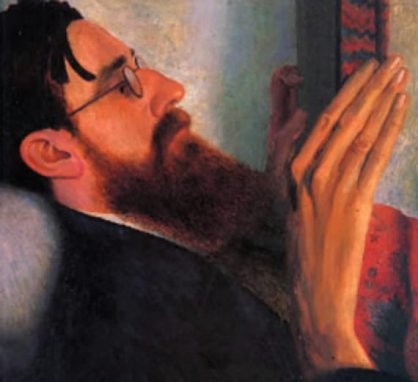
Lytton Strachey, painted by Carrington.

When the 1911 census was taken, the family were still living at Rothsay Gardens, Bedford. Both girls were fortunate enough to become art students, probably encouraged by their old father. Dora excelled at painting, and it would be the beginning of a prolific, if somewhat undeservedly obscure career.

During her long and turbulent relationship with painter Mark Gertler, Carrington met would-be writer Lytton Strachey through fellow artist Vanessa Bell, Virginia Woolf’s sister. The two soon hit it off, and the oddest of amorous relationships blossomed. They became inseparable, and although both had many lovers over the years, they later decided to set up house together. This did not prevent Dora from marrying the attractive Ralph Partridge, whom accepted Strachey’s ominous presence but came to become incensed when he discovered that his wife was also sleeping with the famous hispanist Gerald Brenan; Carrington, Strachey and Partridge lived together in a house purchased by Strachey himself. One can only imagine what Mrs Carrington must have thought at the prospect of her youngest daughter living with two men!

Dora Carrington’s father died in 1918; her mother, who it was claimed had married Samuel Carrington out of pity “because he wanted looking after”, survived her daughter for several years and died in Cheltenham in 1941. In adulthood Dora had no wish to form a family of her own, and her marriage soon turned into an amicable union where both partners fornicated with third parties constantly; it soon became a fait accompli. Ralph soon began an affair with Frances Marshall, whom he later married. Dora meanwhile was smitten with Strachey -in between male and female love-affairs of course-. Then, in late 1931, Strachey became mortally ill, and died the following January. Virginia Woolf, who would kill herself nine years later during a bout of manic depression, wrote during those pitiful weeks that, to her mind, suicide in Carrington’s case seemed “quite sensible”.

Everyone knew Dora Carrington would not live another year without Strachey at her side; she borrowed a shotgun from a neighbour, allegedly to shoot some rabbits in the garden. Then, on 11 March 1932, she shot herself; she failed to kill herself instantly, however, injuring herself in the leg. She languished for three more hours, until she finally died. Her widower, Ralph, married his lover, Frances Marshall, and had a son who was baptised Lytton Burgo Partridge; this child would later marry Henrietta Garnett, one of the four daughters of Angelica Garnett, Virginia Woolf’s niece. The Bloomsbury Group, and Dora Carrington’s role in the world of art and female sexuality, lives on through their descendants.

Posted in 1911 Census, Birth, Death, England, Famous Genealogy, France, Genealogy, Herefordshire, Illness, Marriage, Women | 1 Comment

The first Ronquete

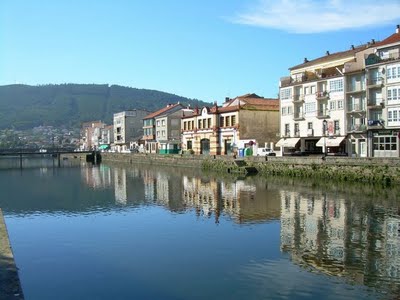
Noya, the village where the first Spanish Ronquetes were born around the 1780’s.

Up until a couple of years ago, I had always been struck by the odd-sounding last name of my grandmother’s paternal grandfather, Miguel Ronquete. This unusual, very un-Spanish surname always seemed to me rather mysterious, particularly as most of the other surnames in my family tree sounded so ordinary. As a word, to the best of my knowledge, ronquete doesn’t mean anything, and even more importantly, most of the people in Spain with this surname  seem to live roughly in the same area of Galicia, in the north-west of the country. This last fact implied that the surname is uncommon in the country, and could also imply that it did not actually originate from Spain, but elsewhere.

Many trips to the Diocesan Archive (Archivo Diocesano) in the Galician capital of Santiago de Compostela allowed me to slowly climb up the Ronquete family tree. Starting with my great-great-grandfather, it me took over four generations and many hours of reading to confirm that the family were already living in the peaceful fishing village of Noya (Noia in the regional language) by the end of the 18th century. Sadly, the baptism certificate for these two of my ancestor’s siblings (the records for the remaining two brothers have yet to be found) did not shed any light as to where their ancestors (and surname) might have originated. It wasn’t until I came across a fifth child’s baptism certificate that my suspicions were confirmed. The record dated back to 1793, a time of great change and convulsion in all of Europe. The document revealed that my my 6x great-grandparents Nicolás Ronquete and Manuela da Costa became the parents of a fifth child that very year; the couple decided to call their son Gabriel Pascual. Unfortunately, the child did not live very long, as a quick glance at the burials book revealed that he was interred in the local cemetery just four years later, on 30th December 1797. However, the little boy’s birth ultimately proved crucial in my family research because, unlike the baptism records for his elder siblings, Gabriel Pascual’s certificate actually mentioned who his two sets of grandparents were and where they came from. The document, almost illegible, confirmed that the baby’s father Nicolás was not from Spain at all, but actually came from the port city of Genoa, in modern-day Italy. The certificate also stated which parishes his grandparents came from, a huge struck of luck considering I was dealing with a document which is over 200 years old.

I was naturally drawn to investigate more about the life of Nicolás Ronquete and the circumstances which may have made him leave his native Genoa. Fiorstly, it seems the surname was in all probability originally Ronchetti, which is fairly well spread around the region of Genoa. As Nicolás’s children were born in the 1780’s (except for poor little Gabriel Pascual, who was born as I said in 1793), I can only assume that Nicolás Ronquete arrived in Noya in the 1770’s at the very latest. I presume that the spelling of his surname was altered by mistake at around that time, most of his contemporaries being illiterate. Knowing that his wife was a local, I also assume that Nicolás met Manuela in Noya and married her there on some unknown date.

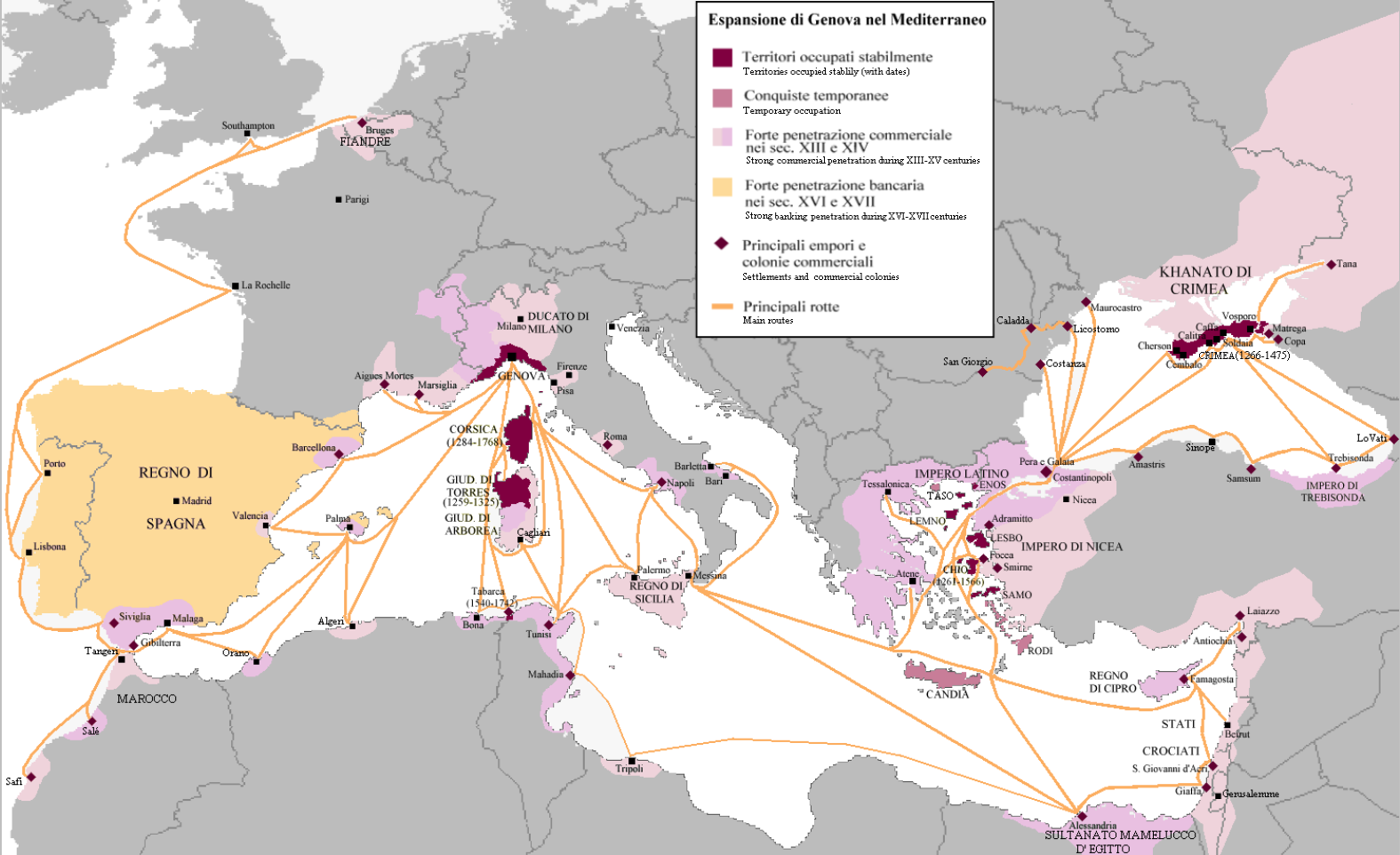
The maximum expansion of the Genoese Republic.

Genoa, the city where Nicolás was born probably around the 1740’s or 1750’s, was the capital city of the Republic of Genoa, a long-gone state born during Medieval times which was forced to constantly fight off foreign foes who attacked the territory, placing its very existence, peoples and prosperity in jeopardy. The Republic of Venice, on the opposite side of the northern Italian peninsula, was one of Genoa’s long-standing nemesis and a commercial power to be reckoned. But the Genoese were also intrepid and successful seafarers; their ongoing trade-routes led them as far as the Black Sea coastline of modern-day Ukraine and even to the Flemish city of Bruges. However, their main aim was to control large portions of the Mediterranean sea, where they could secure trading routes with many different powers. The Genoese, I am told, even got to Galicia on different occasions, perhaps establishing a fixed trade-route to the north Atlantic which eventually led Nicolás Ronquete to settle in Noya.

By the 1760’s Genoa was in decline, threatened by many different powers on the continent and beyond the seas. For centuries it had been attacked by many enemies, but the outbreak of the French Revolution in 1789 would ultimately claim the Republic’s very existence. By 1797, the same year little Gabriel Pascual died in Spain, Napoleon Bonaparte invaded Genoa, followed seven years later by the annexation of the former Republic to the First French Empire. It would be decades before Genoa became incorporated into what is now modern Italy.

By the outbreak of the French Revolution Nicolás had already made a life for himself in Noya. Initially things may have seemed a little more secure in Spain, but politically and socially the country was in turmoil. Regardless, Nicolás was mentioned in a document as a member of the local town council, which reveals that he was interested in local politics to some extent. He may well have had a reputation in Noya, which could explain how his four surviving children intermarried with many well-known local families. He was very probably a well-respected man within his own family; one of his grandsons was even given his name in his memory.

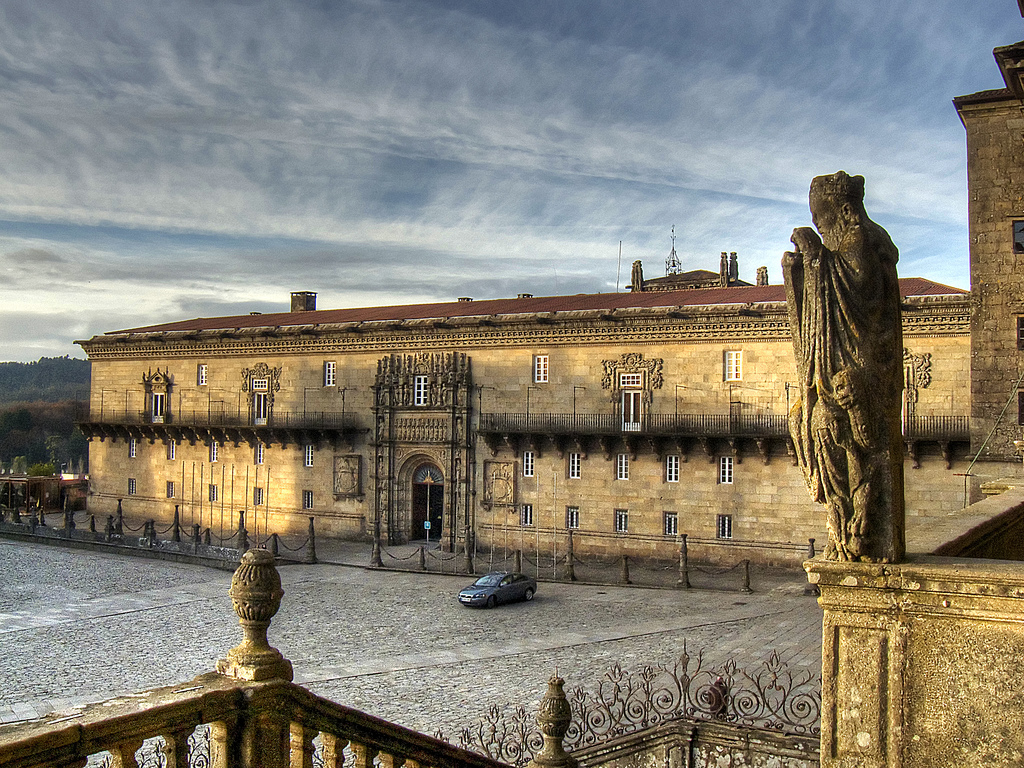
The old Hospital Real, opposite Santiago Cathedral, where my ancestor died and was buried in 1809 during the Napoleonic invasion of Spain.

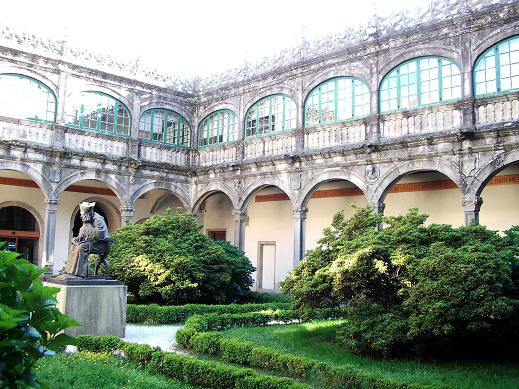
By 1808 Spain was on the brink of catastrophe. The Royal Family had been taken prisoner by Napoleon to the French city of Bayonne, and the Emperor placed his brother Joseph on the Spanish throne. I can only presume that, after the invasion of Genoa in 1797, Nicolás could only feel resentment and disgust at the prospect of a French invasion in Spain. Witnessing terribly sad scenes and his own health failing, he was taken ill and transported to the Galician capital, Santiago, where was was fortunate enough to receive medical care in the old Hospital Real (now called Hostal de los Reyes Católicos, a luxurious hotel). It was there where he made his last will and testament at the end of 1808; by early January 1809, with Bonaparte’s forces meeting great opposition in Galicia, Nicolás was close to death. He passed away on 9th January 1809, and was buried the following day in the chapel of Saint Sebastian, according to his wishes.

Nicolás did not live to see the end of Napoleonic Europe. He was survived by his wife, who died in 1823, never having remarried. His eldest son, my 5x great-grandfather, died of unknown causes in 1820; another of Nicolás’s sons drownedin 1818, leaving four daughters and a pregnant widow. It is highly probable that two generations later, no one already recalled or knew of the Ronquete family’s Genoese roots, nor of Nicolás’s contribution to their own personal history. Happily two centuries after his death, I was fortunate enough to bring this little bit of history back to reality.

Posted in Death, Emigration, France, Galicia, Genealogy, Italy, Santiago de Compostela, Ships, Spain, War | Leave a comment

Mad as a March Hare

It was the year 1854. Cholera broke out in many parts of the world, and decimated countless families. My family was among those affected, and very probably among one of the epidemic’s numerous victims was my 6x great-uncle, Elias de Agra, who passed away in his 77th year. “Great-uncle Elias” had no wife and children, but he did have quite a bit of money, which he divided equally among his many relatives upon his death. 3/6 of his fortune were given in equal shares to his three surviving siblings, while the other three remaining parts were divided equally among the children and grandchildren of his other three siblings who had predeceased him.

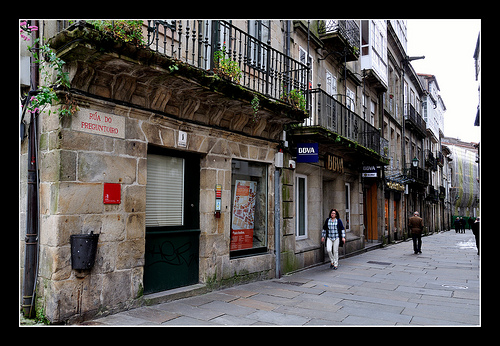
Rúa do Preguntorio, in Santiago de Compostela.

As Elias had no children of his own, he was probably nursed in old age by his niece Bonifacia Gudín, who moved in with him at his town house in Santiago de Compostela. As a thank-you for her cares and attention, Bonifacia got a considerable chunk of her uncle’s property, including his house in the Rúa do Preguntorio. At the time, Bonifacia was already 40 years old and probably expected to remain a spinster throughout her life. Upon her uncle’s death, she now stood to inherit half of the money Elias had set aside for her mother, who was by then an old lady herself. Before the year was out, Bonifacia was already engaged to marry a man nine years her junior.

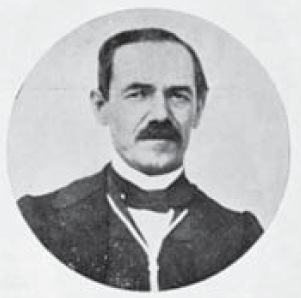
The man in question was Salustiano Aseguinolaza Aramburu, a young, probably attractive and certainly promising Basque man who had just moved to Santiago after completing his Pharmaceutical studies in the Universidad Complutense of Madrid. The wedding took place on 6th December 1854, and the couple soon settled in the bride’s recently inherited house in the Galician capital. It was there that their only child, a girl called Matilde, was born toward the end of the following year.

The 1850’s were years of tremendous changes in Bonifacia’s life and fortunes. Aside from becoming a mother in 1855, she also lost both her parents toward the end of the same year, implying that she inherited half of what her mother had got from the death of uncle Elias the previous year (the other half went to Bonifacia’s only surviving elder sister Josefa). Bonifacia’s husband Salustiano Aseguinolaza, on the other hand, seemed to be making great progress in his professional career: in 1858 he became a substitute professor in the University of Santiago; five years later he was made head of department in the faculty of Pharmacy. His thesis, which analysed the advantages of botanical pharmaceuticals, was published in Madrid in 1861. But Salustiano was not a great writer; aside from his thesis, very few of his publications have survived, aside from a few articles which were published in the El Restaurador Farmacéutico. At any rate, life seemed to be smiling at him and his wife.

Salustiano Aseguinolaza Aramburu.

However, things changed when in 1865, shortly after becoming head of department, Salustiano began to show signs of an abnormal, extravagant behaviour, which may have been the result of some sort of periodic mental derangement. Those who surrounded him recognised these oddities, but failed to diagnose the illness. Soon, the University’s Rector wrote Salustiano a letter begging him to be more circumspect in his public and private affairs – what the Rector  exactly meant by this is a mystery. In order to calm his spirits, Salustiano was given two weeks sick-leave. He was certainly displeased, and wrote to the Rector claiming that, “just as the best fruit is always the one birds peck the most, so are the most dignified of men the victims of other people’s calumnies”. On 11th January 1866 Salustiano Aseguinolaza wrote a letter, which was duly published in the journal La Iberia, criticising the Rector and the Dean for their passed attitude.

Palacio de Fonseca, Santiago de Compostela.

A few days later, Salustiano was arrested in his house -probably in front of his wife and child- for having forced a local man at gun-point to leave his shop and then walk about the streets of Santiago; Salustiano caught other people’s attention when he drew his pistol out and pointed it at a police constable because he was “not doing his duty”. Both men were unharmed, but bizarrely Salustiano was freed from police custody on the same day; the next morning he escorted a University gardener to the Palacio de Fonseca and ordered him to dig holes on the paved stony floor of the historical palace, in order to plant trees and bushes. Salustiano was soon forced to give up his foolish venture.

Having become notorious for his behaviour, on February 23rd Salustiano was suspended in his position as University lecturer. By then, however, he had escaped, and was found days later in his native village of Idiazábal. It is not known whether his wife and daughter accompanied him on his trip. When he broke down, lamenting his failure to crush a demonstration led by railway workers, a local doctor certified that indeed Salustiano Aseguinolaza suffered from “irritability, exuberance and exaltation”.  However, as time went by, Bonifacia’s husband seemed to be feeling better in his native land, and only showed signs of psychological instability when asked about his life in Santiago. Consequently his doctors made it clear that Salustiano would probably soon become his old self once again.

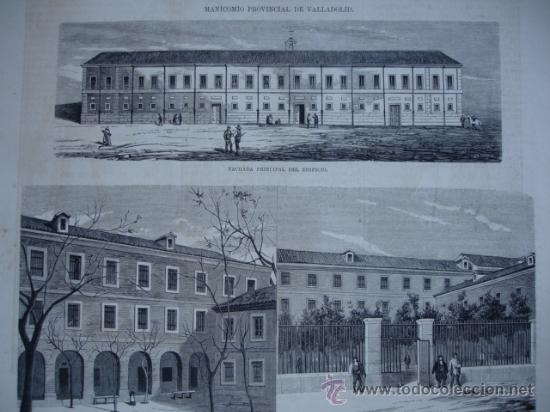
The lunatic asylum in Valladolid.

Indeed, Salustiano did get better, and returned to the Galician capital, where he resumed his obligations as University professor. Three years later, Salustiano’s mental health began to deteriorate once more, and Bonifacia was ainstructed to take her husband back to Idiazábal, where it was assumed his condition might improve. Bonifacia challenged the doctors’ advice and instead took her husband to the city of Pau, in the French Pyrenees, where Salustiano was committed to a lunatic asylum. However, Salustiano did not stay there long, as he disappeared a few days later, only to be found soon thereafter in his own house. Once again he was taken by force to another asylum in the Spanish city of Zaragoza, where he remained until the beginning of 1870. Apparently recuperated, he returned to Santiago and resumed his duties as professor, but two years later he asked for an authorisation to enter, by his own will, a lunatic asylum in Valladolid. The head of the asylum declared that Salustiano suffered a hereditary incurable disease which manifested itself periodically.

Although we do not know how long Salustiano remained in Valladolid, we do find him once more in Santiago in 1875 when he was appointed University Dean! He only remained in the position for a year, but was elected once more to the same position in 1877, and occupied it until 1883. Between 1889 and 1890 he once again became Dean -this time substitute Dean-, his illness apparently over.

Salustiano Aseguinolaza’s turbulent life ended in 1894, when he died aged 68. Little else is known of his wife Bonifacia or daughter Matilde, but I cannot help wondering what the “hereditary incurable disease” might have been, or if indeed he has living descendants today.

Most of the information contained in this article, including some of the images, have been extracted from this source.

Posted in Death, Engagement, France, Galicia, Genealogy, Illness, Marriage, Money, Property, Santiago de Compostela, Spain, Women | Leave a comment

A Murder in the Family

Whenever we start investigating our family tree, I think most of us expect to find something “out of the ordinary” among our ancestral roots, whether it be a scandal, a rogue or a murder. Well, I don’t know if I should say “I’m pleased to say I have found the latter in my family”, but here is what I have found out so far, anyway:

On 1st May 1927, my 2x great-grandmother’s first cousin was shot and killed by a neighbour, who then tried to kill one of the victim’s daughters, before taking his own life. Such a gruesome and tragic episode came to my attention some two or perhaps three years ago, when another member of an Internet forum found a reference to the terrible occurrence on the online archive of The Times.

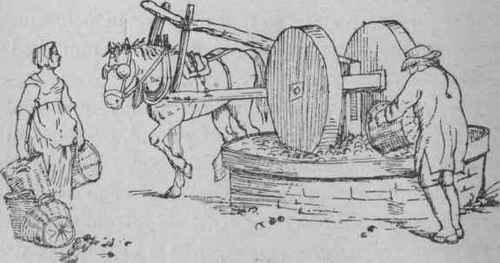
An old cider mill.

But let’s start at the beginning. Alfred Vickress, the would-be-victim’s father, was the youngest of my 4x great-grandparents’ 12 children, and like many men in his family, he turned to carpentry for a living. His elder brother William, who practically belonged to the previous generation given the difference in age between them, married in 1852 a woman called Mary Orchard. The marriage remained childless, but it probably became instrumental in the forging of yet another union some 20 years later. Given the fact that William and Mary had no children, they often had Hannah Orchard, Mary’s only niece, to come and stay with them in Marden, Herefordshire, where they lived all their lives. Young Hannah soon caught the eye of her uncle’s youngest brother Alfred, and soon a relationship blossomed. The second union between a Vickress and an Orchard took place in 1877; Hannah thus became the sister-in-law of her own Aunt Mary.

Hannah’s presence in the family was probably very well accepted, given the fact that she had known most of her (now) in-laws for some time. She and Alfred had a son, William, and a daughter, Sarah. The family lived next door to the widowed Mary at Litmarsh, in Marden, and it was there that Alfred passed away -peacefully- in 1900. His widowed wife Hannah followed him to the grave 15 years later, at the age of 77. Had she lived another 15 years she would have witnessed her only son’s murder.

Alfred and Hannah’s son William had been born in 1877 and became a mason ny his early 20’s; he was later described as a smallholder in middle-age. In 1903 William married Alice Maria Taylor, a local girl two years his senior, who gave her husband two daughters: Violet in 1904, and Rose, born two years after. How well off the family was we cannot know, but whatever his life may have been like, it is certain that William’s existence was cut short on April 29th 1927, when he went to the cider-mill in Marden accompanied by a farmer called Thomas Bown (or Bounds). The two had been neighbours for an unspecified amount of time and had even been living together -presumably Bown was a lodger at Litmarsh farm-; Bown was a retired farmer and old-age pensioner who may have moved into the Vickress’s household because he lacked the means to support himself.

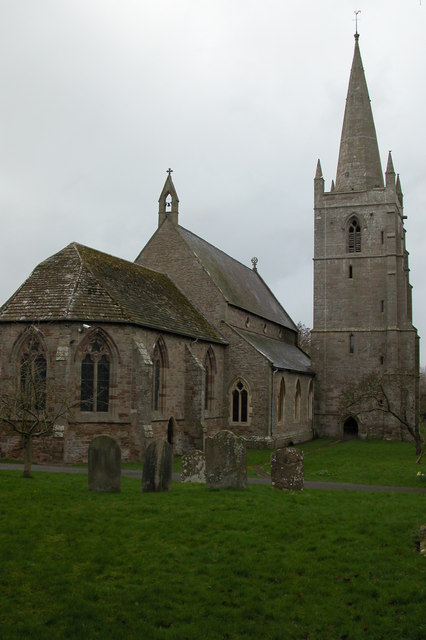
Marden church is dedicated to St Mary the Virgin. The church is believed to be near the site of another murder, that of the young king of East Anglia, Ethelbert, in 794 AD. Courtesy of geograph.org.uk.

On that fateful day, one can only suppose that the two started to argue. Bown, who seems to have been mentally unstable, took out a gun (did people usually carry guns in Herefordshire in the 1920’s, I wonder?) and shot William Vickress on the spot. Upon hearing the shot, one of William’s young daughters appeared on the scene,saw her father bleeding on the ground, and made a miraculous escape when Bown pointed the gun at her as well. When she returned a few minutes later with help, Bown had fatally shot himself; her father lay on the floor, motionless, and mortally wounded. He was rushed to hospital in the city of Hereford, where he died two days later.

An inquest, which I can only imagine is preserved at the Records Office in Hereford, might well shed some more light onto what happened on 1st May 1927. I suppose that’s my next port of call.

The ending of this sad story is no less sadder. The same year William was killed his eldest daughter Violet gave birth to an illegitimate child; in 1931 she had a second baby by an unknown father, but Violet died later that very same year, aged just 27. Her two babies, I imagine, were taken care of by her mother, who died in 1950, and her sister Rose, who died a spinster in the early 1960’s. I wonder if the two illegitimate children’s descendants have any idea of the tragedies that touched their family at the beginning of the previous century?

Posted in Birth, Death, England, Genealogy, Herefordshire, Illegitimacy, Marden, Marriage, Murder | 2 Comments

“You May Kiss the Child”

“I have always considered marriage as the most interesting event of one’s life, the foundation of happiness or misery”. These very wise words, addressed to a friend, were written by George Washington in 1795. That same year, one of my ancestors -my 5x great-grandmother Elizabeth- passed away thousands of miles away from where the first President of the United States was putting pen to paper. But I am sure she would have agreed with him, particularly as Elizabeth spent most of her life as a married woman.


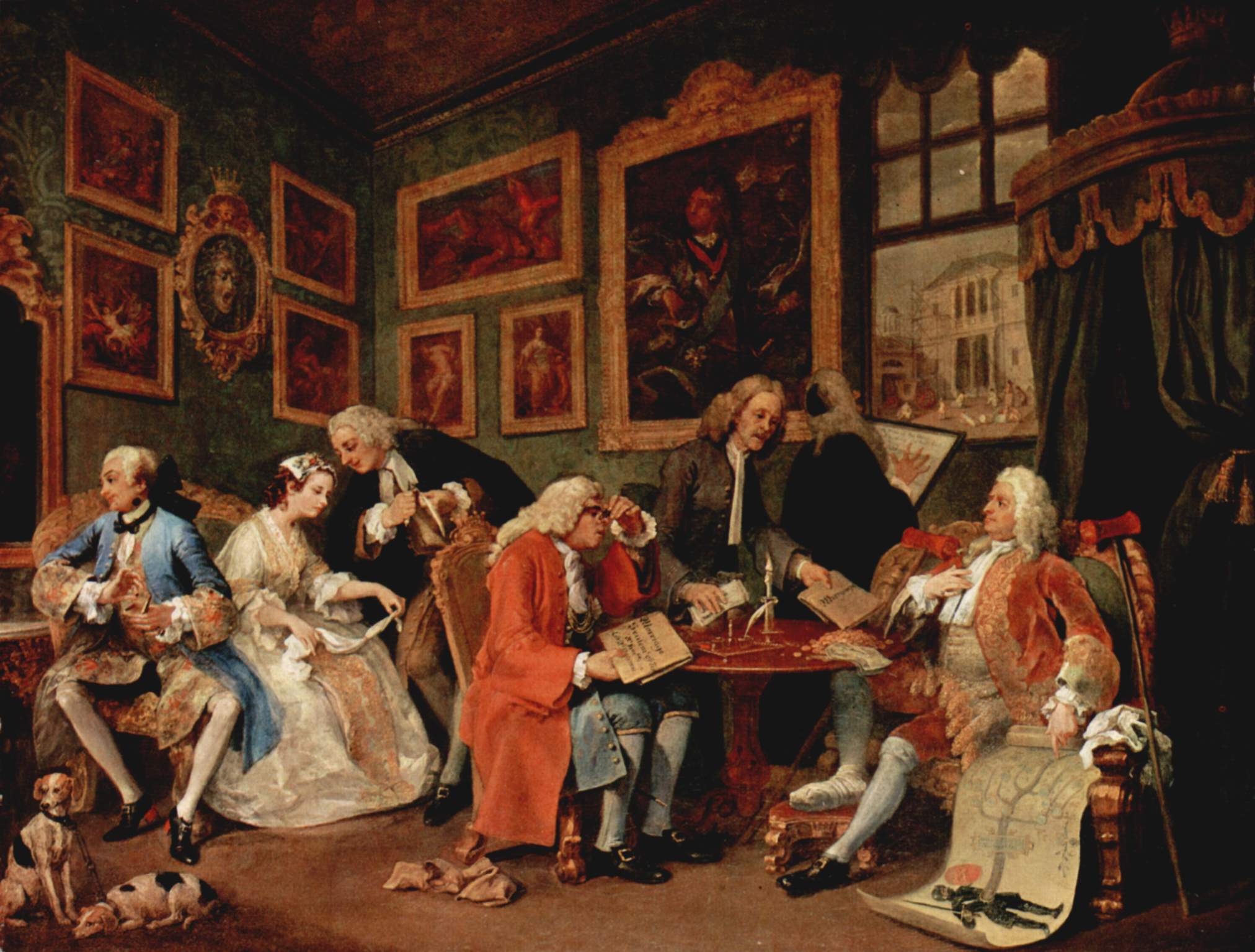
William Hogarth’s “Marriage à la Mode” satirised arranged marriages. Photo courtesy of Wikipedia.

Elizabeth was born Elizabeth Symonds in 1739 in the village of Colwall, on the Malvern slopes of Herefordshire. She was baptised, probably soon after birth, with her sister Catherine, who may well have been her twin. Baby Elizabeth was named after her own mother, who gave her husband, Robert Symonds, five children in just under eight years of marital bliss.

Elizabeth grew up surrounded by her siblings in Colwall. It was there that she married a local man, 29 year-old William Allen, who in turn belonged to an extended family which traced its ancestry back to the reign of James I. The date of the marriage is recorded as 9th October 1751 (according to the new calendar, enforced some months previously); a simple deduction of years reveals that Elizabeth was, at the time of her marriage, a mere child of 12 years! Could this be possible? Could a 12 year-old child legally become someone’s wife? Well, a bit of research revealed that indeed it seems that from a legal point of view William and Elizabeth were acting completely above board, though things were to change in the marriage field shortly afterwards.

Before the Marriages Act of 1753, canon law required that marriages performed according to the rites of the Church of England needed banns to be called or else a marriage licence had to be obtained prior to the celebration of the marriage, which could only take place in the parish where at least one of the spouses was resident. Nevertheless, these rules were directory rather than mandatory, which meant that in practice the absence of banns, of a marriage licence or even of a marriage ceremony did not necessarily render a marriage void. The only real requirement that was absolutely necessary was that the wedding had to be performed by an Anglican clergyman. A simple exchange of consent could be sufficient to declare a union valid and legal.


Gretna Green became the stopping point for lovers who, for some reason or another, decided to elope.

The lax rules regarding the celebration of marriages made it necessary to revise marital laws. This also affected the minimum legal age for men and women to marry. Up until 1753, people who were 12 were considered of age and, consequently, needed no permission from their parents or legal guardians to marry. This naturally caused great problems. For instance, in a time when marriage could imply the shift of a family property from a parent to a son-in-law, fortune hunters could well seduce wealthy young heiresses and lure them into marriage, and everything could be done legally without the intervention of the bride’s unsuspecting parents. It became clear that the rules had to be changed. Thus, the minimum required age for a person to marry was raised from 12 to 21 for both parties; people under the age of 21 could marry, but paternal consent was required.


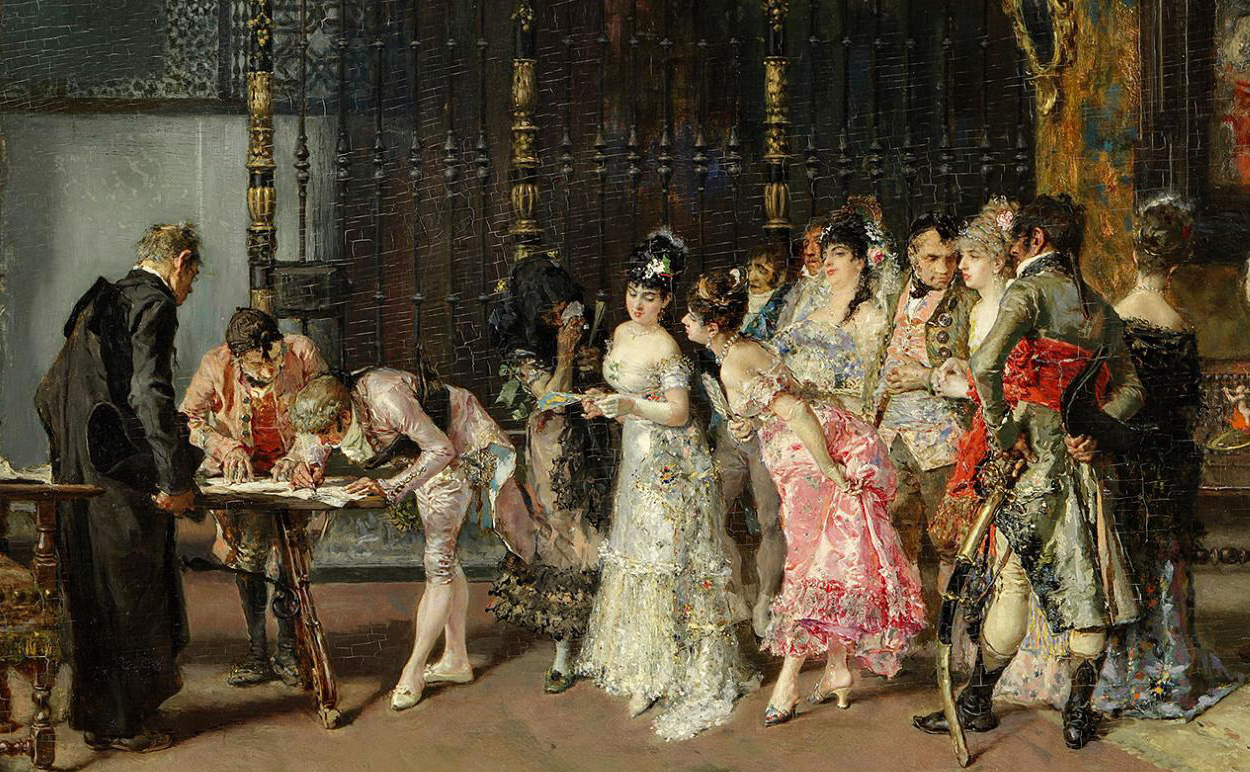
Detail of Mariano Fortuny’s painting “La Vicaría”, depicting a 19th century Spanish religious wedding. Courtesy of Wikipedia (Spanish version).

The Act for the Better Preventing of Clandestine Marriage, which was carried out thanks to the efforts of Lord Hardwicke, made it compulsory to have banns published or else to obtain a marriage licence before celebrating the wedding in a church; Quakers, Jews and the British Royal Family were exempted from these requirements, which only applied to England and Wales anyway; thus, they did not become compulsory in Scotland, the Channel Islands or any of the overseas territories and colonies. “The Act was highly successful in its stated aim of putting a stop to clandestine marriages, i.e., valid marriages performed by an Anglican clergyman but not in accordance with the canons […]. However, some couples evaded the Act by travelling to Scotland. Various Scottish “Border Villages” (Coldstream Bridge, Lamberton, Mordington and Paxton Toll) became known as places to marry. And in the 1770s the construction of a toll road passing through the hitherto obscure village of Graitney led to Gretna Green becoming synonymous with romantic elopements.”

For William and Elizabeth, of course, the Marriage Act arrived too late. They were married, perhaps not unhappily, in 1751, and soon began welcoming children into their household. Five sons and two daughters completed the family picture; two of those children married second cousins, while another son, my 4x great-grandfather Thomas Allen, married aged 40 a woman half his age. The Allens were obviously fond of colourful marriages.

Posted in Colwall, Engagement, England, Genealogy, Herefordshire, Marriage, Money, Property, Spain, United States, Women | Leave a comment

A New Branch Full of Surprises

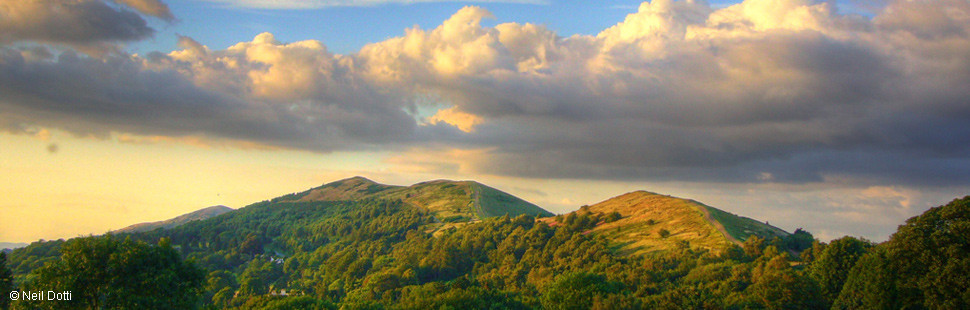
The Malvern Hills (photo courtesy of visitmalverns.org, no copyright violation intended).

Every time I assume that by now I have located and traced entirely all the collateral branches of my family tree, I am (happily) proven wrong. A couple of days ago I logged on Ancestry.co.uk where a pop-up message informed me that they have updated and uploaded thousands of new probate records. I immediately typed in my paternal grandmother’s maiden name and the place she came from, the small village of Colwall, in the Herefordshire side of the Malvern Hills. The first result that came up eventually led me down a whole new path with details I had never expected to find in my seemingly rural family tree.

Joseph Allen was the younger brother of my 3x great-grandfather. His existence wasn’t news to me, for I had already traced his presence on several census returns. In 1851 he was living at The Knell, Colwall, with his widowed mother Sarah, his wife Hannah and their first child, a girl called Ann, who is 7 at the time. In 1861 Joseph is listed once again with his widowed mother -who died later that same year-, his wife and 10 year-old son Herbert. But daughter Ann seems to have vanished! I remember trying to find out months ago whether Ann had died in Colwall by looking at burial registrations, in that parish, to no avail. Going through the Free Birth, Marriage and Death Database was inconclusive when I triedto find Ann’s hypothetical marriage, but the results were too ambiguous to pinpoint a correct match. I finally gave up the search, imagining that Ann would remain, like so many others in the family tree, an anonymous name on the missing persons list.

The joy of discovering new relatives thanks to the England & Wales Census!

The probate records made accessible on Ancestry recently showed me how wrong I can be (sometimes!). The administration of the widowed Joseph Allen, of Colwall, was granted to Ann Webb, wife of Joseph Webb, of West Bromwich, “the Daughter and Next of Kin”. Well well! Ann did survive infancy and was married by the time her parents passed away. Too exciting to resist. So I started going through the records.

Tracing Ann’s marriage to Joseph Webb was easy enough; it took place in 1863 across the border from Ann’s home, in the registration district of Worcester, which explains why I never found their marriage record in the county of Hereford. Wrong once again. By 1871 the couple were living in Leigh, on the road linking the cities of Hereford and Worcester. The census reveals several other details about them as well; for instance, husband Joseph is recorded as… a Police Constable! Ah, that’s why they’re living at the County Police Station! Makes a nice change from all those farmers and labourers I seem destined to dig up with my research My, my! Joseph and Ann seem to be the proud parents of three children by then: Alice J. and Albert H. born in Malvern, and little Edith, born in Ripple, further south of the county, near the Gloucestershire border. I can only assumed that it was Joseph Webb’s job which took the family from Malvern to Ripple and then back up to Leigh.

Ten years on and the family keeps on growing: Ann and Joseph have had six children by now, but oddly enough Joseph is no longer a Police Constable, but a simple labourer. Could he have retired early, or is there a darker mystery surrounding the demise of his professional career? Teenage daughter Alice is still at home, without any particular occupation mentioned; son Albert now works as an errand boy, while siblings Edith and Reuben are schoolchildren. Three year-old Esther and baby Rosa are still under Ann’s care. Both girls, as well as young Reuben, were born in West Bromwich, Staffordshire, so I assume the family moved there after leaving Leigh. As all subsequent census returns were taken there, I can surmise they made their definite home in West Bromwich.

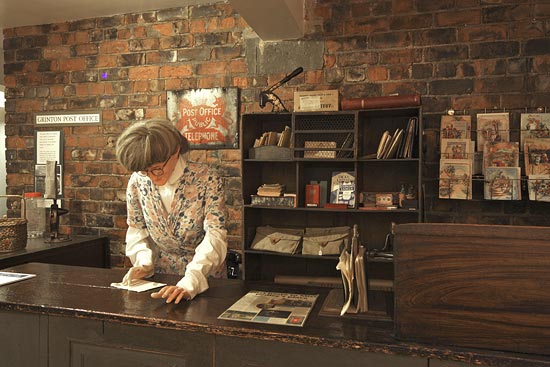
Recreation of a 19th-century post office (courtesy of richmondshiremuseum.org.uk, no copyright violation intended!)

The 1881 census is the last one showing the whole family together. Joseph seems to have passed away in 1882, but I cannot find any further trace of his very elusive wife Ann. Has she died, or has she married someone else instead? I trace their children individually to see if she is living with them; although I reach no conclusion about Ann’s eventual fate, I do find some rather interesting facts about their six children. I cannot find eldest daughter Alice for love nor money, in 1891, but I so see her in the 1901 and 1911 census living with some of her father’s relatives; she is still a spinster and eventually moves back to her native Malvern to as a stationer along with her paternal cousin Ada, who worked as a sub-postmistress in Malvern.

Brother Albert Henry Webb seems to have followed in his father’s footsteps and became an Inspector of the Railway Police in West Bromwich, where he lived with his young wife Clara, three children and Detective Charles Brown, of Potton, Bedfordshire. But still no trace of Albert’s mother Ann.

Edith and Reuben, listed as scholars in the 1881 census, seem to have stuck together until 1901 at least, when they were recorded still living in West Bromwich; Reuben eventually became a brewery warehouseman. Yet another surprising profession! In 1901 he married Harriet Riley and by 1911 they had already had and lost their only child; by then Reuben’s profession also changed to caretaker in “iron merchant’s”.

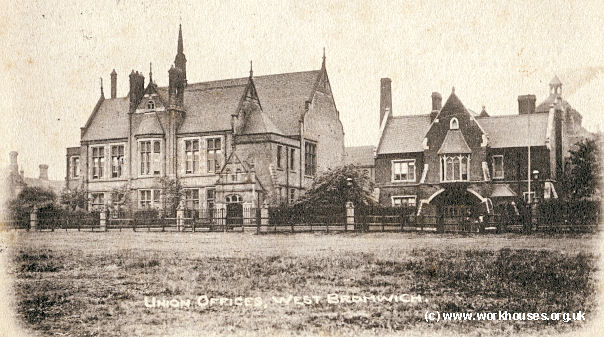
West Bromwich Union board room (left) and main entrance, circa 1904. Union workhouses were grim institutions (photo courtesy of workhouses.org.uk, no copyright violation intended!).

But what of his two little sisters, Esther and Rosa. If their mother Ann did indeed die around that time, what happened to the girls? I fear something terrible has happened to them once I seem unable to find their mother in any further records. Being so young, I can only hope they are living with relatives, perhaps other cousins on their father’s side. Sadly, I am again proven wrong. Rosa died aged 3 in 1883, shortly after her father’s passing and possibly shortly before the (presumed) death of her mother. Her sister Esther lived for a few more years, but in wretched conditions, at the Union District Workhouse in West Bromwich, where she was classified aged 12 among dozens of other female pauper inmates… as an idiot! The workhouse seems to have been nothing short of a lunatic-assylum-kind-of institution, full of idiots and imbeciles. I wonder what the difference is between these terms, so I turn to Wikipedia:

“In 19th and early 20th century medicine and psychology, an “idiot” was a person with a very severe mental retardation. In the early 1900s, Dr. Henry H. Goddard proposed a classification system for mental retardation based on the Binet-Simon concept of mental age. Individuals with the lowest mental age level (less than three years) were identified as idiots; imbeciles had a mental age of three to seven years, and morons had a mental age of seven to ten years.The term “idiot” was used to refer to people having an IQ below 30. IQ, or intelligence quotient, was originally determined by dividing a person’s mental age, as determined by standardized tests, by their actual age. The concept of mental age has fallen into disfavor, though, and IQ is now determined on the basis of statistical distributions.In current medical classification, these people are now said to have “profound mental retardation.”

So poor little Esther was born severely mentally handicapped. It seems hard that even after the death of her parents, none of her siblings took her on into their care to nurse her, but perhaps they were going through difficult times themselves, having to cope with the loss of their father and mother at a relatively young age. I feel very sorry for poor Esther, who probably never left the loony bin; she died in 1894 aged 15. Still no trace of her mother Ann, but what do I care. This branch of the family has proven very surprising , and surprisingly sad. I think I’m done with researching genealogy for a day.

Posted in 1871 Census, 1881 Census, 1891 Census, 1901 Census, 1911 Census, Birth, Colwall, Death, England, Genealogy, Herefordshire, Illness, Marriage, Property, Staffordshire, Worcestershire, Workhouse | 1 Comment

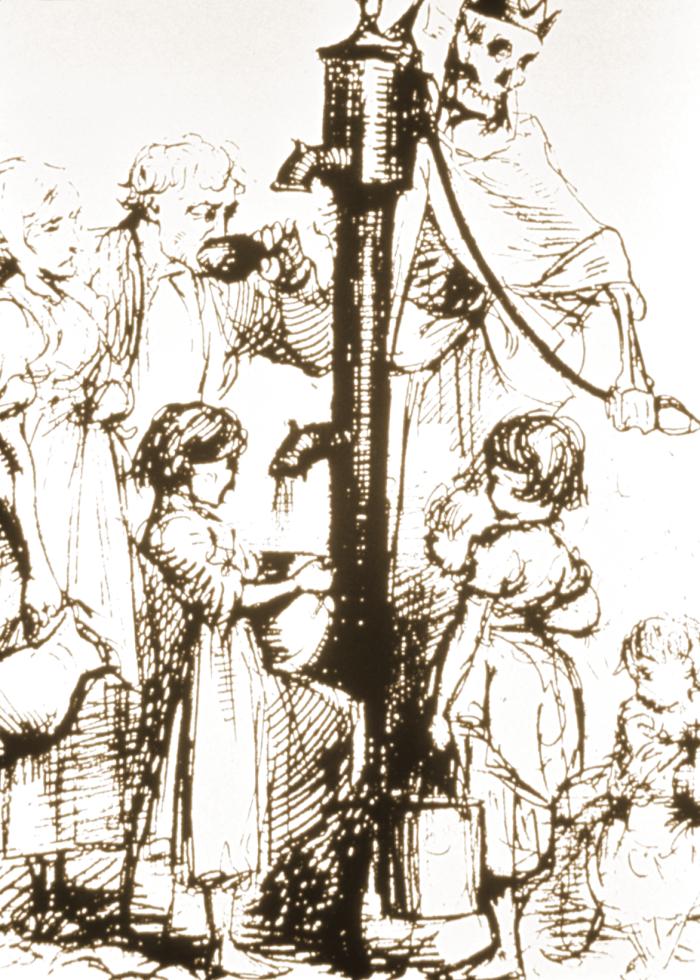
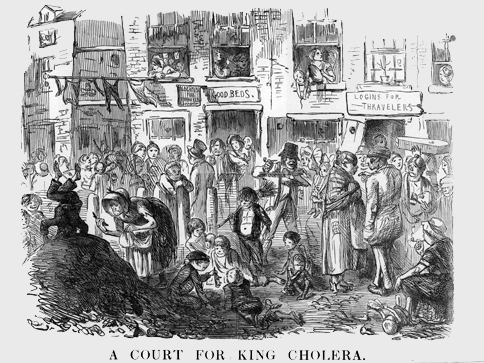
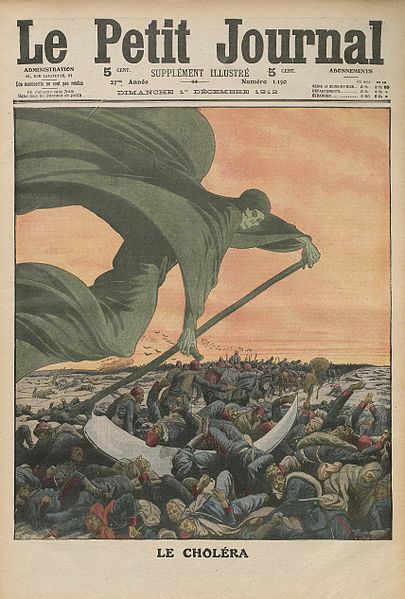
The 1854 Cholera Epidemic

Every genealogist and historian knows the basic facts about the so-called Spanish Flu epidemic and its devastating effects on post-First World War Europe and America. However, through my own family history I have encountered several deaths all directly caused by another terrible pandemic disease which became rife throughout the world in the mid 1850’s: the 1854 cholera epidemic.

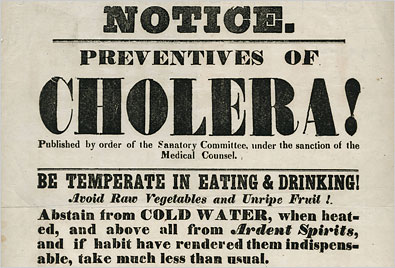
I must admit I knew very little about this disease before I started reading about it today. I knew it is a highly contagious disease which basically causes watery diarrhoea and intense vomiting, leading to severe dehydration and ultimate death in untreated or extreme cases. People can contract cholera by drinking contaminated water or else eating food which has come into contact with animal faeces –I’ll leave the more graphic details for another time. One can only guess at the terrible consequences cholera may have brought on the world’s population in the 1850’s, when antibiotics and other useful drugs were simply non-existent.

The 1853-54 pandemic apparently began somewhere in the Asian subcontinent around 1845. It was probably through the trade route connecting Asia with Europe that the disease had found its way through to Constantinople (present-day Istanbul) by 1847, and less than six years later it had already manifested itself in the port-city of Vigo, in the Spanish region of Galicia. And that is how my relatives began to fall like nine-pins.

The area of Galicia had always been much poorer and underdeveloped than many other regions of Spain. Even today it is a highly agricultural area, dominated by the cool, rainy weather which inadvertently reminds native Galicians of our remote Celtic roots. The months prior to the epidemic had been particularly harsh, and a famine similar to that which struck Ireland a few years before had already taken its toll on the population. Nothing would have prepared the locals for what was to come next.

Probably the first victim of the disease accounted for in my family tree was a distant relative called Juliana de Agra, who passed away aged 82 on 1st September 1854. Exactly ten days later, her son Manuel García, aged 55, certainly died of cholera, according to the medical report. Two weeks elapsed before the family was struck again by cholera, causing the death of Manuel’s first cousin Juana Gudín on 26th September and her daughter María Ramona Ronquete the previous day. Today I found out that my 5x great-grandfather’s younger brother Joaquín Martínez died at the age of 83 on 3rd October 1854 of cholera. So ill was he that the local priest was not even able to minister him with the sacrament of Eucharist, before the patient’s inevitable demise. Tragically, his 24 year-old son Segundo Martínez died himself only two days later, having recently completed his University studies. It was so dangerous to leave the bodies unburied that the local vicar was compelled to bury them straight away.

Naturally, my family was not the only one affected in the area. The books containing burial records at the time are full of notes about the deaths caused by cholera. The consequences of such an agonizing disease on a small, poor region like Galicia are unimaginable. In fact, the effects were so devastating, that even the Spanish press begged the government to quarantine the whole area of Galicia. Their efforts were to no avail.

Even as cholera stopped claiming its many victims in Galicia, it somehow managed to penetrate Spain through another channel. Later that same year the disease entered Barcelona via Marseille, thus becoming rife all along the Mediterranean coastline. Meanwhile, military manoeuvres in Andalucía helped to spread cholera across the south of the Iberian Peninsula. In growing cities like Malaga over 300 people died in less than a month. They say that underneath La Coruña’s cemetery of San Amaro there are thousands of people buried after being killed in the 1854 pandemic. Heaven knows how many stories have been left untold because of the cholera epidemic.

Posted in France, Galicia, Genealogy, Illness, Spain | Leave a comment