Jane Austen’s family tree

Like so many other great British female authors, such as Virginia Woolf or the three Brontë sisters, English novelist Jane Austen (1775-1817) was a wonderful and prolific writer, but left no children. But although there are no descendants of the creator of great works like Pride and Prejudice, Sense and Sensibility or Persuasion, Jane Austen’s large family is an interesting genealogical case in itself.
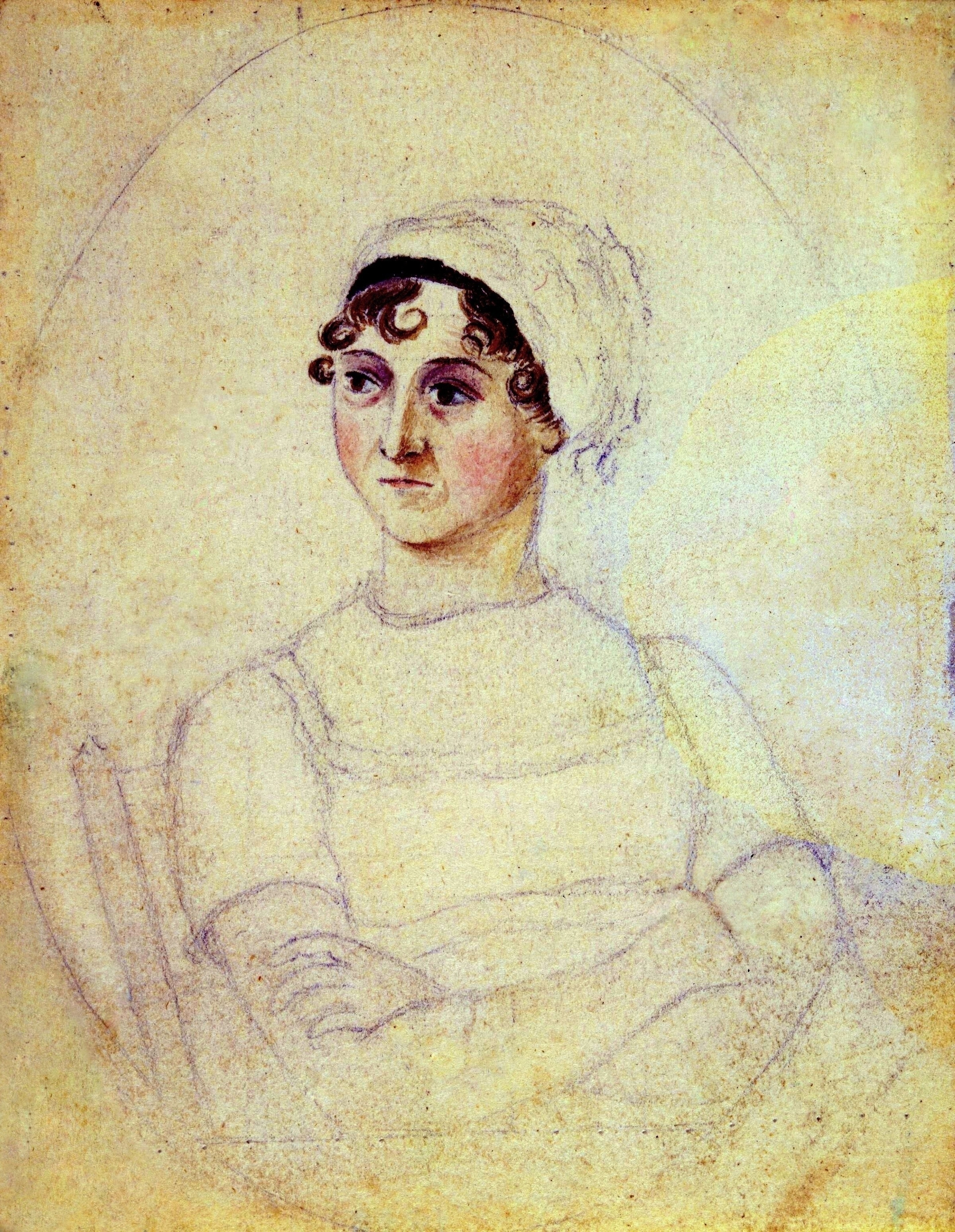
Jane Austen, portrayed by her sister Cassandra.

Jane Austen, portrayed by her sister Cassandra.

Jane Austen was born in 1775 in Steventon, Hampshire, the second daughter and seventh child of an Anglican clergyman, the Reverend George Austen, who had himself been born “on the lower fringes of the English landed gentry”. Reverend Austen was descended from a family of woollen manufacturers from Kent and Sussex who had gone up in the social scale several generations earlier. His wife, Cassandra (formerly Leigh), could boast greater connections with the English aristocracy. Cassandra’s paternal grandmother, Mary Brydges (1666-1703) was the eldest child of James Brydges, Baron Chandos of Sudeley, who in 1680 was appointed Royal Ambassador to the Sultan’s Court in Constantinople. By going up a few generations back, we discover that Jane Austen’s family tree is populated by Greys, Staffords, Nevilles, Throckmortons, Fitzalans, Beauchamps, Beauforts and, ultimately, to the most illustrious of all ancestors, King Edward III.

Like her elder sister Cassandra, Jane Austen left no descendants, but their large army of brothers did have in most cases a significant amount of progeny. Here is a relation of their names, their spouses, and a brief account of some of their descendants’s lives:

1. James Austen (1765-1819) became a clergyman, like his father. He was married twice, his first wife being Anne Matthew, who died in 1795 after giving him a daughter called Anna (this girl would go on to marry Benjamin Lefroy, the nephew of the more famous Tom Lefroy, who had earlier courted her aunt Jane and was, quite possibly, the author’s love of her life). James Austen married as his second wife Mary Lloyd, was was not only a great friend of Jane’s, but whose cousin and brother-in-law Thomas Fowle had once been engaged to the other Austen daughter, Cassandra. This second marriage produced a son, Edward Austen-Leigh (1798-1874), and a daughter, Caroline, who died unmarried in 1880. Nephew Edward, who would go on to become his famous aunt’s first biographer, married Emma Smith in 1801 and sired ten children. One of them, Chomeley, married the daughter of the Protestant Archbishop of Dublin, while other male descendants also joined the clergy. Another descendant, Lionel Austen-Leigh, who was “a land surveyor who went to Victoria British Columbia when it was an ‘outpost of Empire'”, emigrated to the United States in 1937.

2. George Austen (1766-1838) was the only one of Jane’s brothers who never married. He was reportedly born an invalid, a general term to describe someone who was either physically or mentally handicapped. Aged four, he was unable to speak properly, and during one of his aunt’s visits to the Austen home, it became clear that the child was “backward”. Suffering from terrible epileptic seizures, the boy never learned to talk, and was finally entrusted to a foster family who took care of him. It was not until he was in his early teens that it was judged safe for his sister Jane to pay him a visit. He died, in obscurity, in the late 1830’s, forgotten by all.
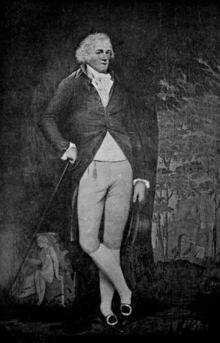
Edward Austen (later Knight), Jane's elder brother, is the ancestor of actress Anna Chancellor, adventurer Denys Finch-Hatton and British peer and film producer John Brabourne.

Edward Austen (later Knight), Jane’s elder brother, is the ancestor of actress Anna Chancellor, adventurer Denys Finch-Hatton and British peer and film producer John Brabourne.

3. Edward Austen, later Knight (1768-1852), was introduced at the age of 12 to Thomas and Fanny Knight, wealthy childless cousins on his father’s side. The Knights decided to adopt Edward, who from 1812 onward used the surname “Knight” instead of Austen. He married Elizabeth Bridges in 1791, and the couple had eleven children, including one of Jane Austen’s favourite nieces, Fanny Knight (1793-1882). Edward inherited from the Knights a total of three estates, the libraries of which were extensively used by his novelist sister. He also inherited the rectory at Steventon, where the Austen children grew up, but in the 1820’s he had it knocked down after the building was damaged in a flood. This explains why Jane Austen’s birthplace no longer exists. Fanny Knight married Edward Knatchbull, Baronet, whose son Edward became Lord Brabourne. His descendant John Ulick Knatchbull, 7th Baron Brabourne, married the daughter of Lord Mountbatten, who was killed by the IRA in 1979 along with one of his grandsons and the elderly Lady Brabourne, his daughter’s mother-in-law. Edward Knight’s granddaughter Fanny Rice (1820-1900) married the Earl of Winchilsea and Nottingham; her grandson Denys Finch-Hatton settled in British East Africa, and his romance with the novelist Karen, Baroness Blixen was immortalised in her autobiography Out of Africa, which was later turned into a movie. Another of Fanny’s grandchildren was Muriel Finch-Hatton, whose daughter Sylvia Paget, OBE, was the grandmother of actress Anna Chancellor, who played the haughty Miss Caroline Bingley inn the famous BBC adaptation of Jane Austen’s Pride and Prejudice.

4. Henry Thomas Austen (1771-1850) was Jane’s favourite brother. He was known to be witty and enthusiastic, but unfortunately not always successful in his business interests. His wife was his first cousin Eliza (née Hancock), the daughter of Jane Austen’s paternal aunt, Philadelphia Austen. Eliza, who was born in Calcutta in 1761 the possible daughter of her godfather Warren Hastings, had been previously married to a French aristocrat, Jean Capot, Comte de Feuillide, who was executed at the guillotine in 1794; she had one son by her first marriage, but the boy died in his teens in 1801. Eliza herself died in 1813, without leaving any descendants by her second husband Henry Austen. Two years later Henry became bankrupt, and later would go on to become a Calvinist-leaning minister. It was he who would see his sister’s two novels, Persuasion and Northanger Abbey, through to the printing press. In his late 40’s he married his third cousin, Eleanor Jackson (a descendants of an earlier Austen ancestor), but they had no children.

5. Cassandra Austen (1773-1845), Jane’s only sister, was her closest friend and confidante throughout her life. Although she burned many letters written by Jane after the latter’s death in 1817, there are 100 or so letters sent by the sisters to each other which give an interesting and intimate insight into their unique relationship. Cassandra became engaged, when she was quite young, to Thomas Fowle, a cousin of her brother’s wife Mary Lloyd, but it was to be a long engagement without a happy ending. Thomas died of yellow fever whilst in the Caribbean in 1797, and Cassandra vowed never to marry anyone else. The experience may have inspired Jane to write critically of “long engagements”, which she deemed “uncertain” in her last completed novel Persuasion. Cassandra lived very much like her sister, at the mercy of wealthier relatives, and often portrayed her siblings in sketch books. She survived Jane by almost three decades, and died in 1845 in Chawton, Hampshire.
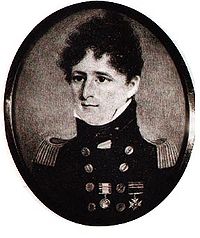
Jane Austen's brother Frank was described by Admiral Horatio Nelson as an "excellent" man.

Jane Austen’s brother Frank was described by Admiral Horatio Nelson as an “excellent” man.

6. Francis Austen (1774-1865), known as Frank, joined the Royal Naval Academy at Portsmouth along his younger brother Charles. He fought in the British Navy during the Napoleonic wars, and like his brother he rose to the rank of admiral. The more famous Admiral Horatio Nelson once remarked that Frank Austen was “an excellent young man”. In 1795 he was part of the naval squadron that escorted Princess Caroline of Brunswick to England, where she was to infamously marry her cousin, the future George IV. After the defeat of Napoleon, Frank was transferred to the North America and West Indies Station in 1844 and was promoted an Admiral of the Red in 1855. It is said that Frank Austen’s rapid early promotions were largely due to the patronage of the powerful Warren Hastings, who was a friend of the Austen family and was alleged to be the natural father of Frank’s cousin (and later sister-in-law), Eliza de Feuillide. In 1806 he married Mary Gibson, who gave him eleven children. After her death in 1823 he married secondly Martha Lloyd, his sister-in-law’s younger sister. This second union left no children, but there are many descendants alive today descended from his first marriage.

7. Charles Austen (1779-1852) was also, like his brother, a navyman. He served during the French Revolutionary Wars and the Napoleonic Wars, eventually rising to the rank of rear-admiral. In 1807 Charles married Frances Palmer, the youngest daughter of the late Attorney-General of Bermuda. The couple had four daughters, of whom two died young; the other two died as adults, and unmarried. After the death of Frances in 1814, Charles married his late wife’s sister Harriet in 1820. The couple produced four children, two of them sons, and one of whom, Charles John Austen, followed his father into the navy and died in Guadeloupe in 1867, leaving numerous descendants.

Here is an interesting documentary about Jane Austen’s life, which given an insight into her family and her personal life:

For specific details about Jane Austen’s family, I recommend the following website, compiled by one of her many relatives, Ronald Dunning.
Posted in England, Famous Genealogy, Genealogy, Ireland, Marriage, Royalty, Ships, Women | 9 Comments

Our elusive ancestors

Elusive ancestors. We all have them. We all chase them. And very often, they remain a mystery. Who among you has not come across a distant forebear who will just not turn up in the usual sources?

In England and Wales, births, marriages and deaths have been recorded since civil registration was introduced in 1837, previous records being kept by the church. Therefore, any of these three types of events should have been registered in the district’s General Registry Office. At least, that’s how the theory goes.

In practice, however, many events have, for some reason or another, gone unrecorded, and this I’m afraid you will discover the hard way. In late 1887 my great-great-grandmother gave birth to her sixth and last child, a daughter she and her husband named Anne. The child was born on 10 November and was five days later was baptised in the local church. Had the baby girl survived, she should have been recorded in the next (i.e. 1891) census, but as it happens, Anne Morris simply vanishes into thin air after her baptism. The 1901 census also fails to mention her (at least there is no trace of her in her parents’ house), but the census taken ten years later does seem to offer the first real clue as to her fate.

When the 1911 census was taken in England, it was the first time that people were asked to state how many children they had had up to date, and how many of them were alive at the time. In my great-great-grandmother’s case, she confirmed that of her five children, four were still alive (another one being the stillborn son she had in 1885, who was therefore not taken into account). I know full well that Anne’s four siblings died in old age, leading me to the painful and certain conclusion that by 1911 Anne was dead.

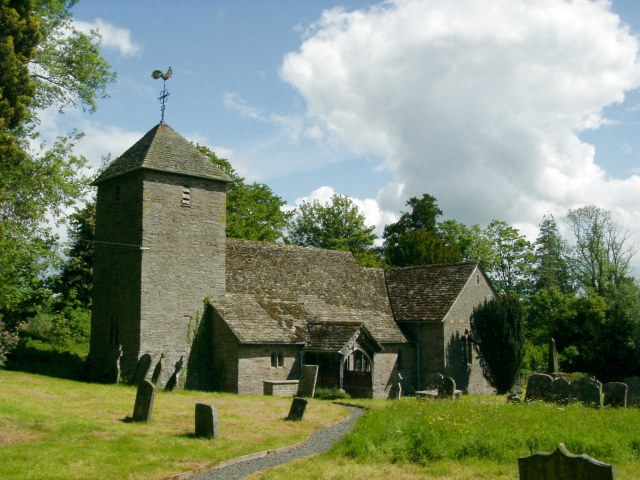
Sarnesfield St Mary's church in Herefordshire could unlock the mystery to Anne's untimely death. Could she have been buried within the churchyard's walls?

Sarnesfield St Mary’s church in Herefordshire could unlock the mystery to Anne’s untimely death. Could she have been buried within the churchyard’s walls? Source: WikiCommons.

The fact that Anne was not mentioned in the 1891 and 1901 censuses makes me believe that she probably died at a very early age, though there are several other possibilities for her otherwise illogical absence: for instance, she may have been given up for adoption, her parents not willing or being able to bring up a fifth mouth to feed. This theory, however, is highly unlikely, since the Morrises actually adopted a distant relative’s baby daughter in the early 1890’s. Another possibility is that Anne may have been brought up by her childless maternal aunt Milborough, who lived in the same village as the Morrises with her husband John Hollings. Nevertheless, the couple are listed living by themselves in 1891, again without showing any trace of little Anne. If Anne was alive in 1891, she was certainly not living with any of her closest relatives (including grandparents, uncles and cousins). I suppose there is  a slight possibility she may have been born with some kind of health problem and was therefore raised in an institution, but this is for now no more than a hypothetical alternative to an otherwise all-too common and untimely demise in Victorian England. To my mind, it certainly seems that Anne died an infant before 1891.

The FreeBMD website offers free, easy-to-use access to Civil Registration index of births, marriages and deaths for England and Wales. Although this is a tremendously useful and essential tool, FreeBMD does have some omissions and transcription errors which often turn ancestor-tracking into a very hard nut to crack. My attempts to search for Anne (using various spellings such as Ann, Annie, Anna and even Hannah), even under her aunt’s married name of Hollings, prove fruitless.

Lacking family documents such as diaries and other personal sources of information, my only option now is to turn to local church records, assuming that Anne died in the same place where she was born (that’s Sarnesfield, in Herefordshire). Unfortunately, sources like Findmypast.co.uk and Familysearch.org, not to mention Ancestry.co.uk, have produced no results whatsoever. This gives me a nasty feeling that, even if I accessed the Sarnesfield church burial records (presumably kept in Herefordshire Records Office), I wouldn’t find a thing.

I ought perhaps to remain positive and hope that one day I’ll find poor little Anne’s name scribbled on a piece of paper next to a date of death. But between you and me, it all looks very bleak to me…

Posted in 1891 Census, 1901 Census, 1911 Census, Adoption, Birth, Death, England, Genealogy, Herefordshire | Leave a comment

Feliz 256 cumpleaños, “abuela”

El pasado 9 de febrero, día de Santa Apolonia, se cumplieron exactamente 256 años del nacimiento de mi 4x tatarabuela en la Puebla del Caramiñal (en gallego, Pobra do Caramiñal). Casi de inmediato fue conducida a la pila bautismal, donde se le impusieron los nombres de Jacoba Polonia María de la Barca Josefa. Actuaron como padrinos don Juan Antonio Malvárez, vecino de la villa de Muros, y doña Rosa Romero, a la que en la partida bautismal, y sin duda por descuido, el párroco olvidó citar como abuela paterna de la niña.

El nacimiento de mi lejana tatarabuela fue, sin duda, un acontecimiento especial para sus padres. La neonata tenía sólo una hermana, llamada María de la Concepción Josefa Teresa Gabriela de los Dolores, que era cinco años mayor que Jacoba. Otro hermano había nacido tres años antes que mi antepasada, pero falleció en la cuna.

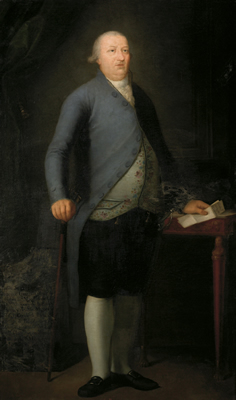
Domingo Gayoso de los Cobos, Conde de Amarante y Marqués de Camarasa. Retrato de Agustín Esteve y Márquez (Fundación Casa Ducal de Medinaceli).

Domingo Gayoso de los Cobos, Conde de Amarante y Marqués de Camarasa. Retrato de Agustín Esteve y Márquez (Fundación Casa Ducal de Medinaceli).

El padre de estos tres retoños no era otro sino Miguel José González-Soldado y Romero, que fue Escribano Real de la villa del Caramiñal entre los años 1752 y 1789, así como Procurador de Número de su regimiento. Pero el nombre de mi antepasado también ha llegado hasta nuestros días asociado con la historia de la villa; y no en vano merece Miguel José nuestras alabanzas, pues en 1756 publicó una obra dedicada a los orígenes y la historia heráldica del Caramiñal. Además, Miguel José trabajaba como secretario para don Domingo Gayoso de los Cobos (1735-1803), que más adelante heredaría los títulos familiares de Marqués de Camarasa (1791-1803) y Conde de Amarante (1765-1803), entre otros tratamientos del reino de Galicia.

Las cordiales relaciones entre mi familia y la del Conde de Amarante, se remontaban, por lo menos, una generación, y perdurarían hasta bien entrado el siglo XIX, cuando el padre de mi tatarabuelo todavía administraba las propiedades del XIII Marqués de Camarasa. Justa Martínez Montoro y Verea, la madre de nuestra protagonista Jacoba, percibió en 1776 del Conde de Amarante la cantidad de 1.550 reales para costear los gastos funerarios de su propio padre, que también había estado al servicio del Conde. Dos cartas escritas por mi antepasado Miguel José al Domingo Gayoso de los Cobos diez años antes dan fe de la proximidad entre ambas familias, pues aquél se dirige a éste como “Compañero, Amigo y Señor”.

En varias otras ocasiones había dado el Conde de Amarante muestras de amabilidad con el fin de ayudar y mejorar la situación de mis antepasados y de sus dos hijas. Es precisamente en este punto donde nos topamos con una curiosa incógnita. Gracias a la genial tesis de Atanasio Santos Iglesias Blanco sobre la casa de Amarante, sabemos que en 1768 Domingo Gayoso libró una importante suma de dinero para que una de las hijas de la pareja (no cita a cuál, pero por eliminación, como veremos, cabe suponer que fue ni más ni menos que mi antepasada Jacoba) pudiera ingresar en el convento de carmelitas descalzas de la ciudad de Palencia. Un año más tarde, de nuevo accedió el Conde de Amarante a aportarle a la otra hija (aquí citada como María de los Dolores, uno de los nombres que la única hermana de Jacoba había recibido en el bautismo) la cantidad de 600 reales para que ésta pudiese pagar su dote e ingresar en un convento. La tesis de Iglesias Blanco no cita a qué convento se refiere, pero sabemos que dos años más tarde, según una nota marginal de su partida de bautismo, la hermana mayor de Jacoba se encontraba religiosa del Coro y Velo Negro en el convento de la Purísima Concepción, en la ciudad castellana de Toro, donde profesó en el año 1771.

Dado que Miguel José y su mujer sólo tenían, que sepamos, dos hijas, Jacoba y María de la Concepción Josefa Teresa Gabriela de los Dolores (posiblemente conocida simplemente como “María de los Dolores”), y puesto que en un momento dado se pensó en destinarlas a la vida monástica, cabe suponer que Jacoba debió de retirarse, como así debió de suceder, para poder casarse y tener descendencia. Aparte del evidente requisito de tener que colgar los hábitos de monja para contraer matrimonio, Jacoba tuvo que abandonar el convento para poder suceder en el vínculo de mayorazgo que sus abuelos paternos habían fundado un año antes de su nacimiento, es decir en 1757. Este vínculo de mayorazgo,  implicaba que las abundantes propiedades familiares sólo podrían ser heredadas y transmitidas por los descendientes de Miguel José y su esposa, prefiriéndose la línea masculina a la femenina; además, el legado no podría ser heredado por aquellos descendientes que fueran o descendieran de curas, monjas, cristianos nuevos, judíos, brujos, sodomitas o personas que hubieran cometido crímenes de lesa majestad. Dado que el único hermano de Jacoba murió, como ya hemos visto, en la infancia, sólo quedaban ella y su hermana mayor como posibles herederas, pero María Dolores ya era monja en 1771, por lo que Jacoba quedaba como presunta heredera. Si efectivamente había ingresado en un convento palentino en 1768, su vida monástica debió de ser extremadamente corta.

Sabemos que en 1772 Jacoba vivía (¿de regreso?) en la Puebla del Caramiñal, pues aquel año ejerció de madrina de Francisco Javier Rivadulla, que más tarde llegaría a escribano real. Nada más sabemos de su vida, por ahora, hasta que en febrero de 1787 sus padres liquidaron el vínculo de mayorazgo en su favor y ante notario. Para rizar más el rizo, Jacoba se encontraba entonces en el séptimo mes de embarazo y, dudo mucho que de manera casual, dos semanas después pasó por la vicaría. El novio era Alonso Martínez, un joven oriundo del Puerto del Son (en gallego, Porto do Son) que más tarde llegaría a ser Escribano Real de las villas del Puerto del Son, la Puebla del Caramiñal y Noya.

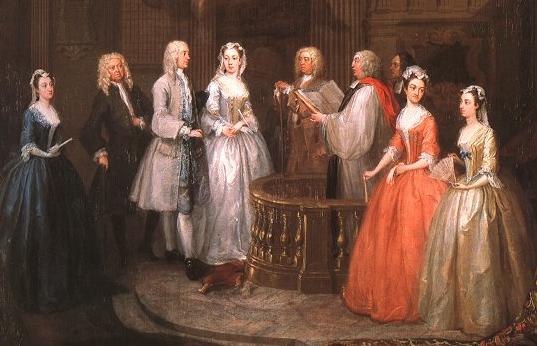
El matrimonio de mis antepasados permitió que sus descendientes pudieran legalmente heredar el vínculo de mayorazgo fundado por sus bisabuelos. Cuadro de William Hogarth.

El matrimonio de mis antepasados permitió que sus descendientes pudieran legalmente heredar el vínculo de mayorazgo fundado por sus bisabuelos. Cuadro de William Hogarth.

La rápida sucesión de los hechos me hacen concluir que Jacoba quedó embarazada a finales de 1786; el padre del nonato, Alonso Martínez, era entonces un mozo de 21 años (así que siete años menor que Jacoba) y por entonces no parecía disfrutar de oficio ni beneficio alguno. La heredera del mayorazgo de una de las familias más acomodadas de la zona debió de parecer una prodigiosa tentación y, por diseño o por accidente, pronto Jacoba dejó patente su evidente gravidez. Sus padres, Miguel José y Justa, que tantas esperanzas debieron de haber depositado sobre su hija pequeña, pusieron manos a la obra. El 3 de febrero liquidaron el vínculo en su favor, y dieciséis días después la pareja contrajo matrimonio. Menos de dos meses después hacía su aparición el primer hijo de la pareja, legítimo sí, pero por los pelos. La alegría fue también breve, puesto que el niño murió poco después del bautismo.

Un año más tarde Jacoba alumbró una niña, que sería amadrinada por sus abuelos maternos, y a esta la siguieron cinco féminas más. Estas seis hijas, solteras todas ellas, serían expulsadas de la casa familiar por su padre tres décadas más tarde, pero por entonces Jacoba estaría ya fría en su tumba.

Jacoba y Alonso tuvieron, además de las seis hijas, cinco hijos varones, dos de los cuales se malograron pronto. A uno, antepasado mío, también lo despojaría su padre de sus derechos al mayorazgo, quizá aprovechando que en 1820 fue promulgada la Ley Desvinculadora, que suprimió todos los vínculos en el reino. Por aquel entonces, ni Jacoba, ni sus padres, ni sus abuelos, que tanto habían trabajado por mantener el vínculo y que éste pudieran ser transmitido sin dificultad a las generaciones postreras, pertenecían al mundo de los vivos, pero los efectos de sus gestos perduraron y afectaron a dos generaciones más de la familia. Hoy poco o nada queda de aquellos frenéticos y en ocasiones desagradables episodios, salvo un puñado de legajos y la memoria que les otorguemos.

Dedicado a la memoria de mi tatara-tatara-tatara-tatarabuela,
Jacoba Polonia María de la Barca Josefa González-Soldado y Martínez.

Posted in Birth, Death, Engagement, Galicia, Genealogy, Illegitimacy, La Coruña, Marriage, Women | Leave a comment

The maid and the nurse

Like most people in the UK, I descend from working-class people. Almost all of my ancestors worked invariably either on the land or in service.  If you’re interested in this topic, I recommend you read “Life Below Stairs“, by Alison Maloney.

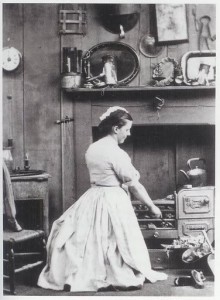
Source: Victorian Life Style - No copyright infringement intended.

Source: Victorian Life Style – No copyright infringement intended.

Being a servant in the 19th and early 20th century was usually totally alien to the glamorous, easy-going lifestyle that below-stairs workers enjoyed as depicted in modern-day television dramas like Upstairs, Downstairs or Downton Abbey. My great-grandmother Elizabeth was a domestic servant – or in other words, she was a maid. As far as I know, she never worked in a large household, and her employers would have therefore belonged to the middle-class, which became so prominent and so powerful in 19th-century England.

Elizabeth was born in 1879, toward the end of the Victorian era. She came from a family that for generations had lived in the countryside and worked on the land. In fact, there are very few precedents of females in her family who worked in service before her. This is hardly surprising, as servant numbers grew steadily until the outbreak of WWI. In 1901 over 40% of the total female population of working age were employed in service. In 1911 1.3 million people in England and Wales alone worked “below stairs”.

Elizabeth and her sister Ellen, who was only a year older than her, were very close. They both went to school together, as the 1891 census testifies, but probably left the classroom soon thereafter. The elementary Education Act of 1880 stated that children aged between 5 and 10 had to attend school, but as poor families would have needed even the youngest of children to work, this standard was not always reached. In 1893, by which time Elizabeth would have been 14 years old, a new act on elementary education raised the minimum leaving age to 11. It is therefore possible that Elizabeth was already in service at that time.

The 1901 census shows that Elizabeth worked as a general domestic servant in the house of a Mr and Mrs Oliver in the town of Leominster, in Herefordshire. Mr Oliver was fish and poultry merchant who evidently did well enough to maintain a small household, providing his wife and two small children with three servants (including Elizabeth, a groom and a nurse for the Oliver baby).

As explained in this documentary on the history of servants, presented by Dr. Pamela Cox, servants were often given a shortened and more familiar name by their employers, so as to denote their inferior rank and station within the household. It was probably Mr and Mrs Oliver who gave Elizabeth the nickname Bessie, which she used for the rest of her life. A generation later and her daughter, my own grandmother Betty, was also addressed as Bessie by her employer, the Canadian novelist Mazo de la Roche.

In 1901, my great-grandmother’s sister Ellen, nicknamed Nell, was also a servant. She actually worked and lived at nr 24, the High street, in Leominster, just a couple of doors down from where Elizabeth worked. Nell, however, was a children’s nurse (rather like a nanny), a more respectable position than being a general servant.

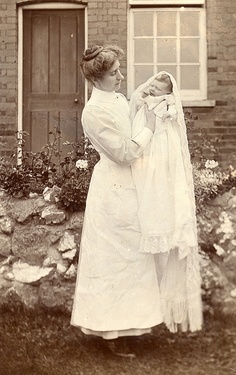
An Edwardian nurse with her young charge. Source:

An Edwardian nurse with her young charge. Source: Pinterest. No Copyright infringement intended.

Nell worked in the house of a Mr Frederick Heal, a 34 year-old drape shopkeeper who hailed from the Isle of Wight. Mr Heal and his wife Fanny had two young sons aged 2 and 1 (which explains Nell’s presence in the household), but also lodged four female employees who are described in the census returns as draper’s assistants. Their names, for posterity’s sake, are Lilly Andrews (25, from Ashley, Shropshire), Pauline Beach (25, from Birmingham), Alice Passey (21, from Kidderminster) and Winifred Pipes (18, from Worcester). Apart from his family, his employees and my great-great-aunt Nell, Mr Heal shared his roof with two other female servants, Jennie Haynes, a 17 year-old cook (who I imagine would have worked very hard to feed all those people day after day) and Rhoda Haynes (Jennie’s sister, probably), who was a general domestic servant. The house they all lived in is now a travel agent’s.

Of course, Elizabeth and Ellen probably never intended to work in service all their lives, but at the time, marriage was the almost-exclusive means of escaping a life below stairs. Of them both, Elizabeth was the quickest to escape, as she somehow met my great-grandfather and duly married in 1910, leading a peaceful but hard-working life as a mother of three in the countryside up in the Malvern Hills. Nell, on the other hand, lingered in service for a few more years. In 1911 she pops once again as a nurse, only this time she is staying in the house of 50 year-old George Wilson and his wife Mary Anne in Ross-on-Wye. Ellen is not employed by the Wilsons themselves, however, since two accompanying boys, Thomas and George Wall, are listed as visitors too. It is quite possible that Ellen would have been entrusted with the boys’ care by their parents while they all visited the children’s grandparents.

It was not until 1926 that Ellen finally married a fellow Herefordshireman, and they settled near her sister Elizabeth.

Posted in Genealogy | Leave a comment

Recordando a Manolito

Recuerdo que de niño, cuando comenzaba a investigar mi árbol genealógico, le solía preguntar a mi madre sobre sus tíos. Dado que mis bisabuelos tuvieron muchos hijos, para mí resultaba un tanto frustrante no saber distinguir quién era quién cuando asistía a reuniones familiares, cumpleaños, bautizos, bodas y funerales.

De entre todos los nombres que oía repetir una y otra vez, había un caso en particular que me intrigaba: el del hermano mayor de mi abuela, Manuel (conocido como Manolito por sus allegados), al que yo jamás llegué a conocer. En más de una ocasión oí de los labios de mi madre cómo Manolito había muerto en un accidente de coche (“en una época en la que casi no había coches”, decía ella), y podía imaginar perfectamente las circunstancias del accidente, como si yo mismo lo hubiera presenciado.

Manolito nació en la villa coruñesa de Puerto del Son (hoy Porto do Son) en 1915. Era el segundo hijo de la pareja formada por mis bisabuelos Pepe y Lola, cuya primogénita había nacido un año antes en la vecina localidad de Noya (Noia). La familia deambuló por Galicia durante varios años debido a la profesión de mis bisabuelos, pues ambos eran maestros por aquel entonces, además de la labor de abogado que ejercía mi bisabuelo. Tras residir un tiempo en Ribadeo (Lugo), Pepe, Lola y sus siete hijos se acabaron afincando en La Coruña, donde nacerían cuatro hijos más (sin contar una niña, que nació muerta a finales de los años 20).

Manolito era el mayor de los varones, y por las fotografías que he visto de él, era un muchacho sonriente y alegre al que parecía gustarle disfrutar de las vacaciones familiares en el Son junto a sus hermanos menores. Físicamente, Manolito se parecía a su madre, pues era tan moreno que en algunas fotos parece negro, y su pelo era extremadamente ondulado, dándole una apariencia casi morisca (¿quién sabe si tenemos algún gen africano merodeando por ahí?). A los siete años Manolito hizo su Primera Comunión, ocasión para la cual posó en un estudio fotográfico vistiendo un flamante traje blanco con un gran lazo atado al brazo izquierdo. Más de 70 años después recuerdo a mi madre contándome que ella y sus hermanos habían encontrado dicho lazo en el desván de mi abuela (fallecida poco antes), pero que éste estaba tan deteriorado que se deshacía al tacto.

Al contrario que sus hermanos Dolores, Juan y José, que estudiaron derecho, Manolito decidió decantarse por la carrera de periodismo, que nunca llegó a completar pero que era una profesión a la que su padre estaba muy ligado, ya que además de abogado y maestro ejercía también como director del diario El Ideal Gallego. De haber vivido más, estoy seguro de que Manolito habría llegado a ser un conocido periodista en Galicia, o que por su edad y firmes convicciones religiosas hubiera decidido jugarse la vida luchando en la Guerra Civil, que estallaría menos de un año después de su temprana muerte.

A comienzos de octubre de 1935, Manolito y dos amigos, Miguel Ruiz Alarcón y José Otero Cagigal (algunas fuentes apuntan a que éste se llamaba Vicente), decidieron viajar a Madrid. Escogieron visitar la capital aquel fin de semana del 12 porque en la Academia de la Lengua Española se celebraba oficialmente el primer Día de la Hispanidad, evento que fue descrito por una publicación de la época de la siguiente manera: “«La conmemoración de la fiesta de la Hispanidad. Con gran brillantez se ha celebrado este año el día de la Hispanidad. Toda España se ha sumado a su conmemoración. Y no solamente en España. En América, ni qué decir. En cuanto al extranjero, allí donde existe un núcleo de españoles se han reunido y han brindado por la raza española.» Si, como sospecho, mi tío-abuelo Manolito estuvo presente en la Academia de la Lengua aquel 12 de octubre, seguramente pudo disfrutar del discurso sobre el descubrimiento de América que dio el diplomático y escritor Ramiro de Maeztu, que sería asesinado un año más tarde por milicianos republicanos.

Para un joven cultivado y aspirante a periodista como lo era Manolito, aquel evento debió de ser tan emocionante como inolvidable, y quién sabe si llegó a comunicarse con sus padres desde la capital antes de emprender el camino de vuelta para relatarles lo que había visto y oído.

Pero ante el comienzo de una nueva jornada laboral, Manolito y sus dos amigos se vieron obligados a volver a La Coruña, donde les esperaban sus respectivas responsabilidades profesionales: José Otero trabajaba para el Banco Pastor, mientras que Miguel Ruiz sólo consta como “empleado” en la prensa de la época. Los tres muchachos dejaron Madrid el lunes 14, muy de madrugada, a fin de llegar a La Coruña lo antes posible.

Dicen (tanto los periódicos de entonces como la historia que ha llegado hasta mis oídos) que mientras los dos otros ocupantes del coche descansaban, el conductor y dueño del automóvil, José Otero, se quedó dormido al volante, y en el descuido empotró el vehículo contra un pino en la zona conocida como Pinar de Antequera, a la entrada de la ciudad de Valladolid.

Los tres jóvenes quedaron gravemente heridos como resultas del accidente; Miguel y Manolito sufrieron una fuerte conmoción cerebral con shock traumático, y fueron trasladados a la Casa del Socorro de la capital vallisoletana, donde Miguel Ruiz Alarcón, de 22 años, falleció minutos más tarde. Manolito, con 20 años recién cumplidos, murió a las seis de la madrugada de ese fatídico día. A pesar de la gravedad de sus heridas, sólo José Otero logró sobrevivir al accidente.

Las familias de los tres jóvenes fueron notificadas de lo sucedido inmediatamente  mientras que en La Coruña se vertían los primeros detalles del accidente, pues todos ellos pertenecían a conocidísimas familias de la ciudad. Aunque no estoy completamente seguro, es muy probable que fuera mi bisabuelo, el padre de Manolito, quien fuera a recoger el cadáver de su hijo y lo trasladase a Galicia.

El entierro del malogrado Manolito tuvo lugar en el cementerio municipal de San Amaro el 17 de octubre ante la apenada mirada de un gran número de personas, entre quienes se encontraban muchos jóvenes pertenecientes a las Juventudes Católicas, en las que mi tío-abuelo era activo militante.

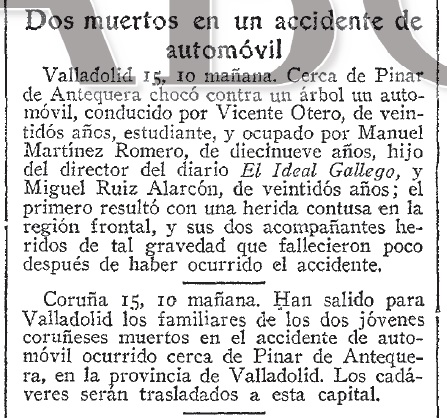
Noticia publicada por el diario ABC el 16 de octubre de 1935, adelantando el accidente ocurrido en Valladolid. Fuente: Hemeroteca ABC.

Noticia publicada por el diario ABC el 16 de octubre de 1935, adelantando el accidente ocurrido en Valladolid. Fuente: Hemeroteca ABC.

Posted in Death, Genealogy, La Coruña, Spain | Leave a comment

Who really built the Cruceiro de Hío?

View of the Cruceiro de Hío, opposite the parish church.

View of the Cruceiro de Hío, opposite the parish church.

The region of Galicia, in the northwest of Spain, is a hilly region with coastal areas that alternate beautiful rías (submerged valleys where the sea enters the mainland) and rugged cliffs. The climate in Galicia is moderate and rainy, making it the greenest part of Spain. Despite ongoing efforts to modernise Galicia, the area remains strongly agricultural even today, a fact which in a way reinforces the ancestral ties between its inhabitants and the land they live on. Romanesque art (10th-13th century AD), together with Galician baroque, is also one of Galicia’s trademark features, particularly in religious architecture, and is present all over the area in almost every piece of architectural craftsmanship.

Most, if not all of Galician villages, also boast a cruceiro, a roadside stone cross situated atop a stone pillar. Such works of architecture are usually several metres high, and their ornamental details vary from the sober to the exuberant.

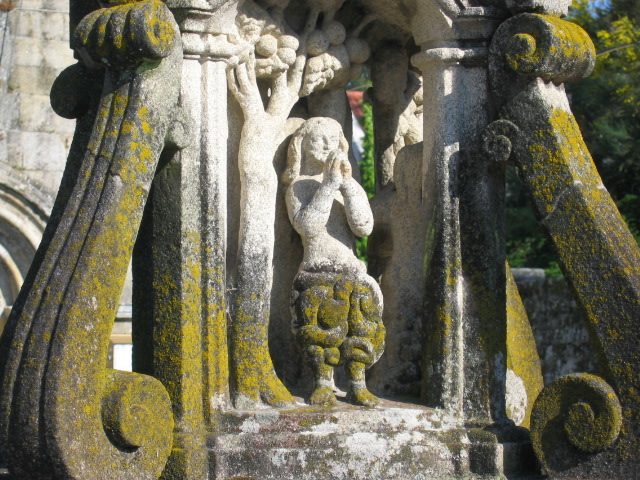
The most famous of these crosses, the Cruceiro de Hío, takes its name from the place were it was built, in the municipality of Cangas do Morrazo, in the province of Pontevedra. It is situated a few feet away from the local parish church and it is undoubtedly the most famous, symbolic and elaborate of all Galician cruceiros. Made of a single piece of solid granite and representing various passages of the Bible, the highest part of the cruceiro represents the crucifixion, while the bottom image represents Adam and Eve having been expelled from Paradise. This exquisite work of art was meticulously cut, finished and inaugurated in 1872, and I am proud to say, it was also erected by one of my great-great-grandfather’s relatives.

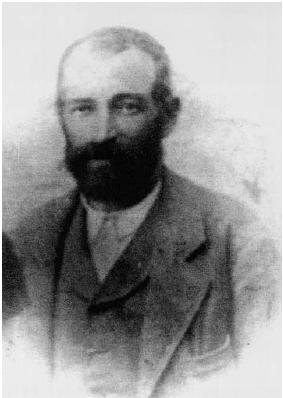
José Cerviño García

José Cerviño García

And yet, despite its fame and obvious architectural importance, the true identity of its author remains something of a conundrum. Over the years, many experts and locals have maintained that the author was a man called José Cerviño García (1843-1922), who was my great-great-grandfather’s second cousin. José Cerviño was known to have been a stone cutter from the parish of Aguasantas, in Cotobade, a small village located over an hour’s drive away from Hío (that is, an hour’s drive by modern standards – the distance would of course have been far greater in the late 19th century, when the cruceiro was built). José Cerviño’s claim to fame rests largely upon a left to us by Galician journalist and writer Alfonso Rodríguez Castelao, who confidently stated in the 1950’s: “José Cerviño was a genius, a revolutionary, capable of turning simple cruceiros into large calvaries, similar to those erected in Brittany. He was possessed by his geniality up to the point that he proved more expensive because of the wine he drank than the money he charged“. Naturally, José’s descendants claim to this day that their illustrious ancestor built this architectural marvel, but many other people are still not convinced, due mainly to the lack of evidence that would support José Cerviño’s claim.

Since the 1960’s, several Galician authors and historians have suggested that it was actually Ignacio Cerviño Quinteiro (1839-1905), my great-great-grandfather’s third cousin, who really erected the cruceiro. This second Cerviño, who also happened to be José Cerviño’s third cousin once removed through their common descent from an early 18th century ancestor, is supposed to be the real author of the cruceiro, and his supporters maintain that a lost document written by the local parish of Hío several decades ago, would confirm this hypothesis. And yet there is no definite proof that Ignacio Cerviño was more the author of the cruceiro than José Cerviño; all we have is hearsay and second-hand information. Therefore, the only alternative we have left is to analyse other sources to try and make an educated guess in order to unravel this century-long mystery.

In first place, I’ll consider the profession of our two candidates. My great-great-grandfather José Benito Cerviño was a stone-cutter who lived roughly at the same time as his two cousins; I know this because he often worked as a sort of building contractor, and it was he who was responsible for building several stone walls in the city of Vigo, where he ultimately settled and died. His distant cousin, José Cerviño, one of the purported authors of the Cruceiro de Hío, was also a stone cutter who would have worked in a similar business. However, the fact that he erected several ornate mausoleums (such as those in Antas, in Eiras, etc) and that he actually signed them, would confirm that José Cerviño did have a certain artistic talent for more than just cutting blocks of stone. His cousin and fellow candidate to the authorship of the cruceiro, Ignacio Cerviño, is actually described on various documents as a sculptor, as opposed to a humble stone cutter. Clue number 1.

Adam following his expulsion from Paradise, as represented on the base of the Cruceiro de Hío.

Adam following his expulsion from Paradise, as represented on the base of the Cruceiro de Hío.

But let us now explore the personal lives of our two Cerviño candidates. José Cerviño was born in 1843 into a humble family. His father was also a stone cutter, and his only brother was a simple peasant. His first marriage, which took place in his home town of Aguasantas in early 1872, produced four children; all three sons were born in the same village as their father, while the only daughter was born in the city of Pontevedra in 1878.Therefore José was nowehere near Hío at the time he was supposed to have been sculpting the Cruceiro de Hío. Clue number 2.

On the other hand, his distant relative Ignacio Cerviño was born in 1839, also into a poor family. His father was a stone cutter, the same as many other males in the family, and like José, Ignacio married twice as well. His first marriage took place in 1859, but I have not found any traces to suggest that the couple had any descendants. Then, at a later date, Ignacio remarried, as by 1869 his second wife gave birth to their daughter Delfina, who was born in Aguasantas, Ignacio’s native village. However, things changed within the next three years, as by 1872 (the same year the cruceiro was built, clue number 3) his wife gave birth to another daughter in the parish of Hío, the very same place the cruceiro was erected too! Clue number 4.

So, bearing in mind these unquestionable facts, I think we can safely assume that circumstantial evidence certainly points to Ignacio Cerviño Quinteiro as the likeliest author of the Cruceiro de Hío. While both he and his cousin certainly had the expertise and the talent to produce the most famous cruceiro in Galicia, the fact that Ignacio was at the right place and at the right time strongly points to him as the man we are looking for. Only time will tell whether we will ever find any conclusive evidence to corroborate the true identity of the cruceiro‘s author.

Posted in Death, Galicia, Genealogy, Marriage, Pontevedra, Spain | Leave a comment

Who Do You Think You Are? Nigella Lawson

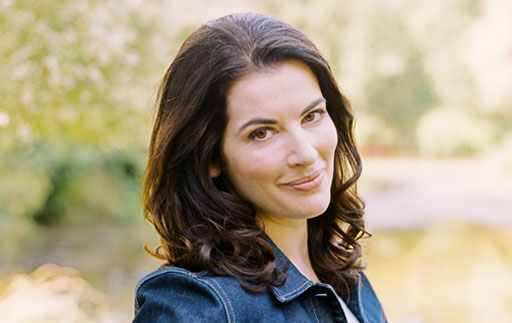
Nigella Lawson (bbc.co.uk)

Nigella Lawson (bbc.co.uk)

SPOILER WARNING!

One of my favourite Who Do You Think You Are? episodes is the one starring Nigella Lawson (series 3, episode 6), the TV personality and cook book writer who has lately come under huge scrutiny due to her past drug-use and the very public collapse of her marriage to Iraqi-born British businessman Charles Saatchi.

Nigella Lawson is one of the four children born to former Conservative MP and Chancellor of the Exchequer Nigel Lawson (b. 1932) and his first wife, the late Vanessa Salmon (1936-1985). Nigella’s family was a Jewish, though non-observant family linked for several generations to London’s wealthier circles as well as the catering business

In this episode, Nigella attempts to clear several myths surrounding some of her maternal ancestors, who came to prominence for having founded the famous Lyons Corner House chain. Although not much genealogical research actually takes place during this episode, Nigella attempts to uncover the personal stories behind her maternal Salmon ancestors. She goes back to her ancestor Barnett Salmon and his wife Helena Gluckstein, whose family originally came from Amsterdam. It was Helena’s grandfather, Coenraad Sammes (later Coleman Joseph), who fled to England from Amsterdam in 1830 to escape a prison sentence following a conviction for theft.

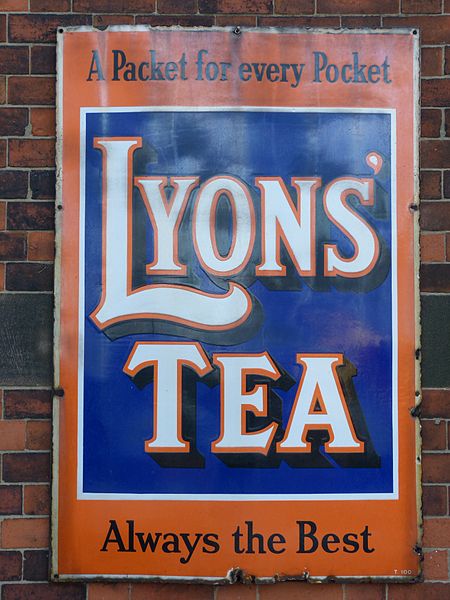
A Lyons Tea sign (wikipedia)

A Lyons Tea sign (wikipedia)

Amused rather than ashamed by her family secret, Nigella also tries to find out whether she actually has any -as she puts it “exotic”- Spanish blood, knowing that many Jews originally came from Spain (Sephardi Jews). A trip to the archives in The Netherlands confirms Nigella’s family were actually Ashkenazi Jews who probably came from Eastern Europe or Germany, which slightly lets her down.

I find Nigella Lawson’s episode light and entertaining because, in spite of the Jewish element in her family background, her story is not as tragic or gloomy as those presented by Jerry Springer or Marianne Faithfull, apart from her Jewish maternal grandfather’s experience as a British soldier in the Army Catering Corps which liberated Belsen Concentration Camp in 1945.

Her story is more about success, about money and about eluding the law in order to survive. Definitely a good mix for an hour’s entertainment!

http://www.youtube.com/watch?v=rOUmPUepBLc

Posted in Famous Genealogy, Genealogy, Germany, Jewish Ancestry, Money, War, Who Do You Think You Are?, Women, Work | 1 Comment

JFK and a family memoir

I earnestly encourage you all to ask your relatives, whatever their age and relation to you, to tell you about what they remember. It doesn’t matter if they talk about what the war was like, or what it was like to date decades ago, or how the world has changed in recent times… It’s all valuable information.

Today, my dad sent me an e-mail telling me about his recollections of that sad day in November 1963 when the world stood still. Other than very minimal editing, all the below is his. Thank you P.J.

“I remember November 22nd 1963. A Friday, like today. It was my last day at school. For some months my mother, a widow with five siblings to raise, had become increasingly irritated with my teenage lifestyle and constantly threatened to take me away from school and send me out to work. Finally, fed up with domestic penury and disillusioned at school, I took her up.

It was a gloomy, miserable autumn day. November is a depressing month, comparable only to February, though the latter at least is the pre-cursor of Spring. I arrived home after my usual two bus journeys – the grammar school I attended was on the far side of the city. I entered, as usual, through the kitchen door (the front door was for posh visitors or tradesmen). Everyone was in the living room, watching the slot-rental TV. I plonked down my school satchel when suddenly a news flash came on the screen – President Kennedy had been shot on a visit to Dallas and had been rushed to hospital. I went upstairs and changed out of my school uniform for the last time and headed to my best friend’s house on a nearby council estate. It was about a ten-minute walk. Just as I entered his living room another news flash came on the TV – President Kennedy had died on the operating table at Parklands Hospital in Dallas. At that moment the world went into deep, dark mourning. The BBC blacked out its schedule and played funeral music with frequent news updates on the magnicide. The profound sense of shock and tragedy at that time was only comparable to 9-11, or what I imagine it must have been like as the news of the attack on Pearl Harbour came through, with the difference that both the latter were tempered by a sense of indignation giving way to an outburst of patriotic pride. The assassination of John Kennedy was simply a tragic waste and, as events unfolded and the details emerged, questions began to be raised about who really ran America and whether the youthful optimism he so clearly represented and the changes he espoused would be tolerated by the entrenched establishment. With hindsight I would have to say not, and I don’t believe Bobby’s death a few years later was at all coincidental. That night in California he was assured of the Democratic nomination, and surely would have beaten Nixon, Nixon the perpetual loser, in the upcoming presidential election.

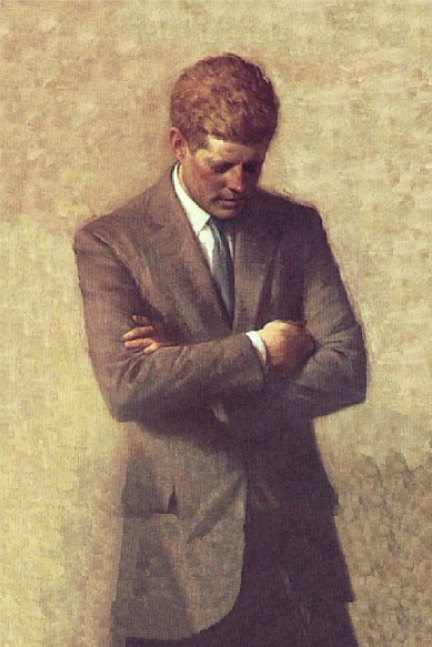
The official White House portrait of JFK, courtesy of American Heritage.

The official White House portrait of JFK, courtesy of American Heritage.

Regarding the assassination itself I don’t have time to go into detail. Much is being discussed these days about minor, though important, details such as the Magic Bullet, dodgy rifles, faked photos, and so on. Just the timeline of events speaks for itself. President Kennedy was shot at about 12.30. Every police car in Dallas was undestandably ordered to converge on the scene, with one solitary exception. The lone police car was ordered to patrol North Dallas for no declared purpose. At that time there was absolutely nothing to link either Oswald or the Book Depository to the crime. At about 1.10 the officer stopped a person who, after a couple of minutes of apparently amicable conversation pulled out a gun and shot him dead, throwing away his jacket as he ran off. Lee Harvey Oswald was arrested in a nearby cinema a few hours later and subsequently charged with the officer’s murder. Only later that night was he linked to the Kennedy assassination and charged with the killing.

The FBI and especially the Secret Service were uneasy about the Dallas City Police, whom they regarded as corrupt and incompetent, and requested Oswald be moved to the county jail, where Oswald had said he would speak out (remember the Secret Service, responsible for guarding the President, had absolutely no jurisdiction – murder, even of high officers of state, was at that time exclusively a State crime). Oswald was due to be transferred early the morning of the 24th, but there was an unexplained delay. Some 2 hours after the scheduled time of the transfer Jack Ruby, a Dallas nightclub owner friendly with the Dallas police but possibly with connections to organised crime, arrives at Dallas City Police headquarters, walks unchallenged past the police guard down the ramp into the heavily-guarded garage at the exact moment when Oswald is brought down in the lift and shoots him.

What I am trying to say is that, after 50 years, I can still feel, despite all the sordid details subsequently revealed about JFK’s private life, the senseless loss, but more than that I can still smell the putrefaction that surrounded the assassination and the subsequent so-called “investigation”. I have always maintained that the United States is a constitutional semi-absolutist monarchy – a view supported by no less eminent a person than David Starkey, presenter of the Monarchy series on TV. So if you’re going to bump off a President, who better to cover it up than the VP. the heir apparent (The King is dead; Long live the King!) and where better than in the VP’s own home state? Despite being his Vice-President, Lyndon Johnson, the hard-talking, some would say foul-mouthed, Texas rancher had a visceral hatred for Kennedy, the Northern liberal silver-spoon-in-his-mouth pussy. Sound incredible? Why not? If the powers-that-be could get rid of democratic leaders such as Mossadegh in Iran or Arbenz in Guatemala, or later Allende in Chile, for acting against the perceived interests of the United States, is it too bizarre to believe they could conceivably get rid of one (two, if you include Bobby) of their own, if the stakes (viz. vast business gains) were high enough?

One final point; there has always seemed to me to be a strong correlation between politics and culture. The Sixties saw un unprecedented blossoming of youth culture, a generational change famously epitomised in President John Kenndy’s inauguration speech (I earnestly recommend you listen to all 20 minutes of it on YouTube). But the decade of optimism and free expression gradually gave way to the harsh realities of Vietnam which no amount of dope-induced highs could hide, and the establishment finally decided it had had enough of hippies and, more importantly, political protests. The deaths of Bobby Kennedy and Martin Luther King presaged the crackdown on Eugene McCarthy’s candidature at the Democratic Convention later that year in Chicago, where the asinine Hubert Humphrey received the nomination, only to founder miserably against the erstwhile loser Richard Nixon in the subsequent presidential election. A little over a year later the death knell of the political protest was, literally, sounded when students were gunned down by National Guardsmen at Kent State University in Ohio. The decade of light, hope and freedom was well and truly over. Don McLean’s “American Pie” catalogues that period, beginning with the happy innocence of Buddy Holly, passing through the dreams of the Beatles and the Byrds and finally ending with the tragic deaths at the 1969 Altamont festival. Marijuana gave way to amphetamines and heroin, the Beach Boys to Lou Reed and the heavy bands. The decade began with “Surfin’ USA” and ended with the Doors’ “The End”. It was not simply “the day the music died”. With the passing of the Kennedys, especially Bobby, who I think would have been a truly great president, part of America’s hitherto unshakeable self-belief also died, and has never recovered – witness the majority of American citizens who believe that JFK’s assassination was both a conspiracy and a cover-up (of its own conspiracy?). That perception is not simply a verdict on an event that happened two genarations ago; it is a stark comment on how the American dream has been diminished – if it ever existed.”

Posted in Gloucestershire, Murder, United States | 2 Comments

Researching Colwall’s WWI heroes

Some months ago, with every single genealogical site and publication talking about the upcoming centenary of the breakout of the First World War, I came up with the idea of researching the life of the men from my grandmother’s home town who perished during the war, as well as the circumstances that led to their sad and untimely ends.

IMG_7090To ensure my work was not in vain, I got in touch with John Atkin, of the Colwall Village Society, who confirmed that no such undertaking had ever been done before, and that they would be very interested in having a look at my work when it is completed. Thus, I set off in my quest for information.

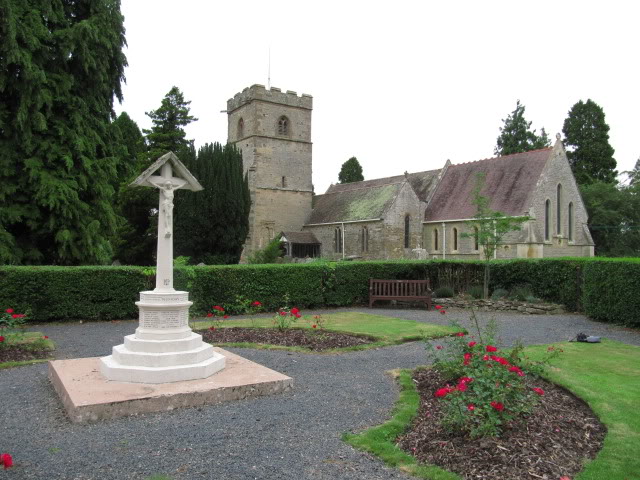
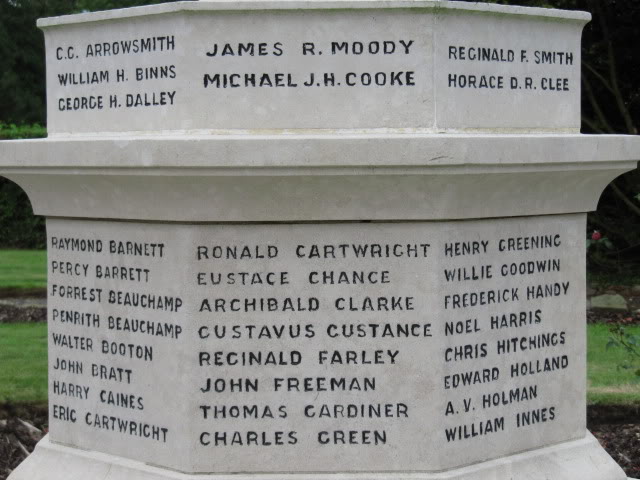
Using the Internet as my primary tool, I first looked for photographs or a transcription of the names of the soldiers mentioned on the Colwall War Memorial. The memorial (above, right) was erected just outside the parish church of Saint James “the Great”, where so many of my ancestors were baptised, got married and were finally laid to rest. Sadly, the war memorial only mentions the soldiers by name, and therefore gives no hint as to the date when they lost their lives.

cwgc_siteThus, using the military records that are available on Ancestry.co.uk and the endless repository of information contained in the Commonwealth War Graves Commission website (right), I started looking for each of the 49 individuals‘ background (parents’ names, age, profession before the war, marital status, etc.); Googling each soldier’s name has also permitted me to find additional information not contained in the other sources I have mentioned, such as newspaper cuttings, photographs, etc.

IMG_7093I soon noticed that some of the men listed on the memorial were not actually born in Colwall, but only lived there for varying amounts of time. Some only had a passing link with the place (in some instances it was where their wife came from and therefore it is possible that it was the women’s families who wished to honour their deceased in-law by engraving his name on the memorial). What really struck me, however, was the fact that some names had been left out. Although the war memorial mentions 49 names, I have so far found over 60 soldiers who either came from or lived in Colwall by the outbreak of war.

I then started to re-arrange the information onto an Excel sheet. I classified my findings according to surname, name, date of death, military rank, service number, age, regiment of service, country of service (for some Colwallians had emigrated by 1914 and therefore went to war in the Australian or Canadian forces), cemetery or memorial where their name is commemorated, whether actually born in Colwall or not, marital status and a space for comments. I then colour-coded each soldier according to the year they died.

This research has so far not only allowed me to understand the human loss of the war, but will also contribute, I hope, to the lasting memory of the 60-odd young men who gave their lives for King and Country.

Posted in Australia, Colwall, Commonwealth War Graves Commission, Death, England, Genealogy, Herefordshire, Killed In Action, Marriage, War | Leave a comment

Who Do You Think You Are? Marianne Faithfull

SPOILER WARNING!

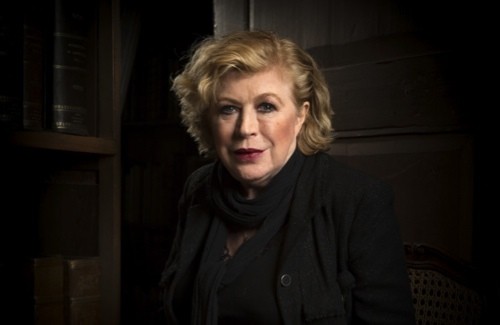
Marianne Faithfull explores her maternal family's history prior and during WWII.

Marianne Faithfull explores her maternal family’s history prior and during WWII. Photo courtesy of Who Do You Think You Are? Magazine.

If you had to pick a likely description for Marianne Faithfull‘s background, you would hardly choose an illustrious knight in the Austro-Hungarian army, a Jewish grandmother who took part in the Viennese resistance during WWII or a sexually ambiguous mother who lived the roaring 20’s from the glittering stages of Berlin’s most famous -and infamous- theatres. And yet, Marianne Faithfull’s family history is exactly that – and so much more.

The 9th episode of the 10th season of the BBC series Who Do You Think You Are? delves into the roots of British singer and actress Marianne Faithful, whose highly-acclaimed work during the 1960’s and 70’s has been overshadowed by drug abuse and her tempestuous relationship with Rolling Stone lead singer Mick Jagger.

In this episode, Marianne, 66, attempts to unearth the facts behind her late mother’s life and experiences as a young half-Jewish woman in the Berlin of the 1920’s and 30’s. Unsurprisingly, like in so many other episodes that focus on the Jewish ancestry of  celebrities who starred in Who Do You Think You Are? (David Baddiel, Stephen Fry, Jerry Springer or Natascha Kaplinsky), the Second World War marks a turning point in the protagonist’s family history.

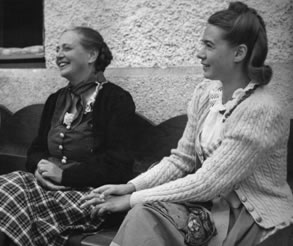
Marianne's mother Eva von Sacher-Masoch, who was half-Jewish, and her mother Flora, who was a Hungarian Jew.

Marianne’s mother Eva von Sacher-Masoch, who was half-Jewish, and her mother Flora, who was a Hungarian Jew. Photo courtesy of http://www.cabaret-berlin.com.

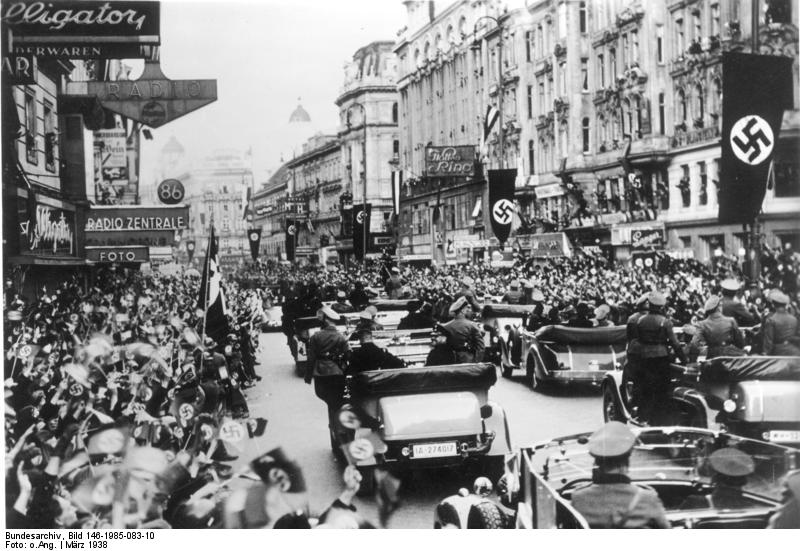
However, Marianne’s background offers the viewer a detailed insight into what life was like in the Berlin of the Weimar Republic. What is more, it also shows how families of mixed background like Marianne’s, who were half Austrian Catholics and half Hungarian Jews, were treated by the Third Reich. Labelled a “mischling”, or mongrel, Eva von Sacher-Masoch (Marianne Faithfull’s mother) was kept at arm’s length by the Gestapo after the Anschluss and during the difficult years of WWII. Only her father’s title, conferred on one of his ancestors by an Austrian Emperor, and the family’s connections with Hungarian diplomatic circles, prevented the Nazis from pulling off a fatal check-mate on the Sacher-Masochs.

Cheering crows greet the Nazis in Vienna following the Anschluss, in 1938. Photo courtesy of Wikipedia.

Cheering crows greet the Nazis in Vienna following the Anschluss, in 1938. Photo courtesy of Wikipedia.

This episode is interesting because it shows in great detail how people of mixed race lived and were generally treated by the Nazi regime until 1945, and proves that it was not all as black-or-white as we would have thought. Though perhaps not as moving as Stephen Fry’s family, or as heart-breaking as the story of Jerry Springer’s grandparents, it is touching to see someone like Marianne Faithfull’s eyes filling up with tears while she recounts how the occupying (or “liberating”) Soviet army raped over 100,000 women in Vienna at the end of WWII.

I was disappointed, however, by the fact that this particular episode failed to mention Leopold von Sacher-Masoch (1836-1895), who according to Wikipedia was Marianne’s great-great-uncle. Leopold von Sacher-Masoch was an Austrian writer and journalist who became well-known in his lifetime for his romantic stories of Galician life but also also for his bizarre sexual practices, which included role-play, cruelty and humiliation. The term masochism, used today to describe someone who gets sexual pleasure from pain, derives from Leopold’s own surname.

Perhaps the BBC thought having Hitler in the episode was quite enough for the public to digest…

Posted in Austria, Famous Genealogy, Genealogy, Germany, Jewish Ancestry, Marriage, War, Who Do You Think You Are?, Women | 3 Comments