

Years ago, while researching my great-grandfather’s family, I decided to explore the branch of his only paternal uncle, William Henry Allen (1845-1923), a blacksmith by trade who fathered no fewer than nine children! Most of them eventually married and had families of their own, but one particular individual would remain a conundrum for years to come. It was only recently that I was able to uncover more information about her life… and death.
Winifred Rose Allen was born in Colwall, Herefordshire on 21 February 1881, her parents’ sixth child and second daughter. On 20 April she was baptised in nearby Great Malvern, just over the other side of the Malvern Hills, in neighbouring Worcestershire. The subsequent birth of two further daughters and one son (who sadly died aged four months) would complete the family tree.
Little Winifred made her first appearance on the census the same year of her birth, when she was recorded (aged one month) living with her family at Portland Cottage, Upper Colwall. However, something must have been amiss, as it gradually became evident that Winifred showed signs of having some type of handicap. Records do not explicitly state what ailment she suffered from, but her condition was serious enough to be referred to in subsequent censuses.
In 1891, ten-year-old Winifred was again recorded living with her parents and siblings, all of whom appear to have been healthy, with only one exception: in Winifred’s case, the column referring to people being “deaf-and-dumb”, “blind” or “lunatic, imbecile or idiot” is filled in with the following description: Spinal complaint from childhood. It is evident, therefore, that young Winifred was physically disabled. Thus far, there is no reason to suppose that her problems affected her learning capability, but a glance at the column destined to each person’s occupation also reveals that, unlike her older and younger siblings, Winifred was not attending school. Was she suffering from some kind of mental disability, or was her physical condition an obstacle towards her going to school and receiving a formal education?
The 1901 census, taken ten years later, is also striking, in that it offers no reference whatsoever to Winifred’s health problems. Taken by itself, this could suggest she was no longer ill, but rather tellingly other details on the form indicate otherwise: Winifred was still living at home, residing with her parents and unmarried sisters, all of whom were school teachers. And yet, Winifred is the only member of the family who does not have an actual occupation…
By 1911 things for the Allen family had changed dramatically. Susannah Allen, Winifred’s mother, had died the previous year (her father would remarry in 1914), and by then all of Winifred’s brothers were married and leading lives of their own. With her father nearing his seventieth year, Winifred’s closest relatives seem to have decided to send her to an institution where she could be looked after (I hope for her sake that she was not simply “put away” because no one else could or would take care of her!). Thus, by the time the 1911 census was taken, Winifred appears residing in Marylebone, London as a patient in Weymouth Street Hospital, described as a “home for incurables”.
At the dawn of the twentieth century, treatment for the physically and mentally impaired was far less evolved and understood than it is today, and treatment of certain illnesses and conditions was considerably limited. But while it is possible that, to all intents and purposes, Winifred was locked away for good, the fact that she was sent to an institution in one of London’s leafier areas gives me a glimmer of hope that her father and siblings tried to find a suitable establishment where she could be well looked after.
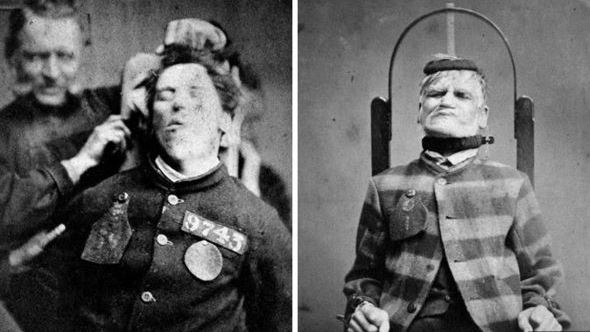
The 1921 census reveals that in that year, Winifred was a patient residing at the St Elizabeth Home in North Finchley, North London. The home was run by the Society of All Saints Sisters of the Poor, one of the first Anglican sisterhoods to be established. It is impossible to know, based on available evidence, whether Winifred went back to Colwall at all during her adult life, whether she received visits from her siblings (all of whom were still alive at the time) of if she was even in contact with them. At any rate, all facts indicate that she was institutionalised for the remainder of her life.
The 1939 UK Register, which was created just after the outbreak of Wold War II, records Winifred once again living in an institution as a patient of the Middlesex Colony (also known as Kingsley Green), in St Albans, Hertfordshire, not far from her previous abode in Finchley. This was a mental health and learning disability hospital which, for sixty-one years, was known as Harperbury Hospital. At the start of the war, there were over 1,190 patients, but the institution appears to have to continued to work with relative normality throughout the conflict.

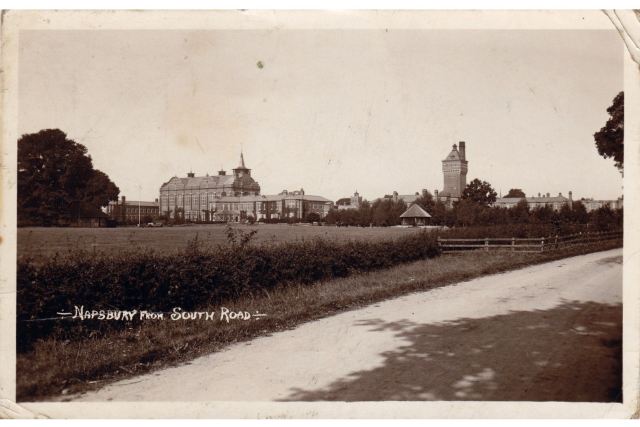
At some later stage, Winifred seems to have been transferred to Napsbury Hospital (which some of you may remember as it was featured in the Who Do You Think You Are? episode starring Julian Clary). Sadly, Winifred would never leave Napsbury. It was there that my sixty-two-year-old cousin passed away on 16 November 1944. The cause of death was recorded as lobar pneumonia and arteriosclerosis. A small note on her death certificate, “P.M.”, which I presume means post-mortem, might suggest that Winifred passed away without a medical attendant at hand, and therefore a thorough medical examination was needed following her death. The death was registered two weeks later by the hospital’s chief resident officer. These details suggest that no relative of Winifred’s was close by when she breathed her last.
Winifred’s death was a particularly sad and anonymous ending for someone who, I have the feeling, was to all intents and purposes forgotten by everyone who had known her in her youth. Through no fault of her own, her life was obliterated from the pages of my family history. I am very proud to rescue her story through this article. After all, this is probably the first time in over seventy years that anyone has mentioned her name – or even dared tell her story!


 The Genealogy Corner
Muy emotiva esta historia y muy bien contada. Tienes un alma sensible y generosa.
Un abrazo
Enviado desde mi iPad
El 10 ene 2018, a las 21:49, The Genealogy Corner <comment-reply@wordpress.com> escribió:
Dawsr posted: ” Years ago, when researching my great-grandfather’s family tree, I found an uncle who through his marriage fathered no less than nine children over a period of seventeen years. Most of them eventually married and began families of their own, but one pa”
Thank you for telling her story! These are the lost and forgotten, it is up to us to tell their stories, no matter how hard it may be to swallow.