Nota bene: There is a simplified family tree at the end of this article, which some of you may find helpful to navigate the numerous Pietros, Marias and Giovannas mentioned in the text.
I think one of the main reasons why our genealogy research never ends is because, with every answer we uncover, new questions will always arise. You will remember my latest article, in which I explored the family of my 6x great-gradfather Pietro Antonio Amerio. In it, I was curious to discover whether the fact that most of his children (from his second marriage to my 6x great-grandmother Giovanna Maria Barbero) had as godparents either one Pietro Matteo Amerio or one of his many children led me to suspect that there was probably a close kinship between Pietro Antonio Amerio and Pietro Matteo Amerio.
My suspicions turned out to be true when I was able to locate Pietro Matteo’s baptism entry from 1742, which confirmed that he and my ancestor Pietro Antonio (who was born in 1744) were in fact brothers! Bullseye! My family tree suddenly acquired a new – and quite large – branch packed with distant cousins!
Once I had connected this new set of relatives to my own lineage, I began analysing them in closer detail – as one does – to see if I could find anything else about these new cousins. I was struck by the fact that Pietro Matteo’s wife, Maria Giovanna (or Giovanna Maria, depending on which record you’re looking at) was the daughter of a Guido Antonio Asinari and his wife Antonia. The names seemed vaguely familiar, so I went through some photos I took at the local church archive during my last research trip to Italy in 2019… and lo and behold I found the marriage of a Guido Antonio Asinari and Antonia Maria Barbero on 31 January 1748 – just a year before Maria Giovanna’s baptism in 1749.
As if this was not coincidence enough, I realised that the marriage recorded on the parish register immediately above that of Guido Antonio and Antonia Maria was that of Pietro Francesco Barbero and Domenica Asinari. The date of the marriage was telling in itself: 31 January 1748 – the same day on which Guido Antonio and Antonia Maria got married! This cannot have been a coincidence: it had to be a case of brother and sister marrying a sister and a brother. Sister exchange, I believe it’s usually called (although why it’s called sister exchange and not brother exchange, or simply sibling exchange, I don’t know!)
So, let’s revisit the facts: my ancestor Pietro Antonio’s brother Pietro Matteo married a woman called Maria Giovanna Asinari, whose parents were married on the same date as their respective siblings. With me so far? Well, hang on, because things are about to become slightly more complicated.
The names Domenica and Pietro Francesco Barbero were not entirely new to me: they happened to be the parents of Giovanna Maria Barbero, my 6x great-grandmother (yes, the one mentioned above, who married Pietro Antonio Amerio). In a nutshell, Pietro Antonio married Giovanna Maria Barbero, whilst his brother Pietro Matteo married Maria Giovanna Asinari, who was not only Giovanna Maria’s first cousin, but her double first cousin, since their respective parents were siblings! Still with me?
As if matters weren’t complicated enough, I was thrilled to discover that Guido Antonio Asinari and his wife Antonia Maria Barbero had another daughter (rather confusingly called Maria) who happens to be my ancestor as well! All I knew of her thus far was that she had married a man called Pietro Piemonte in 1765 and was dead by 1782, when her widower remarried. Thanks to a local researcher I pin-pointed her death record in December 1781, when she was “almost twenty eight years of age”, according to the parish register. This can only mean that she was still 27 when she died, or in other words, she had to have been born in 1754 (or later 1753). This led me to the chilling realisation that Maria Asinari was barely 11 or 12 years of age when she married Pietro Piemonte; he would have been in his early twenties by then. The thought is just so disturbing… And while I’m happy to say that their first recorded child was not born immediately after the marriage, she would still have been 14 or at best 15 when she had her first baby in 1768. Five further children would follow, the last born a few months before Maria’s death.
Maria’s sister Maria Giovanna, the wife of Pietro Matteo Amerio, did not fare much better: born in September 1749, she married him when she was only 13. She had seven children to my knowledge – quite possibly more – and died in 1787 at the age of 38.
Fast forward to 1884, and several generations later, we find that two descendants of Guido Antonio Asinari, Antonia Maria Barbero, Domenica Asinari and Pietro Francesco Barbero intermarried once again, for it was on that year that my great-great-grandparents Pietro Amerio (a great-great-grandson of Maria Asinari) and Maria Maddalena Terzano (a great-great-granddaughter of Giovanna Maria Barbero) were married in the town of Nizza Monferrato, not far from the above marriages took place. The bride, who was only 15, would go on to have twelve children, among whom was my great-grandmother Giovanna. I wonder if any of them ever knew of their ancient family link? Or am I the first person in over two centuries to be aware of it? Either way, it’s a fascinating journey, and I can’t wait to see what I’ll be unearthing next!
This simplified family tree shows the link between my great-great-grandparents, who were 5th cousins through their double descent from the Barbero and Asinari family.
These last two months I have been kept very busy by delving deeper and deeper into my Italian ancestry. Ever since I discovered that at least two of my great-great-great-grandparents shared the same surname (Terzano), I wondered whether these two distinct lineages were actually related to each other, considering they came from the same tiny village: San Marzano Oliveto (Asti, Piedmont).
While I have yet to uncover the most recent common ancestor of those two lines (if indeed they are related, of course), I have rather excitingly discovered that I have two further surnames which are also repeated more than once on my family tree: Barbero and Amerio. It is the latter one I want to talk to you about today.
Amerio was my great-grandmother’s maiden name, and obviously the surname came down to her via her father’s paternal line, going as far back as the mid-18th century, to a Carlo Giuseppe Amerio. But my great-grandmother’s maternal grandmother was herself the daughter of Rosa Maria Amerio (1811-1874), the eldest of ten children and herself the mother of at least eleven others, at least three of whom she would survive. My most recent discoveries, thanks in part to a local researcher with access to records that are not available online, have enabled me to expand her paternal family tree even further.
Rosa Maria’s father, Pietro Francesco Amerio (1788-1868) was, as I already knew, the son of a Pietro Antonio Amerio (c.1745-1812) – son of Pietro Amerio – and of his second wife Maria Giovanna Barbero – herself the daughter of Pietro Francesco Barbero, after whom Rosa Maria’s father was presumably named. For some time I have known that Pietro Antonio and Maria Giovanna were married in 1771, and that he had been married at least once before (when, and for how long, I do not know); whether there were any children born to that earlier marriage remains a mystery for now. However, considering that my ancestor’s union to Maria Giovanna took place in 1771, and that the couple’s son was born in 1788, chances are there must have been quite a few children born to Pietro Antonio’s second marriage to Maria Giovanna Barbero.
Thanks to the local researcher, I was able to learn that the pair did indeed have at least one daughter in 1792, as well as four additional children (born in 1778, 1779, 1783 and 1786), as shown in the family tree below. Why there is a gap between 1771 and 1778 I cannot account for, but we’ll leave that aside for now.
A skeletal family tree showing Pietro Antonio Amerio parents, two wives and children from his second marriage.
At this stage, you should be aware that Italian genealogical research (in Piedmont at least) becomes a little bit trickier by the time you’re back into the 18th century: women’s maiden names are often replaced by married names on church records, which are kept in very spidery Latin rather than clear hand-written Italian. Being able to read the priest’s handwriting, and then managing to understand the Latin expressions, is in itself an extra difficulty. But these challenges are not always insurmountable, provided you learn how to lean on other crucial details provided in baptism records, like the names of the godparents.
Let’s take the baptism of Pietro Francesco’s elder brother Pietro Paolo (yes, my ancestors were not very original when it came to naming their children – and brace yourselves because there are more Pietros coming up in this story!). The child was baptised in 1778, as we know, to Pietro Antonio Amerio, son of Pietro, and to his wife Maria (no explicit reference to her second or maiden names is given, nor to her father’s Christian name). However, his godparents, who would have held him at the font, are mentioned: Matteo Amerio, son of Pietro, and Giulia, wife of Pietro Francesco Barbero. The record does not explicitly tell us that the godparents were in any way related to the child, but the fact that the godfather’s father shared the same name as the child’s paternal grandfather, and that the godmother’s husband shared the same name as the child’s maternal grandfather, certainly seems indicative of a family tradition of having a godparent from either side of the family, one paternal and one maternal.
When the couple’s next child, Francesca Maria, was baptised the following year, her only godparent mentioned was Maria Domenica Barbero, daughter of Pietro Francesco Barbero – likely to have been the child’s maternal aunt. Incidentally, in this instance the mother’s maiden name is also omitted from the record.
In 1783 Pietro Antonio and Maria Giovanna (maiden name once again not mentioned) welcomed their third child, who was rather unimaginatively baptised Pietro Giovanni. His godparents were named on the register as Pietro, son of Matteo Amerio, and Vittoria, daughter of Giovanni Ivaldi. While the Ivaldis’ connection to my family escape me, Matteo Amerio is a name we have already come across before. Onwards and upwards.
Move on three more years, to 1786, and we find ourselves before an additional baptismal entry, for a Giuseppe Antonio. This boy’s godparents were Giuseppe, son of Matteo Amerio, and Antonia, daughter of Pietro Francesco Barbero. Another case of a godfather chosen among the boy’s paternal relatives, and a godmother from the mother’s side? Oh, and let’s not forget the youngest of the family, Maria Domenica, whose baptism in 1792 was witnessed by her godparents, Lorenzo Olivero and Maria Amerio, daughter of Matteo Amerio. Helpfully, this time her mother’s maiden name is made explicit by mentioning that Maria Giovanna was the daughter of Pietro Francesco Barbero.
On the face of it, it seems increasingly likely that the maternal grandparents of these little Amerios were Pietro Francesco Barbero and possibly of a woman called Giulia (who may have been Maria Giovanna’s mother – or stepmother!). Maria Giovanna also seems to have had at least two sisters called Antonia and Maria Domenica, who were godmothers to her children born in 1779 and 1786.
Through my own research some time ago, I have already identified some family members of Matteo Amerio (his full name was, unsurprisingly, Pietro Matteo Amerio). I knew that he married in 1763, so he was probably about the same age as Pietro Antonio (remember that the latter had been married once prior to 1771). As they were both fathered by a man called Pietro Amerio, in view of their repeated godparenting tradition I think it highly likely that they were brothers – a theory reinforced by the fact that Pietro Antonio’s mother was called Catterina Terzano, the same name given to one of Pietro Matteo’s daughters (see family tree below).
Pietro Matteo Amerio’s family tree. While his father’s name was the same as Pietro Antonio’s, his mother’s name for now remains a mystery.
In all, Pietro Matteo had at least seven children: Pietro, Antonia Benedetta, Rosa Veronica, Giovanni Battista, Francesco, Giuseppe and Maria Catterina. Two of them (Pietro and Giuseppe) are known to have stood as godparents to two of Pietro Antonio’s children, and Matteo was himself godfather to a third. Interestingly, though perhaps not all that coincidentally, in 1869 Antonia Benedetta passed away when she was in her eighties in an area of the village called Saline, the same area where her presumed uncle Pietro Antonio died in 1812.
All this is certainly pointing in the right direction, but as we all painfully know, a theory is just that: a theory. I now need to think “strategically” to prove or disprove it. The following records should be able to help me in this regard:
Pietro Antonio’s baptism would confirm not just his father’s name (Pietro Amerio), but also his mother’s (Catterina Terzano?), which is noted in his death record in 1812. If I can retrieve the baptism of Pietro Matteo, who was also presumably born sometime around the 1740s (considering his 1763 marriage), I might be able to connect them definitively.
Even if the respective mothers’ names are not the same, we cannot discard the possibility that Pietro Matteo and Pietro Antonio were paternal half-brothers (sons of the same father but not the same mother), in which case their father’s two marriages would need to be accounted for.
I would also be keen to find out more about Pietro Antonio’s first marriage (prior to 1771), and find out if that union produced any issue, and whether those baptisms reinforce the godparenting tradition kept up in the 1770s and 1780s.
If instinct is anything to go on, I am sure that the godfather of at least one of Pietro Matteo’s numerous children was Pietro Antonio himself. I would therefore love to find the baptisms of Pietro Matteo’s children and see if Pietro Antonio is mentioned on any.
All in all, this latest research has shown me that underneath spiritual connections between different family units, like that between a godparent and his or her godchild, there may be an actual family relationship lurking about. Let’s not forget that remarriages were so common at a time when women often died in childbirth that we need to keep an open mind about individuals being connected through a full (or half) relationship. But above all, this research has reminded me of the importance of keeping track of other families with identical surnames: little could I have known years ago when tracing Pietro Matteo’s family that one day I may have to contemplate having to add his many descendants to my family tree as closer cousins that I could have imagined. Stay tuned!
Today’s blog post is about resourcefulness and, above all, perseverance. For years, I have been obsessed with a particular line of my family tree (I know none of you has ever experienced this!).
It all started a couple of years ago when I was playing around with my dad’s DNA matches on Ancestry, filtering his results by searching for known family names in the surname search field, and colour-coding each individual match (I find colour-coding a very easy and accessible way of categorising and distinguishing DNA matches, particularly if you are not good at keeping track of how you are related to all your matches). I searched for the surname Terzano, which was not only my Italian great-great-grandmother’s maiden name, but also her mother-in-law’s maiden name. Yes, they came from a small place in northern Italy, and in all likelihood they were very distantly related to each other.
As the Terzano surname is relatively rare in Italy – but extremely common in my great-grandmother’s village of San Marzano Oliveto, in Piedmont – I figured that finding out my family link to this unexplored DNA match would prove relatively easy. Wasn’t I in for a surprise!
This DNA match, who must be a very distant relative of mine (roughly 5th cousin, if not more distant) had published on Ancestry a fairly basic family tree featuring his parents and grandparents. Despite the relatively sparse information, it did reveal that his mother’s maiden name was Terzano. Her parents, now deceased, had both been born in Detroit, Michigan but were probably first generation Americans with recent roots in Italy. In order to make the connection between this family and my own, I knew I had to rebuild my DNA match’s family tree and see where the paper trail would take me.
A rough tree showing Luigi Terzano’s descendants. Source: Ancestry
My relative’s great-grandfather was a man called Louis Terzano, and he seems to have emigrated to the United States in the early twentieth century. The first significant record I was able to find that mentioned him with any certainty was his marriage, which was registered in Detroit in July 1914. I knew this was correct because his wife’s surname matched that of my DNA match’s tree (which, although quite basic, was still accurate when it came to personal details such as dates of birth). My next step was to find Louis on the census, in the hope that I find retrieve further details about his family and place of birth.
Luigi Terzano’s entry of marriage in 1914. Source: Ancestry.
The 1920 census records Louis, his wife and children living together in Detroit. This information is replicated in the 1930 and 1940 census, but two very useful details proved essential: Louis’ citizenship status (which changed from “alien” in 1920 to “submitted papers” in 1930, and then to “naturalised” in 1940) and the year in which he emigrated, which is given as 1909.
The 1920 census showing Luigi’s status as an alien immigrant who arrived in America in 1909. Source: Ancestry.
Finding Louis’ naturalisation papers on Ancestry actually proved difficult, though an index card did provide me with his exact date of birth: 19 October 1887. With this additional detail I decided to go off on a tangent and decided to look up the civil registry birth records for my great-grandmother’s home town, which are available (including images) on FamilySearch. I knew I was clutching at straws, since I had no proof as yet that Louis came from my great-grandmother’s hometown, but of course there was an outside change that they were from the same place. Sadly, no birth record matches Louis’ name or date of birth, at least in the village of San Marzano Oliveto. But as I was searching on FamilySearch, I decided to try my luck with a general search and see if there were further clues as to Louis’ origins.
To my delight, a few clicks later I was able to download his 1933 naturalisation papers which had eluded me on Ancestry. In this signed declaration, Louis (or Luigi, as he would have been officially known) stated that he had been born on 19 October 1887 in Casasco, Alessandrea (sic), in Italy. My knowledge of the area’s geography is relatively good, but even I had never heard of Casasco before, or even knew whether it was still within the province of Alessandria (the neighbouring province of Asti, where most of my ancestors came from, actually split from Alessandria in 1935). I checked the online birth records for Camerano Casasco (Asti), which are also available on FamilySearch, but drew a blank. But it turns out that there is indeed a town called Casasco in present-day Alessandria, so armed with his date of birth, I decided to give the local registry office a call in my somewhat mangled Italian. Unfortunately, a search for a birth record for Luigi, as well as a marriage record for his parents, drew a blank.
Luigi’s petition for citizenship clearly states his place of birth is Casasco, in the Italian province of Alessandria. Source: FamilySearch.
At this stage in my research, I started to become frustrated: here I was, with a consistent date of birth, a record that clearly gave me an exact place of birth, a name and surname, and yet there seemed to be no trace whatsoever of my presumed relative’s birth. I then decided to check a source I had not yet consulted before: passenger lists, which as you all know contain a wealth of information about our migrant ancestors.
In 1914, a few short weeks before his marriage in Detroit, Luigi seems to have entered the United States by ship – let’s remember that he had already emigrated in 1909. Unfortunately, he once again gave Casasco as his place of origin. I turned to Twitter for advice (and a bit of moral support), and I was fortunate enough to receive some very helpful tips that will definitely be useful to me in future: a contact of mine suggested that perhaps Luigi was from another town “near Casasco”. Another suggested that perhaps there’s another place with a similar spelling. It’s true that Casasco can be easily spelt incorrectly, and therefore mistranscribed: Casario, Cassano, Cassinasco, Calosso… All these places are relative close to Casasco, but how could I be sure I had the correct place without going on a wild goose chase?
I was on the verge of giving up my quest, when two things happened that made me realise the error of my ways: my dad, who I told about my ongoing genealogical conundrum, made a very pertinent remark when he asked me “Are you sure Casasco was where Luigi was born, and not simply his last place of residence before he emigrated to America?” Something clicked in my mind. What if Luigi had reported Casasco as his last place of residence, as opposed to his actual place of birth?
The other fact which I had stupidly overlooked was the information contained in the census relating to the year on which Luigi had emigrated to the United States. While I had located him on the 1914 passenger list, the 1920 census clearly gave his emigration year as 1909 (see screenshot above). But there was no 1909 passenger list to be found! At first, all I could find was the one for 1914, so I decided to try different spellings and wildcard searches to expand my search. At last, I found a passenger list featuring a Luigi Cerzano, born in or around 1887, who emigrated to America in 1909. While the first page of the manifest (again) mentioned Casasco as his last place of residence, the final column on the second page did actually ask where each passenger had been born: Luigi did not answer Casasco (contrary to what he declared both on the 1914 passenger list and his naturalisation papers in 1933) but Calamandrana. Now that is a familiar name, as it’s a small village literally next to my great-grandmother’s home-town! At long last, I seemed to be getting somewhere!
I couldn’t help myself, so I immediately telephoned the civil registry office in Calamandrana in the hope that they might be able to help. The lady at the other end of the line was extremely helpful, and told me I could make a request via e-mail, asking for an integral copy (basically a certified scan) of the birth certificate. Doing as instructed, I decided to try my luck and also requested a copy of Luigi’s parents’ marriage certificate (assuming they had married in Calamandrana, and of course assuming that their names would be mentioned on Luigi’s birth certificate). After a full week, I received Luigi’s birth certificate, stating that his parents were Gioacchino Terzano and Felicità Cerruti.
Now that I had two new names to play with, I decided to again cross-check the information I had about my own great-grandmother’s family. Looking through the family tree I have built over the years, for a moment I suspected that Gioacchino may have been the same Gioacchino Terzano born in 1855 who is a probable distant relative of my great-grandmother’s. Sadly, his age on Luigi’s birth certificate appears to be off by a number of years (he was more likely born in 1863, give or take). Things seemed a bit more promising for Luigi’s mother, Felicità Cerruti, as I happened to have a woman born in San Marzano Oliveto with that very name combination (and born, coincidentally, in 1863). Of course, this was not yet proof that the woman on my tree was Luigi’s mother. I knew I would have to locate Gioacchino and Felicità’s marriage certificate, or their respective death certificates, to prove these theories.
Luigi’s birth certificate, stating his parents’ names (and his father’s age at the time). Source: Calamandrana registry office.
Sadly, the e-mail from Calamandrana registry office also contained a piece of bad news: there was no trace of a marriage recorded in the village between a Gioacchino Terzano and a Felicità Cerruti. Nothing. Not even close. So… what now? I truly felt like I was at a dead end once again.
My ongoing quest for Luigi’s parents marriage (or death) certificate in both Calamandrana and Casasco had drawn a blank, despite being the only two places where I knew for sure he had lived in at some point prior to emigrating in 1909. Any other place to search would be pure guesswork, and with so many options, I wasn’t prepared to start contacting dozens of registry offices across the provinces of Alessandria and Asti without hard proof. I then decided to think collaterally.
I asked my DNA match in Detroit if he knew whether Luigi/Louis had any known siblings. His reply proved useful, as he was able to enclose a newspaper clipping of his ancestor’s obituary. The clipping happened to mention two sisters, Mrs Caroline Ribero and Mrs Peter Bregni. So far I have been unable to locate any information on Caroline, but I did manage to find Maria and her husband Peter (or Pietro) Bregni on several American records. Peter’s naturalisation papers not only gave me his place of birth, but also included his precise date of marriage, which had taken place in his hometown of Volpedo, also in the province of Alessandria. The naturalisation file also mentioned his wife Maria Terzano’s date of birth, although her name is given as Clementina, and her place of birth is given as Belvilia… I first decided to try my luck and requested their marriage certificate from Volpedo registry office. And it turns out… there is no trace of such a marriage in Volpedo.
Pietro Bregni’s petition for citizenship stating details about his wife and their marriage. Several of these details turned out to be inaccurate… Source: FamilySearch.
Having got to this point in the story, I wasn’t all that surprised when I looked through the records for Belveglio (or Belvilia, as it appears on Peter Bregni’s petition for citizenship record) and could not find either a marriage or a birth record for his wife Maria. But then I thought to myself: if Luigi was born in Calamandrana in 1887, perhaps his sister Maria, who was presumably born in 1894, was also born in the same village. I therefore asked my old friends at Calamandrana civil registry office for an extra favour, and you can imagine my delight when they replied with a copy of Maria’s birth certificate! In it I was able to glean a few extra clues about Maria and Luigi’s parents: their father’s name was now recorded as Rocco Gioacchino Terzano (again, with a birth year in around 1863/1864) and, even more helpfully, there were two marginal notes referring to Maria’s death (in Volpedo) and her marriage to Pietro Bregni, which took place in the nearby village of Sarezzano – so not in Volpedo as stated in her husband’s naturalisation papers! Yet another place I had not come across until now!
The marginal note on Maria Terzano’s birth certificate stating vital clues about her marriage to Pietro Bregni. Source: Calamandrana registry office.
On I proceeded to call the registry office in Sarezzano, asking if I could get a copy of Pietro and Maria’s marriage certificate, a document that would hopefully provide me with information about Maria (and therefore Luigi’s) parents. At this stage, I was trying to move strategically: my plan was to figure out where Rocco Gioacchino Terzano and Felicità Cerruti were by the time of their daughter’s marriage in 1919, which would in turn allow me to locate their respective death certificates, and from then move back to heir baptisms and their own parentage – and discover once and for all how on earth I am related to these mysterious Terzanos!
The marriage certificate reached me only two days later, and it revealed two useful clues: one was that Maria and Luigi’s mother Felicità had already died by 1919, and that had previously been a resident of Sarezzano. Clue number one. Their father Rocco Gioacchino, on the other hand, was still alive at the time, and living in Sarezzano. Clue number three. I therefore contacted Sarezzano registry office again, politely asking them for an additional look up for their respective death certificates.
Maria Terzano’s 1919 marriage certificate stating her mother had already passed away, while her father still resided in Sarezzano. Source: Sarezzano registry office.
Unfortunately, the registry office in Sarezzano went silent at this point (I guess we genealogists can sometimes become as tiresome as we are enthusiastic…), but I was not going to give up so easily. I decided to contact the parish, and within days I managed to speak to the local priest in Sarezzano, to whom I explained my genealogical conundrum. He very kindly asked me to call him a few days later, by when he would have been able to search through the parish records.
My hopes were partially dashed when he told me that he had drawn a blank when it came to Rocco Gioacchino Terzano’s burial certificate. Not only was I having trouble locating his baptism in around 1863, but I had also failed to find his marriage to Felicità Cerruti, and now his death was eluding me too! Fortunately, the priest was luckier when it came to Felicità’s death, which was indeed recorded in Sarezzano. While I wasn’t able to get a copy of the record, he kindly told me the crucial pieces of information relating to her death, her place of birth and her parentage. Lo and behold, Felicità Cerruti was indeed from my great-grandmother’s village of San Marzano Oliveto, and she had been born in 1863 to Giovanni Cerruti and Maria Spertino.
Sadly, neither of Felicità’s parents seems to have been even remotely closely related to me, which still leaves me with the big question: how am I related to the Terzano family that ended in Detroit? My money is still on Rocco Gioacchino Terzano. I’ve certain that he holds the key to the mystery, and only by finding his baptism, marriage or death record will I be able to find our his parents’ names, and how he fits in my family tree. The mystery continues…
Today I’m going off-piste as I follow the line of descent through a collateral branch in my family tree. Harry Cartwright (1796-1842) was the only son, and the middle child, of Henry Cartwright and his wife Jane. Harry was also the first cousin of my great-great-great-great-grandmother Ann Morris (née Cartwright). Harry was born in the market town of Leominster, Herefordshire, and was baptised on 30 November 1796 according to the rites of the Anglican church – despite the fact that his grandfather, my great-great-great-great-great-great-grandfather William Cartwright (1723-1810) was a Quaker. Young Harry Cartwright seems to have spent all his life in Leominster, where his parents had relocated from nearby Kington shortly after the birth of his elder sister Amelia (b.1794). A younger sister, Catherine, would later be born in Leominster in 1799.
In 1818 Harry married Mary Lea; she was a few years older, and although the marriage lasted several years, it seems to have remained childless. Mary died in May 1831. Only a few months later, Harry married a second time, to Jane West, who was younger than him by about six years. They went on to have four children: Mary (1832), Henry (1834), George (1836) and Jane (1839), though sadly only George seems to have outlived his parents.
While the Cartwrights appear on the 1841 census, the record only includes Harry, his wife Jane and their two youngest children George and little Jane. An entry of burial for an infant called Mary Cartwright in Leominster in 1833 strongly suggests that Harry and Jane’s eldest child died in her first year. Their youngest child, Jane, would pass away two years after the census was taken. Unfortunately I have not yet been able to find further trace of their eldest son, Henry, though his absence from the census could well be indicative that he too had died young.
The 1841 census confirms that Harry Cartwright worked as a labourer. In fact this was the first and only time in which he would be recorded on the census. Just over a year later, in July 1842, he died at the age of 45; “waste” was given as the cause of death, which I take refers to some sort of slow, debilitating illness, probably consumption. His death was registered in Leominster by one Amelia Bottrell – quite probably his elder sister, who by then had presumably married a Mr Bottrell. Harry’s early death meant that he left behind a widow and two infant children, though little Jane, as already noted, would die the following year. Harry’s widow Jane seems to have managed to make ends meet by becoming a laundress, according to the 1851 and 1861 census. She died in 1869, in her late sixties. On the other hand, Jane and Harry’s third and only surviving son, George Cartwright, seems to have had slightly better innings than his father and siblings. Despite being left a fatherless orphan at an early age, his mother or perhaps some other relatives helped him become a shoemaker’s apprentice, according to the 1851 census.
But making and mending boots must not have been to George’s taste, since he appears to have become a “gas fitter” by the time the 1861 census was taken, when he was recorded as a visitor in the house of Mr and Mrs Frederick Horton on West Street, Bermondsey. Just what made George leave rural Herefordshire for bustling London is anyone’s guess, though the misery and death which had defined his earliest years in Leominster may well have played a part in his decision to start afresh far away from home. However, the move did not imply severing ties with Herefordshire entirely: in 1867 George married a local Leominsterian called Emma Peters, who was a certified schoolmistress. The couple soon settled in London, and by the time of the 1871 census, they were living on Ashburton Road, Fulham with their eldest children. The couple would go on to have seven children over a fifteen-year period: Harry (b.1868), who was obviously named after the father that George had lost all those years before; Fanny Mary (b.1871), Ada Louise (b.1872), Courtenay (b.1874), Percy (b.1875), Edith (1879) and Lily May (1883).
Model Houses, Streatham Street, Bloomsbury, where the Cartwrights lived in the early years of their marriage. Google Maps.
By the early 1870s the Cartwrights had moved from Fulham to 19 Model Houses, Streatham Street, Bloomsbury. A quick search online reveals that the building, designed by American-born English architect Henry Roberts, is still very much there, and in its time would have been something of an revolution in working-class social housing – the fact that the blocks had their own water-closets would have been quite innovative and forward-thinking. Sadly, conditions in the building were far from ideal, even with the addition of certain modern conveniences, and George Cartwright’s children paid a heavy price. In August 1873, little Fanny Mary died of pneumonia and rickets – a probable sign of dietary deficiency. The following year little Ada Louise died of inflammation of the lungs, a condition likely caused by bacteria, which could be indicative of her insalubrious surroundings. A year after that, George and Emma’s new-born baby, Percy, died of convulsions following his premature birth; there was just enough time to get him christened. In 1880 baby Edith died aged one year due to bronchopneumonia and convulsions. In all, four of George and Emma’s seven children died in infancy, a staggering proportion.
By the early 1880s, George Cartwright’s immediate family had been reduced to him, his wife Emma, their two surviving sons, Harry and Courtenay, and their youngest daughter, Lily May. The family moved a second time, this time to 3 New Inn Passage, just off the Strand – an area which was then characterised by its insalubrious conditions and the proliferation of its meat markets. The street had somehow escaped the Great Fire of London, but what once would have been a quaint reminder of old London was by the 19th century a congested, dirty, foul-smelling slum where cattle, food, and human and animal waste mingled without any concern for public sanitation measures. Much altered, the site is today occupied by the London School of Economics.
New Inn Passage, where the Cartwrights lived from the 1870s onwards. Source.
George Cartwright supported his family by working as a painter and interior decorator, but in addition he also seems to have taken a keen interest in religion, and he is noted on several records as the parish verger of St Clement Danes’ church, which was entirely gutted following a devastating fire in 1941, as a result of the Blitz, and later rebuilt. Although George’s wages as a decorator and as a verger would not have been great, for a time he did manage to employ a helping hand (possibly a domestic servant as much as an employee to assist him in the running of his business).
In September 1879 George’s eleven year-old son Harry was admitted to nearby St Clement Danes Grammar School on Houghton Street (the school was subsequently relocated to Hammersmith and later to Hertfordshire, where it still operates to this day). Sadly, Harry was removed from the school just three months later, his ill health being given as the reason for such a drastic move. Yet the boy must have been academically inclined – probably thanks to his mother’s efforts given her background as a former schoolmistress – and by the late 1880s young Harry was working as an assistant bookseller. Alas, his health slowly continued to deteriorate, and he died aged 22 in 1890 due to acute rheumatism and cardiac disease.
Harry’s death must have been a terrible blow to his parents, who on top of losing four children at a young age now had to endure the death of their eldest son. Perhaps to get away from their immediate surroundings, which would have been so familiar to poor unfortunate Harry, Emma took her surviving children Courtenay and Lily May to Prittlewell, near Southend-on-Sea, Essex, perhaps to visit friends or to spend some time recuperating and enjoying the sea air. George on the other hand stayed behind at 3 New Inn Passage, presumably as his work would not have allowed him to leave London for any extended period of time. But before long, his own health would also give in: George Cartwright, who we must remember was the only one of Harry Cartwright’s children to have survived childhood, and the one who had chosen to move from Leominster to London, died in August 1898 due to cardiac disease, cirrhosis of the liver and acute bronchopneumonia.
St Clement Danes church before it was bombed during the London Blitz. Source.
George and Emma’s now eldest and only-surviving son, Courtenay, who had earlier been listed on the census as working for Smith & Son (the predecessor of newsagent and bookseller W.H. Smith), decided to take over George’s position as parish verger of St Clement Danes’ church. It was in that very church that in early 1900 he married Rose Georgiana Pusey, the daughter of a stationer. The couple’s bliss was married by Courtenay’s failing health and, alas, the marriage was short-lived: Courtenay succumbed to exhaustion and phthisis pulmonum (tuberculosis) in November of that same year. His young widow, by then heavily pregnant, gave birth the following month to fraternal twins, Rosa Dorothy and Courtenay George.
Courtenay’s younger Lily May had meanwhile also attempted to start a family of her own. In 1907 she married William Jones, a labourer working for the Underground Electric Railways Company. Tragically, as if by some cruel twist of fate, this marriage was not only destined to be childless, but also short-lived: Lily May died of enteric fever (typhoid) in September 1910. Her death not only meant a tragic loss to her husband, but also to her mother Emma, who was still very much alive at the time. In the winter of her years, and approaching 70, Emma had to endure the death of her seventh and last surviving child. The sense of loss that she must have felt is inconceivable. She died in 1915, and I think it is fair to say that she died completely heartbroken.
Emma Cartwright’s death spared her of an additional, cruel loss which took place the following year, when her teenage granddaughter Rosa Dorothy Cartwright died of tuberculosis in Caversham, Oxfordshire (he widowed mother Rose Georgiana had remarried a man called Henry grey Rix and had a daughter, Enid Rix, by him). Rosa Dorothy’s death in 1916 meant that by the time the First World War ended, the only living descendant of Harry Cartwright (1796-1842) was his great-grandson Courtenay George Cartwright, Rosa Dorothy’s twin. He would later become a dispenser (chemist), and married Ethel Maud Slater in Brighton in 1926. The couple settled in the Battersea area, and it was there that their only son was born in 1931. For privacy reasons, I cannot disclose his name as there is a chance he might still be alive.
I do wonder if Courtenay George Cartwright’s son ever had children, and if any of them know that they are the sole living descendants of my distant great-uncle Harry Cartwright (1796-1842)? Do they know of their family’s link to Herefordshire? Indeed, do they know anything amount the insurmountable tragedies that marred their family history in the 19th and early 20th centuries? Alas, perhaps this article will help them to piece together some of their family history, and hopefully one day they will get in touch with me to tell me if any of the above was news to them.
My great-great-great-great-grandparents William and Elizabeth Vickress had twelve children, all of whom – remarkably – reached adulthood. Sadly, several of them succumbed to tuberculosis in their early twenties, depleting the number of family members considerably.
One of the daughters that did reach maturity, however, was their second daughter and fourth child, Elizabeth. Born in 1816 in Hope-under-Dinmore (Herefordshire), her movements are somewhat hazy in the early years when the census was taken. It is clear that by 1841 she had already left home, possibly to seek employment in service; in fact, I strongly suspect that she is the Elizabeth Vickress listed as a female servant in the nearby township of Wintercott, near Leominster. Her movements in 1851 are harder to trace.
By 1861 Elizabeth resurfaces on the census – only this time she had swapped the rural scenery of Herefordshire for the hustle and bustle of the West Midland town of Dudley, at the time in the grips of the Industrial Revolution. Working as a dressmaker, Elizabeth was living in a house large enough to accommodate lodgers. When the census was taken, there were three lodgers living under Elizabeth’s roof: Henry and Emily Budd who, aged 12 and 11, were presumably siblings, and an unmarried 49-year old carter called Benjamin Walker.
It is obvious that are relationship blossomed between Mr Walker and his landlady, for just over a year later, Benjamin Walker and Elizabeth Vickress were married in Rowley Regis, a town sandwiched between Dudley and Birmingham. Interestingly, Elizabeth may have passed herself off as a younger women (on the census she had claimed to be 38, when in fact she was closer to 45). Be that as it may, I like the fact that she was adventurous enough to move to a larger city by herself and entrepreneurial enough to take in lodgers – and it obviously paid off!
Sadly, whatever marital bliss Benjamin and Elizabeth may have experienced, it was to be short-lived. By 1864 Elizabeth was diagnosed with tuberculosis, a disease that had already killed three of her eleven siblings. The air in Dudley was probably considered to be too polluted for her own good, and so she went back to her native Hope-under-Dinmore, where the clean country air would help her recuperate. Alas, her untimely death came just nine months later, in April 1865 a few days short of her 49th birthday. Her residence is listed as “Harts Hill, near Brierley Hill, Staffordshire”.
Alone, widowed and obviously childless, Benjamin Walker took to drinking heavily to drown his sorrows. Just six years after the loss of his wife, he too was to head to an early grave. His 1871 death certificate states that he died in Harts Hill (the same place as his late wife’s). The inquest that subsequently took place was held in the Reindeer Inn in Dudley, where the coroner concluded that Benjamin Walker had suffocated due to excessive drinking. He was “a man of intemperate habits”, had “been drinking during the whole of the day” and was “found dead on the floor of his house”.
My great-great-grandfather’s second cousin Ellen Tomkins was born on 2 May 1864 in Colwall, her family’s ancestral birthplace in Herefordshire. As one of no fewer than thirteen children, Ellen belonged to a tight-knit family whose branches stretched across the county borders of Worcestershire, Herefordshire, and beyond. So tightly-knit was her family, in fact, that marriage between distant relatives was not uncommon among her mother’s many cousins, the Rodways.
Ellen’s father, Henry Tomkins, worked as a mason and bricklayer, but his humble origins did not impede Ellen and her siblings from receiving a basic education; when the 1871 census was taken, the seven-year-old was recorded as a scholar. However, as soon as they reached their early teens, Ellen and her brothers and sisters were all put to work, presumably to support the family’s meagre income. By 1871, Ellen’s elder sisters were working either in service or as mantle makers, and one brother was described as a “wagoner’s boy”. By the time the next census was taken ten years later, Ellen herself had moved to Birmingham, where she had taken up work in the pen-making business (Birmingham having been described as the epicentre of pen-making). It was precisely in that city that in 1884 Ellen married a man called Edward Whitney. The couple, whose marriage would remain childless, began working together in the shoe-mending business, Edward as a boot riveter and Ellen as a boot patcher. Tracing the couple in subsequent decades through the census has been straightforward enough, but trying to discover more about Edward Whitney’s past proved a harder nut to crack, for I was unable to locate him in any records prior to his 1884 marriage to Ellen!
Ellen’s first appearance (second from bottom) on a national census, in 1871.
Edward Whitney was 37 years old in 1891 (the first census taken after his marriage to Ellen in 1884), which suggests a birth year of about 1854; he was therefore approximately ten years Ellen’s senior. Birmingham is mentioned on the census as Edward’s place of birth – and yet I was unable to trace a birth or baptism record for an Edward Whitney (and similar spelling variations). Ten years later, when the 1901 census was taken, Edward was listed as a shoemaker, and Birmingham was again given as his place of birth; the only significant discrepancy compared to earlier records is his age (43 – thus indicating a year of birth of about 1858). By this time, Edward’s wife Ellen was working as a washerwoman – a far cry from the pen-making business that occupied the first years of her professional career!
By 1911 the couple had moved back to Ellen’s native village of Colwall, where they were living with Ellen’s namesake niece and her illegitimate daughter Alice Tomkins. The record also confirms that Ellen and Edward’s marriage had produced no children.
Edward Whitney and his wife Ellen (née Tomkins) shown on the 1911 census living in Colwall with Ellen’s namesake niece and the latter’s illegitimate daughter.
It is clear that Edward and Ellen’s life has been well documented following their marriage in 1884, but his life beforehand initially remained a mystery. And then, a possible answer suddenly dawned on me. Edward’s last name, Whitney, rang a familiar bell. A quick search through my family tree database revealed that one of my relatives, Mary Wilkins (1821-1901) had married a Richard Whitney in about 1852 (though I have not found proof of a marriage record to-date). Rather remarkably, Mary Wilkins was Ellen Tomkins’ aunt! And even more remarkably, she and her husband lived in Birmingham, the very place where Edward Whitney is said to have been born.
Could Edward Whitney have been a son of Richard Whitney and his wife, the former Mary Wilkins – and consequently his future wife’s first cousin? My pet theory seemed to crumble in the face of the evidence I uncovered regarding Richard and Mary’s five known children, none of which were called Edward: these were George (b.1850), who married Harriet Pullinger; John (1853-1854); Frederick (b.1854); Mary (b.1859), who married John James Heath; and Richard (b.1862), who married Louisa Stephens.
Of these five siblings, Frederick Whitney was the only loose end. Tracking him down on the 1861 census was easy enough, as he was living at home with his parents. However, by the time the census was taken in 1871, 17-year-old Frederick was listed as an inmate at Stoke Prior Reformatory in Worcestershire! Thanks to the invaluable help of a fellow genealogist (to whom I am deeply indebted!) I was able to get my hands on a newspaper clipping from 1866 in which it Frederick Whitney, “a young incorregible lad”, was accused of stealing £2 from his own mother. For this, the 12-year-old, who was said to be “graduating in crime”, was to be put away “beyond the reach of bad company and bad advisers”. For his crime, Frederick was subsequently committed to five years in Stoke Prior Reformatory, after a spell of fourteen days in jail.
Frederick Whitney (bottom line) listed as an inmate of Stoke Reformatory on the 1871 census.
But after the 1871 census was taken, Frederick Whitney vanishes from all records.
And then, something “clicked” in my brain: not being able trace Edward Whitney prior to his marriage in 1884 shared a curious parallelism with Ellen’s cousin Frederick Whitney, whose story ended abruptly after the 1871 census was taken. Could Frederick Whitney and Edward Whitney be one and the same person? Could Fred, with a history of crime and prison, have turned into Ed in order to start afresh? Could Ellen’s mystery husband actually be none other than her own first cousin? Serendipity seemed to have played a curious joke on my family history research – if only I could find proof that my theory was right!
As is often the case, the answer can easily be unlocked if the right document can be located – and that is precisely why I ordered the marriage certificate for Edward Whitney and Ellen Tomkins. After waiting for many weeks for the proverbial brown envelope from the General Records Office, a few days ago I received a certified copy of Ellen’s marriage to Edward Whitney. The couple were married in July in Balsall Heath. The groom, whose profession is given as a press man, was a 27 year-old bachelor whose father was none other than a bricklayer called Richard Whitney – in other words, the man who married Ellen Tomkins’ aunt Mary Wilkins! As if this were not enough proof, the marriage was witnessed by George Whitney (Frederick/Edward’s elder brother) and Mary Heath (Frederick/Edward’s sister).
Certificate of Ellen Tomkins’ 1884 marriage to Edward Whitney (who was in fact her first cousin, Frederick Whitney). The groom’s brother and sister acted as witnesses.
We will never know if Ellen decided to marry her cousin Edward/Frederick out of love, pity, necessity or even because of some sort of family pressure, but knowing that her mother’s family were keen on the idea of cousin-marriage, I am prepared to believe she would not have had any qualms about marrying a close relative like her first cousin. However, if by marrying Edward/Frederick she thought that his troubled days with the law were over, she was to be sorely disappointed: in February 1885, the Birmingham Daily Post reported that a boot-riveter called Edward Whitney, of 27 Clevedon Road, was summoned before the local magistrate for being drunk, for using obscene language, and for refusing to quit the Freemason’s Arms pub on Mary Street, in Balsall Heath. “Defendant was very violent, and knocked the officer down four times”, adds the article. Whitney was fined 10 shillings, and had to cover the costs, amounting to £1 and 6 shillings – a significant amount for a humble shoemaker.
As Ellen and her husband had a long marriage, I would like to think his violent temper and wayward personality did not surface often. I hope that when Edward/Frederick finally died in 1929, Ellen genuinely grieved not just a cousin, but also a loving husband. We will probably never know what she truly felt.
Clevedon Road, Balsall Heath, c.1900. It was on this street that the Whitneys lived when they first got married. Photo source: Facebook (Ian’s Old Brum)
When I first joined Twitter back in 2016, I was amazed to get to know so many “like-minded” people, from all over the world, old and young, professionals and amateurs… a thriving and incredible community of people who love history and sharing their discoveries about their own ancestral research. I remember the thrill of attending my first family history conference, the excitement of being part of The Genealogy Show organising committee, of giving my first talks to audiences anxious to learn more about Spanish genealogy, of travelling to Paris in the early days of March 2020 to talk about researching ancestors in Spain (only to come down with COVID a few days later…) and, of course, the online conferences and spontaneous online chats that we were all forced to attend from the comfort of our own homes.
But that was then, and times have changed. Twitter was at the time a relatively safe, pleasant and peaceful environment. Alas, ever since Elon Musk took over the platform, trolls, spam, adverts and anonymous accounts have turned it into a cesspit of negativity and hatred that have inevitably chased away most of that genealogy community – and more.
For me, Twitter was a window to the outside world, where I could discuss, reach out, ask for help or simply share my own discoveries and preoccupations. It was an escape from my daily routine, and a refuge when I needed to talk to those like-minded people. Gradually, the replies and “feedback” began to disappear, to become less frequent; interactions but with the usual few became the norm (which is strange considering I still have just under 4,600 followers). It is clear that the platform has become redundant, like a damaged ship taking on water and I and a few others refuse to believe it will sink. As more and more people flock to alternative spaces to which I, alas, do not belong, I think the time has come for me to analyse whether I really do get from social media what it once gave me. And the simple answer is “no”.
Rather than following suit, as so many have done, by creating a profile elsewhere (be it on TikTok, BlueSky, Mastodon, Instagram…), I think the time has come for me to quit social media altogether. Even platforms not considered “social media”, like YouTube, are turning into arenas where comments become vitriolic, and those hateful shorts which started with TikTok and the like have now invaded almost every single app on my phone. No wonder I struggle to stay focused during a conversation; all I want to do is scroll, and scroll! A few days ago I was on a bus, listening to music on my phone, and I noticed that the young woman sitting in front of me spent the entire journey scrolling through images on one of her social media platforms, occasionally “liking” content but more often than not simply scrolling, and scrolling, and scrolling… Is this what I have become too? Is this how I spend all those hours of commuting, of sitting in front of a screen, of “relaxing” (supposedly) on the sofa trying not to think about my day job – which incidentally also involves looking at a screen? The irony is that as I type this, I have three screens in front of me – my laptop and my two phones; I would even have a fourth, were it not because my work laptop is already packed away.
The name social media is misleading. It should be called unsocial media. Yes, it should allow us to look out, to interact, to learn… That’s all very well, but it’s just a theory. What it actually does is give us all an easy excuse to waste time and avoid interacting in real life with other human beings – time which we could so easily spend doing other (not necessarily productive) things: sleeping, exercising, talking, reading, cleaning, playing (am I the only one who hasn’t finished any of the puzzles I bought during the pandemic?), researching, blogging, writing… “I don’t have time” has become a byword for “I’ve wasted all my time looking at my phone and now I have no energy for anything else”. Just take a look next time you’re at a bus stop, or the beach, or a station platform, and count how many people you see who are looking at their phones, probably scrolling, and scrolling, and scrolling…
For those of you wondering, I am not going to disappear. I still have a phone, and e-mail, and this blog (which I have also failed to update often). In fact, for the time being I shall retain my (underused) Facebook account to stay in touch with some friends and relatives. My WhatsApp probably has its days numbered too, as I intend on downgrading from an iPhone to a normal “dumbphone” when my current device kicks the bucket. As for my Twitter profile, it remains active – albeit locked – for the time being, but older tweets are coming down gradually, as are the number of accounts I’ll be following in future. I have no doubt that some accounts will unfollow me back, but it just doesn’t make sense keeping tabs on accounts I literally never interact with. And no offense to anyone, because my deepest hope is that one day I will again be part of a vibrant community in which we can feel safe and happy again.
For now, I will have to content myself with life offline.
Queen Margrethe II of Denmark, who abdicated the throne on 14 January 2024.
I am slightly digressing from my usual focus on genealogy and family history to discuss another of my favourite topics: royal history. And if you like quizzes and riddles, please stay put!
I want to discuss what yesterday started off as a riddle between me and my father (whose love of history I have inherited). The question is very simple: when was the last time that European monarchs were all men? Or to put it a different way: on which date did Europe lack a female ruler?
The question arose following the unexpected abdication of Denmark’s Queen Margrethe II, which was announced during her New Year’s Eve address on 31 December 2023 and came into force yesterday, 14 January 2024. This means that today, 15 January 2024, all ten incumbent European hereditary monarchies – Belgium, Denmark, Liechtenstein, Luxembourg, Monaco, the Netherlands, Norway, Spain, Sweden and the United Kingdom – are headed by men (I am not counting the Principality of Andorra nor the Vatican, as neither is a hereditary monarchy).
Of course, the situation is set to be only temporary. Four of those men (King Philippe of the Belgians, King Willem-Alexander of the Netherlands, King Felipe of Spain and King Carl XVI Gustav of Sweden) are all due to be succeeded one day by a woman, and two further women (Princess Ingrid-Alexandra of Norway and Princess Estelle of Sweden) are expected to inherit the throne in the next generation, as second-in-line.
While trying to work out the last date on which Europe lacked any ruling female monarchs whatsoever (not necessarily queens – empresses or sovereign grand duchesses would also count, of course), I found myself going back decades and even centuries, until I found what I think is the correct answer. As always, I am happy to be proven wrong!
If we go back in history, here is the unbroken chain of female monarchs whose reigns overlapped with each other.
Queen Margrethe II of Denmark (b.1940), who came to the throne in January 1972, has been the sole European female monarch since September 2022, when Britain’s Queen Elizabeth II passed away at the age of 96.
Queen Elizabeth II (1926-2022) ascended the British throne in 1952 following the sudden death of her father, King George VI. Yet there was already another female monarch in Europe at the time right across the English Chanel.
Queen Juliana of the Netherlands (1909-2004) inherited the throne in 1948 following the abdication of her mother, Queen Wilhelmina (1880-1962). She, in turn, became queen in 1890 after the death of her father.
Queen Juliana of the Netherlands reigned between 1948 and 1980. She inherited the Dutch throne from her mother, and eventually passed it on to her daughter.
By 1890, Britain had been ruled by a woman for over forty years: Queen Victoria (1819-1901) was, until recently, Britain’s longest-reigning monarch and remains one of the country’s most emblematic female monarchs, giving her name to an entire era.
When Queen Victoria came to throne in 1837, after the death of her uncle King William IV, there were at least three female monarchs in Europe: Queen Isabella II of Spain (who reigned between 1833 and 1868), Queen Maria II of Portugal (who reigned between 1834 and her death in 1853) and Napoleon Bonaparte’s widow, Marie Louise of Austria (1791-1847), who was sovereign Duchess of Parma, Piacenza and Guastalla in her own right from 1814 until her death in 1847.
Marie Louise’s predecessor on this list of European sovereigns was Portugal’s Queen Maria I (1734-1816), who was queen from 1777 to 1816 – admittedly she had been declared insane by the latter part of her reign and was living in exile in Brazil.
By the time Queen Maria ascended the throne in 1777, Austria was ruled by the famous Empress Maria Theresa (1717-1780). She had been ruler of the Habsburg dominions from 1740 until her death in 1780. Her reign as Queen of Bohemia and Queen of Hungary began on 20 October 1740, and for a moment I thought we had found the answer to the riddle.
Empress Anna of Russia was head of the Russian state between 1730 and 1740. She began an unbroken chain of European female rulers that ended on 14 January 2024!
Enter Empress Anna of Russia (1693-1740), who ascended the throne in 1730 and died shortly after Empress Maria Theresa inherited her dominions. The overlap between the two women’s reigns is extremely short – a mere eight days, safeguarded by the fact that Empress Anna died on 17 October 1740 according to the Julian calendar which was in use in Russia at the time – and which translated into 28 October 1740 according to the Gregorian calendar, which was used in most of Europe, including Austria, at the time.
To the best of my knowledge, when Anna inherited the throne on 15/26 February 1730 following the death of her predecessor Peter II on 19/30 January, there were no women ruling in Europe in their own right.
I can only deduce, therefore, that the last time that Europe had no women sovereigns was 25 February 1730 – the day before Anna’s accession. That’s an astonishing 294-year period!
Of course, there have been many female rulers in Europe since time immemorial – think of Eleanor of Aquitaine, Queen Isabella of Castile, Queen Joan of Naples, or the Tudor queens Mary and Elizabeth. But the unbroken line above demonstrates that, despite changes in succession laws in recent times, European monarchies remain very much a male-dominated world.
While most surviving European monarchies will have a female monarch before long, the laws that regulate the royal succession still given men precedence over women in Monaco and Spain. Liechtenstein is the only European monarchy that strictly applies “Salic law” or agnatic primogeniture, which effectively excludes women from the line of succession.
Most European monarchies apply absolute primogeniture; two still apply male primogeniture; and one applies agnatic primogeniture.
Morris was my great-grandmother’s maiden name, so when I was growing up, I was well aware of its existence in my recent family history. However, when I later became interested in genealogy, I soon discovered how difficult it was going to be to track down the origins of the Morris family tree.
The earliest ancestor I was able to trace without much difficulty was my four-times great-grandfather Samuel Morris. Born towards the end of the 18th century, he died in Almeley (Herefordshire) in 1867 having survived his wife Ann and the youngest of their three children; his only surviving children were his daughter Mary (who married Thomas Seaborne in 1853) and my three-times great-grandfather, who was called Samuel Cartwright Morris.
Samuel Morris (bottom line), described as the father of the head of the family. His son Samuel Cartwright Morris and the latter’s growing family are listed as well. Samue’s place of birth is given as Hereford St Peter’s.
Given that he died in 1867, Samuel Sr. is recorded in three 19th-century census records (1841, 1851 and 1861). In the last of these he was already a widower and lived with his son Samuel and the latter’s family in Kinnersley, not far from Almeley. Ten years before, in the 1851 census, Samuel was already living in Kinnersley, but in the company of his wife Ann, their eldest and as yet unmarried daughter Mary, and their baby granddaughter Catherine (their son Samuel’s eldest child). Ten years before, in 1841, Samuel was living with his wife in her native hometown of Kington, together with their two youngest children Samuel and Charlotte.
Samuel Morris’s entry on the 1851 census – stating his place of birth as Hereford All Saints. Living under the same roof are his wife Ann, their daughter Mary and their granddaughter Catherine.
The ages given on all three census records, plus Samuel’s age at death in 1867, all suggest a birth year somewhere between 1788 and 1792. Although apparently born in the city of Hereford, there is some inconsistency as to the parish in which Samuel had been born: according to the 1851 census he was born in the parish of All Saints, while in 1861 he was noted as having been born in the parish of St. Peter.
The main issue arises from the fact that there are two infants called Samuel Morris who were baptised in the city of Hereford around the same time: one, baptised on 16 May 1785 in Hereford All Saints, was the son of Samuel and Elizabeth Morris; the other, baptised on 30 October 1796 (but born on 19 August 1794) was the son of Samuel and Catherine Morris. The first candidate’s parents were probably Samuel Morris and Elizabeth Gritton, who were married in Madley in 1775, while the parents of the second one were almost certainly Samuel Morris and Catherine Carpenter, who were married in 1791. The big question now is: how can I be sure which one of the two boys was my ancestor?
The 1796 baptism in Hereford St Peter’s of Samuel Morris, son of Samuel and Catherine Morris. Observe the year of birth is 1794.
There is, unfortunately, very little to go on that would allow me to say with any degree of certainty which one of the two is my ancestor. If I had to hazard a guess, I would say it’s probably the one born in 1794 and baptised in 1796. There are mainly two reasons for this: firstly, a Samuel Morris was buried in the parish of All Saints in 1793, which could be indicative that the child born to Samuel and Elizabeth Morris in 1785 passed away at a young age; sadly, the burial record itself only states the deceased’s name, without noting where he lived or if he happened to be someone’s child – and most other child burials in the parish do seem to indicate as much. Therefore, this entry is, at best, inconclusive.
The burial record for Hereford All Saints in 1793 that mentions Samuel Morris (fifth entry on the left). Observe how, unlike other cases on the page, there is no reference to him being a child or the son of a specific couple.
The second reason for my supposing that my Samuel Morris was born to Samuel and Catherine Morris in 1794 is the fact that Catherine is a name found in the family tree – it was the name given to Samuel’s eldest granddaughter, who happened to be living with him in the 1851 census. Alas, this could well be nothing more than an almighty coincidence.
Unfortunately, intuition in genealogy is not enough to prove or disprove a theory. I need tangible evidence in order to conclude who really were the parents of my ancestor Samuel Morris. In effect, neither of my reasons for believing that the boy born in 1794 to Samuel and Catherine Morris is sufficiently watertight to reach a final conclusion. I will have to keep digging until further evidence surfaces to prove me right – or wrong…
Do you have any suggestions as to how I can take my research further? Do you think there is a strong possibility that either one of the two boys was my ancestor? If you have any ideas or have spotted any flaws in my research, please leave a comment below.
Casltemorton, Worcestershire, where the Rodways lived for two generations before moving to the London East End. Image source: Wikimedia Commons
The Rodways of Castlemorton
In 1853 my great-great-great-great-uncle John Rodway, a wheelwright by profession, died in the Worcestershire village of Castlemorton, where he had lived for most of his adult life. He was 60 years of age, a widower, and had recently experienced the loss of his fourth child, Thomas, who had passed away aged only 28. Sadly, within a year of John’s death, two of his three other surviving children would also go to an early grave – thus leaving his middle son, William Rodway, as the sole surviving member of the entire family.
Born in 1820, William Rodway would go on to become a greengrocer by trade; his first marriage to Harriot Hooper ended abruptly in 1849 with the passing of his wife, thus leaving him to raise their two small children, Joseph William and Angelina. William subsequently met Mary Ann Clee – I have no proof that they ever married – by whom he would have a further seven children. However, by the time their youngest was born, the family had moved away from the rural Worcestershire countryside and settled in the bustling East End of London. It was also there that William’s eldest son, Joseph William, would spend the remainder of his life.
Joseph William Rodway
Like his father and many of his relatives before him, Joseph William Rodway had been born in Castlemorton. The loss of his mother in 1849, when he was only four years old, must have made a devastating impression on the young boy. Fortunately, relatives were at hand: on the 1851 census he was listed living with his maternal grandparents, who also lived in Castlemorton. However, by the time the 1861 census was taken, he had left Worcestershire for the overcrowded streets of London. He continued to live with his father and the latter’s growing family for several years, and it was probably through his father’s training and influence that Joseph William also became a greengrocer.
In 1866 Joseph William married Catherine Ruthe, an East End engineer’s daughter who had grown up to the sound of Bow bells. The wedding took place in Stepney’s Trinity Church, which no longer exists as it was unfortunately destroyed during the Blitz. The couple initially set up house at 3 Burdett Road, Mile End Old Town, where they began a family of their own: Joseph William Jr (1869) and Catherine, known as Kate (1870), were both recorded on the 1871 census with their parents, as would be Florence (1872), Albert (1878) and Maurice (1880) ten years later. The couple’s last child, Jessie, would be born in late 1882, while another daughter called Adeline Elizabeth passed away in 1877 aged two.
If census records are anything to go by, there is nothing seemingly remarkable about the Rodways during the next few years, besides the fact that they changed address from time to time: in 1881 they were living at 59 Haggerstone Road, St Leonard’s Shoreditch, while ten years later they were recorded living at 312 Devons Road, Bromley-by-Bow. I can imagine that a greengrocer’s income would be insufficient to keep the family far above the poverty line, though thus far they seemed to have successfully avoided the dreaded workhouse.
A mysterious death?
And yet, not everything appears to have been well in the Rodway household, for 1891 would be the last census in which Joseph William would be recorded living with his wife and children. When his second daughter Florence married in 1894, her father was recorded as “dec[eased]” on the marriage certificate. On the other hand, while the marriage certificate of his elder daughter Kate in 1896 does not say as much, the 1901 census clearly states that his wife Catherine – by then living back in Mile End Old Town with her children Joseph William, Maurice and Jessie – was a widow. All these facts would therefore suggest that Joseph William had died sometime between 1891 and 1901, when the respective decennial censuses were taken, and more probably before 1894, when his daughter Florence got married. And yet, despite trying various spelling alternatives, there is not a single trace of a burial nor an entry of death that fits the fill, either on FreeBMD or on the GRO index, nor on any of the major genealogical websites. What happened to Joseph William Rodway?
Florence Rodway’s 1894 marriage certificate clearly states her father Joseph [William] Rodway was deceased.
Almost by chance, I came across an entry of death, registered in Shoreditch in 1883, for a 35-year-old man called Joseph Rodway. Except for the absence of a middle name, the place, age and name all matched with the information I had about my relative – were it not or the fact that in 1891 he was supposedly still alive! But we must remember that Joseph William and Catherine’s last child had been born in Shoreditch in 1882, and Joseph William himself declared he was in his mid-30s when the 1881 census was taken. I began to wonder: could he have truly died in 1883 and been recorded on the 1891 census by mistake, perhaps by a grieving widow who thought she had to declare who her husband had been? Did the census enumerator make a mistake? Believing there was a good chance that this may have been my distant cousin, I decided to order a digital copy of the 1883 death certificate from the GRO website, and dispel the mystery once and for all.
Unfortunately, my imagination had got the better of me. The Joseph Rodway who died in Shoreditch in late 1883 was a “fancy case maker”, not a greengrocer, as my Joseph William Rodway had been consistently recorded on all census records. He lived on Canal Road (not an address, as far as I know, associated in any way with my relatives), and had been admitted into the Shoreditch Infirmary, where he eventually died. This led me to conclude that I had the death record for the wrong man – but more importantly, it left one key question unanswered: what happened to Joseph William Rodway after 1891?
A broken-down marriage
I briefly considered the possibility that Joseph William may have abandoned his family and emigrated, as so many people did back then… but I did not have to go far to discover that he needn’t have boarded a steamer to elude my research efforts. There it was, hiding almost in plain sight: a 1901 census entry for Joseph William Rodway, a married 54 year-old greengrocer from Worcestershire, living by himself at 158 Boleyn Road, Stoke Newington, Hackney. This could not be a simple coincidence – this had to be my Joseph William Rodway! But before jumping to conclusions again, I had to ask myself the question: could there have been a second Joseph William Rodway from Worcestershire, born around the same period, who worked as a greengrocer in London at the same time as my relative? A quick check for a birth in Worcestershire for a possible second Joseph William Rodway brought up only one single candidate – my distant relative himself. This could only mean that the Joseph William Rodway living in Stoke Newington in 1901 was indeed my distant cousin!
It was obvious by this stage that Joseph William and his wife Catherine had parted ways at some point during the 1880s – whether the separation was mutually agreed to, or he led his family to believe that he was dead, I could not say. Perhaps the fact that Florence’s entry of marriage as the daughter of a man who was supposedly dead, and Catherine’s own declaration on the 1901 census that she was a widow, may well have been an effort to conceal the fact that the marriage had broken down irreparably, and Joseph William had consequently agreed to move out of the family home. In addition, the fact that all of his children remained close to their mother – and to each other, since they witnessed each other’s marriages as they found partners of their own – suggests to me that they all sided with Catherine following the separation. It is impossible to even guess what the reason for the separation was.
At some point between 1901 and 1903, Catherine and Joseph William’s youngest son, Maurice – then a young man of 23 – was admitted into the Mile End Old Town workhouse on Bancroft Road. He was eventually released on 21 April 1903, only to be sent to Colney Hatch Lunatic Asylum in Barnet. The Asylum had only recently been partially devastated by a fire which had claimed the lives of over 50 female inmates. Remains of the distressing event must have been evident by the time Maurice arrived there 120 years ago. Alas, it was to remain his permanent residence for the remainder of his life: he died there of pulmonary and intestinal tuberculosis in February 1915.
Colney Hatch Asylum, where Maurice Rodway spent the last 12 years of his life.
1911 would be the last time that Joseph William Rodway would be recorded on a national census. At the time, he was living at 173 Garratt Lane, Wandsworth. Living with my 65-year-old relative were a servant (a widow called Kate Taylor, of Monmouth) and two boarders (Henry and Emma Carter, of Chelsea). Despite his advanced years and personal circumstances – or perhaps because of them – Joseph William was still working as a greengrocer. Things likely took a turn for the worse shortly thereafter, and by late July he was taken to the recently-opened St James Infirmary, in Balham, where he finally succumbed to mitral valve disease. Touchingly, his estranged wife Catherine was present, and it was she who registered the death the same day of his passing in the local registry office. It seems that by the end at least, Joseph William and Catherine and made peace with each other.
A tragic epilogue
The final, tragic chapter of the family’s story took place three decades later, at the height of the Blitz. Joseph William and Catherine’s eldest son (confusingly also called Joseph William) had gone into the greengrocery business like his father and grandfather before him. His marriage to Ida Ethel Clapp had lasted almost forty years, but the couple remained childless.
By 1939, Joseph William Jr had gone blind, forcing him into early retirement. According to a later statement by his wife, he began to act “childishly” – perhaps a sign that he was suffering from mental illness, possibly brought on by syphilis (which is known to cause blindness, impotence and eventually dementia). Be it as it may, Ida Ethel Rodway had to give up her own job in a local shoe factory to nurse her husband. Then, with the onset of war, their home on 11 Martello Road was bombed and badly damaged. Fortunately the couple survived with only superficial injuries, and after a brief spell in hospital, went to stay with Ida Ethel’s sister at 39 Kingshold Road in Hackney. The sudden change of environment was very trying for Joseph William Jr, who became restless in his new surroundings. Ida Ethel also became concerned about their limited income (Joseph William’s old age pension was coming to an end, it seems), and was worried that their old home would have to be pulled down entirely.
As usual, on the morning of 1 October 1940 Ida Ethel made tea for her husband, but just as her sister left for work, she picked up an axe and a kitchen knife, and went to the room upstairs where her husband was resting. Distressed at their pitiful situation, and in a desperate effort to put an end to his miserable existence, she bludgeoned Joseph William Jr on the neck, killing him almost instantly. Offering no resistance, Ida Ethel was arrested and later tried for her husband’s murder, but was spared the death penalty when she was declared insane and unfit to plead. She died at Broadmoor Asylum in 1946, a year after the end of the war.
Joseph William Rodway Jr’s life was cut short due to the effects of the Blitz in 1940.

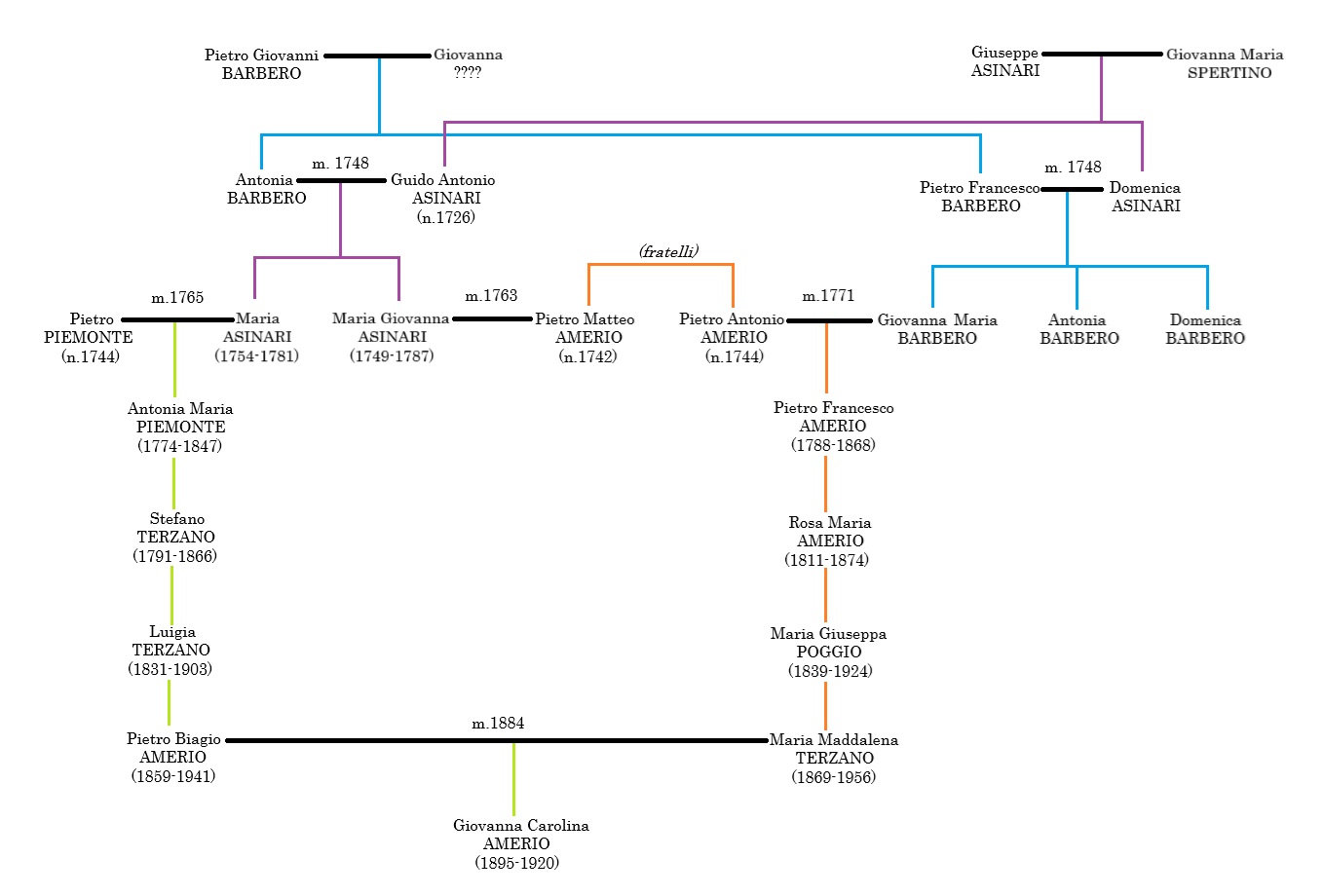

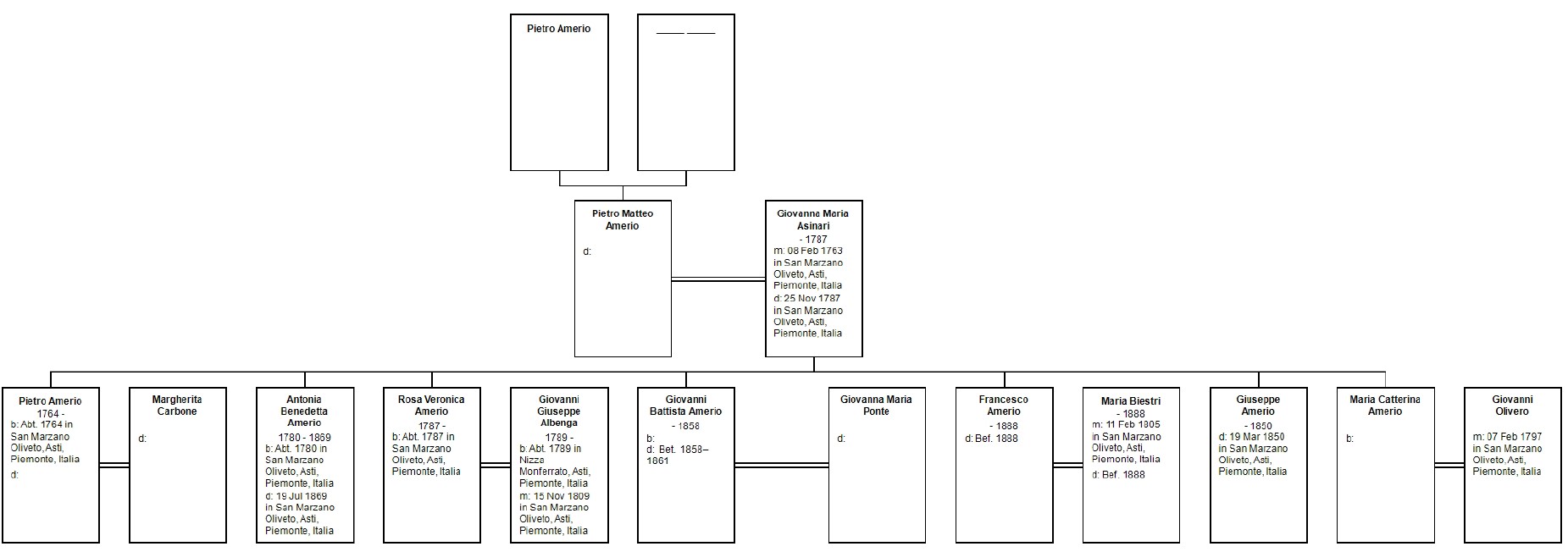
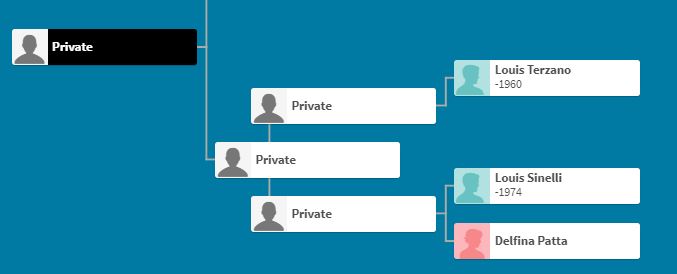


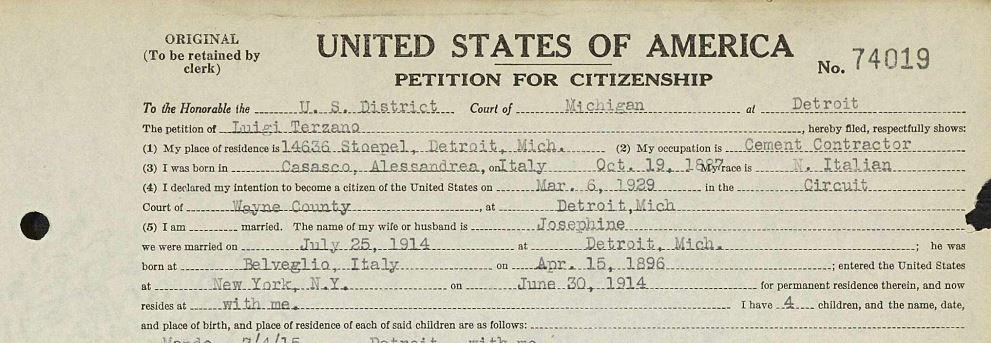
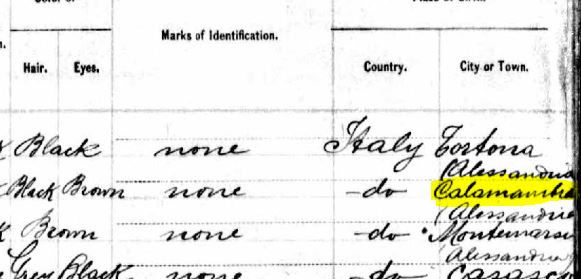
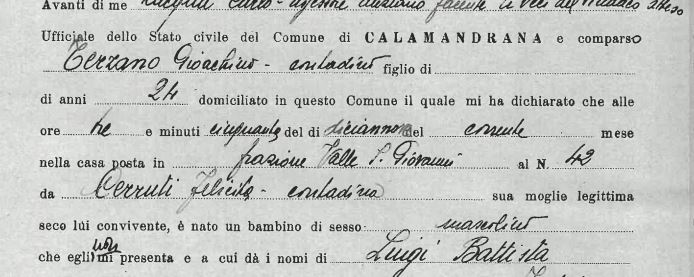
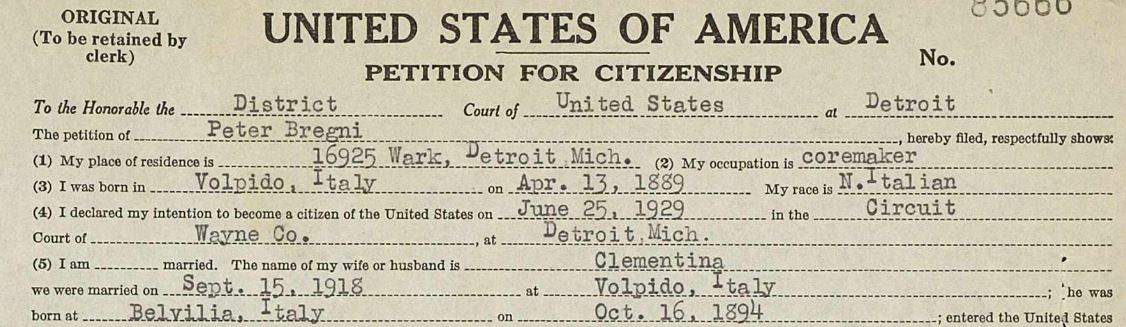
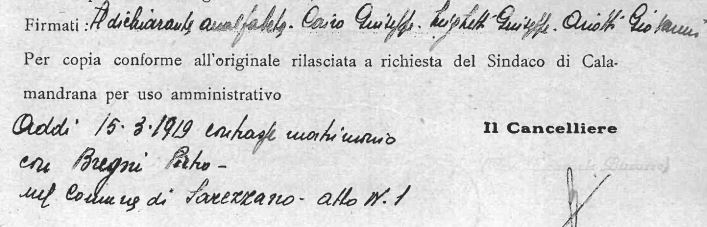
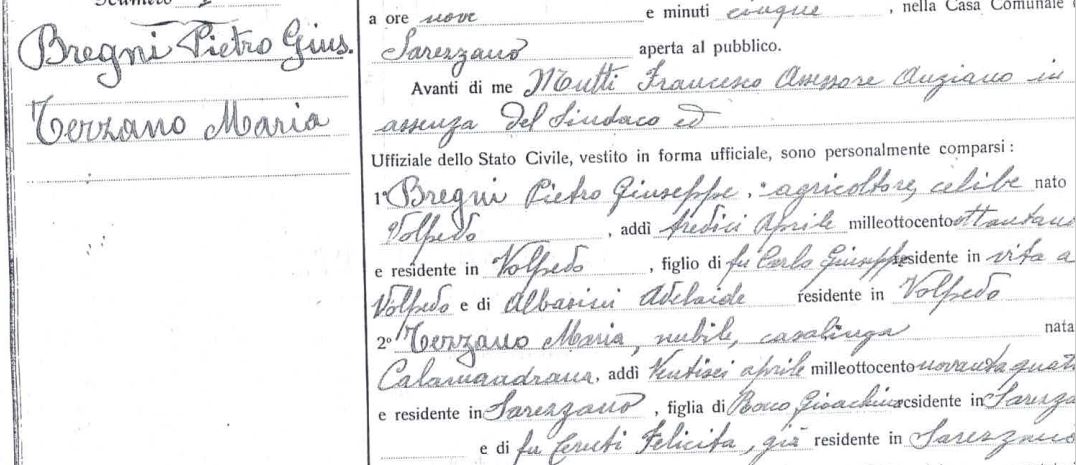
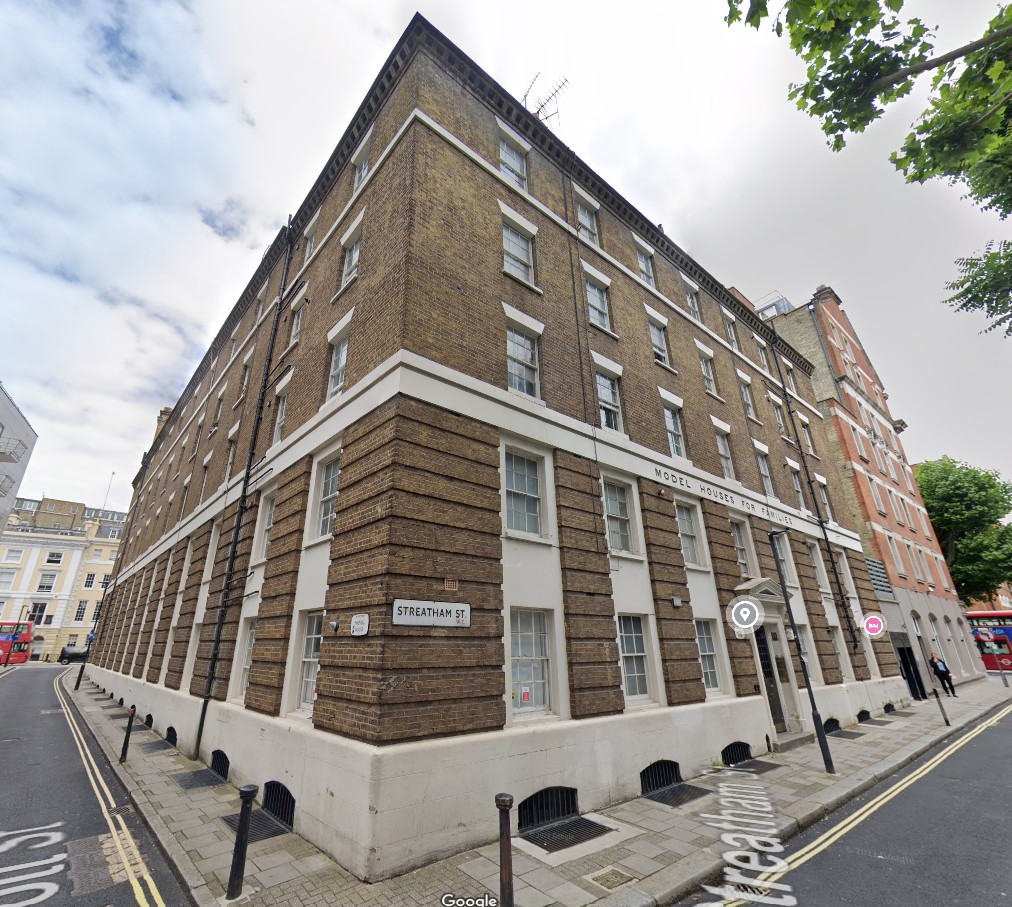
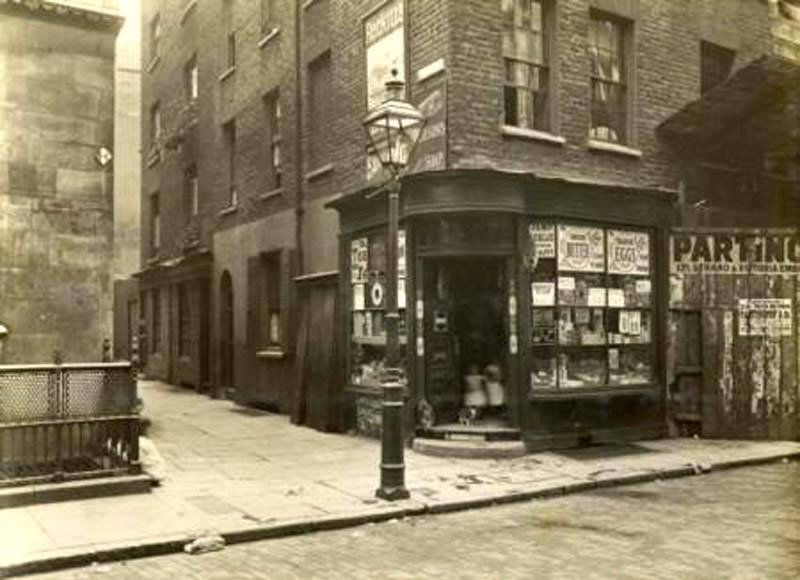
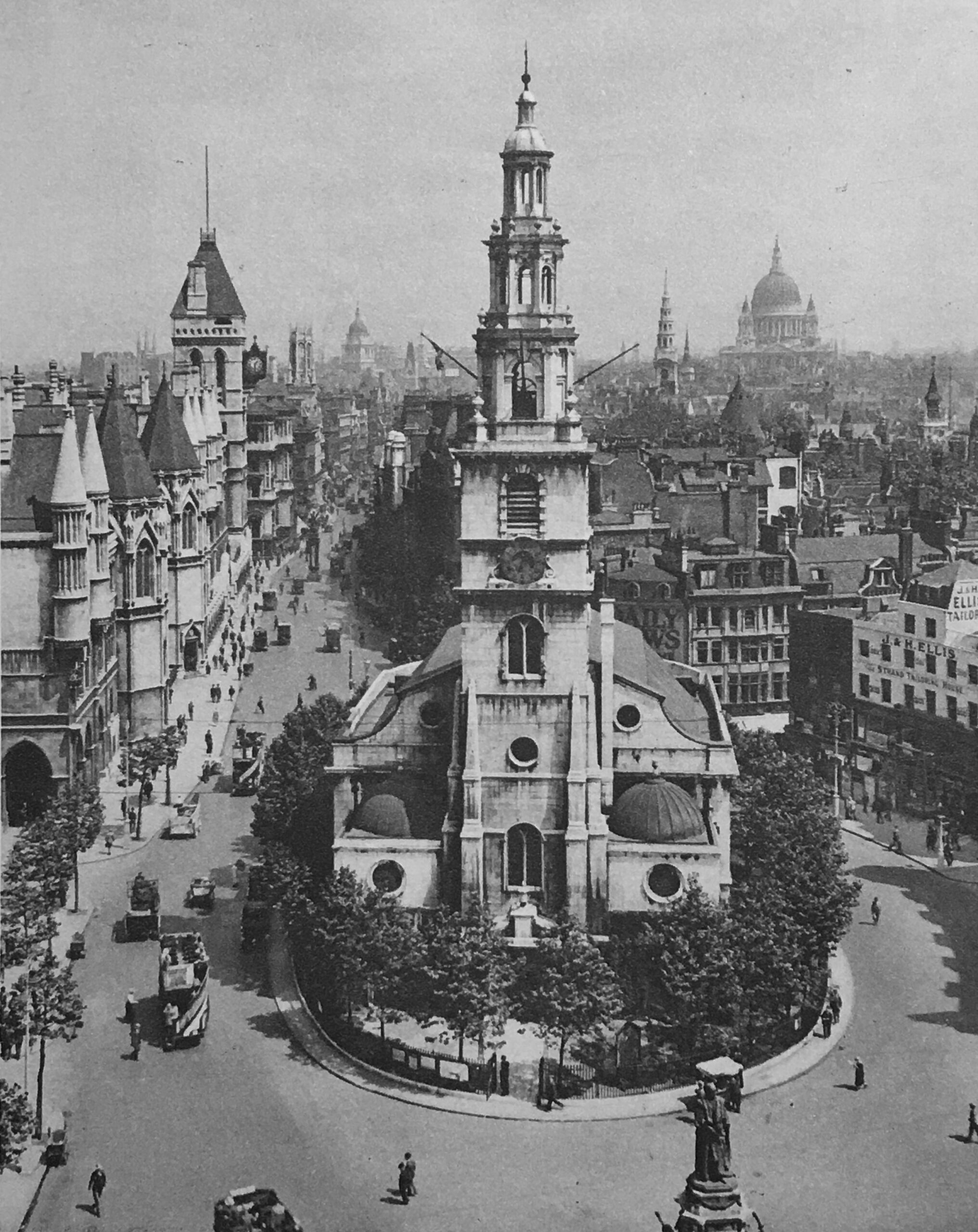

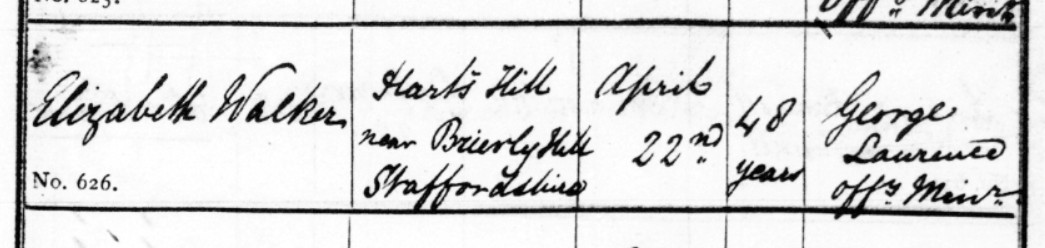
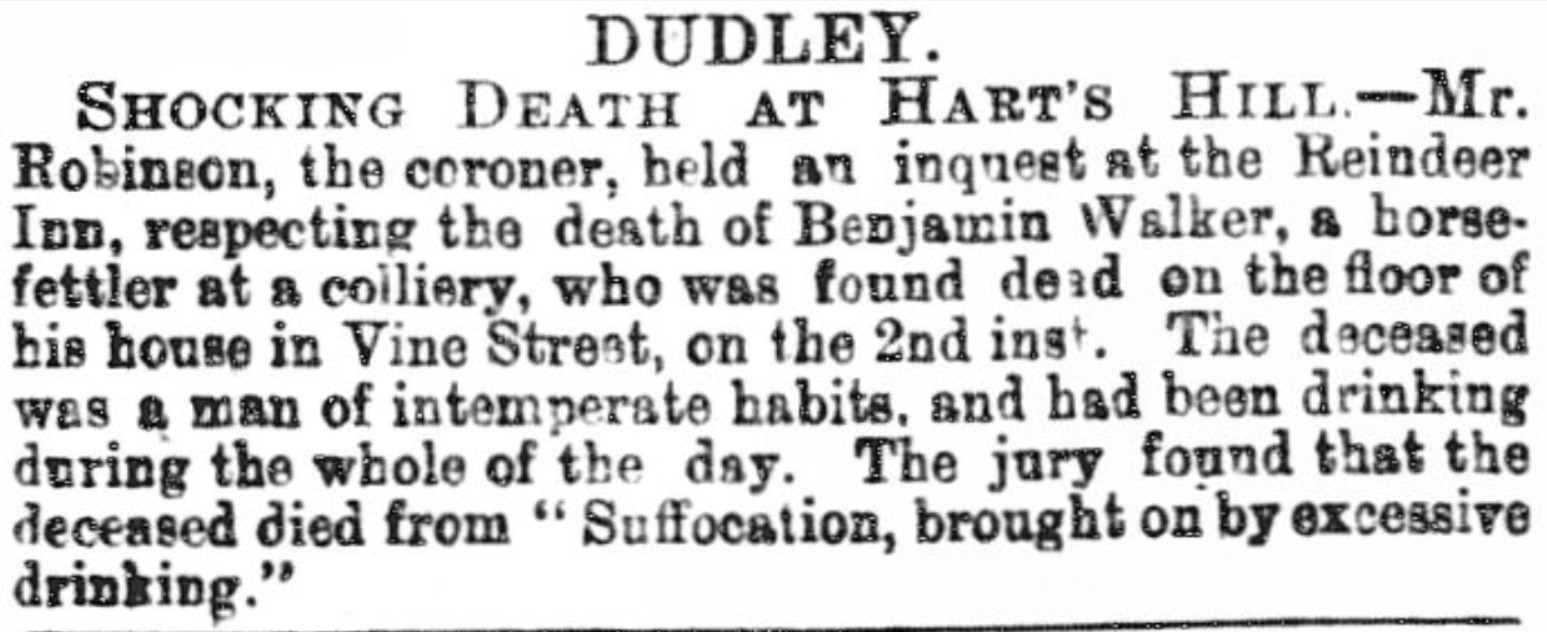
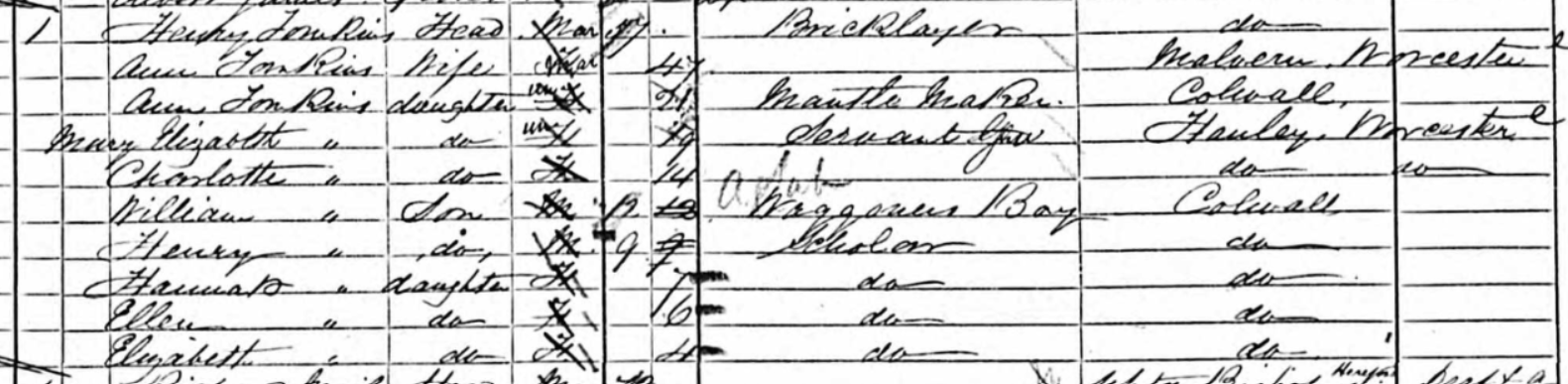

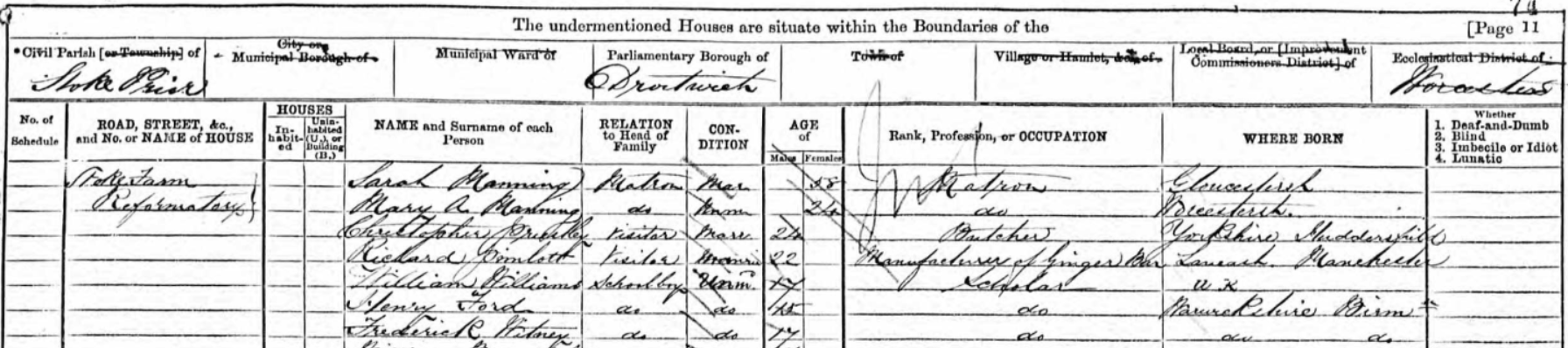
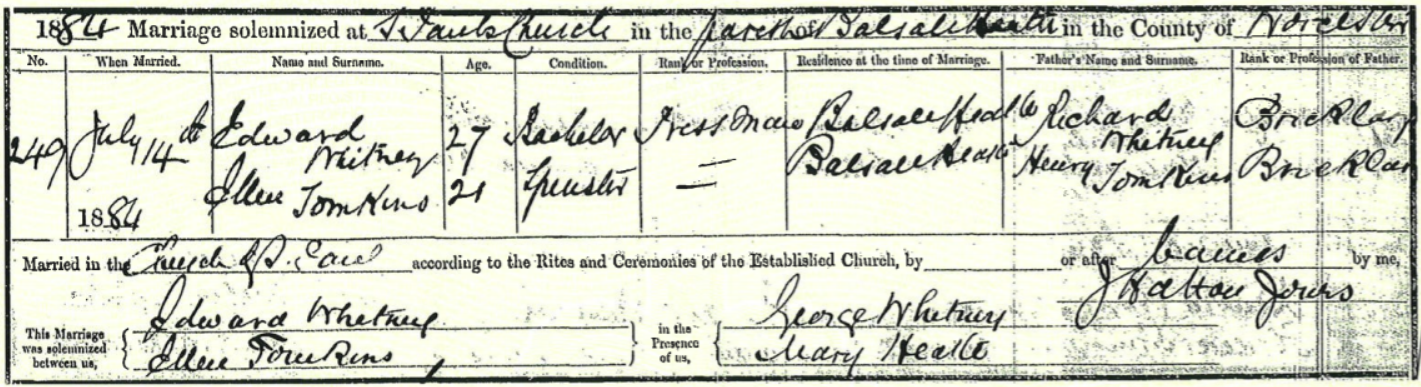
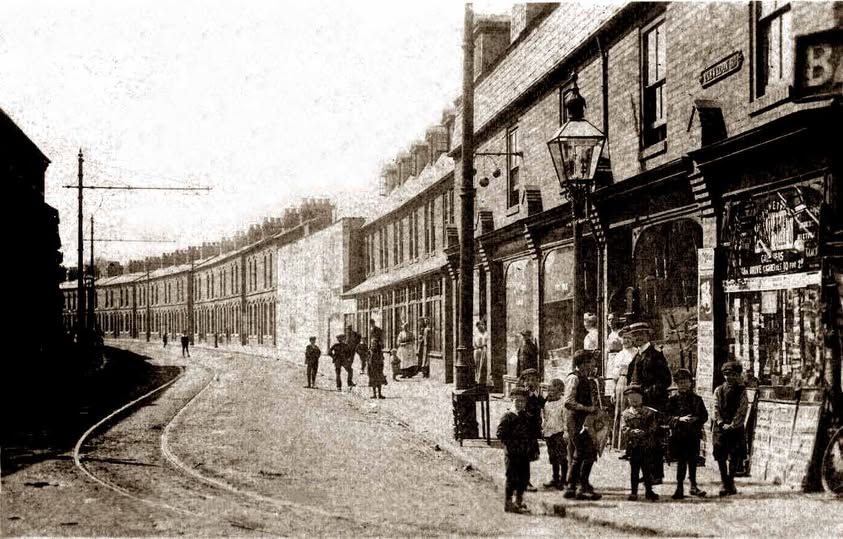
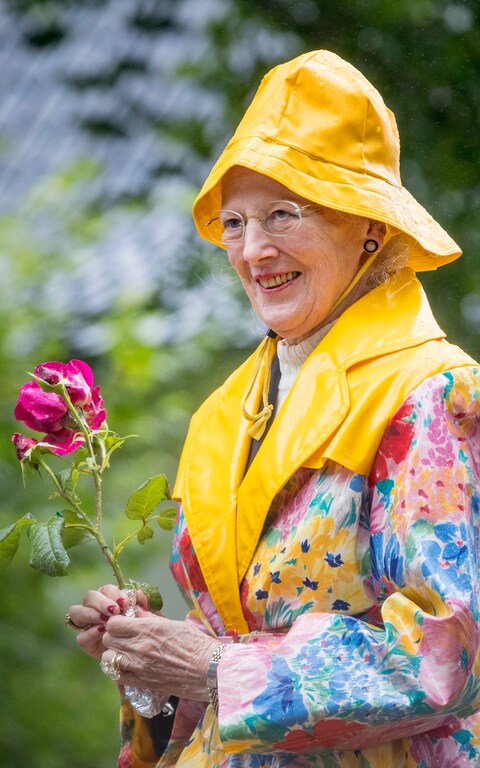
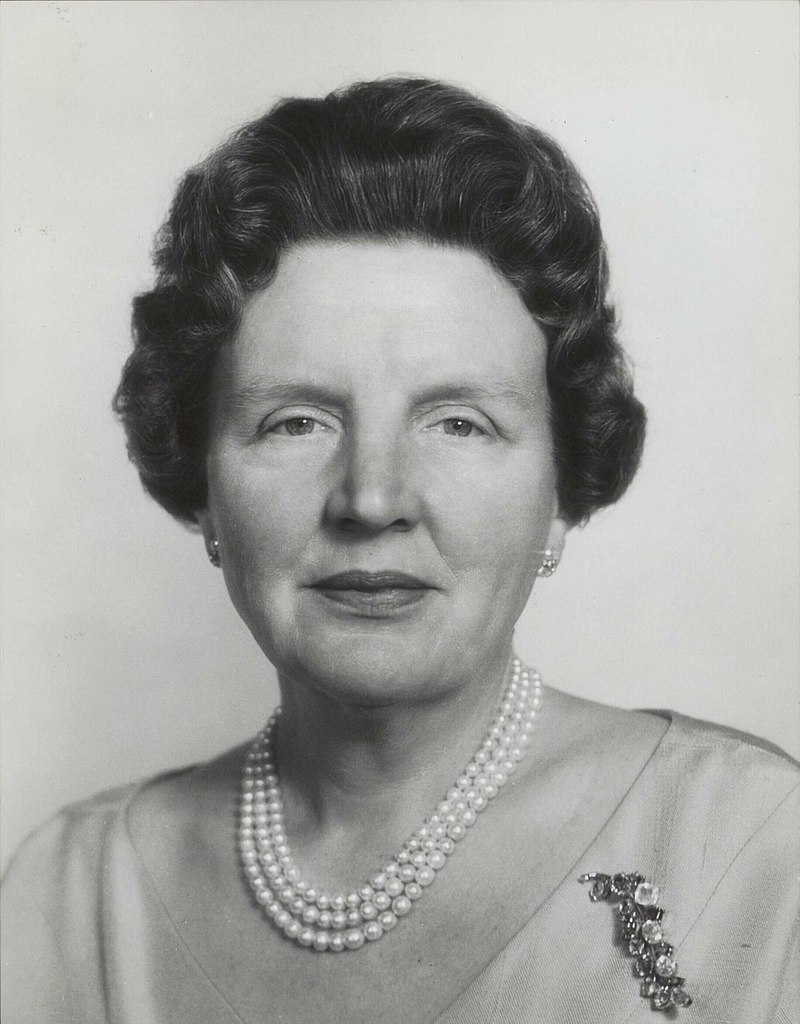

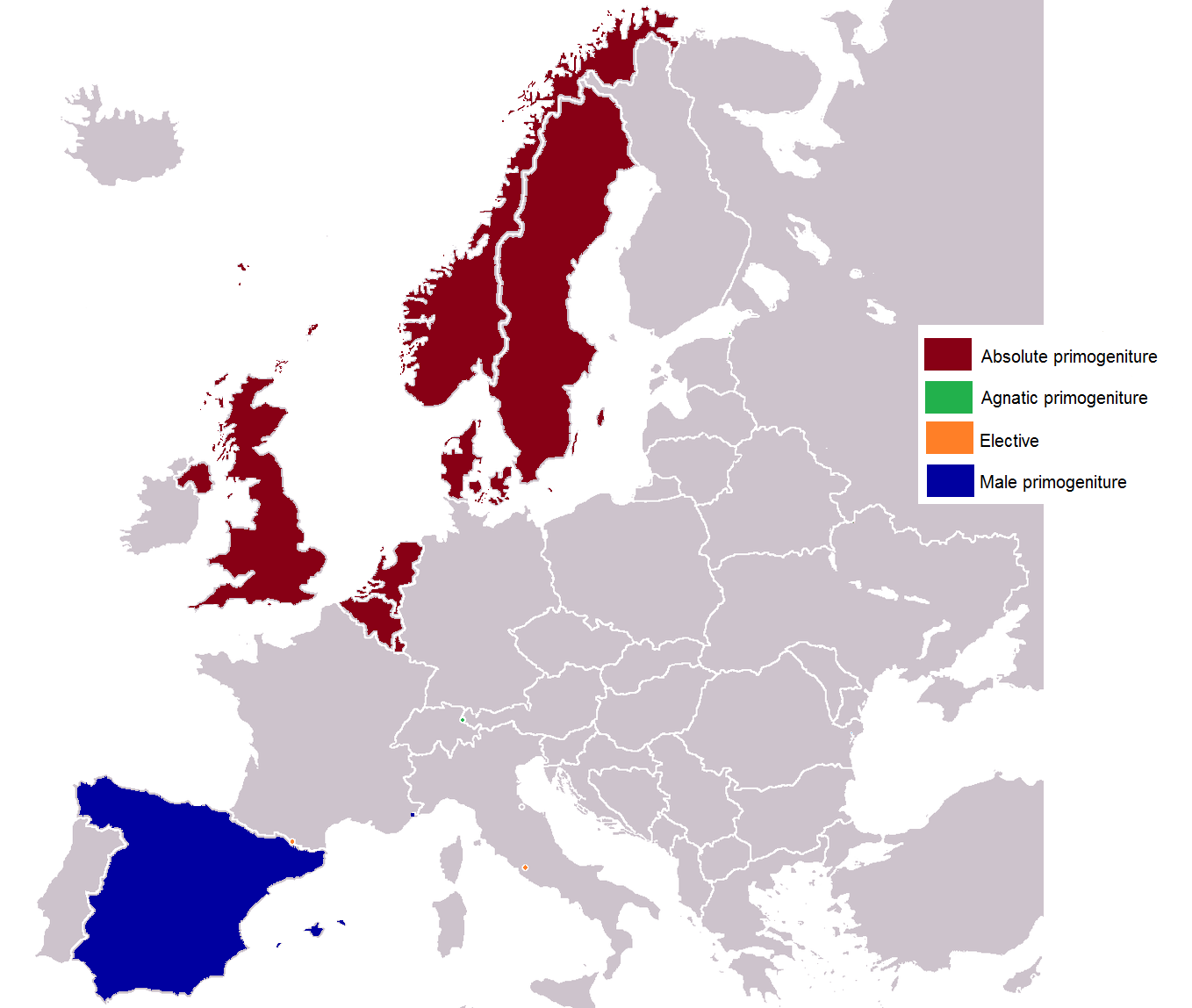
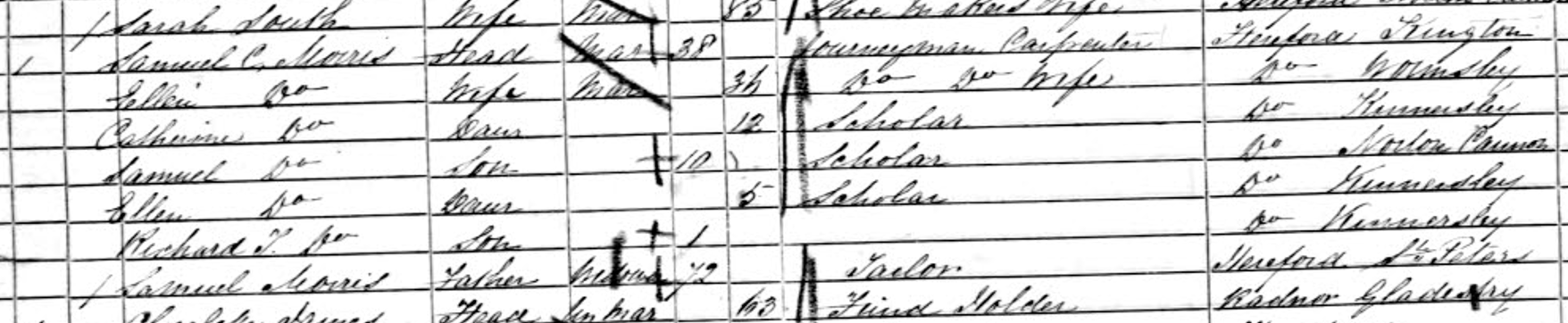


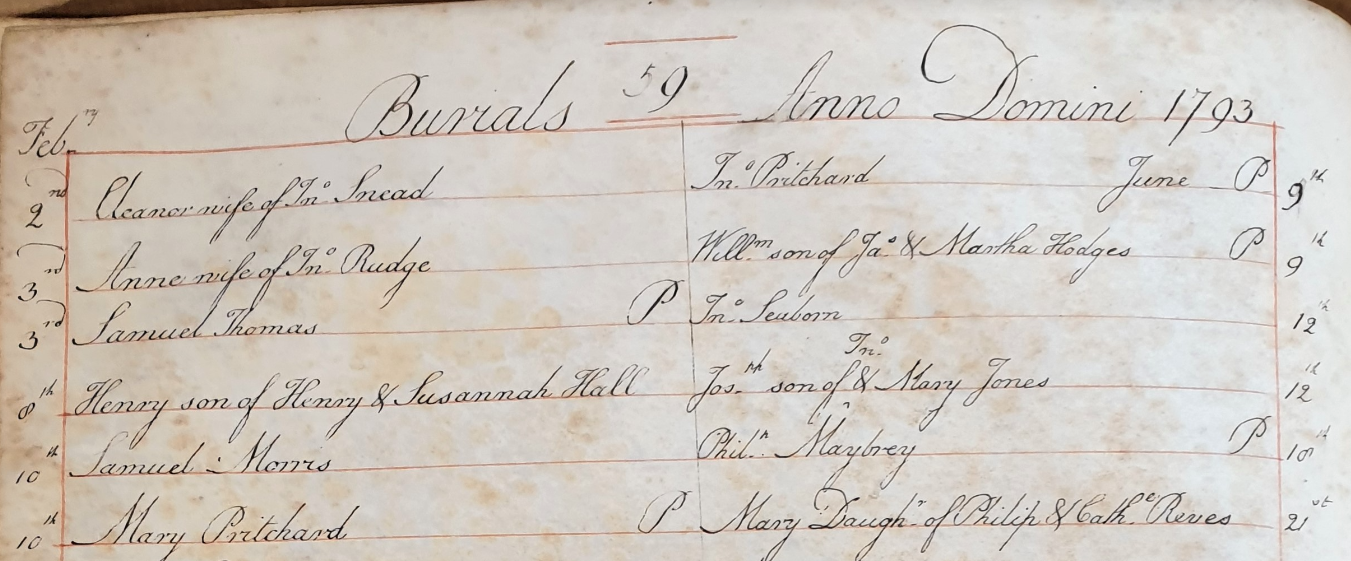
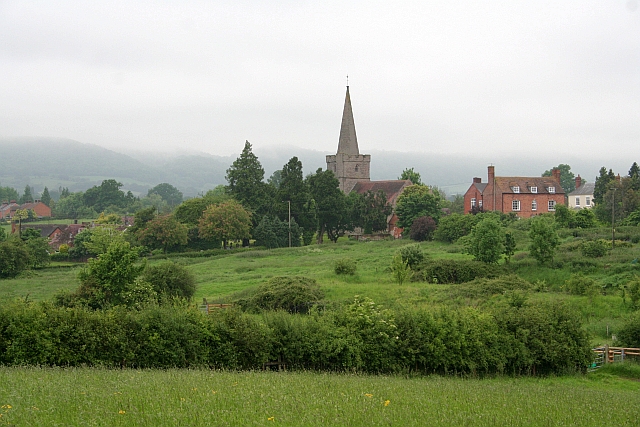

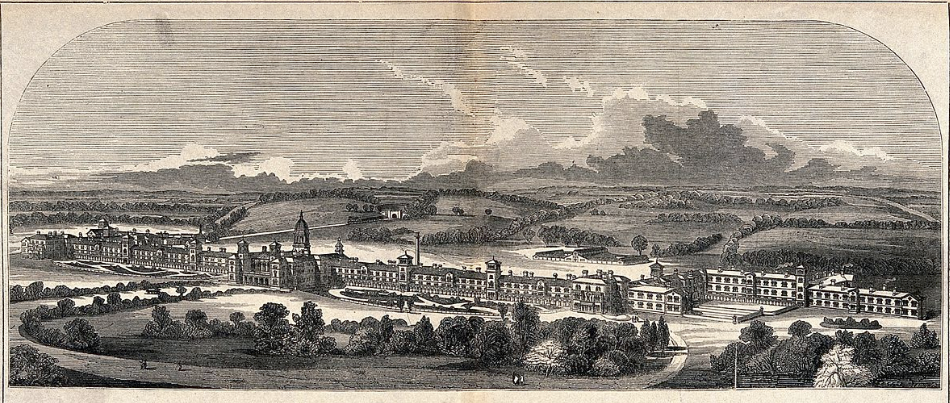


 The Genealogy Corner